


HostMonster to Office 365 Email Migration
Move HostMonster-hosted email to Microsoft 365 while keeping the website and domain hosting unchanged if required. This EdbMails workflow treats HostMonster as an IMAP email source and migrates supported messages, attachments, mail folders, folder hierarchy, and common message properties to Exchange Online.
Standard IMAP is email-focused. Contacts, calendars, tasks, websites, databases, DNS zones, and other hosting-account content are outside this mailbox migration workflow.
The EdbMails IMAP Migration Tool supports single and bulk mailbox connection, mailbox/folder mapping, selective migration, concurrent processing, incremental follow-up runs, pause/resume, and migration reports. Use the current HostMonster/hosting-control-panel mail settings for the source connection. Secure IMAP commonly uses port 993, but verify the exact incoming server name and encryption settings for the account before migration. For destination-wide planning, use the IMAP to Office 365 migration guide.
User Query
“Our company is planning to migrate to Office 365. Currently, our website domain is hosted by HostMonster. To ensure a smooth migration, we’re gathering all the necessary information in advance for transferring our emails from Horde to Office 365. We need to retain our current domain name and ensure that emails sent to our HostMonster domain are seamlessly routed to Office 365. Could someone guide us on the best approach to achieve this without experiencing any downtime or issues? Thanks”
HostMonster to Office 365 Migration Plan
- Inventory HostMonster email accounts, mailbox sizes, folders, aliases, and active users.
- Confirm the exact source IMAP server/hostname, secure port, mailbox credentials, and connection limits from the current hosting control panel.
- Create/provision Microsoft 365 target users/mailboxes and assign the required licenses.
- Add and verify the custom domain in Microsoft 365 if it will continue to be used for email.
- Review source limits, Microsoft 365 throttling, message-size policies, and available bandwidth.
- Run a pilot mailbox and verify the target before the production batch.
- Use incremental follow-up passes where required and change production MX/DNS only after target validation.
Pre-migration Steps for HostMonster to Office 365
HostMonster source
- Obtain the current IMAP server name, port, SSL/TLS setting, full email address, and mailbox password from the hosting control panel.
- Use an encrypted IMAP connection where available. Secure IMAP commonly uses port 993; verify the actual mailbox/server configuration.
- For bulk migration, prepare the EdbMails sample CSV and validate a small test set first.
Microsoft 365 target
- Create/provision the required target mailboxes and assign licenses.
- Add and verify the custom domain if Microsoft 365 will receive production mail.
- Use the current EdbMails OAuth-based Microsoft 365 target connection.
- Review target throttling/message-size limits and run a pilot before production migration.
Steps to Migrate from HostMonster to Office 365
Step 1: Download and Install EdbMails software
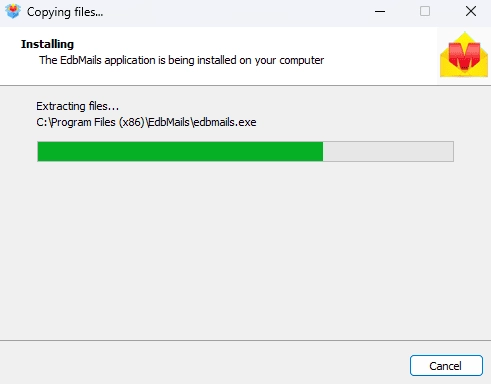
- Download and install the EdbMails application on your computer running on Windows OS.
See a detailed list of EdbMails system requirements for IMAP migration.
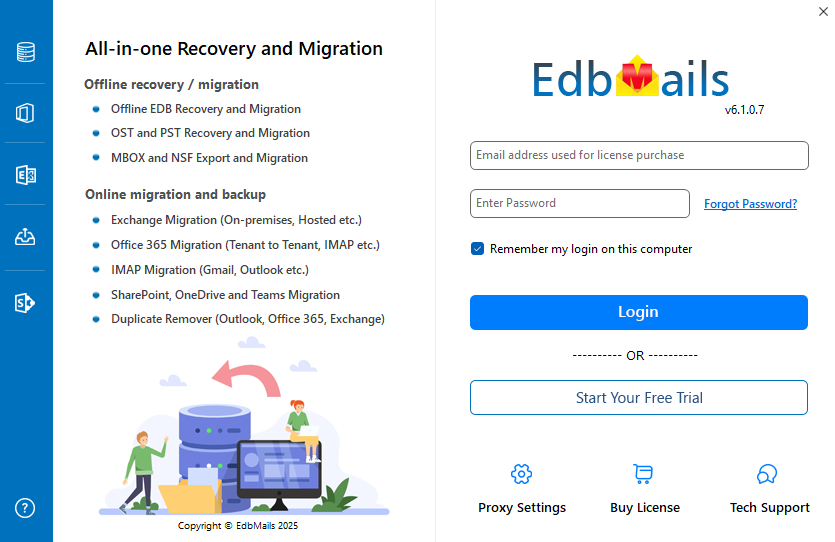
- Launch the EdbMails application on your computer.
- Enter your registered email address and password, then click ‘Login’. If you’re using EdbMails for the first time, select ‘Start Your Free Trial’ to continue with the trial version.Note: The EdbMails IMAP trial lets you evaluate the workflow and migrate up to 30 items from each folder. To migrate all eligible items for licensed mailboxes, purchase the required IMAP migration license.
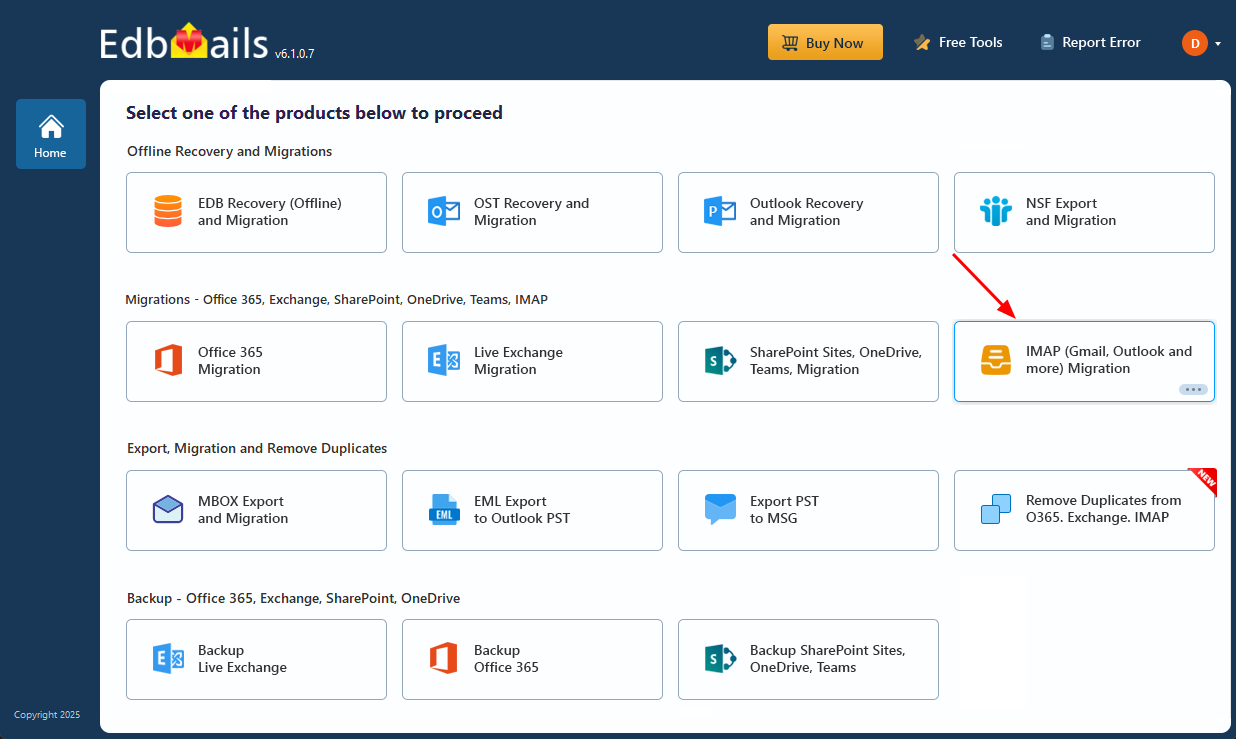
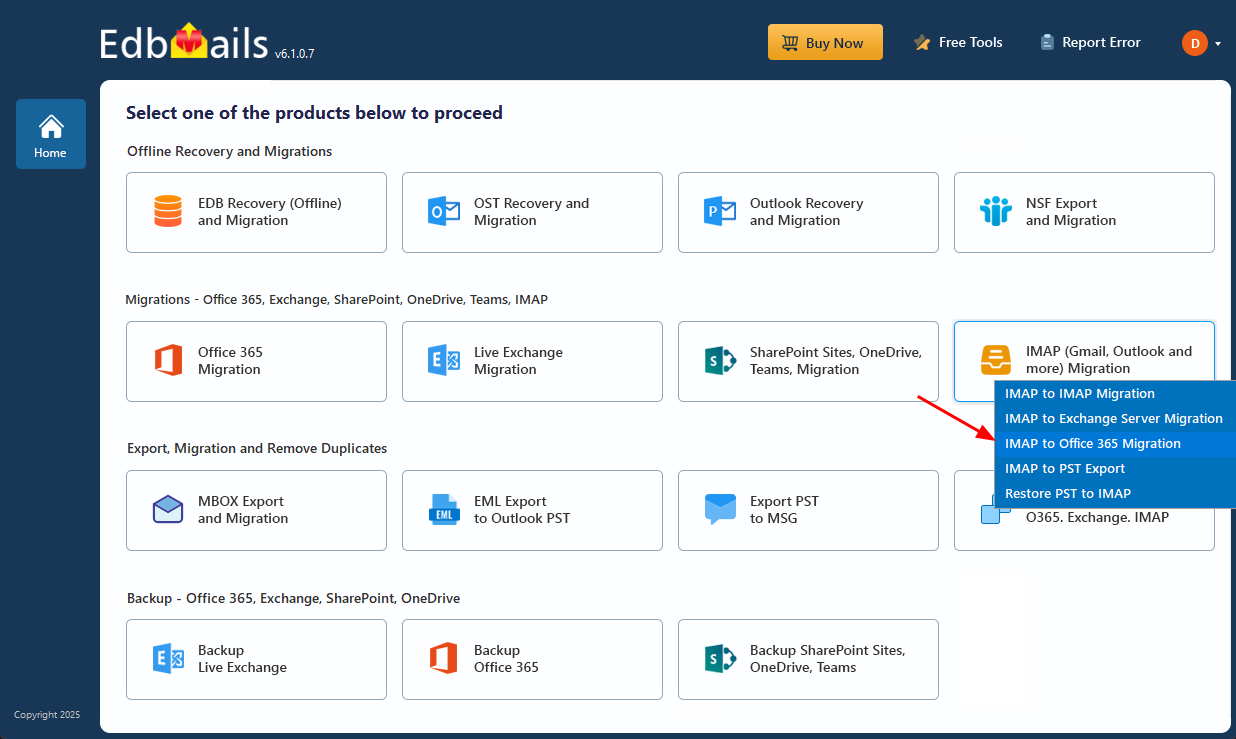
- Select the option ‘IMAP (Gmail, Outlook & more) Migration’.
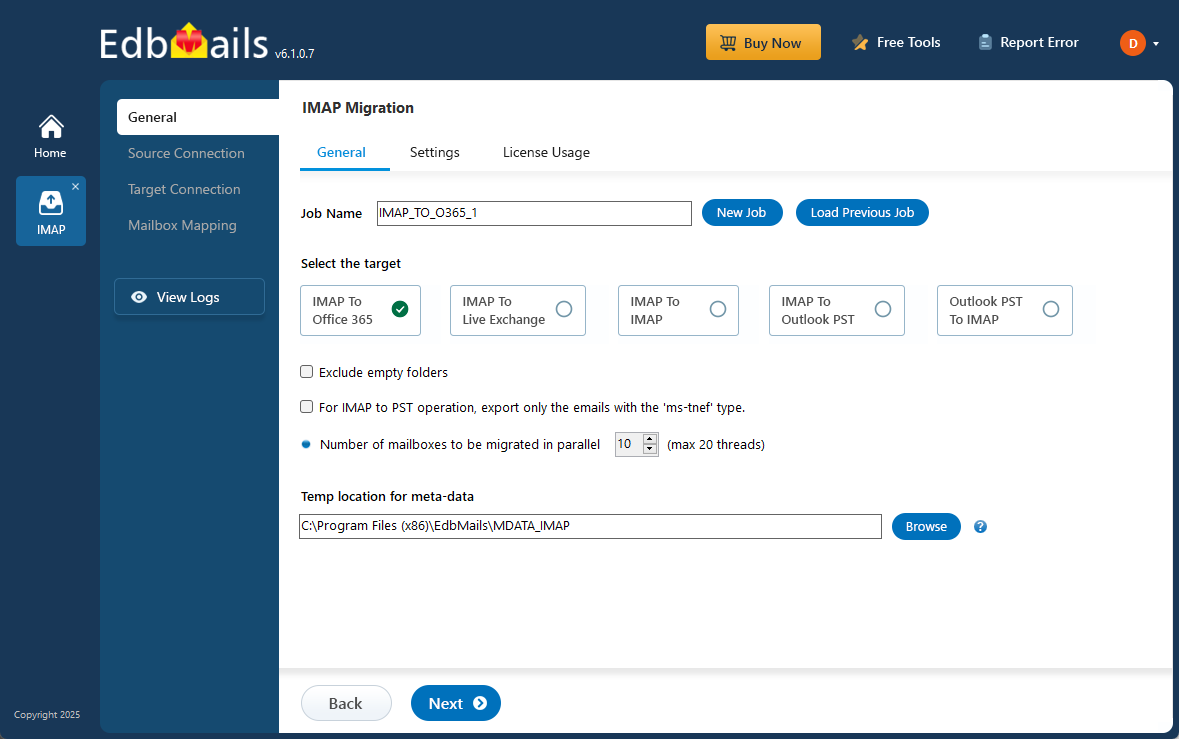
- Select ‘IMAP to Office 365 Migration’.
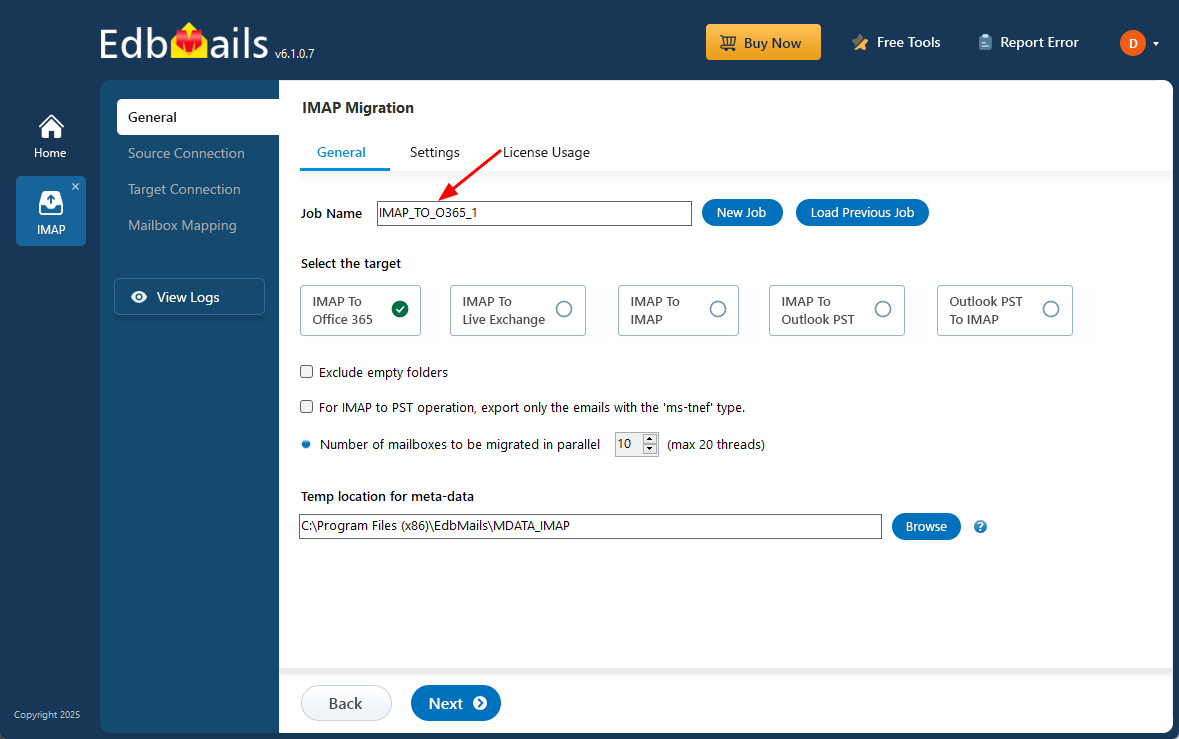
- You can either use the default job name or click on 'New Job' to customize it as needed.
- Download and install the EdbMails application on your computer running on Windows OS.
Step 2: Connect to source Hostmonster server
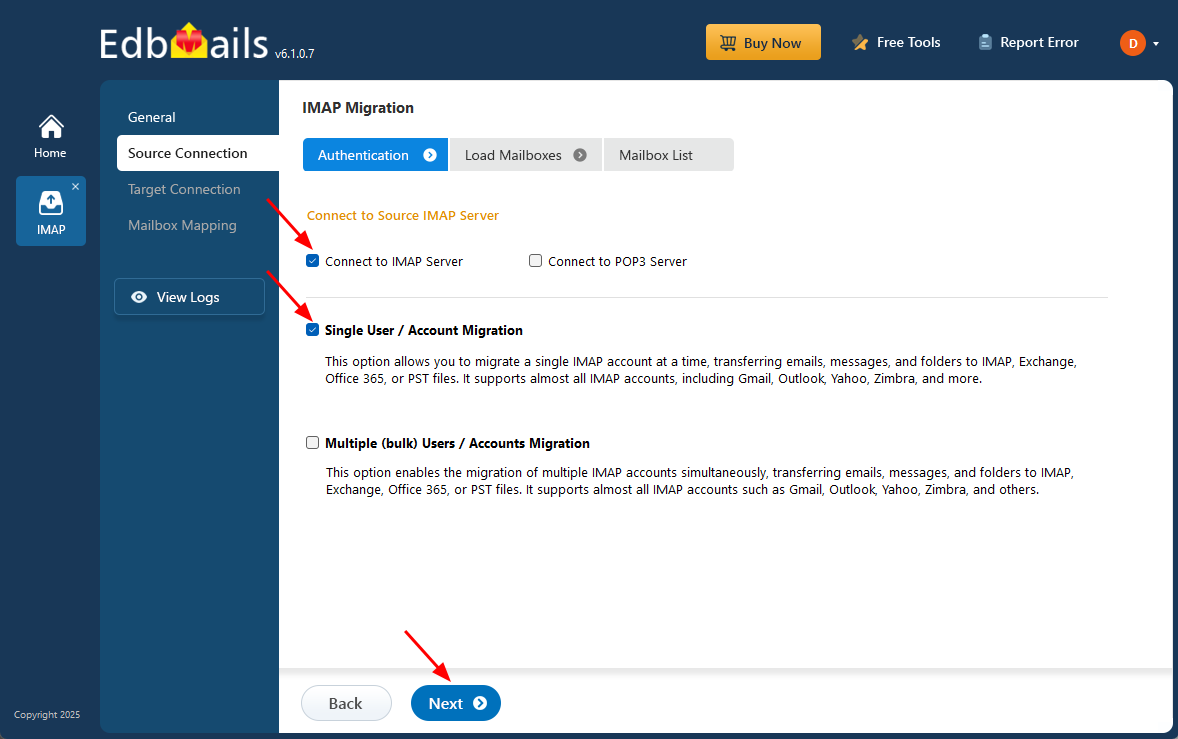
- To connect a single Hostmonster mailbox, select ‘Single User / Account Migration’, choose ‘Connect to IMAP Server’, and click ‘Next’.
- After selecting the option, click ‘Next’ to continue setting up the connection.
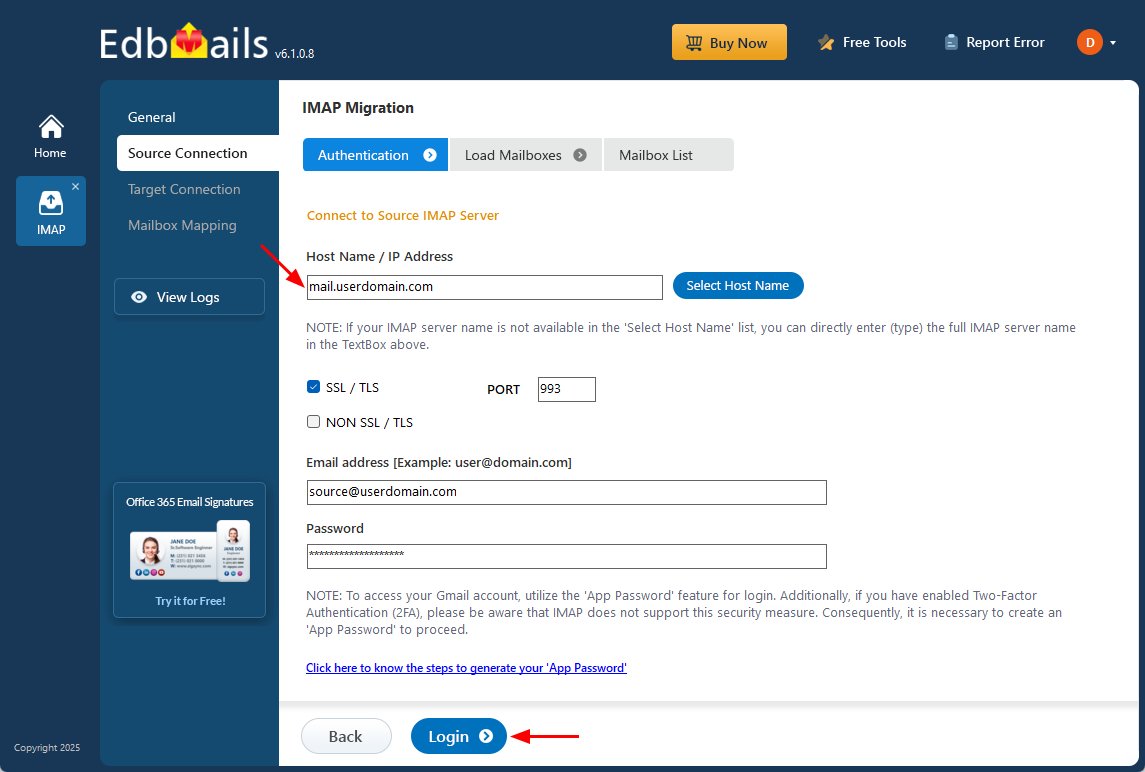
- Enter the exact HostMonster IMAP server/hostname shown for the mailbox, then provide the full email address and password. Use secure IMAP settings where available and verify the port/encryption value in the current account configuration.
- Click on the ‘Login’ button to establish a secure connection with your Hostmonster account.
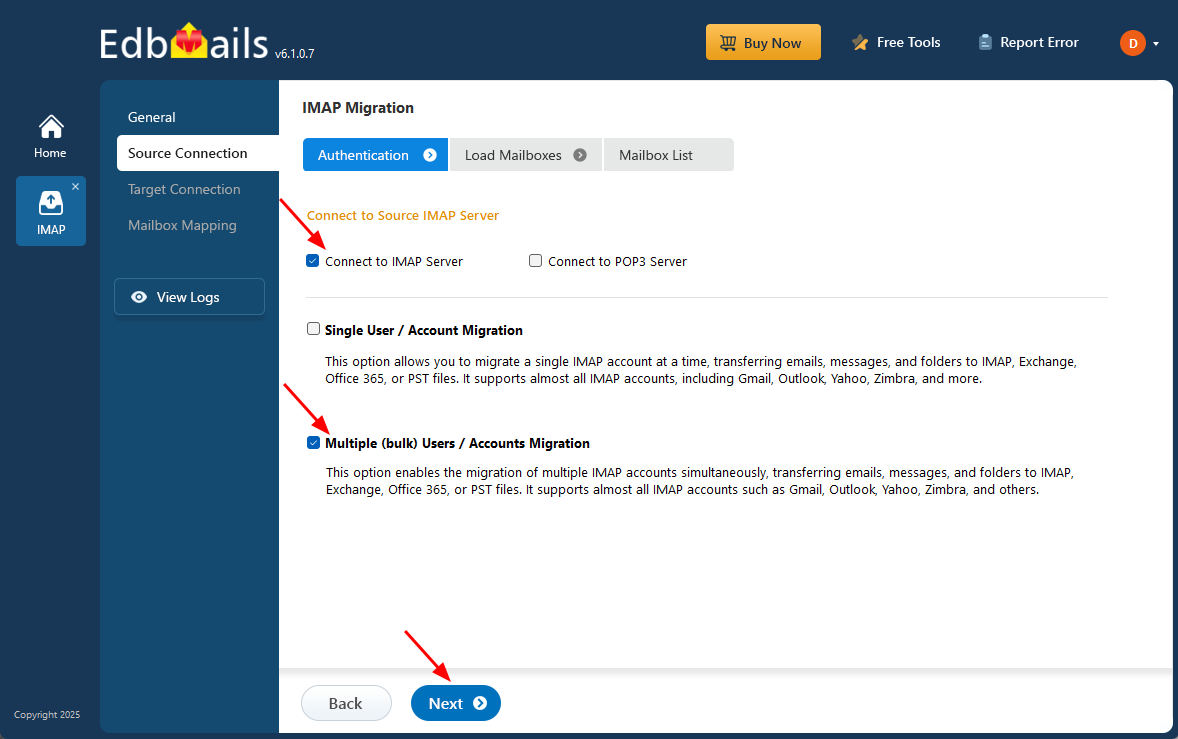
- For migrating multiple Hostmonster mailboxes in a single operation, choose ‘Multiple (Bulk) Users/Accounts Migration’ and select the appropriate connection option such as ‘Connect to IMAP Server’ or ‘Connect to POP3 Server’, then click ‘Next’ to continue.
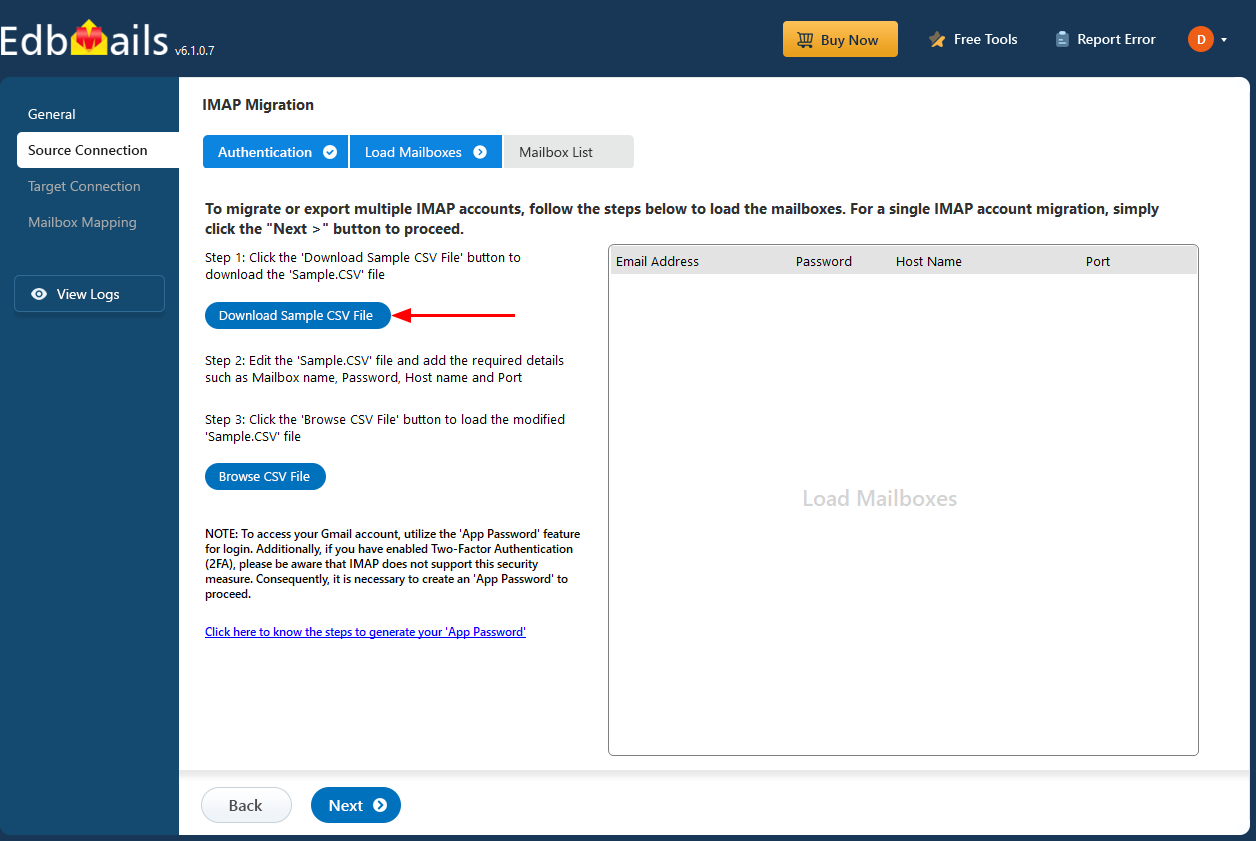
- Click ‘IMAP Migration CSV File’.
- Open the CSV file and enter the necessary details for each Hostmonster account you wish to migrate. This includes the user's email address, account password, IMAP server name, and the corresponding port number. After filling in all the required fields, save the file to proceed with the migration setup.
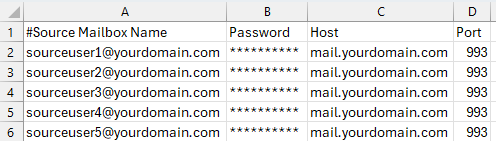
- Once you've updated the CSV file with all the necessary mailbox details, save and close the file.
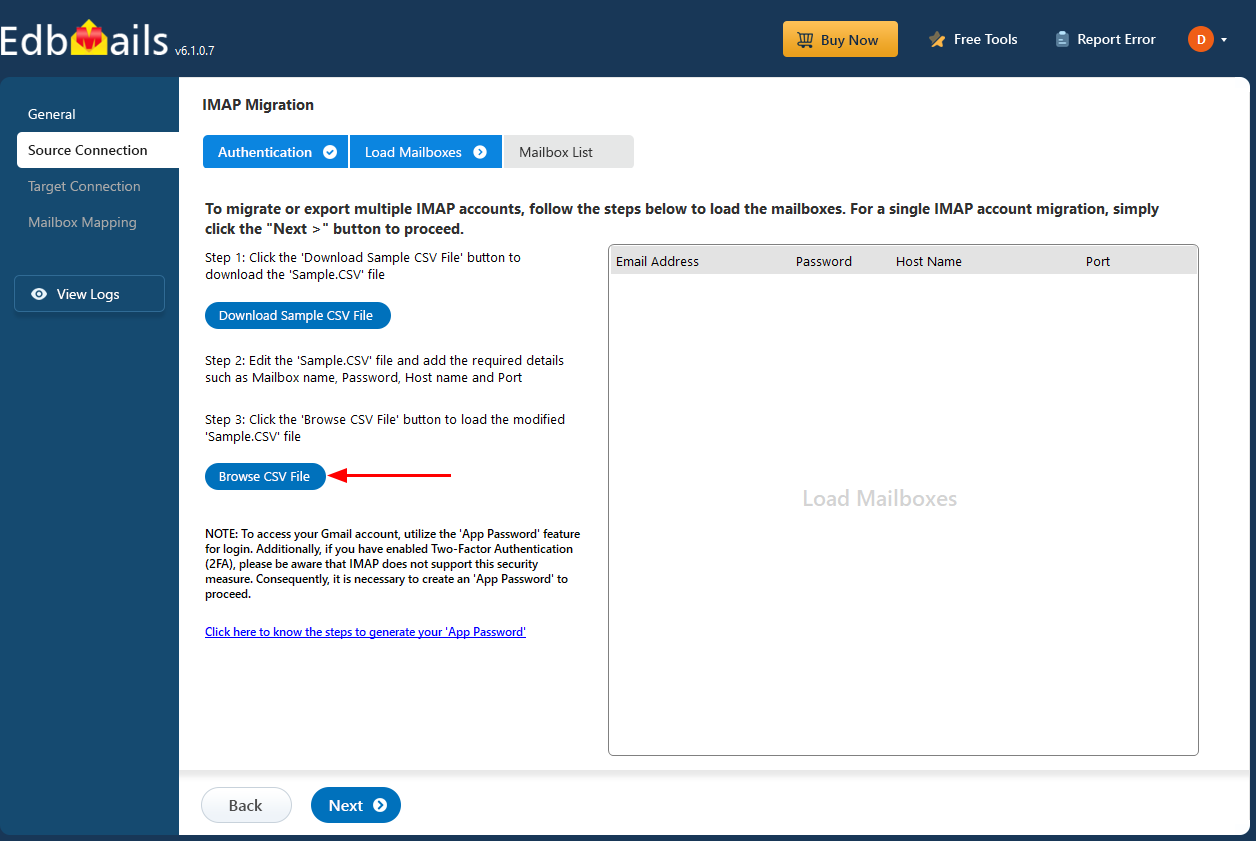
- Then, click the 'Load Modified CSV File' button, navigate to the saved location, select your file, and upload it to continue with the migration process.
Step 3: Select source HostMonster server mailboxes
- Select the mailboxes or individual folders you want to include in the migration. Once you've made your selection, click ‘Next’ to move forward with the process.
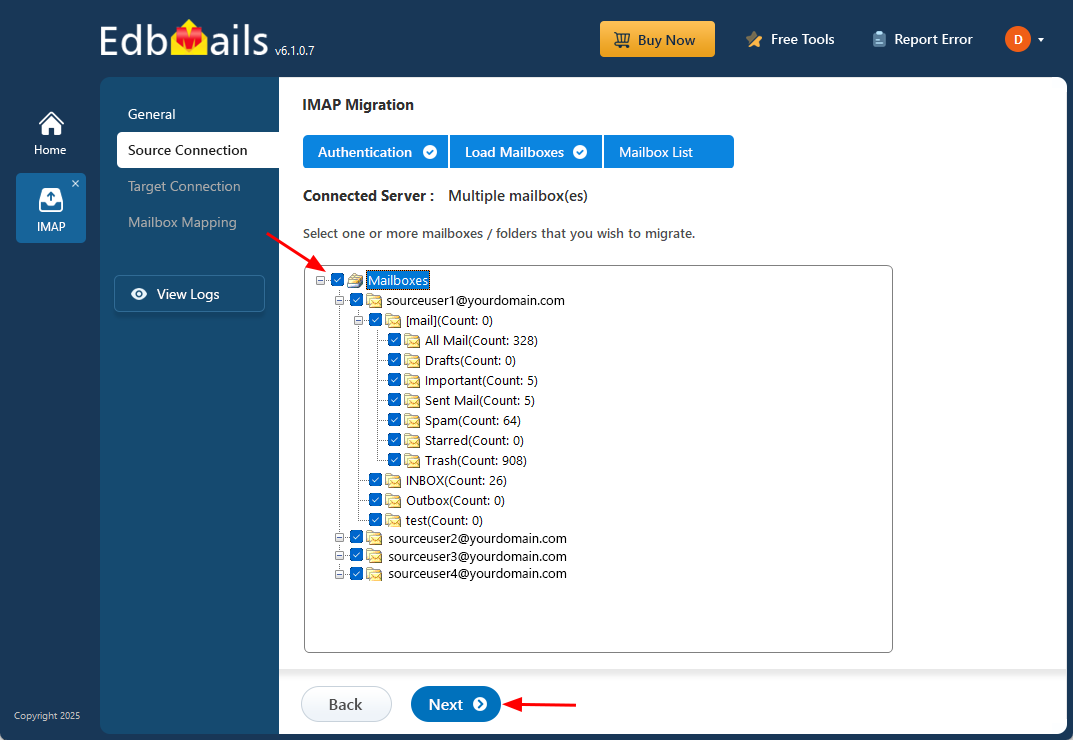
- Select the mailboxes or individual folders you want to include in the migration. Once you've made your selection, click ‘Next’ to move forward with the process.
Step 4: Connect to target Office 365 server
- Select the ‘Add New Connection’ option to establish a connection with your target Office 365 account.
- If you have previously set up a connection, you can choose it from the available list and click ‘Connect to Existing’ to proceed.
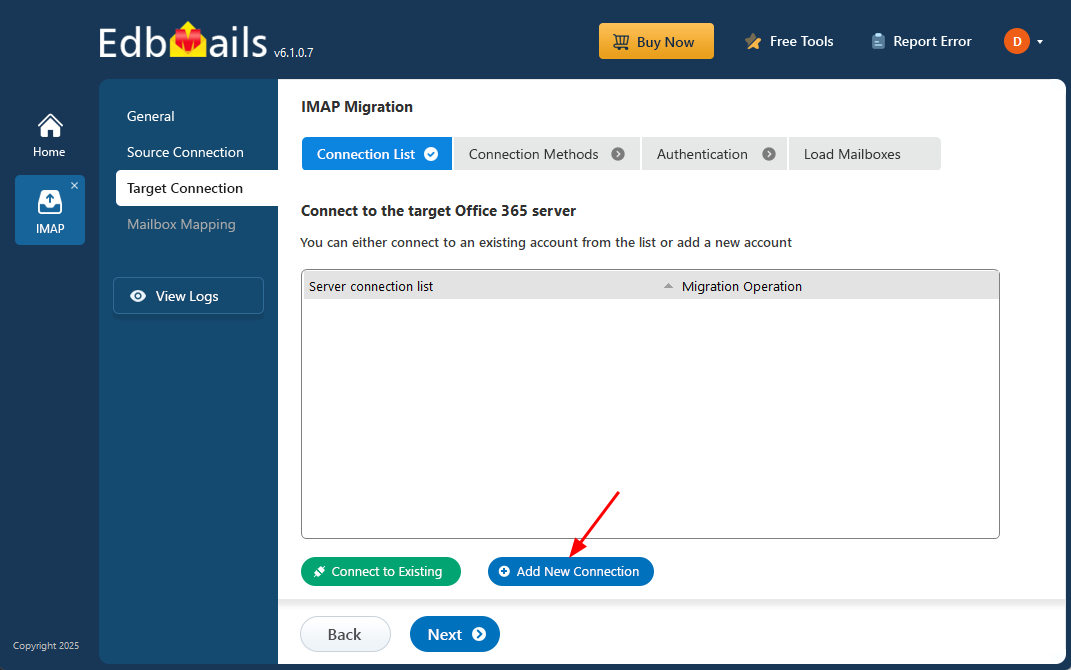
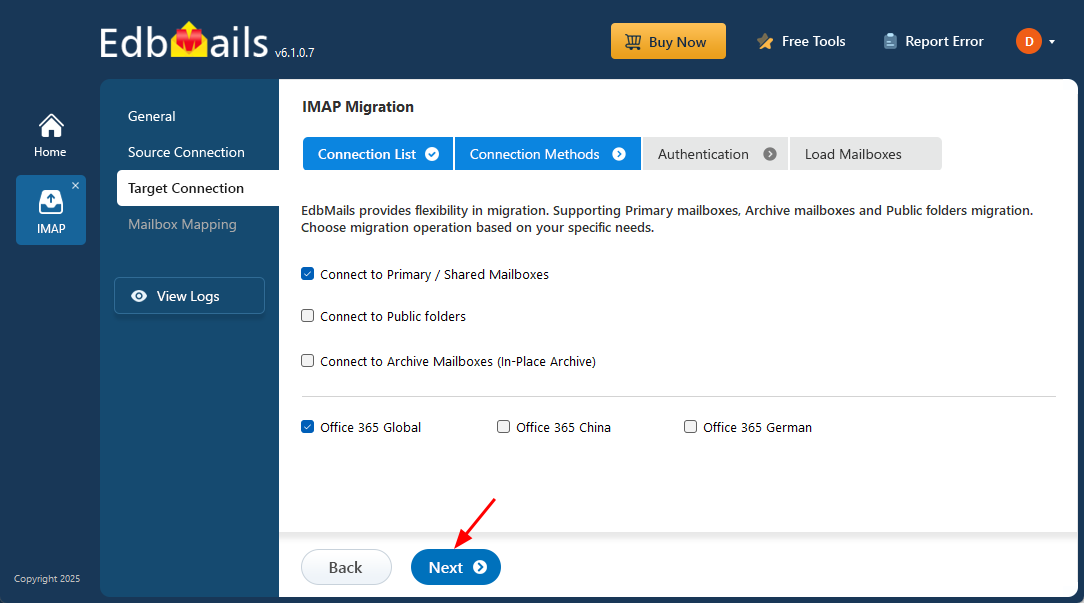
- Select the appropriate connection settings based on your migration requirements, then click ‘Next’ to proceed with the migration.
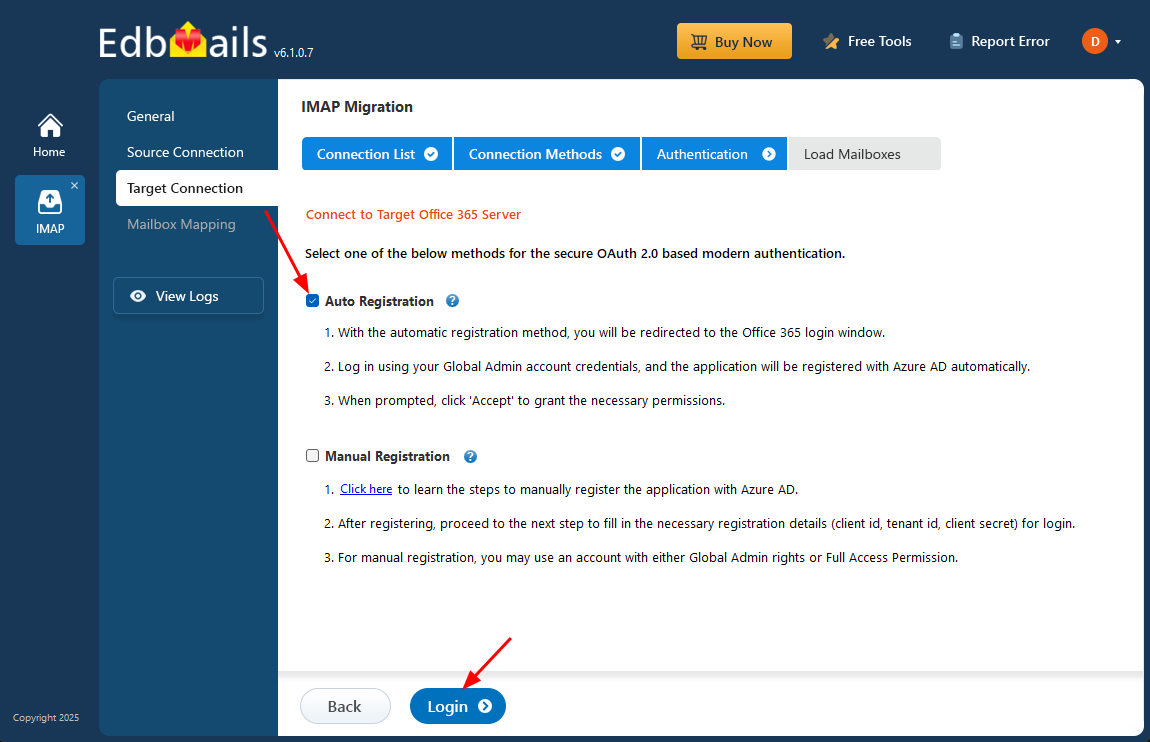
- Select any of the available options to create a secure connection using OAuth 2.0 modern authentication.
- Choose Auto Registration for a quick and simple setup. Sign in using a Global Admin account and grant the necessary permissions to automatically register the application in Azure AD.
- Alternatively, select Manual Registration if you want to manually provide the Azure AD application details. This option works with both Global Admin accounts and accounts that have Full Access permissions.
- Click ‘Login’ to continue.
- Authenticate on Microsoft sign-in page.
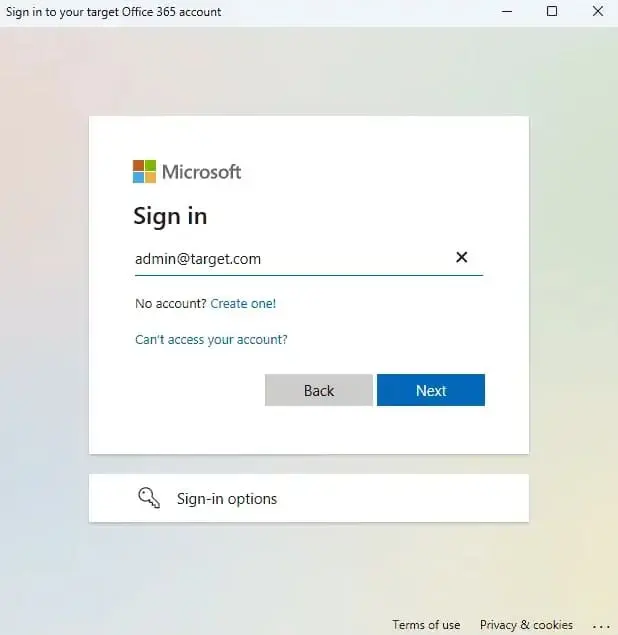
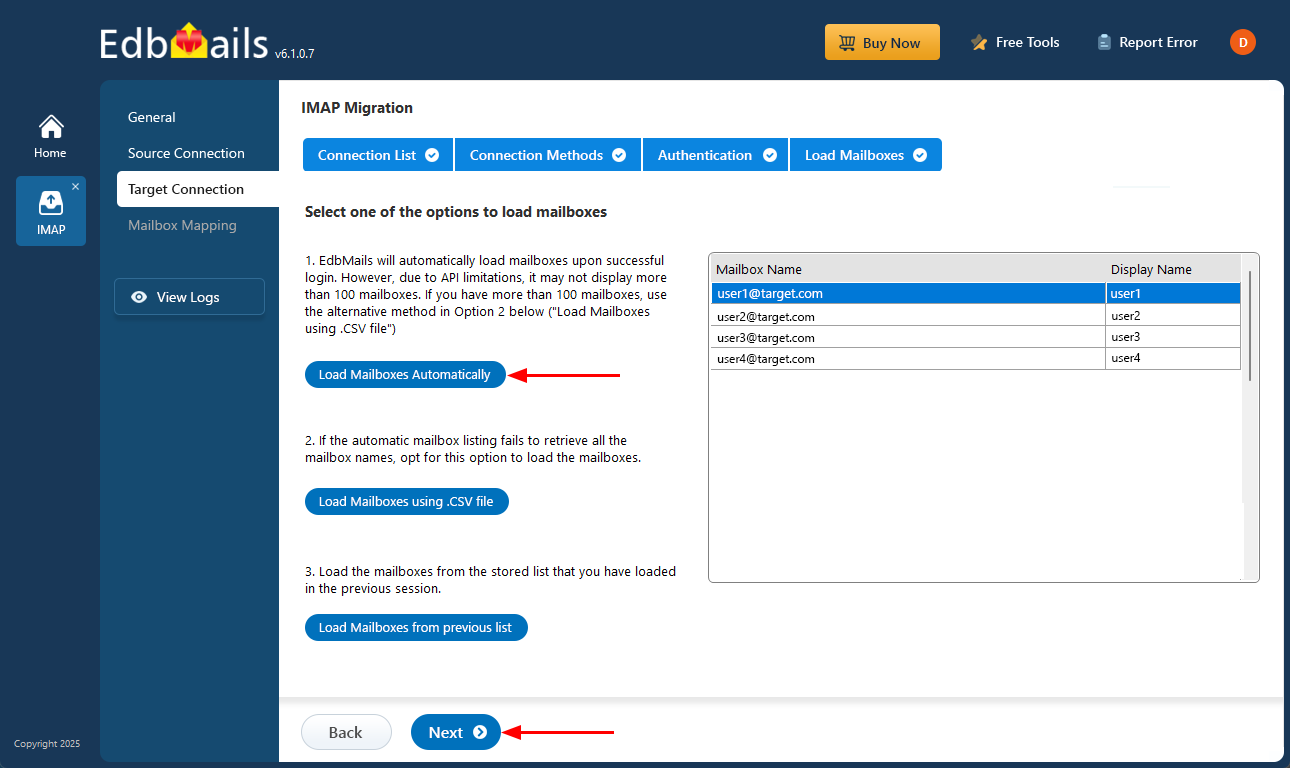
- After successful authentication, choose one of the following options to load the mailboxes:
Load Mailboxes Automatically: Use the automatic option to retrieve available target mailboxes through the current EdbMails Microsoft 365 connection. If every required mailbox is not returned, use the supported CSV-loading option and verify the destination mailbox list before continuing.
ii) Load Mailboxes using CSV file: If all mailbox names are not retrieved through the automatic method, select the ‘Load Mailboxes using .CSV file’ option to manually add and load the required mailboxes.
iii) Load Mailboxes from previous list: This option allows you to load mailboxes directly from the list that was previously imported and saved in your earlier session.
- Choose ‘Load Mailboxes Automatically’ and click ‘Next’ to continue.
Step 5: HostMonster to Office 365 mailboxes mapping
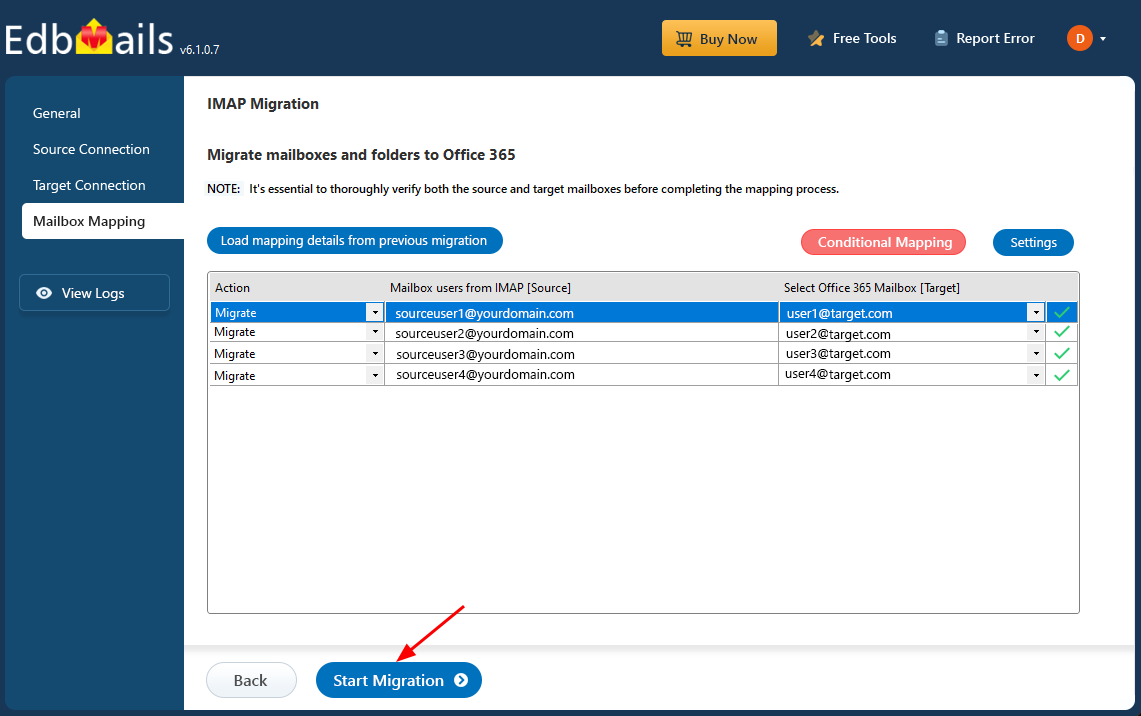
- Choose your preferred method to map the source mailboxes and folders to their corresponding mailboxes and folders on the target Office 365 account.
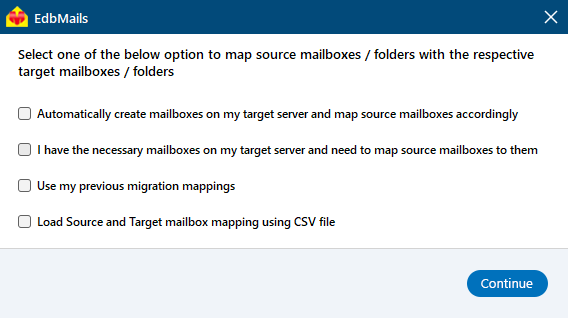
- Where supported and selected, EdbMails can assist with target mailbox creation and automatic mapping. Verify Microsoft 365 licensing and review every source-to-target mailbox mapping before starting the production migration.
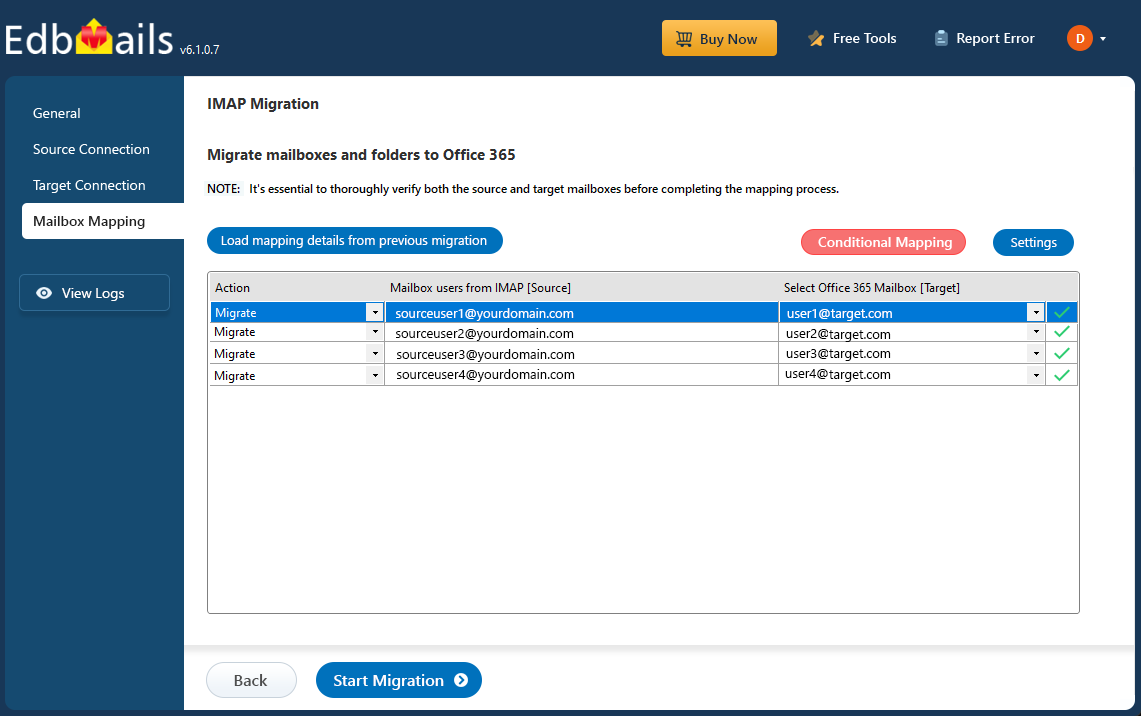
- Choose your preferred method to map the source mailboxes and folders to their corresponding mailboxes and folders on the target Office 365 account.
Step 6: Start HostMonster to Office 365 migration
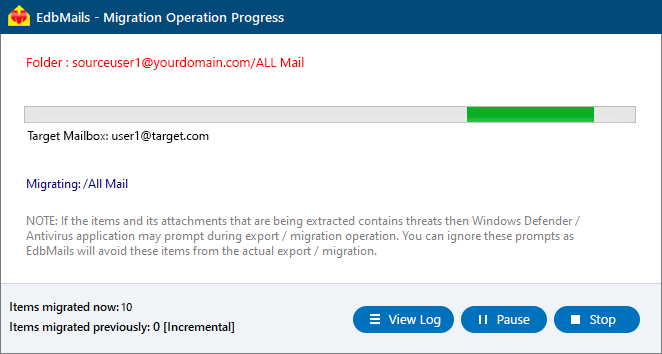
- Review the mailbox mapping for accuracy, then click the ‘Start Migration’ button to initiate the migration process.
- Click the ‘View Logs’ button to access the full migration report. This report includes comprehensive information, such as mailbox mapping, a summary of the migration process, and the item count for each migrated mailbox and folder.
- Review the mailbox mapping for accuracy, then click the ‘Start Migration’ button to initiate the migration process.
HostMonster to Office 365 Post-Migration Tasks
- Verify the Microsoft 365 target
Review migration reports and check representative folders, messages, attachments, item counts, and user access.
- Update mail DNS when ready
If Microsoft 365 becomes the production mail service, update the required MX/DNS records only after target validation. The website can remain hosted with HostMonster.
- Validate Outlook/client access
Confirm Microsoft 365 sign-in and Autodiscover behavior and recreate Outlook profiles only where required.
- Retain the source during validation
Keep the HostMonster mailboxes available for the agreed transition period before decommissioning the old email service.
- Verify the Microsoft 365 target
Troubleshooting Guide for HostMonster to Office 365 Migration
For troubleshooting, visit Knowledge Base.
For more queries, check Frequently Asked Questions or contact support.
Benefits of EdbMails for HostMonster to Office 365 Email Migration
- Bulk mailbox migration
Load multiple HostMonster mailboxes through CSV and process migration batches without entering every mailbox manually.
- Selective migration
Select required mailboxes/folders and apply supported IMAP filters and exclusions.
- Incremental follow-up runs
Process eligible new or changed email items after the initial pass for staged migration.
- Mailbox mapping
Review source-to-target mailbox/folder mapping and correct renamed or nonmatching accounts manually.
- Reports and verification
Use migration reports and target-side checks before changing production mail flow.