


IMAP to PST Converter and Backup Tool
IMAP to PST export creates a local Outlook PST copy of email data stored on an IMAP-enabled server. Organizations use this workflow for offline backup, long-term archiving, mailbox handoff, compliance-related retention projects, or to keep a portable copy of email outside the live IMAP service. Standard IMAP is primarily email-focused, so the source data normally includes supported messages, attachments, folders, folder hierarchy, and common message properties rather than contacts, calendars, tasks, or rules.
Microsoft Outlook can export a mailbox to PST after the account has been added and the required mailbox content has synchronized locally. For a small number of accounts this can be sufficient, but administrators handling many IMAP mailboxes may need a repeatable workflow for bulk account loading, selective export, reporting, and separate PST output. Before any PST export, ensure that the destination drive has enough free space and that the PST files are stored on an appropriate local or supported storage location.
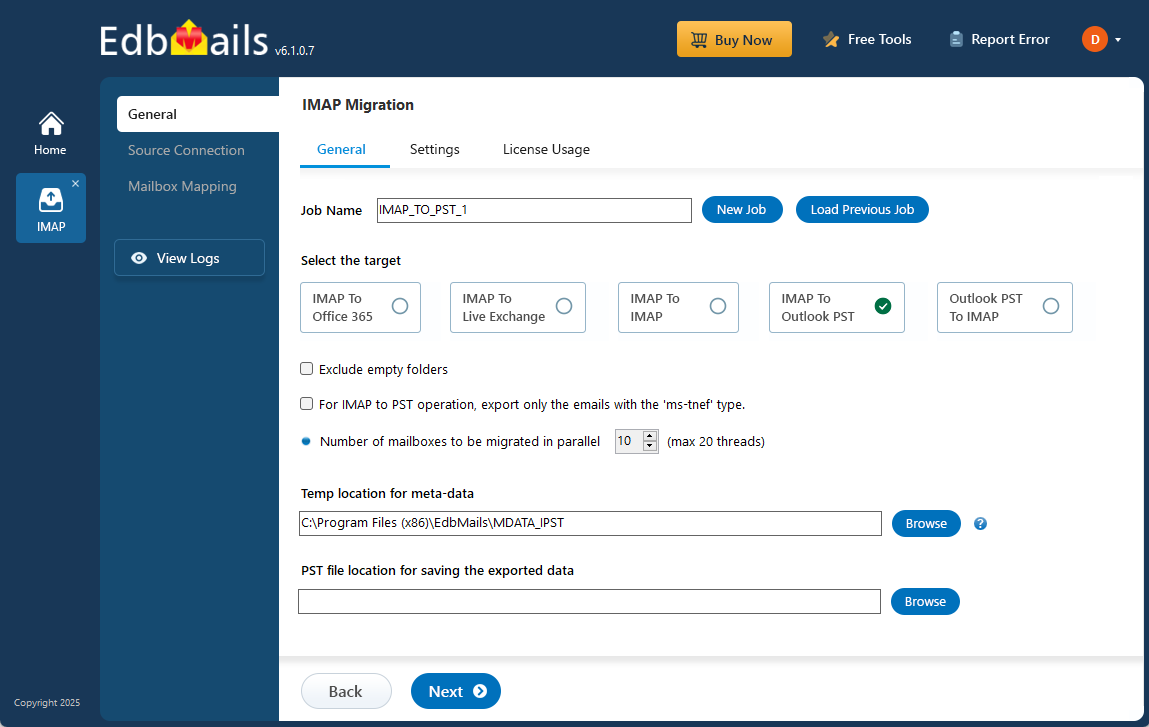
The EdbMails IMAP Migration Tool includes an IMAP to PST export workflow for backing up supported email data from single or multiple IMAP mailboxes to Outlook PST files. Administrators can load mailboxes individually or through CSV, preview mailbox folders, select the required data, apply supported filters, choose the PST destination, start the export, and review the operation from the export report. The workflow is suitable for providers such as Gmail, Yahoo Mail, Zoho Mail, Zimbra, cPanel, Plesk, GoDaddy, Rackspace, Amazon WorkMail, and other standards-compliant IMAP environments.
Important PST note: Large PST files can become harder to manage and may affect Outlook performance. Use the available PST split option where appropriate and keep adequate free disk space for the export. Do not treat a single very large PST file as an unlimited archive.
Why use EdbMails for IMAP to PST export and backup?
- Bulk mailbox export: Prepare multiple IMAP accounts through CSV instead of configuring every mailbox individually.
- Selective PST export: Choose specific mailboxes, folders, and supported filter criteria so the PST contains only the email data required for the backup or archive.
- Mailbox preview: Review mailbox folders before starting the export so the selected scope can be checked in advance.
- PST split option: Split large output PST files into more manageable files where required for storage and Outlook handling.
- Folder hierarchy preservation: Keep supported mailbox folder structure and common email properties in the exported PST.
- Export reports: Review processed item counts, mailbox or folder status, and any errors or warnings after the operation.
See the IMAP to PST screenshots and IMAP to PST video for additional guidance.
Prerequisites for IMAP to PST Export
- Source IMAP access: Confirm that IMAP is enabled and collect the correct host name, port, TLS/SSL requirement, email address, and authentication method for each source mailbox.
- Bulk mailbox list: For multiple accounts, download the EdbMails sample CSV and enter the required mailbox details. Validate a small test set before loading the full production list.
- Provider-specific authentication: Use the authentication method supported by the provider. For Gmail or Google Workspace, use an app password only where the account policy and selected EdbMails workflow permit it.
- Supported Microsoft Outlook installation: The EdbMails IMAP to PST workflow requires the Outlook components specified in the current IMAP system requirements. Install applicable Outlook updates before a production export.
- Outlook profile: Create and validate the Outlook profile required by the EdbMails PST export workflow before starting the export.
- Storage capacity: Ensure the selected destination has enough free space for the exported PST files and additional working space. Avoid saving actively used PST files in locations that can cause sync or file-locking issues.
- Pilot export: Export a representative mailbox or folder first and verify the PST in Outlook before starting a large multi-mailbox job.
Step-by-Step Guide to Export IMAP to PST
Step 1: Download and install EdbMails
- Download and install EdbMails on a Windows computer that meets the current IMAP to PST system requirements.
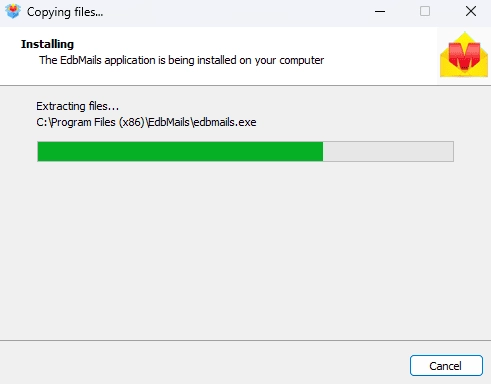
- Start the EdbMails application on your system.
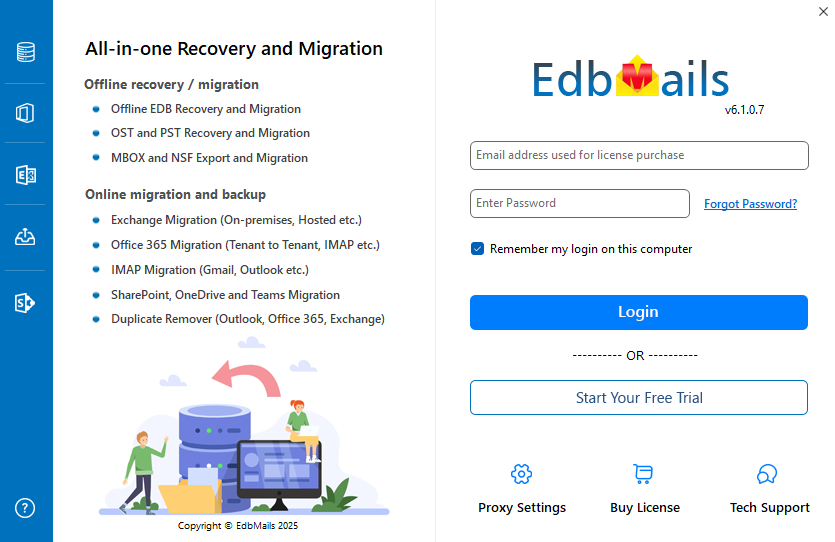
- Enter your registered email ID and password, then click ‘Login’. If you haven’t registered yet, choose ‘Start Your Free Trial’ to continue with the trial version.Note: The free trial lets you evaluate the IMAP to PST workflow and export up to 30 items from each folder. To export all eligible items for licensed mailboxes, purchase the required IMAP migration license.
See the complete list of system requirements for IMAP to PST export.
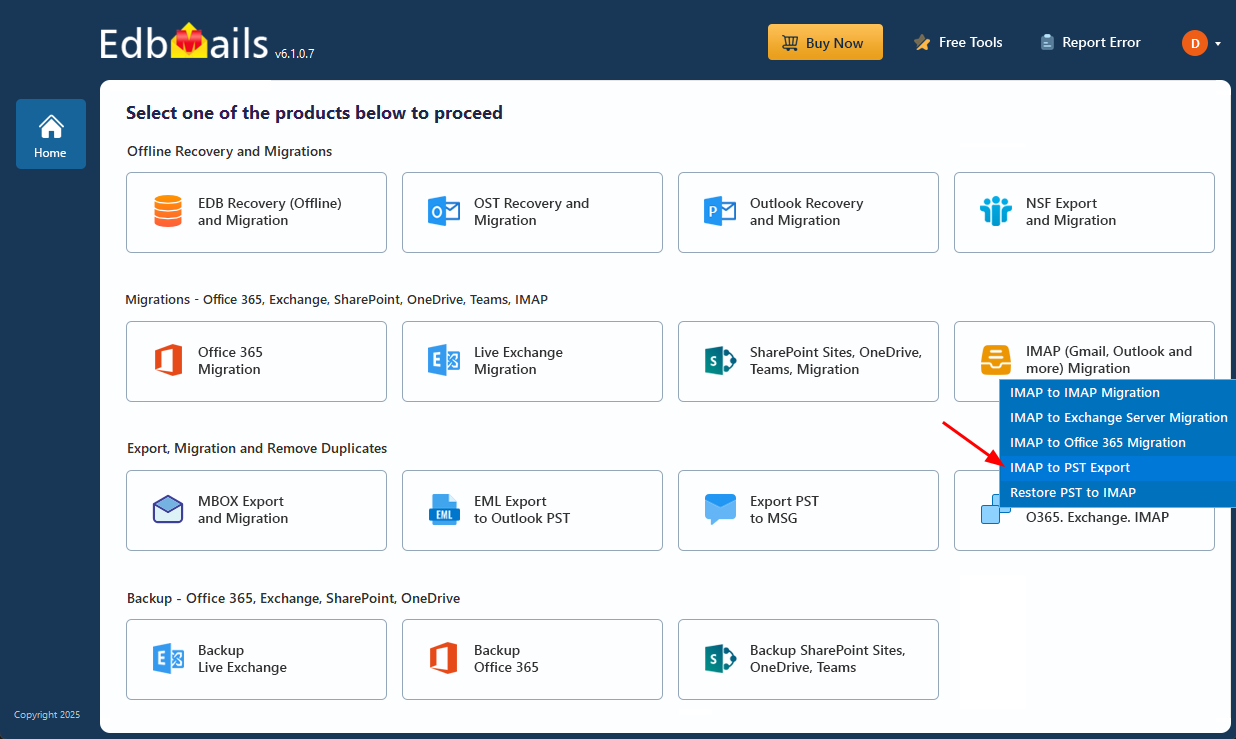
- Select the option ‘IMAP (Gmail, Outlook & more) Migration’
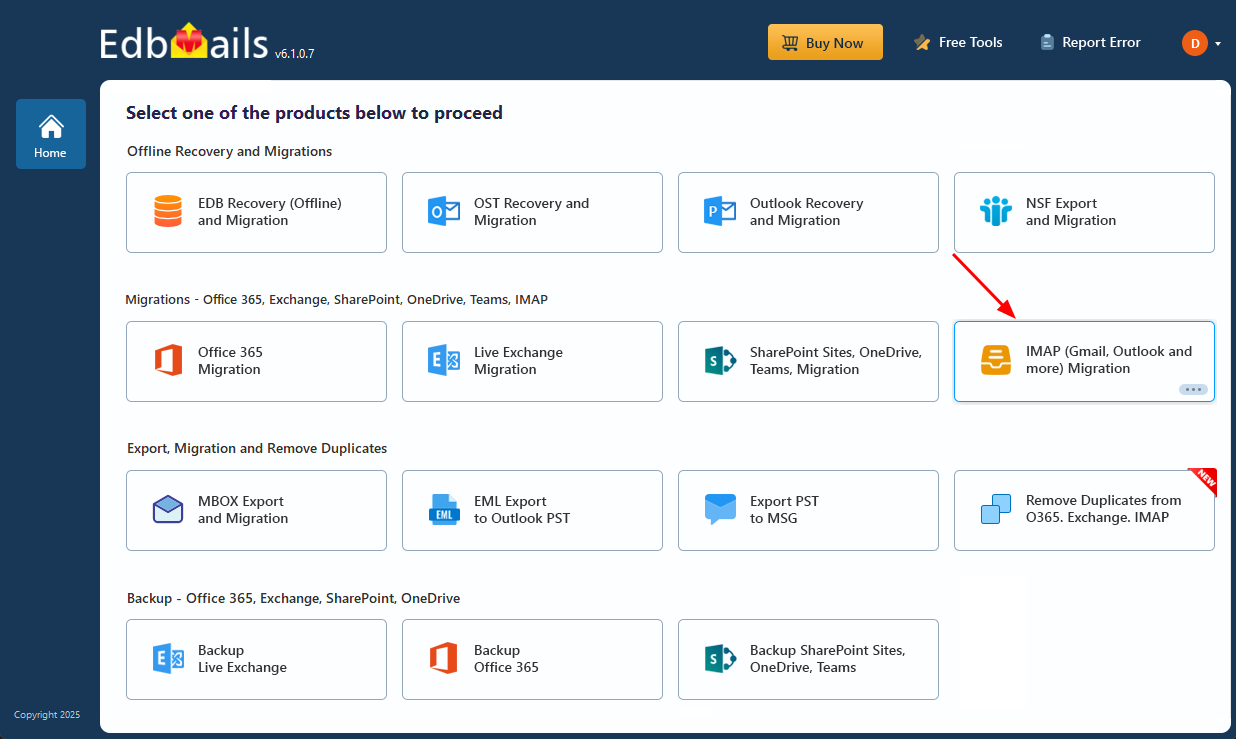
- Select ‘IMAP to PST Export’.
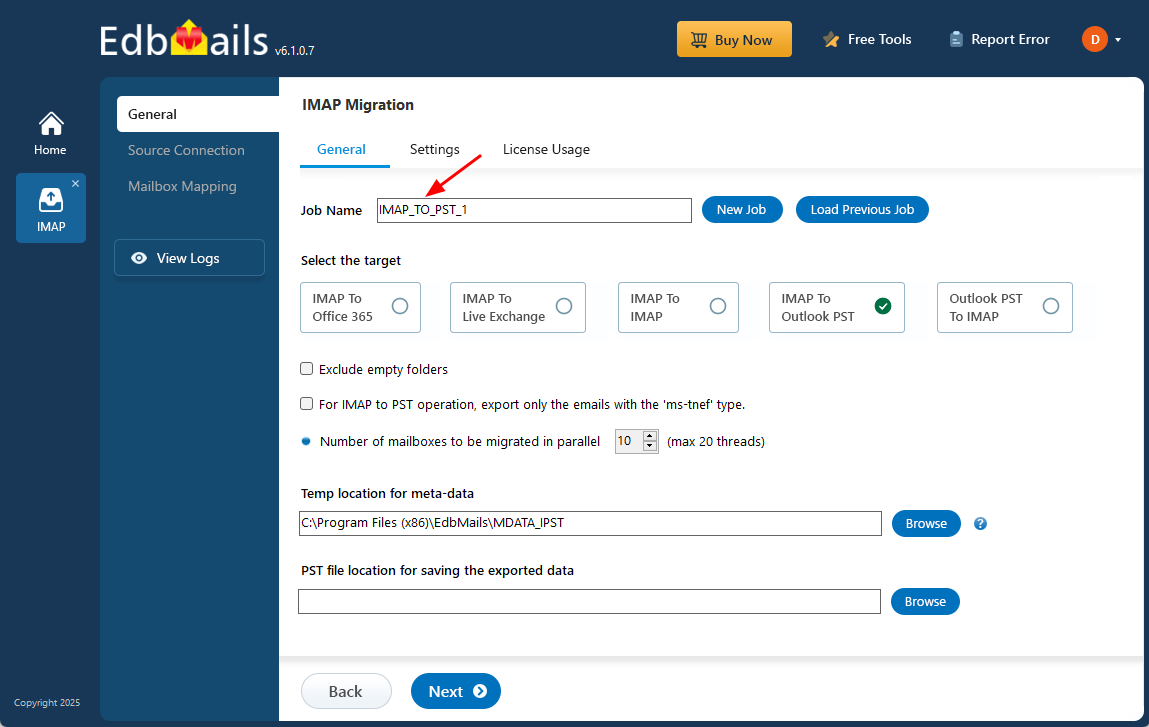
- You can proceed using the automatically assigned job name or choose ‘New Job’ to set a name of your choice before continuing with the process.
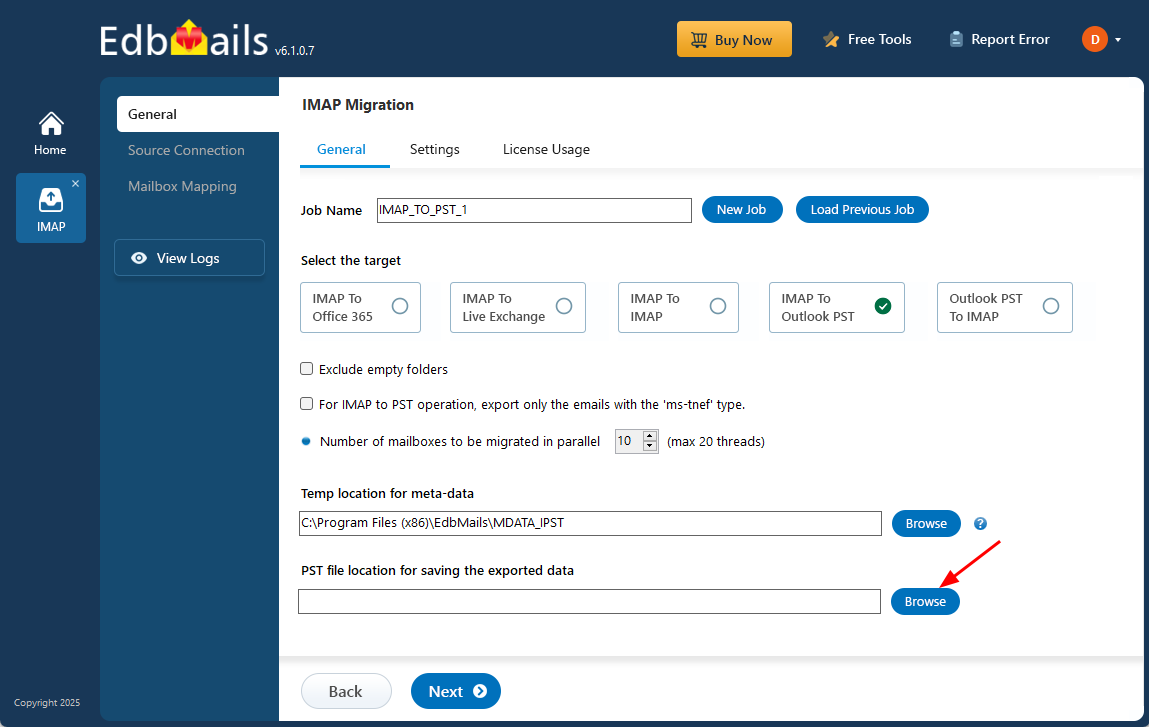
- Click the ‘Browse’ button to choose the location where the PST file will be saved for the exported data.
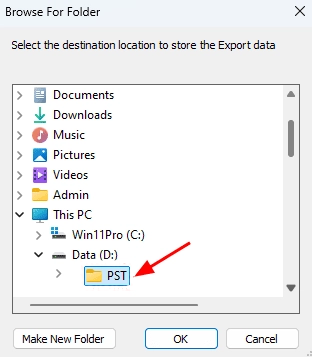
- Select a destination on your computer to store the exported PST files and ensure the selected drive has sufficient free space to handle the file size.
- Download and install EdbMails on a Windows computer that meets the current IMAP to PST system requirements.
Step 2: Connect to Source IMAP Server
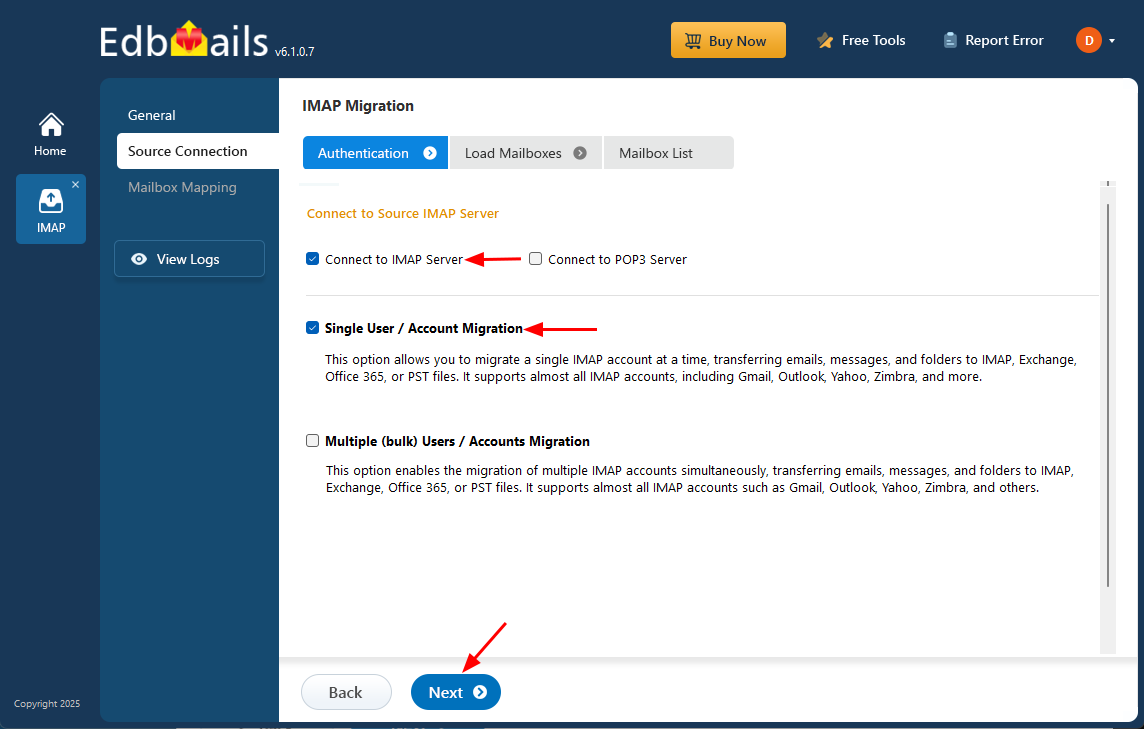
- To migrate a single account, select ‘Single User / Account Migration’, choose the required option such as ‘Connect to IMAP Server’ or ‘Connect to POP3 Server’, and then click ‘Next’ to proceed.
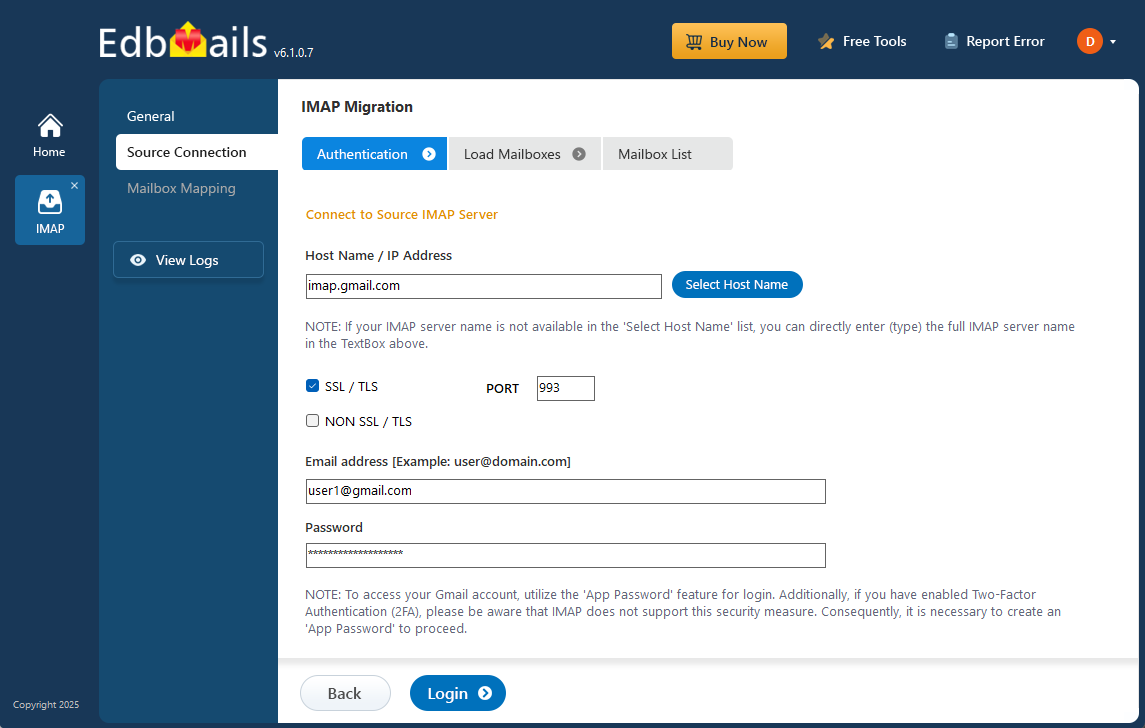
- Select the correct IMAP host name from the list or enter it manually, then provide the source email address and authentication credential required by that provider. For Gmail or Google Workspace, use an app password only where the account policy and EdbMails workflow allow it.
- Click the ‘Login’ button.
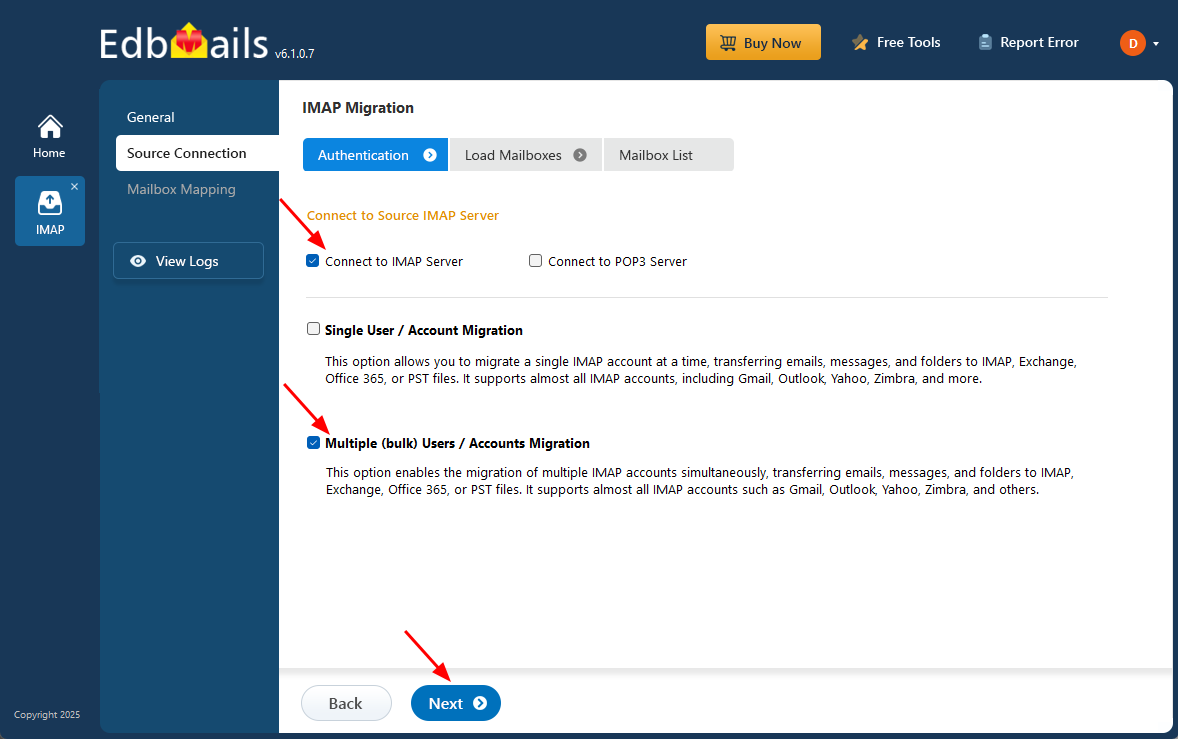
- For migrating multiple mailboxes, choose ‘Multiple (bulk) Users/Accounts Migration’, then select the appropriate option such as ‘Connect to IMAP Server’ or ‘Connect to POP3 Server’, and then click ‘Next’.
- Download the ‘Sample.CSV’ file by clicking ‘IMAP Migration CSV File’.
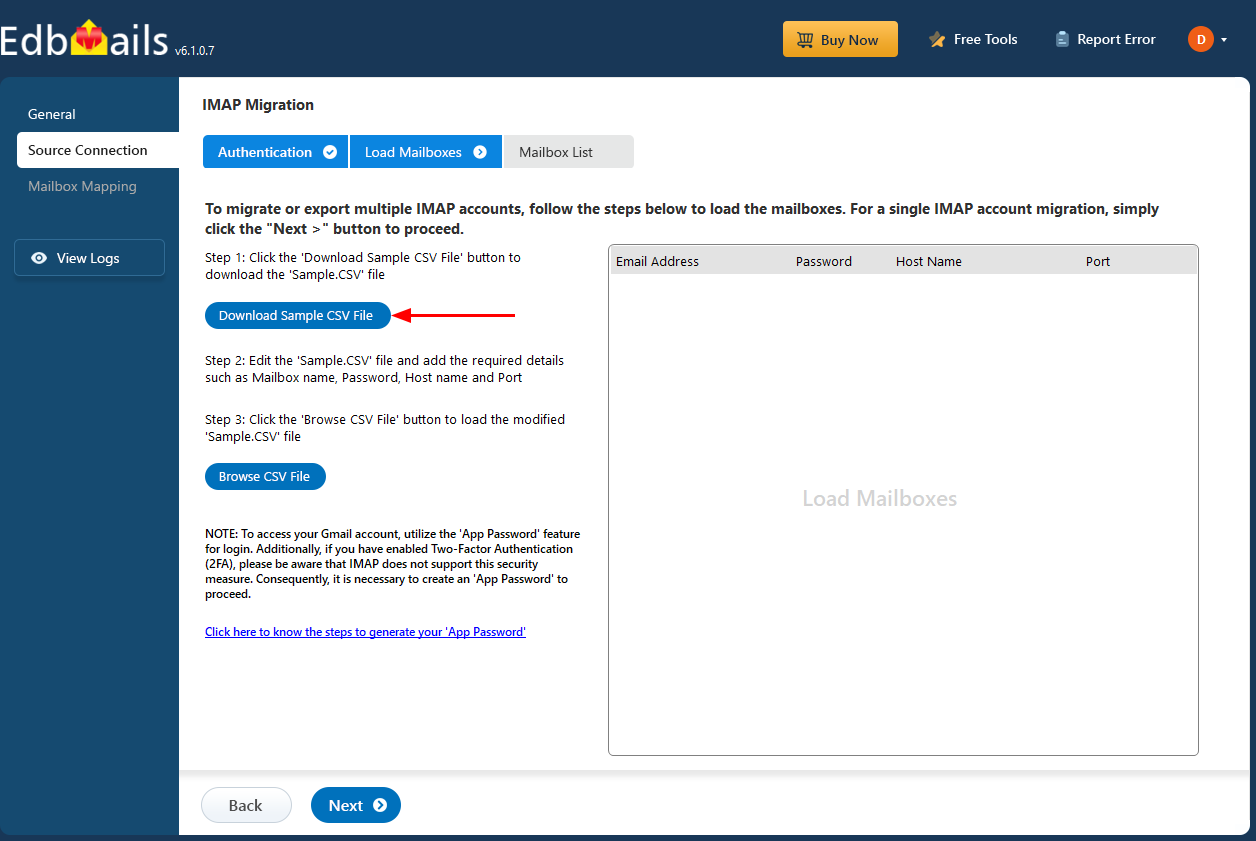
- Update the source CSV with the required email address, authentication credential, IMAP host name, and port for each mailbox, then save the file.
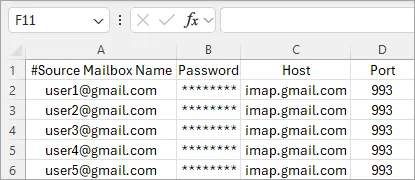
- Close the CSV file, then click 'Load Modified CSV File' and choose the modified ‘Sample.CSV’ file.
- Verify the mailboxes, and click 'Next'.
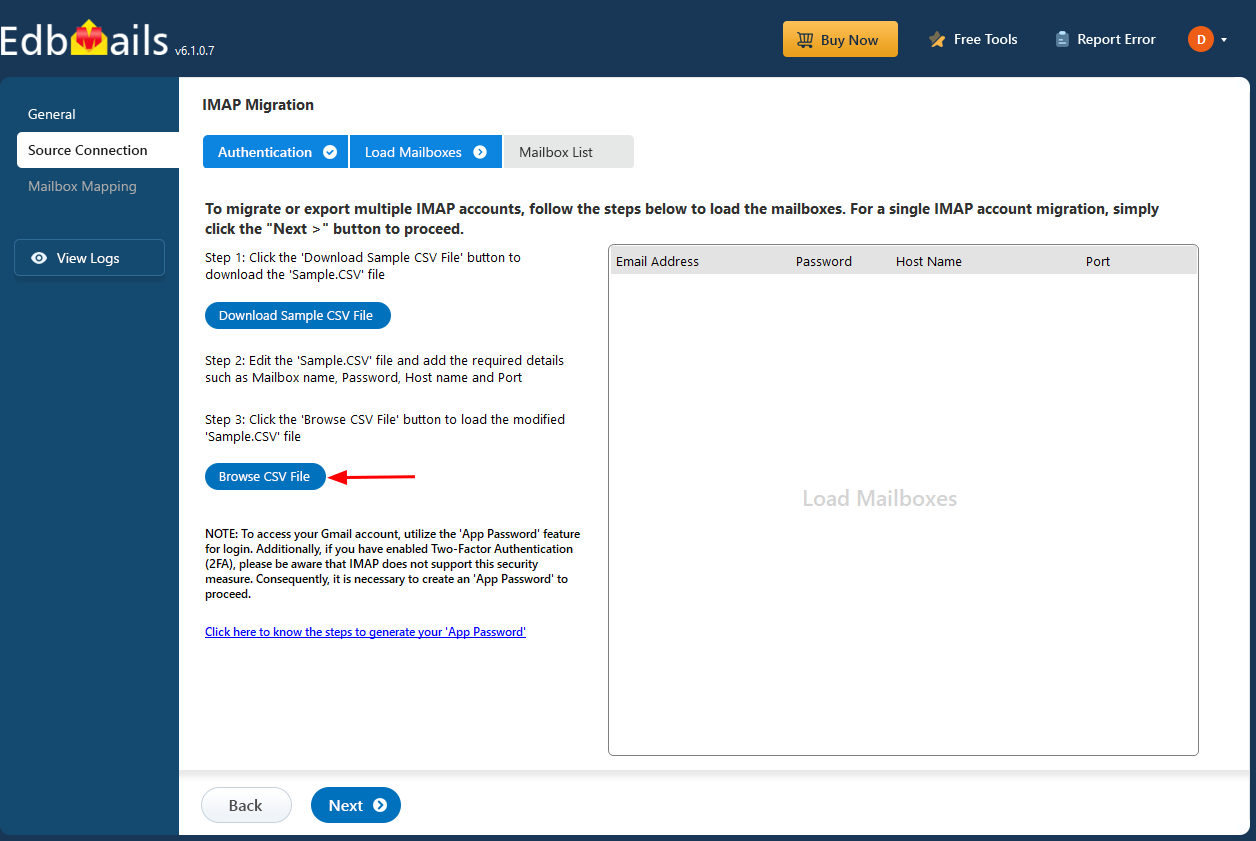
- To migrate a single account, select ‘Single User / Account Migration’, choose the required option such as ‘Connect to IMAP Server’ or ‘Connect to POP3 Server’, and then click ‘Next’ to proceed.
Step 3: Select Source IMAP mailboxes
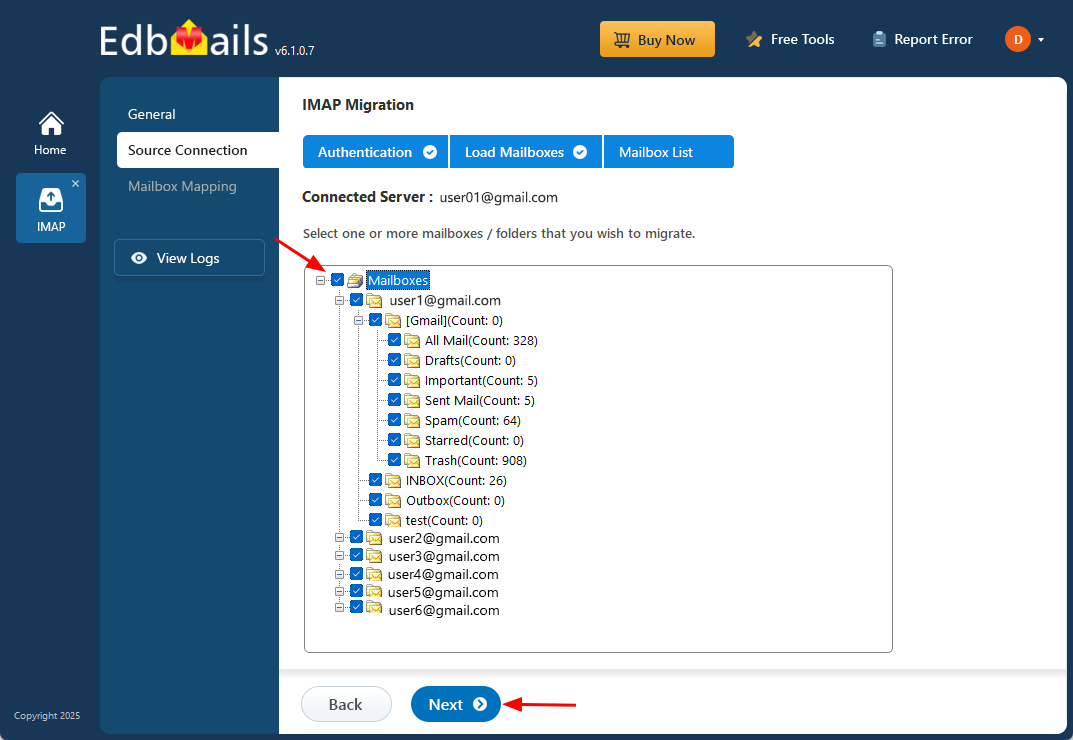
- Choose the mailboxes or particular folders you need to migrate and once your selection is complete, click ‘Next’ to proceed.
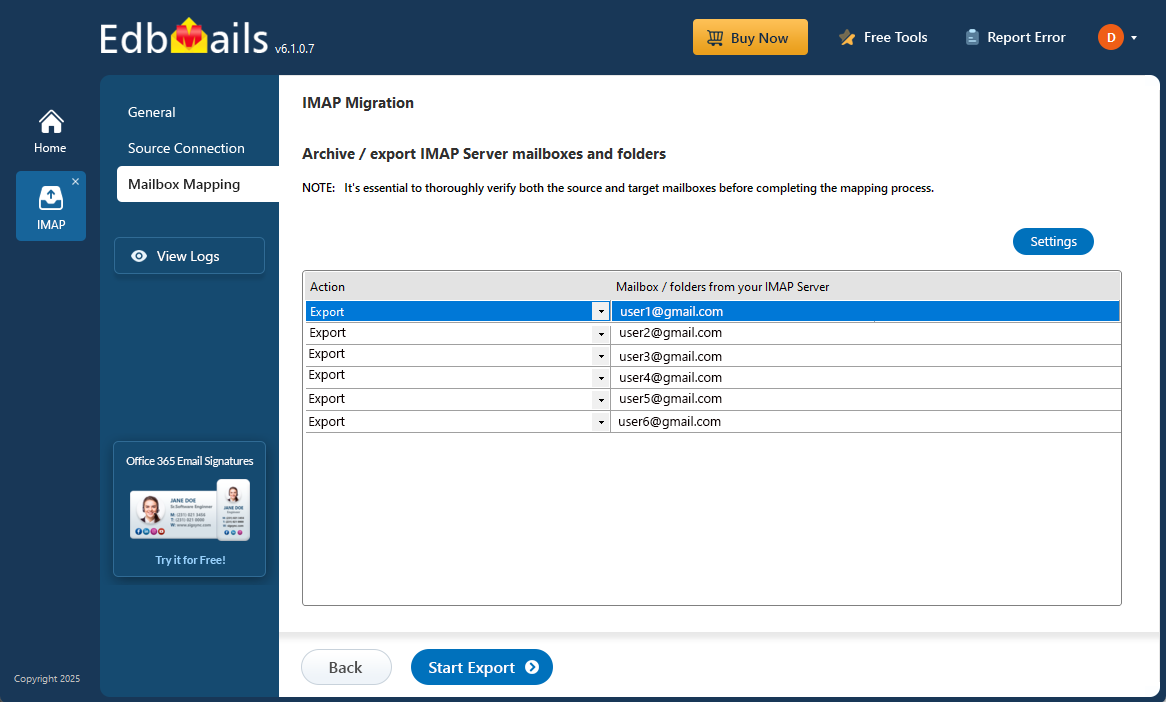
- Review the selected source mailboxes and folders and confirm that the ‘Action’ is set to ‘Export’ before starting the PST export.
- Choose the mailboxes or particular folders you need to migrate and once your selection is complete, click ‘Next’ to proceed.
Step 4: Start the IMAP to PST Export
- To begin the export, click on ‘Start Export’
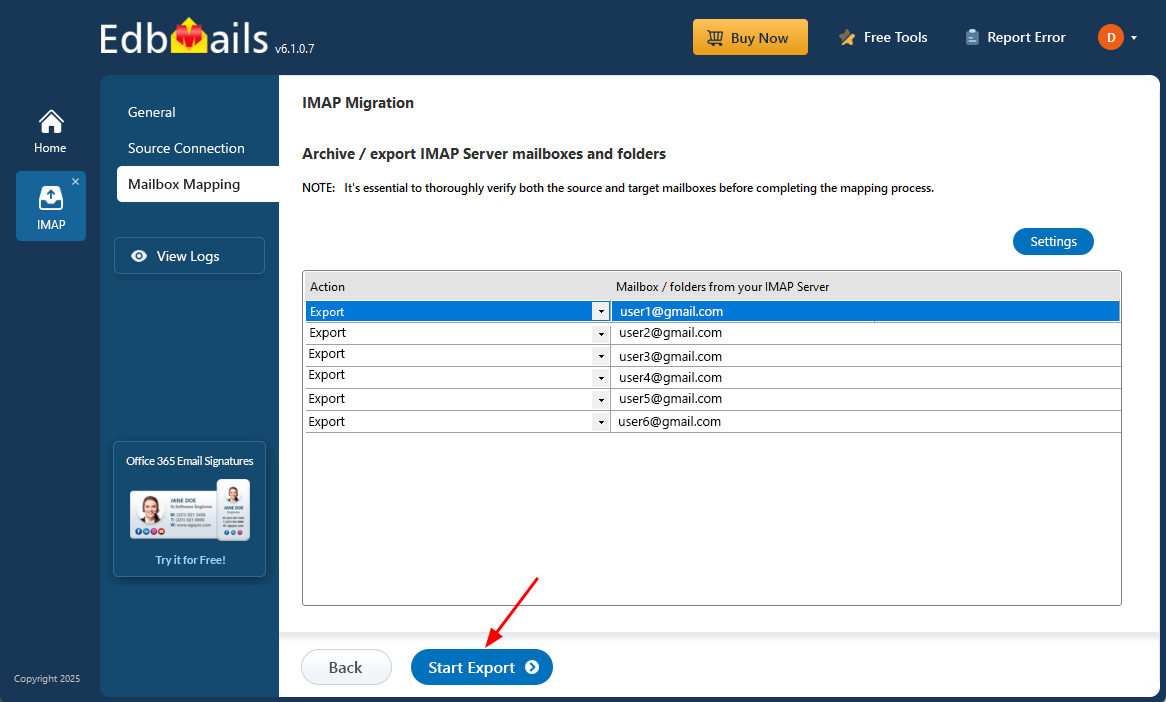
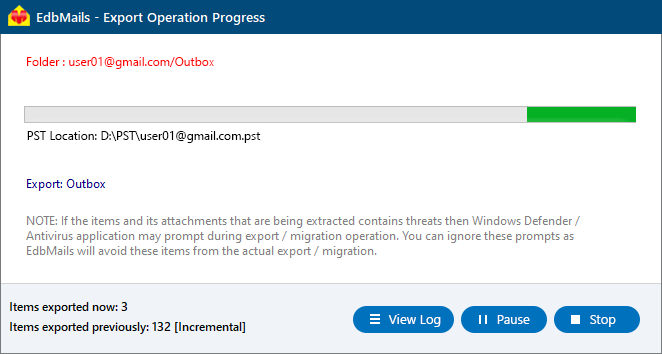
- Monitor the export progress in EdbMails. After the operation completes, select ‘View Log’ to review the export report, including processed item counts and any errors or warnings. Verify the output PST in Outlook and check representative folders, messages, and attachments before treating the backup as complete.
- To begin the export, click on ‘Start Export’
Why choose EdbMails IMAP to PST Converter?
- Export single or multiple IMAP mailboxes to PST
Use the same workflow for a single mailbox or prepare multiple IMAP accounts through CSV for a larger backup or archiving project.
- Works with IMAP-enabled providers and servers
EdbMails supports standards-compliant IMAP environments and commonly used providers such as Gmail, Yahoo Mail, Zoho Mail, Zimbra, cPanel, Plesk, GoDaddy, Rackspace, Amazon WorkMail, Dovecot, and other IMAP-enabled systems. Connection success depends on IMAP access, provider authentication requirements, and network availability.
- Selective email and folder export
Select the required mailboxes and folders and use supported filters to limit the PST export to the email data required for the project. See the IMAP migration filter settings.
- Split large PST output
Use the PST split option to keep large exports in more manageable files rather than relying on a single oversized PST. This can make storage, transfer, and Outlook access easier to manage.
- Preserve supported email structure and properties
EdbMails is designed to preserve supported folder hierarchy, messages, attachments, and common email properties in the PST. Always verify representative data after export because provider-specific and Outlook/PST constraints can affect individual items.
- Preview and verify the export scope
Review mailbox content and folder selection before the export and verify the resulting PST in Outlook after completion. Use the export report to identify errors or items that require another pass.
- PST viewing and management options
EdbMails provides a free PST viewer for examining PST data. If multiple PST files later need to be consolidated, use the dedicated PST merge tool.
- Free trial and 24/7 technical support
Use the free trial to validate a representative mailbox before purchase. EdbMails also provides 24/7 technical support for connection, export, PST, and verification issues.
Manual Outlook export vs EdbMails IMAP to PST export
Microsoft Outlook provides a native PST export option after an IMAP account is added to Outlook and the required mailbox content is available locally. That method can work well for an occasional single-mailbox export. For an administrator handling many mailboxes, EdbMails adds a job-based workflow with CSV account loading, selective folder export, reporting, and PST split options.
| Requirement | Manual Outlook export | EdbMails workflow |
|---|---|---|
| Single mailbox export | Supported | Supported |
| Multiple IMAP accounts | Handled one account at a time in the Outlook export workflow | Bulk account preparation through CSV |
| Folder selection | Supported | Supported |
| Migration/export filters | Limited to the Outlook export workflow | Supported EdbMails filters and folder exclusions |
| PST split option | Not part of the standard Outlook export wizard | Available in EdbMails |
| Export report | No EdbMails-style migration report | Available for operation verification |
IMAP to PST Export and Backup FAQs
- What is IMAP to PST export?
IMAP to PST export creates an Outlook PST copy of supported email data stored on an IMAP server. It is commonly used for local backup, offline access, archiving, or mailbox handoff.
- What IMAP data can be exported to PST?
The IMAP workflow is primarily for supported email messages, attachments, folders, folder hierarchy, and common message properties. Contacts, calendars, tasks, and rules are not standard IMAP mailbox data and require a separate workflow.
- Can EdbMails export multiple IMAP mailboxes to PST?
Yes. Multiple IMAP accounts can be prepared through CSV and exported as part of the same project workflow, subject to the licensed mailbox scope and available system resources.
- Does EdbMails require Outlook for IMAP to PST export?
The EdbMails IMAP to PST workflow requires the Outlook components specified in the current EdbMails system requirements. Verify the supported Outlook and Windows environment before starting the export.
- Can I split a large PST during IMAP export?
Yes. EdbMails provides a PST split option that can be used to keep large output files in more manageable parts. This is useful because very large PST files can be harder to store, transfer, and use efficiently in Outlook.
- How do I verify an IMAP to PST backup?
Review the export report, open or inspect the resulting PST in a supported Outlook environment, and check representative folders, messages, attachments, and item counts. Resolve any errors before treating the backup as complete.