


Zimbra to Office 365 Migration
Many organizations are transitioning from Zimbra to Office 365 to benefit from the flexibility, collaboration capabilities, and cloud services offered by Microsoft 365, including Teams, SharePoint, and OneDrive. Although Zimbra provides dependable email hosting, it may fall short for businesses that need deeper integration, centralized administration, and greater scalability. At the same time, migrating to Office 365 is not without challenges, as differences in data formats, mailbox mapping, authentication methods, and the need to maintain uninterrupted access to emails.
The EdbMails IMAP Migration Tool provides a guided Zimbra-to-Microsoft 365 email migration workflow for single mailboxes and bulk projects. It migrates supported messages, attachments, mail folders, and common message properties exposed through IMAP, with selective migration options, mailbox mapping, migration reports, and incremental follow-up runs. For broader destination planning and cutover guidance, use the IMAP to Office 365 migration guide.
User Query Response
Query: “Hello EdbMails team. Previously, we used Zimbra for email communication. However, as our organization has grown across the globe, we intend to migrate to Microsoft Office 365. We have no idea how to migrate large amounts of data. Can you recommend a solution or a step-by-step procedure to make our move go as smoothly as possible?”
Why organizations migrate from Zimbra to Microsoft 365
Organizations may move Zimbra email to Microsoft 365 when they want Exchange Online together with Microsoft collaboration, identity, administration, and security services.
- Microsoft 365 collaboration ecosystem
Exchange Online integrates with services such as Outlook, Teams, OneDrive, and SharePoint, helping organizations centralize communication and collaboration.
- Centralized administration
Microsoft 365 provides tenant-level administration for users, mailboxes, access, security policies, and service configuration.
- Scalable licensing options
Organizations can select Microsoft 365 or Exchange Online plans based on mailbox, application, security, compliance, and archiving requirements.
- Security and compliance capabilities
Depending on the selected plan, Microsoft 365 supports capabilities such as multi-factor authentication, anti-spam and anti-malware protection, encryption, retention, and compliance policies.
- Cloud-based access
Users can access their Microsoft 365 mailboxes and permitted applications through supported web, desktop, and mobile clients.
- Microsoft 365 collaboration ecosystem
Zimbra to Office 365 Migration Planning
Planning is one of the most important factors before you migrate email from Zimbra to Office 365. You must prepare the source and target environments and have a backup plan in place to avoid potential risks and data loss. Here is a checklist of points to consider for the migration.
- Determine the size of the data and number of mailboxes you want to migrate from Zimbra to Office 365.
- Make a list of all the data and permissions from Zimbra that you want to transfer.
- Create appropriate user mailboxes on Office 365 and assign licenses to them.
- Ensure you have enough network capacity and bandwidth to migrate.
- Communicate the migration plan to your end users and inform the stakeholders.
- Perform a test or pilot migration before you start the actual one
Zimbra to Office 365 Migration Prerequisites
On the Zimbra Server:
- Ensure you have the Zimbra Mail server’s hostname, port number, email address, and password ready.
- If you’re migrating multiple users, download the sample CSV file from the EdbMails application, update it with the necessary details like email address, password, IMAP hostname, and port number, then save the file
On the Office 365 Server:
Before beginning the migration from Zimbra to Office 365, ensure that all user mailboxes are set up and properly licensed. You have two options for mailbox creation:
- Allow EdbMails to automatically create mailboxes for your users.
- Alternatively, manually create mailboxes through the Office 365 Admin Center. You can refer to the following guides for assistance:
- How to add users and assign licenses in Office 365?
- Adding multiple users at once in Office 365
- Assigning Microsoft 365 licenses to user accounts
If you're using a custom email domain from Zimbra and want to continue receiving emails after migration, make sure to add and verify the domain in Office 365.
You’ll need to follow the steps to:
- Add a custom domain to Office 365
- Set up the DNS records to connect your domain to Office 365
Additionally, configure Office 365 to handle larger emails by following the steps to increase the maximum email size.
Steps to migrate email from Zimbra to Office 365
Step 1: Download and install EdbMails IMAP migration Software
- Download EdbMails and install it on a Windows-based computer to get started with the Zimbra to Office 365 migration process.
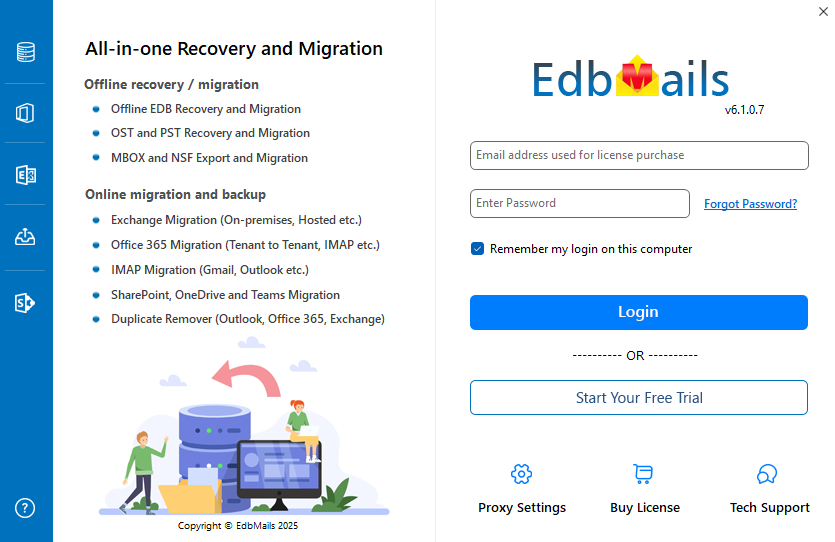
- Launch the EdbMails application on your system.
- Enter your registered email address and password, then click ‘Login’. If you’re using EdbMails for the first time, choose ‘Start Your Free Trial’ to proceed with the trial version.Note: The trial edition provides the major migration features and allows you to migrate up to 30 items per folder. To remove the trial item limit, purchase a valid IMAP Migration license from the official EdbMails website.After completing the purchase, close and reopen the application, then log in again using the same email address and password you used to buy the license to ensure successful activation.
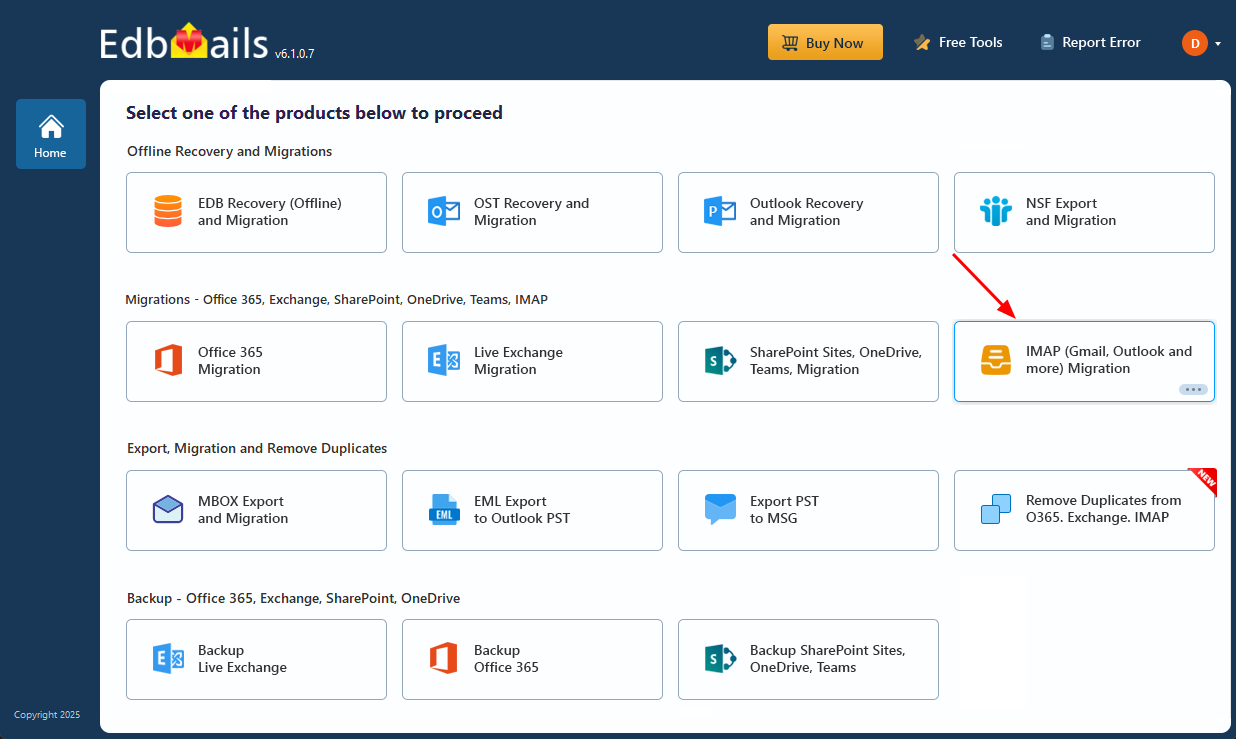
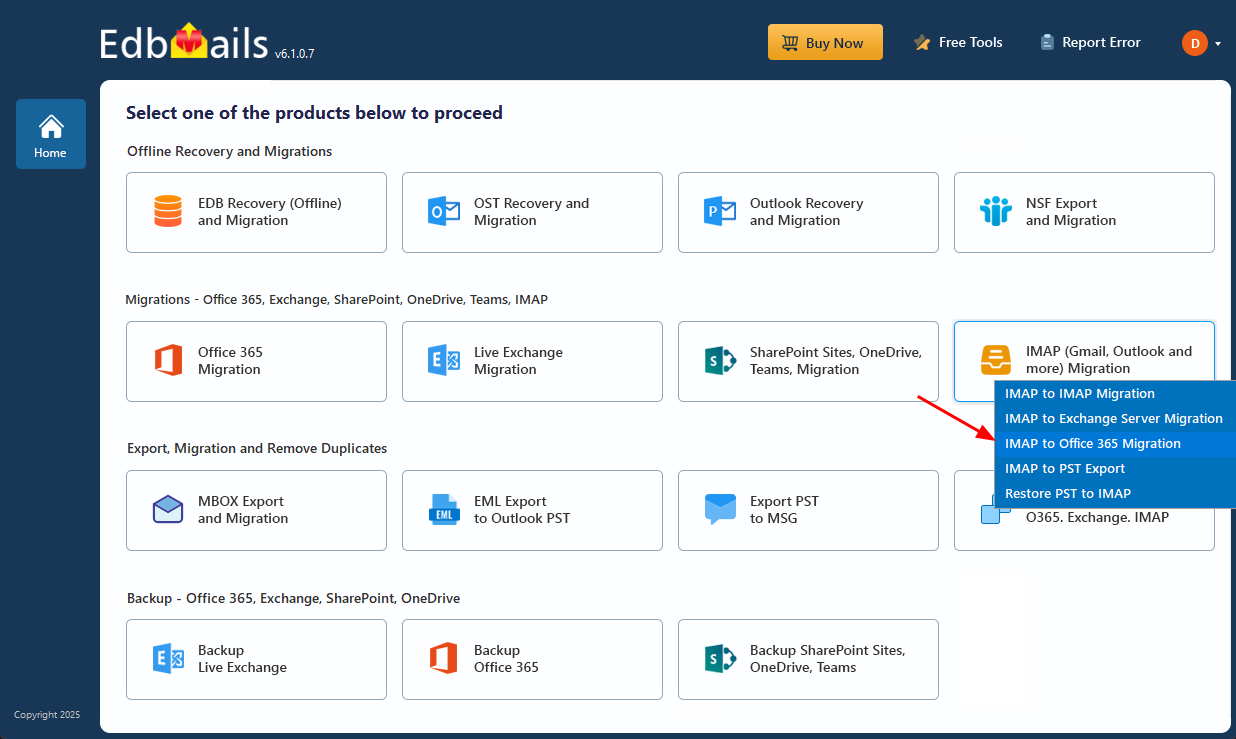
- Select the option ‘IMAP (Gmail, Outlook & more) Migration’
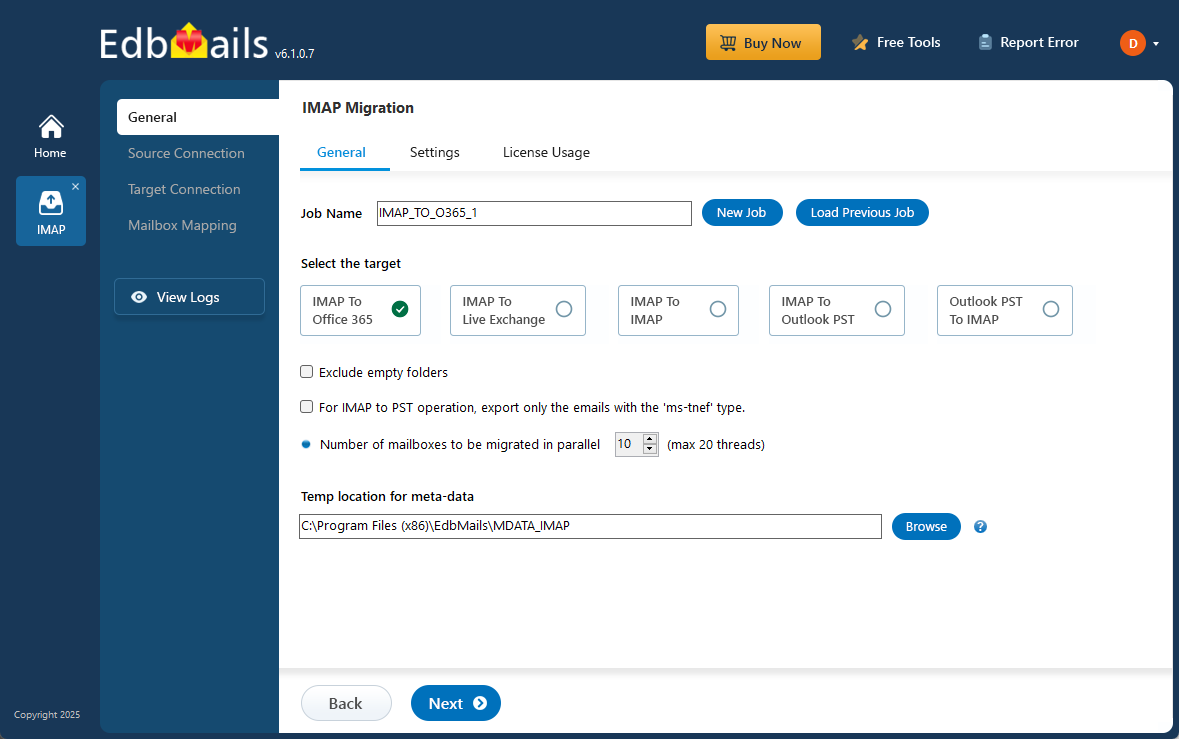
- Select ‘IMAP to Office 365 Migration’.
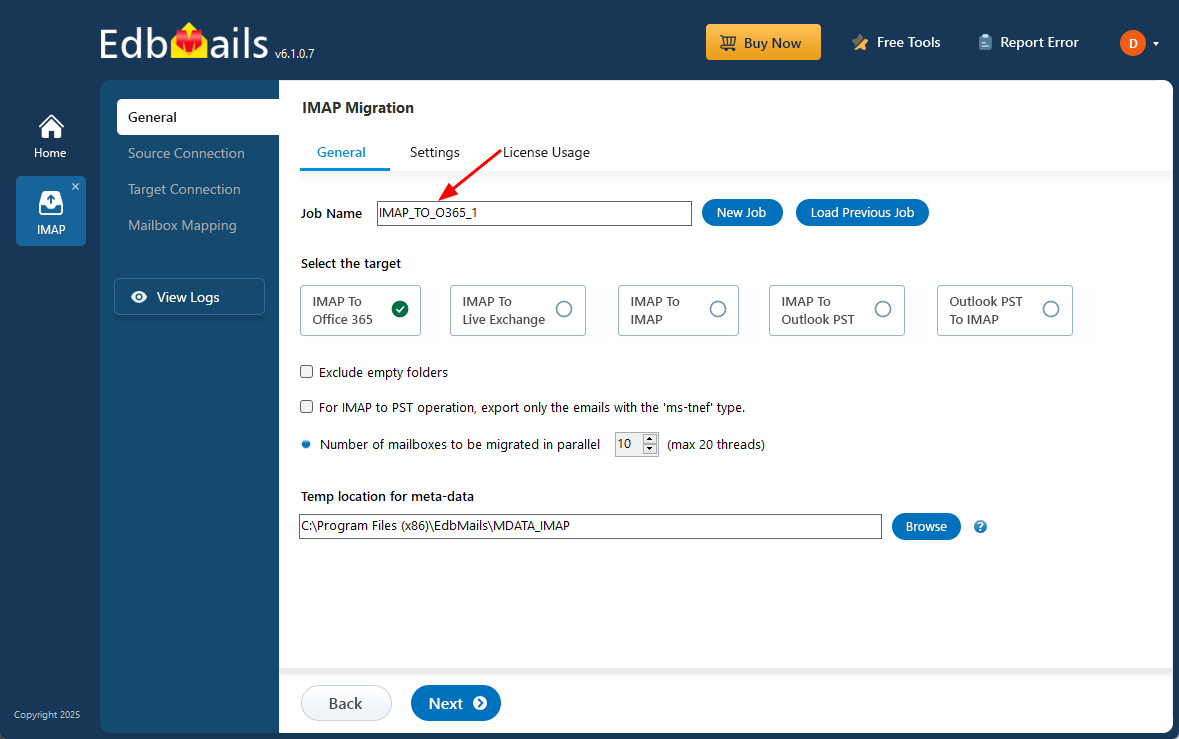
- A default job name is assigned automatically. If needed, click ‘New Job’ to rename it with a custom title for easier identification.
- Download EdbMails and install it on a Windows-based computer to get started with the Zimbra to Office 365 migration process.
Step 2: Connect to Source Zimbra Mail Server
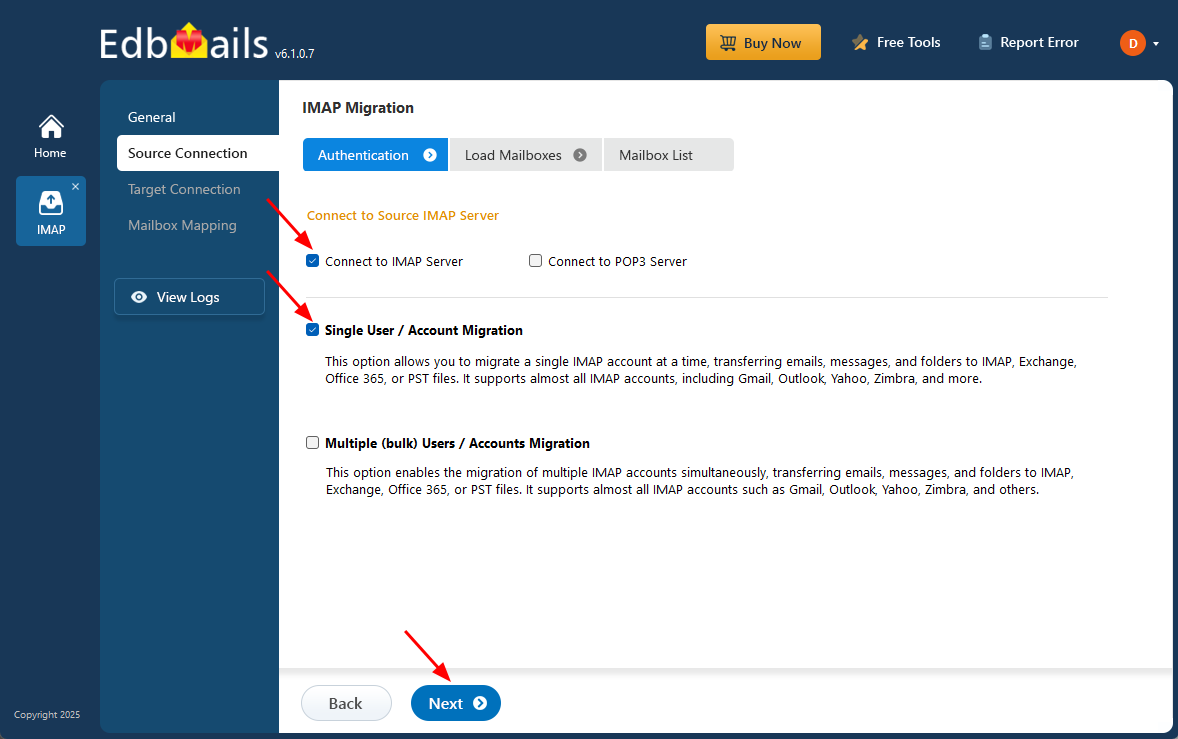
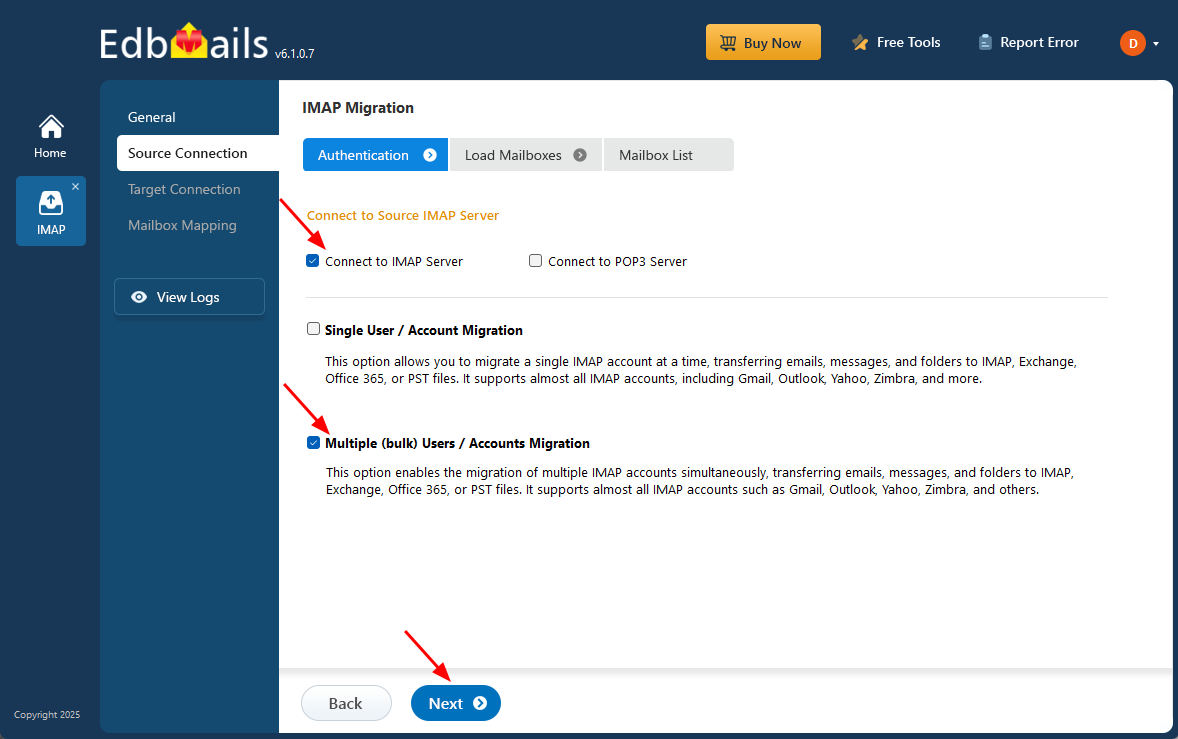
- To migrate a single account, select ‘Single User / Account Migration’, choose the suitable connection option such as ‘Connect to IMAP Server’ or ‘Connect to POP3 Server’.
- Click ‘Next’ to proceed.
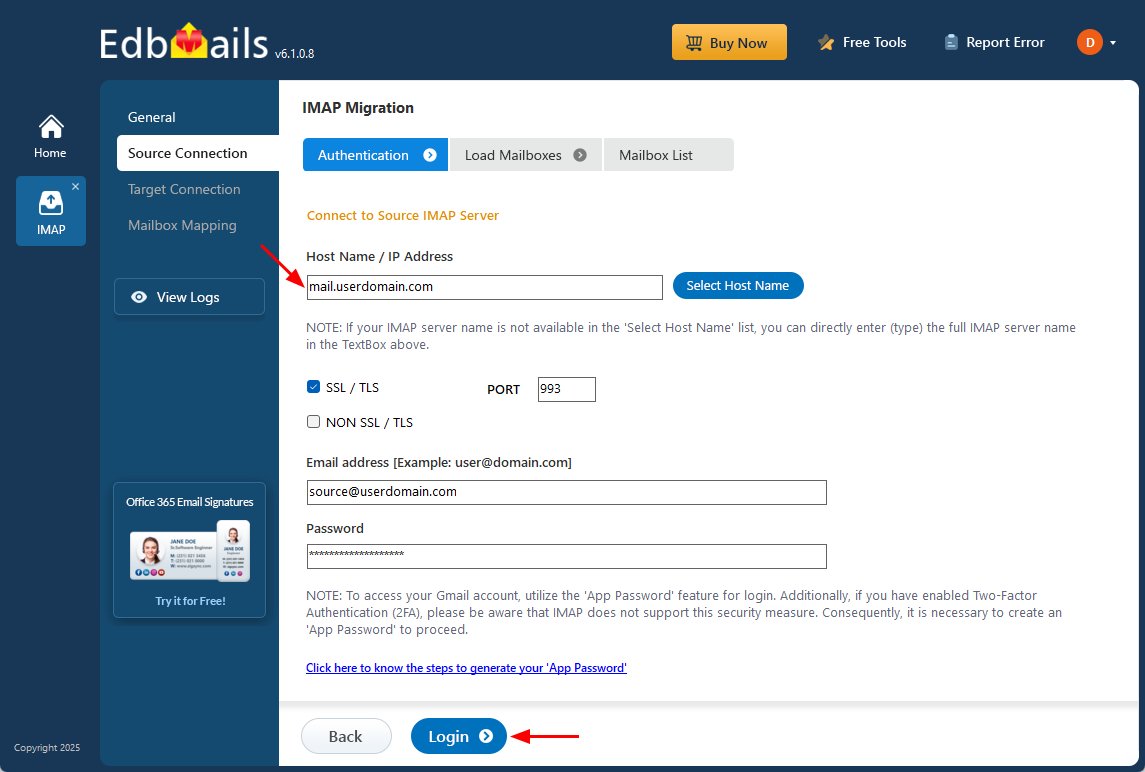
- For a single user login, pick the correct IMAP host name for your Zimbra server from the list, or type it in manually if it's not listed.
- Then, enter the email address and password.
- Click the ‘Login’ button.
- To migrate multiple Zimbra mailboxes at once, select ‘Multiple (bulk) Users/Accounts Migration’, choose the suitable connection method such as ‘Connect to IMAP Server’ or ‘Connect to POP3 Server’, and then proceed by clicking ‘Next’.
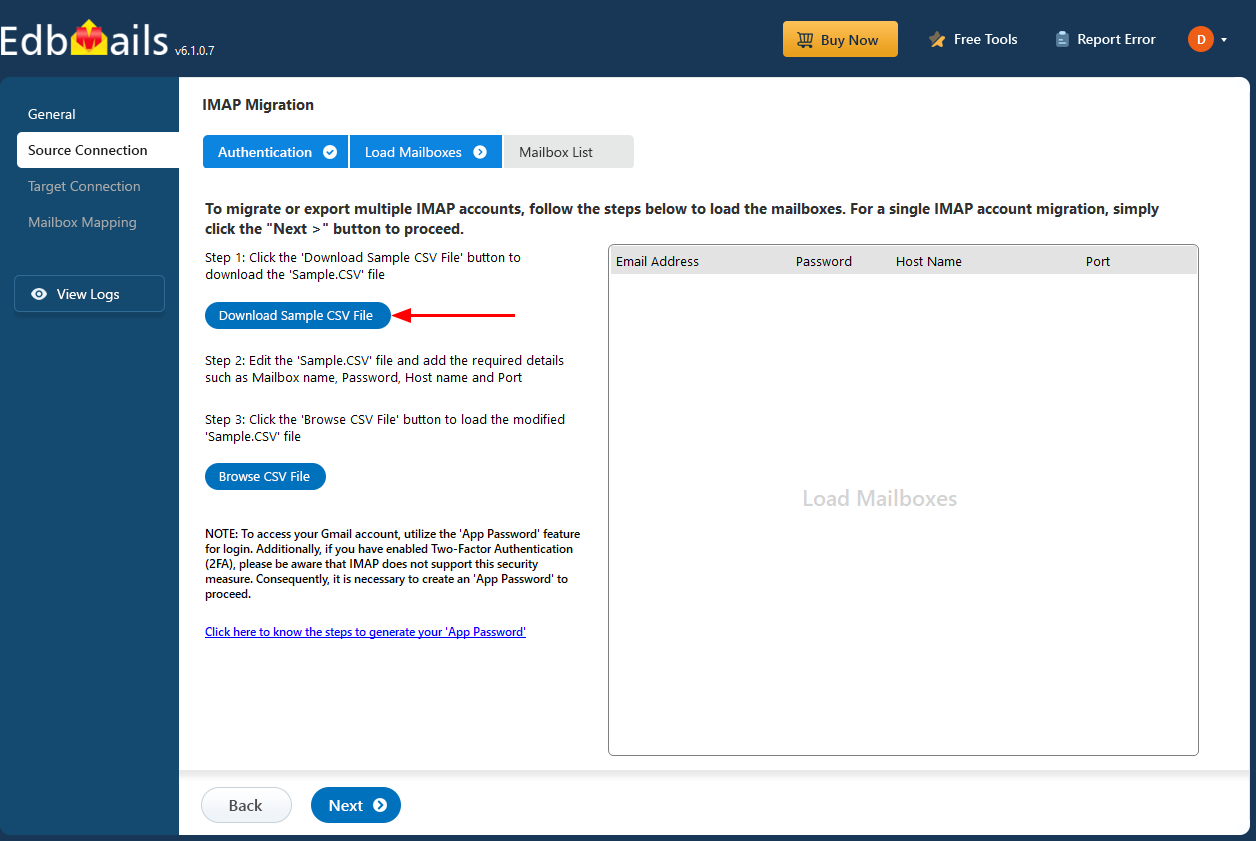
- Select ‘IMAP Migration CSV File’ to download the ‘Sample.CSV’ file, which will be saved to your local drive for reference.
- Open the sample CSV file and enter the required details, such as the email address, password, host name, and port number.
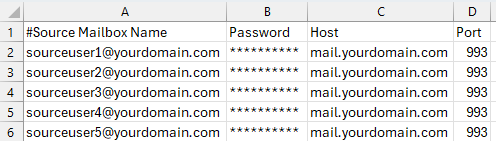
- After entering the required details in the CSV file, save your changes and close the file to continue with the next steps.
- Next, click the 'Load Modified CSV File' button, locate your updated CSV file, select it, and open it to proceed.
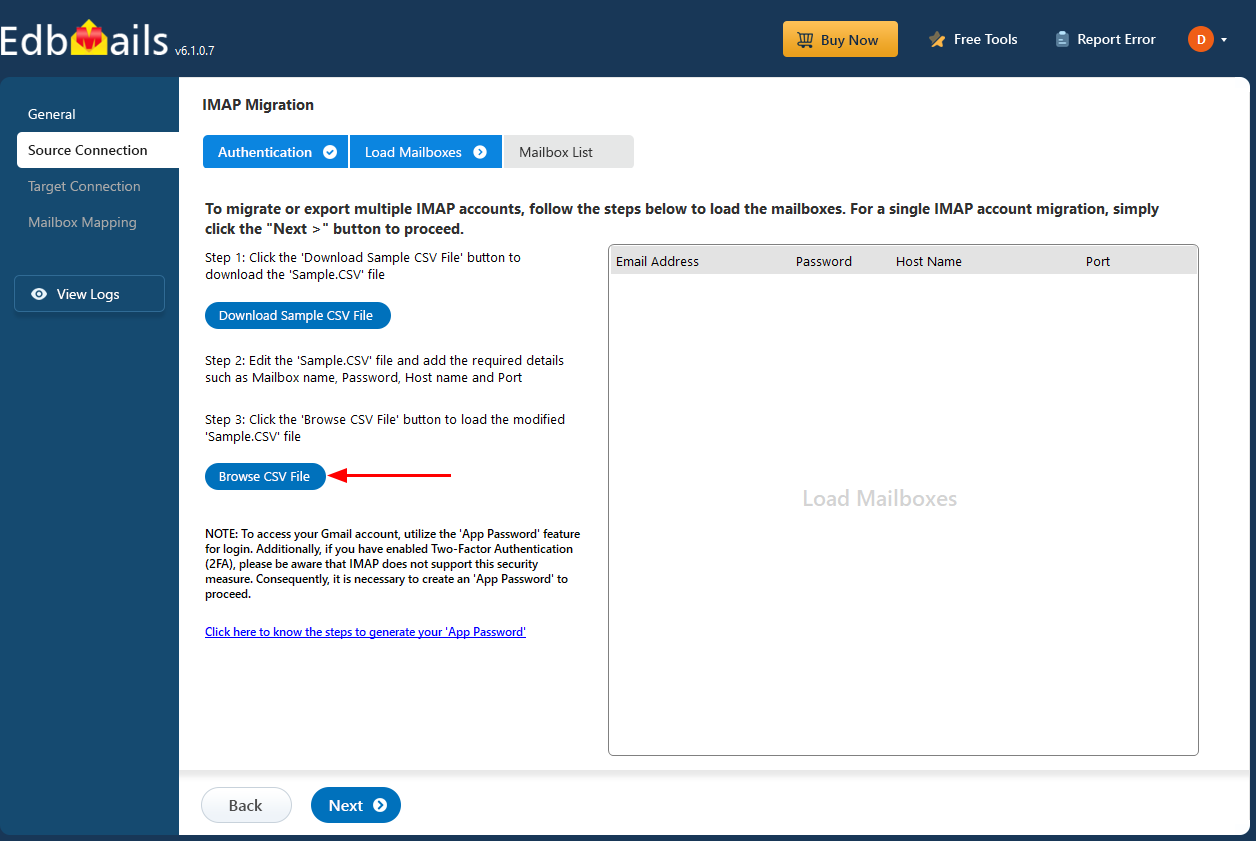
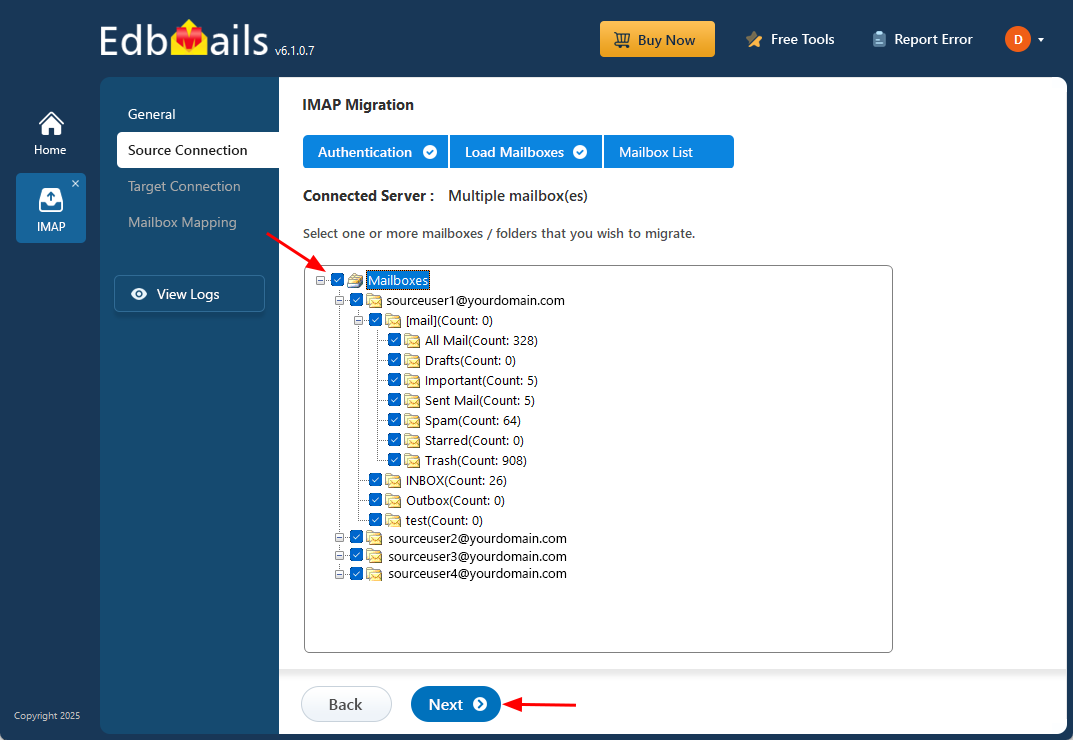
- Choose the specific one or more mailboxes or individual folders you wish to migrate.
- Once your selection is complete, click ‘Next’ to continue.
Step 3: Connect to the Target Office 365 Server
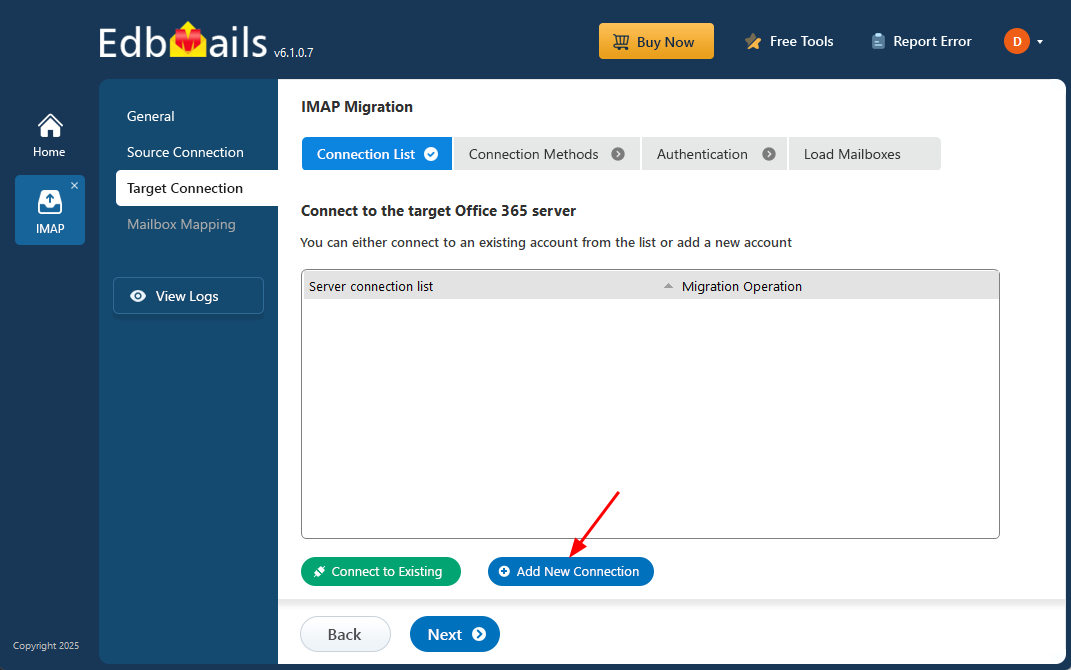
- Click the ‘Add New Connection’ button to configure a fresh connection to your target Office 365 account. If you have already set up a connection, select it from the list and click ‘Connect to Existing’.
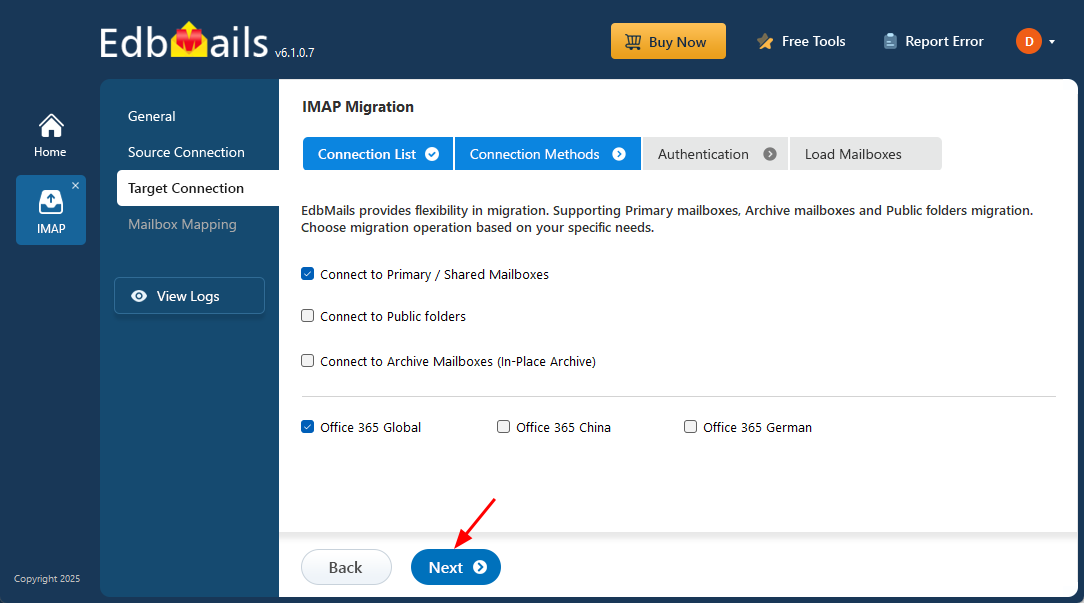
- This tool supports Primary, archive and public folders migration.
- Choose the desired connection options and click ‘Next’ to proceed with authentication methods.
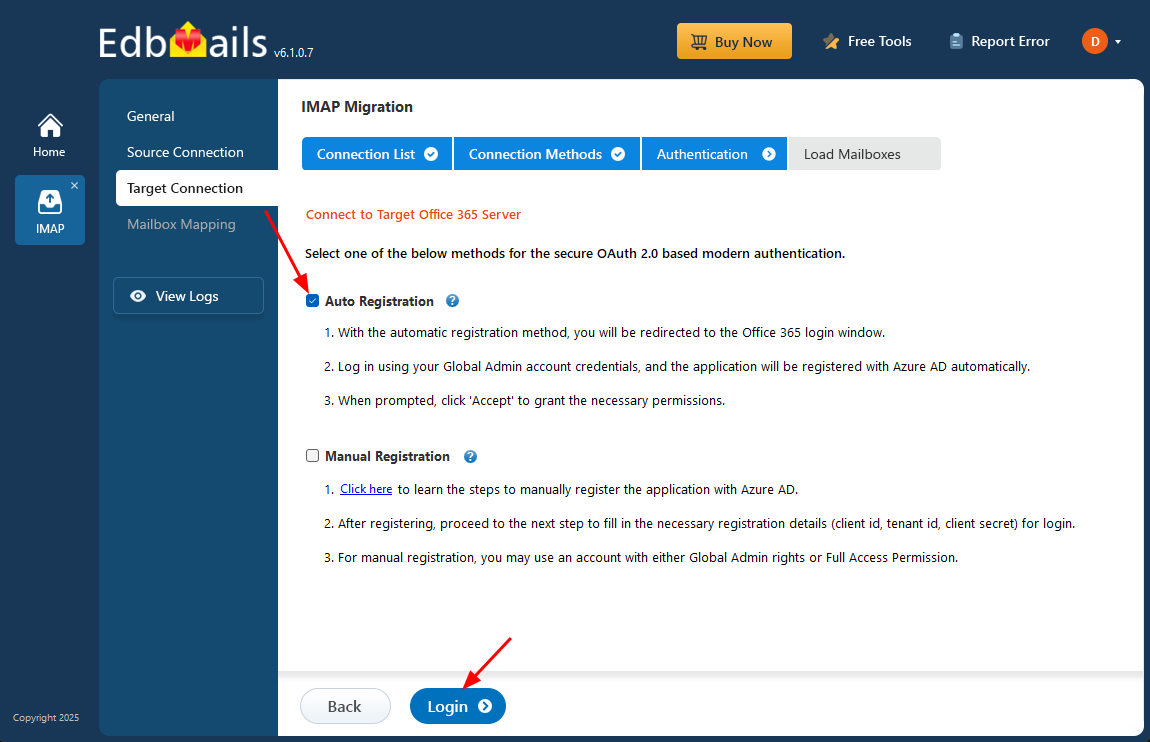
- Choose your preferred authentication method
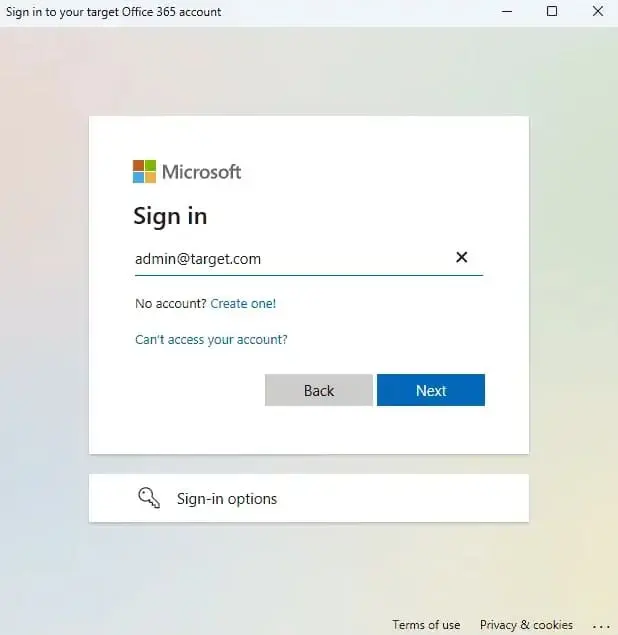
- Authentication will complete through the official Microsoft Sign-in page, where credentials are verified securely using OAuth 2.0.
- Click the ‘Login’ button to proceed.
- Authenticate on Microsoft sign-in page.
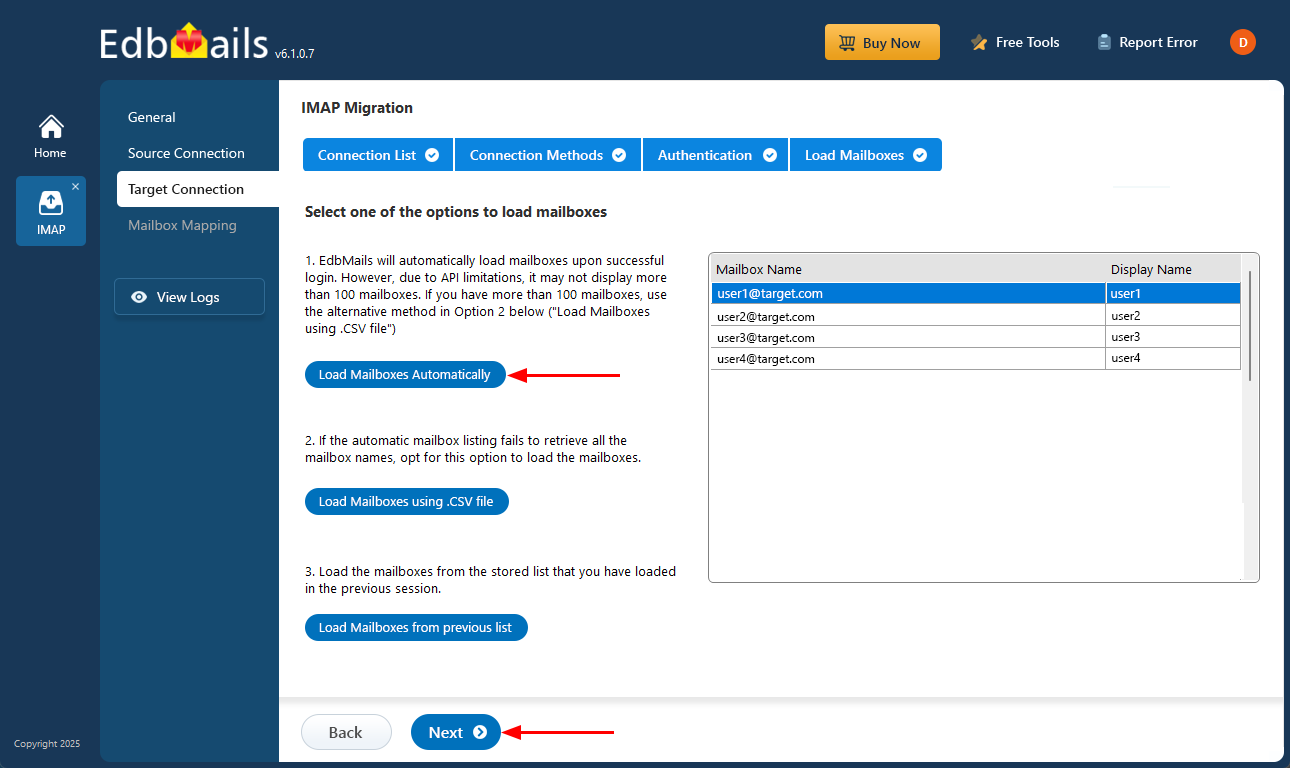
- Choose a preferred method to load the mailboxes.
- EdbMails automatically retrieves Office 365 mailboxes, but because of Microsoft API limitations, only the first 100 mailboxes are displayed.
- To load more than 100 mailboxes, select the CSV file option and click ‘Next’ to continue.
- Click the ‘Add New Connection’ button to configure a fresh connection to your target Office 365 account. If you have already set up a connection, select it from the list and click ‘Connect to Existing’.
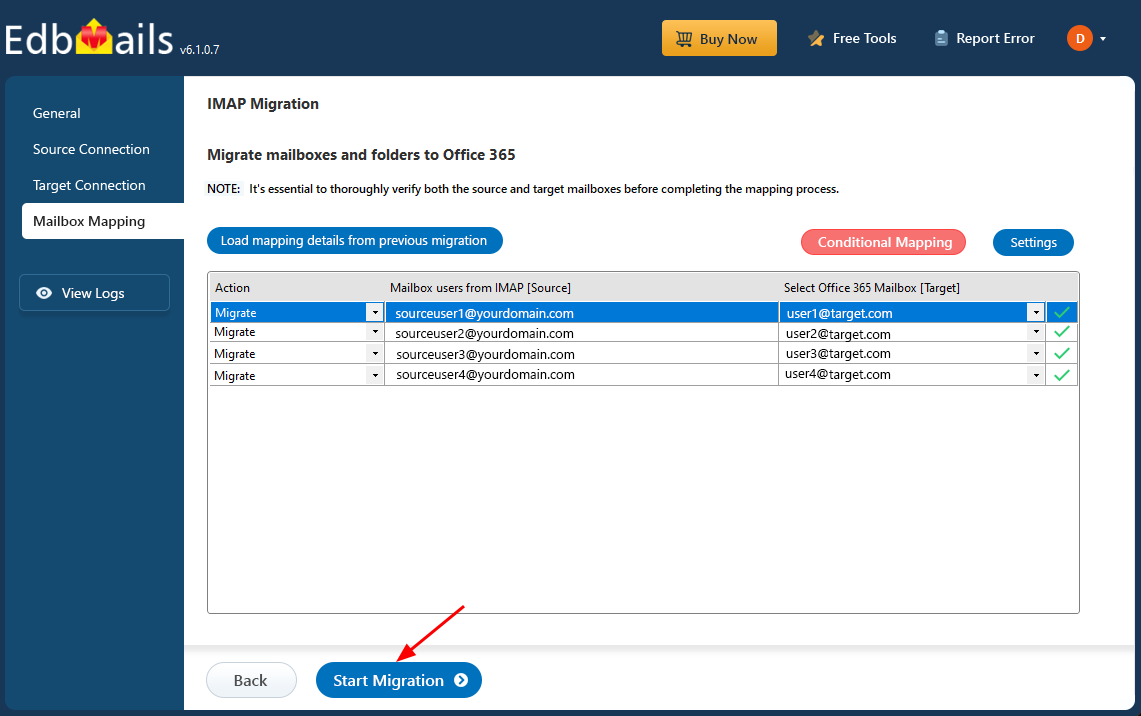
Step 4: Zimbra to Office 365 Mailboxes Mapping
- Choose one of the available options to map the source and target mailboxes
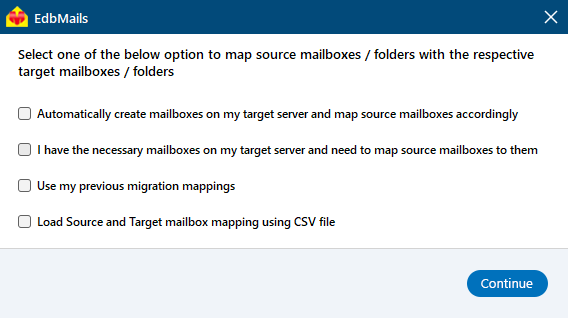
- You can choose the option to let EdbMails automatically create mailboxes on your target Office 365 tenant if they don’t already exist, simplifying the setup process.
- EdbMails automatically maps the source and target mailboxes based on matching display names. You can also manually map mailboxes if needed. With manual mapping, the target mailbox folders are fetched and listed, giving you the option to match the source folders with the corresponding target folders or create custom folder mappings as required.
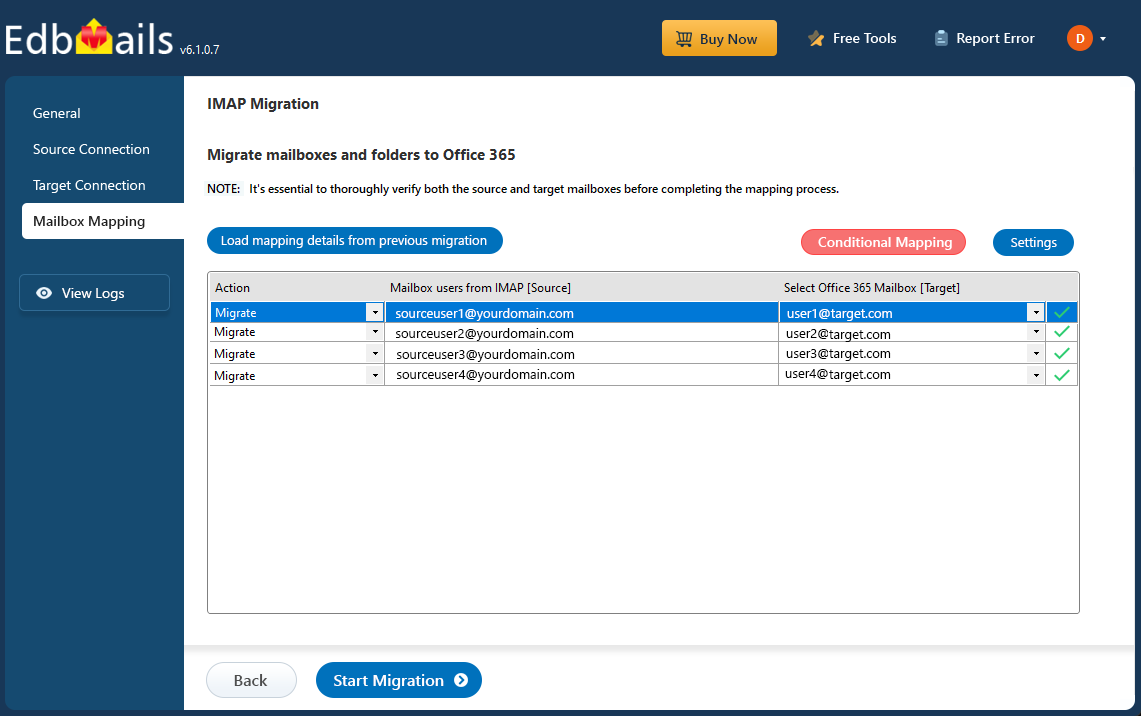
- Choose one of the available options to map the source and target mailboxes
Step 5: Start Zimbra to Office 365 migration operation
- Once the mailboxes are mapped, click the 'Start Migration' button to begin the migration process.
- Click the 'View Logs' button to access the migration report, which provides detailed information on the items migrated from each folder and mailbox. The report includes mapping details, the number of emails migrated, and any issues encountered during the migration process, helping you track and verify the migration of your data.
- Also log into your target server to verify the migrated items.
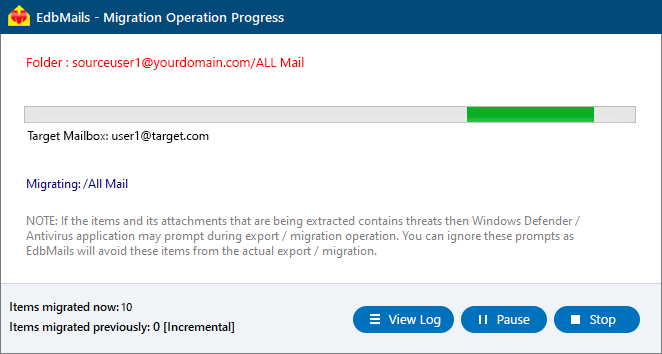
- Once the mailboxes are mapped, click the 'Start Migration' button to begin the migration process.
Troubleshooting Guide for Zimbra email Migration to Office 365
For troubleshooting, refer to the knowledge base articles. If you have further questions or need additional assistance, check the FAQs or contact the support team for personalized help.
Why choose EdbMails for Zimbra to Office 365 migration?
- Guided Zimbra to Office 365 workflow
EdbMails provides a structured source-to-target workflow with mailbox selection, mapping, filters, follow-up passes, reporting, and target-side verification. Actual migration time and cutover impact depend on mailbox volume, bandwidth, source limits, Microsoft 365 throttling, and project planning.
- Preserve supported folder structure
EdbMails is designed to preserve supported Zimbra IMAP folders and common email properties where the source exposes them and Microsoft 365 accepts the corresponding structure. Verify representative folders and items after migration.
- Email and folder migration
EdbMails migrates Zimbra email data exposed through IMAP, including messages, attachments, folders, and supported message metadata. Contacts, calendars, tasks, and other non-email workloads require a separate migration method.
- Zimbra IMAP to Microsoft 365 workflow
EdbMails connects to IMAP-enabled Zimbra mailboxes and maps them to Microsoft 365 target mailboxes, providing a structured workflow for single-user and bulk migration projects.
- Detailed migration reports for transparency
EdbMails provides detailed migration reports, giving you complete transparency into the entire migration process. With these reports, you can track the number of migrated items, view any errors or issues, and ensure the migration is completed successfully, giving you peace of mind.
Additional resources: