Tiscali email to Gmail Migration
If you’re experiencing limitations with the Tiscali email service and planning to switch to Gmail for its modern interface and advanced capabilities, this guide explains the complete migration process. Follow the step-by-step instructions to migrate your Tiscali emails to Gmail smoothly, while reducing disruption during the transition.
Gmail offers several advantages compared to traditional email platforms, including generous storage space, strong spam filtering, powerful search functionality, and seamless integration with Google Workspace applications such as Drive, Meet, and Calendar. Whether you’re migrating for personal use or improving business communication, Gmail provides a secure, scalable, and easy-to-manage email environment.
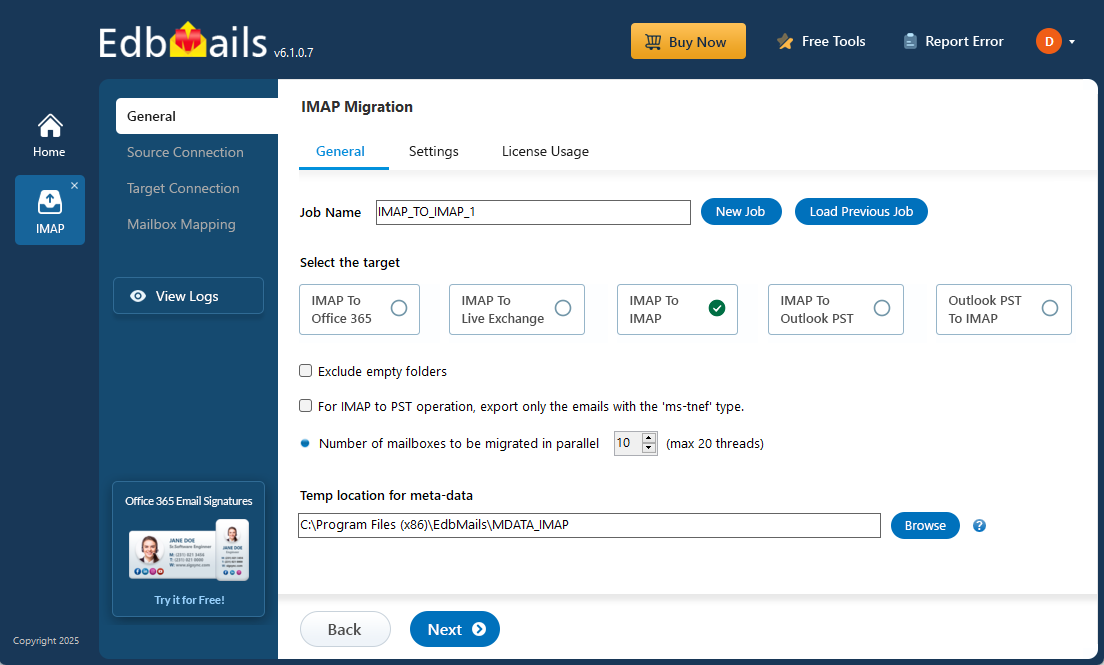
The EdbMails IMAP Migration Tool provides a guided Tiscali-to-Gmail email migration workflow with mailbox selection, mapping, filters, follow-up runs, concurrent processing, and migration reports. It is designed to migrate supported messages, attachments, folders, and common message properties available through IMAP. For the broader source-to-target workflow, see the IMAP to IMAP migration guide.
Designed for simplicity, EdbMails provides a guided interface and does not require manual mailbox export files for this IMAP-to-Gmail workflow. With its intuitive interface, you can easily migrate large volumes of mail data securely and efficiently. The tool preserves the mailbox folder structure, attachments, and supported email metadata and provides logs for post-migration verification.
User Query
This type of concern is quite common among users looking for better email solutions.
"I’ve been using Tiscali email for several years, but recently, I’ve found it lacking in terms of features and usability. I’m considering moving my email account to Gmail for better storage and easier access to Google services. Can someone guide me through the steps to transfer my Tiscali emails over to Gmail without losing any data?"
Why Migrate emails from Tiscali to Gmail?
- Expanded storage capacity:
Gmail offers a generous 15 GB of free storage, shared across Gmail, Google Drive, and Google Photos. This significantly exceeds Tiscali’s storage limits, giving you more space for emails, attachments, and files.
- Advanced email organization:
With Gmail, emails are automatically sorted into categories like Primary, Social, and Promotions, keeping your inbox organized. This feature reduces clutter and enhances the ease of finding important emails quickly.
- Seamless Google ecosystem integration:
Gmail is integrated with Google’s powerful suite of services such as Google Drive, Google Calendar, and Google Meet. This integration streamlines tasks like scheduling meetings, managing documents, and sharing files without leaving your inbox.
- Universal accessibility and device compatibility:
Gmail is fully accessible across all devices such as smartphones, tablets, and desktops ensuring that you can access your emails anytime, anywhere. Whether on the go or at your desk, Gmail adapts to your needs.
- Robust search capabilities and spam protection:
Gmail's advanced search functionality makes it easy to find emails, even those from years ago. Its highly effective spam filters block unwanted messages, keeping your inbox clean and secure.
- Enhanced security and privacy features:
Gmail offers state-of-the-art security measures, including two-step verification and real-time alerts for suspicious activity. By migrating to Gmail, you benefit from these protections, ensuring the safety and privacy of your data.
For users who choose to move from Tiscali email to Gmail, EdbMails provides a guided IMAP workflow with source/target connection, mapping, filters, migration logs, and post-migration verification.
- Expanded storage capacity:
Tiscali email to Gmail Migration Plan
- Assess your specific needs, including the number of users, data volume, and desired migration timeframe.
- Create a Gmail account or Google Workspace subscription, depending on your requirements. Configure the necessary settings and ensure that your Gmail account is ready to receive the migrated data.
- Create user mailboxes on Gmail that align with your organizational requirements, granting appropriate access and permissions.
- Configure IMAP migration settings: If you opt for an IMAP migration tool, configure the necessary settings, such as providing the source Tiscali Mail server details, target Gmail server details, authentication credentials, and migration options.
- Before migrating all data, perform a test migration to ensure that the process works smoothly. Verify that emails, attachments, folders, and supported message metadata are successfully transferred from Tiscali to Gmail.
- Inform all users about the upcoming migration. Provide instructions on how to access their new Gmail accounts and any necessary setup steps.
- Once you have completed the necessary preparations and testing, initiate the full migration process. Monitor the progress to ensure that all data is transferred correctly.
- After the migration, carefully review the migrated data in Gmail to ensure that everything is intact and accurately transferred. Cross-check mailbox folders, message counts, attachments, and representative messages to confirm completeness.
- Once you have verified the successful migration and ensure data integrity, you can proceed to decommission your Tiscali Mail accounts.
Tiscali email to Gmail Migration: Pre-migration Activities
- Ensure that IMAP settings are enabled on both the source (Tiscali) and target (Gmail) servers to facilitate migration.
- Keep a record of the email addresses and passwords for all users you plan to migrate from the Tiscali server.
- Confirm that you have the email addresses for all users on Tiscali. If using Gmail, create an app password for the account.
Click here for steps to create an app password for a Gmail account.
Step-by-Step Guide to Migrate from Tiscali to Gmail
Download and install EdbMails IMAP migration software
- Download and install EdbMails on your computer.
See EdbMails system requirements for Tiscali email to Gmail migration
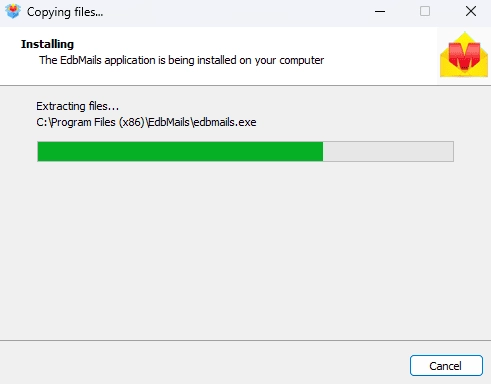
- Launch the EdbMails application on your system.
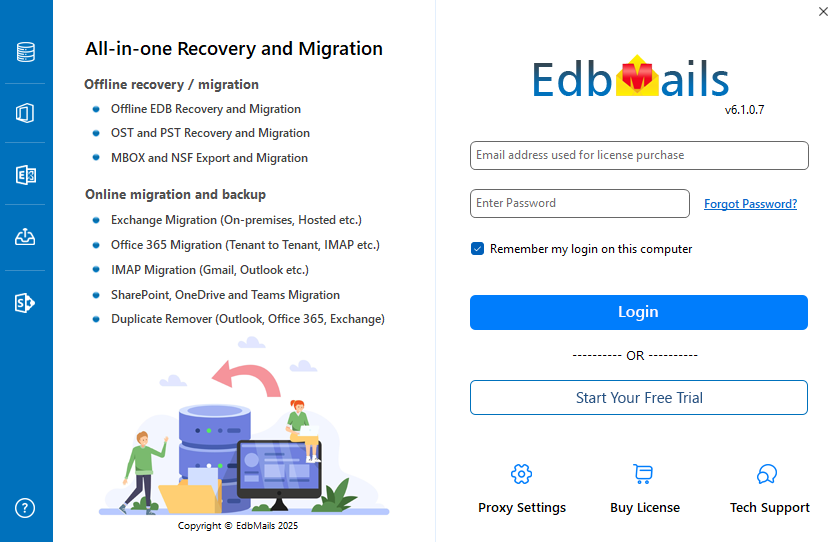
- Enter your registered email address and password, then click ‘Login’. If you’re using EdbMails for the first time, choose ‘Start Your Free Trial’ to proceed with the trial version.Note: The trial edition provides all major features and allows you to migrate up to 30 items per folder. To migrate all eligible items for licensed mailboxes, purchase the required IMAP Migration license from the official EdbMails website.
Click here to know IMAP Migration Pricing Details.
After completing the purchase, close and reopen the application, then log in again using the same email address and password you used to buy the license to ensure successful activation.
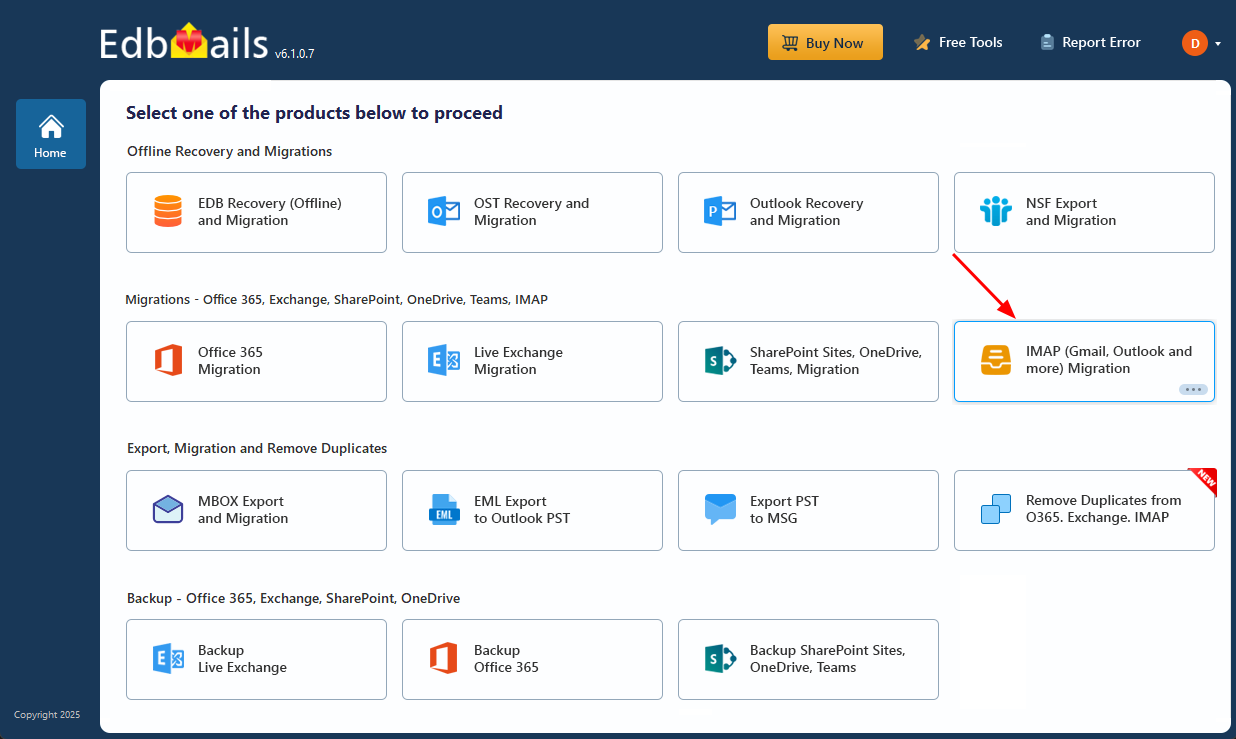
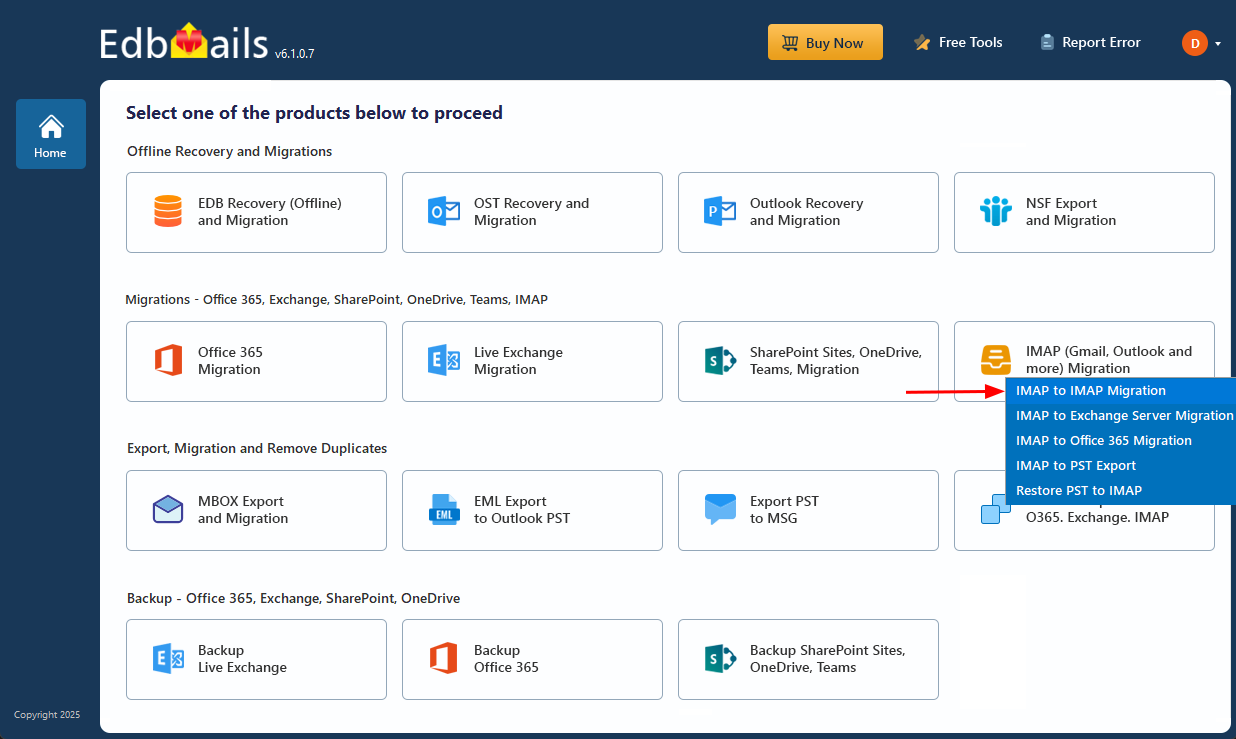
- Select the ‘IMAP (Gmail, Outlook & more) Migration’.
- Select ‘IMAP to IMAP Migration’.
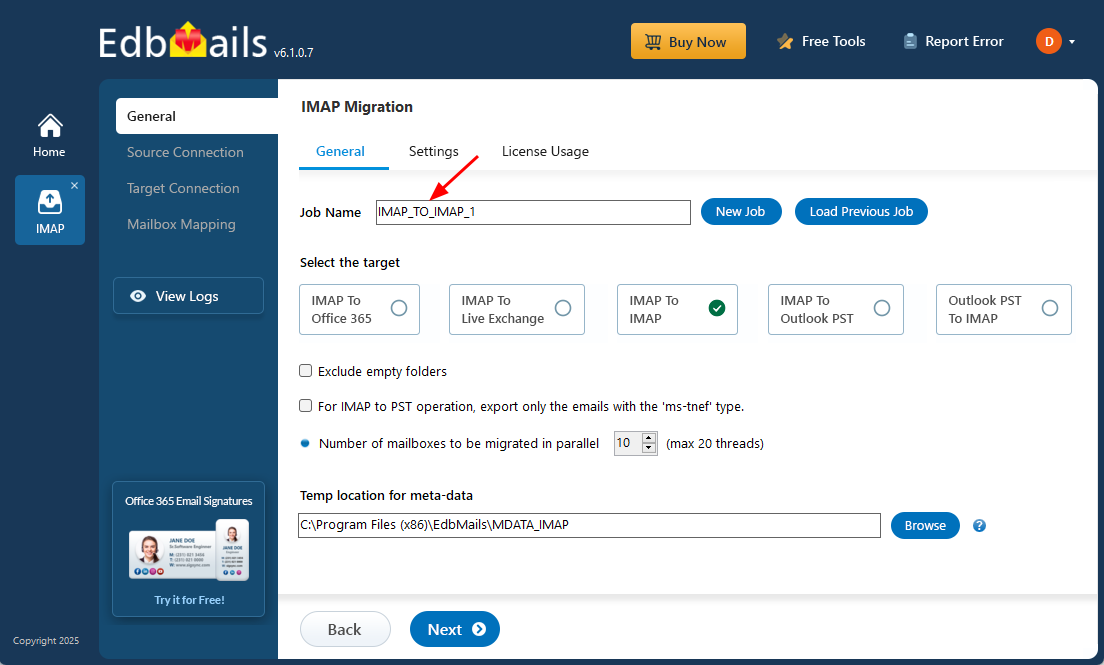
- Continue with the default job name or select ‘New Job’ to assign a custom name, making it easier to identify the migration task before proceeding.
- Download and install EdbMails on your computer.
Step 2: Connect to the source Tiscali email server
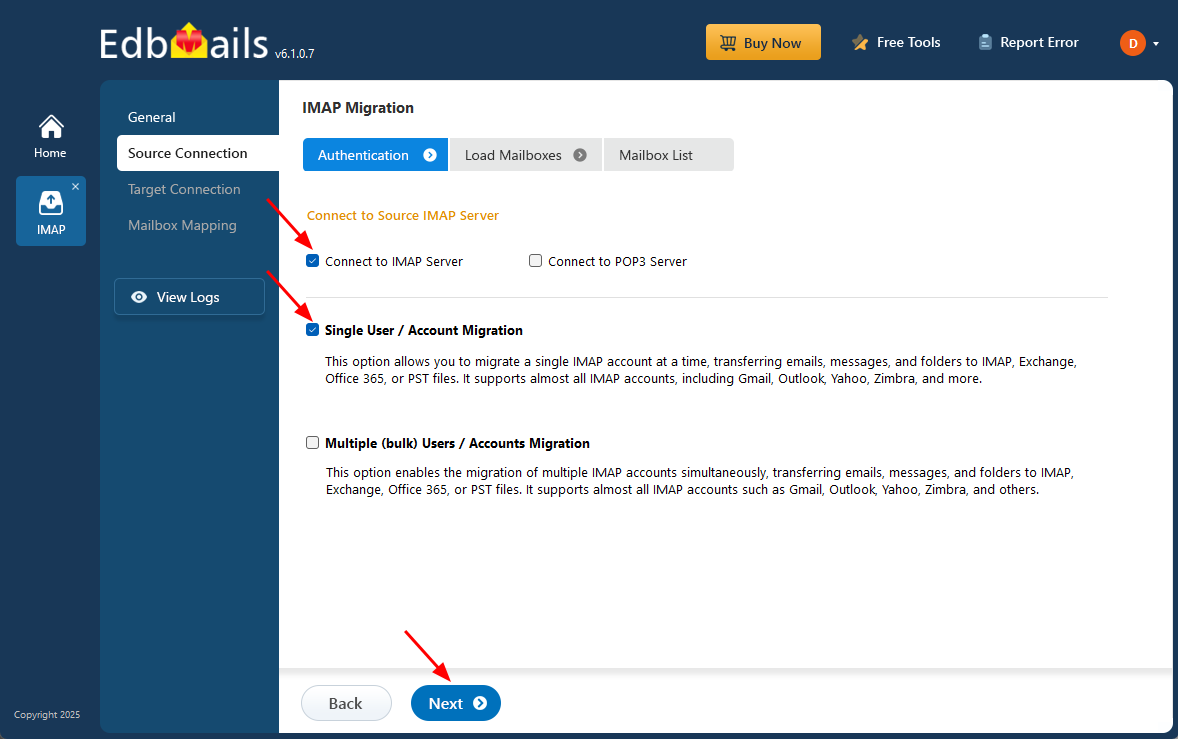
- To connect a single Tiscali account for migration, click ‘Single User / Account Migration’, choose the suitable connection option such as ‘Connect to IMAP Server’ or ‘Connect to POP3 Server’.
- Click ‘Next’ to proceed.
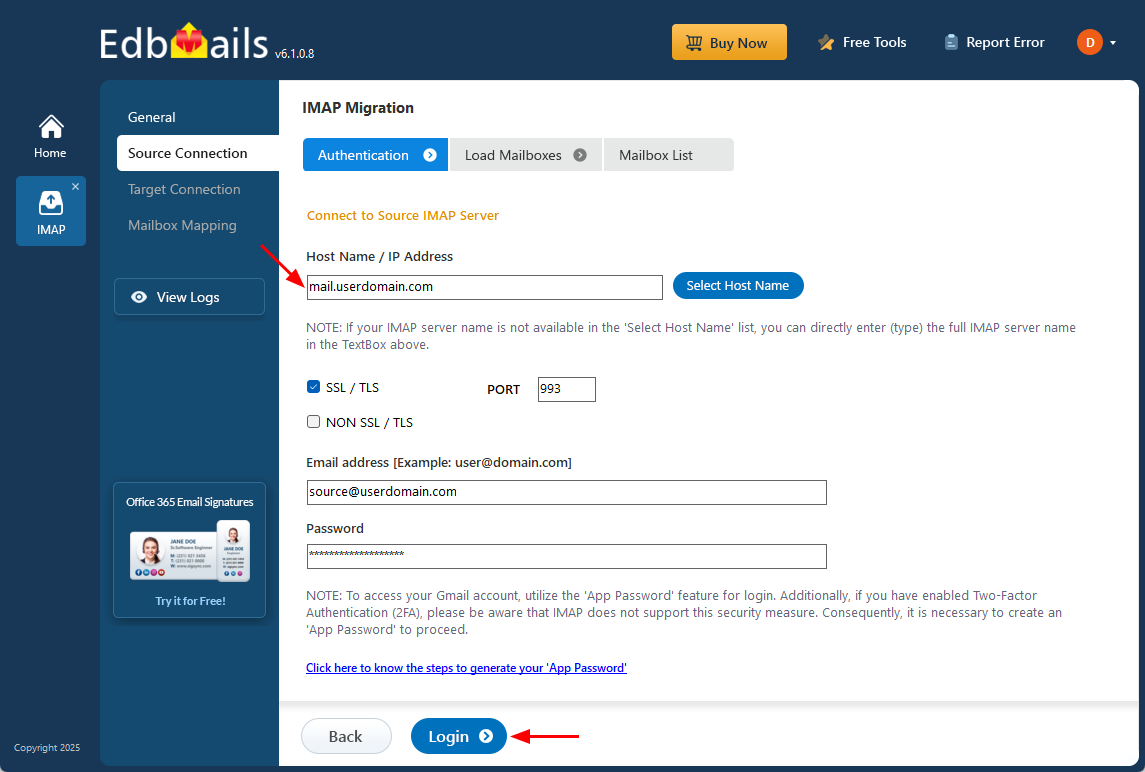
- Use the current IMAP server details assigned to the Tiscali mailbox. Tiscali-branded services can vary by region or underlying provider, so verify the actual hostname, port, TLS requirement, and authentication method before loading production accounts.
- Use secure IMAP with SSL/TLS where supported and validate a single mailbox connection before preparing the bulk CSV.
- Use the Tiscali authentication method required by your source mailbox and a secure SSL/TLS IMAP connection where supported.
- Click the ‘Login’ button to proceed.
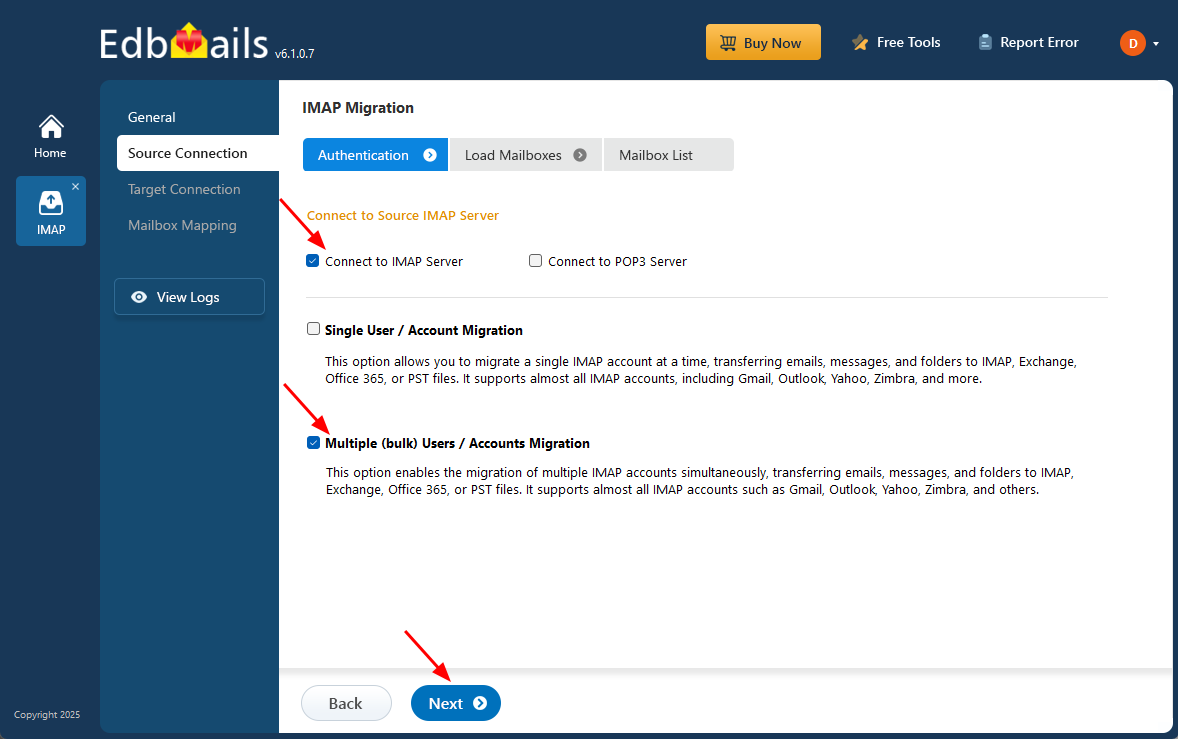
- For migrating multiple Tiscali mailboxes simultaneously, choose ‘Multiple (Bulk) Users/Accounts Migration’, then select the appropriate connection option such as ‘Connect to IMAP Server’ or ‘Connect to POP3 Server’.
- Click ‘Next’ to continue.
- Click ‘IMAP Migration CSV File’.
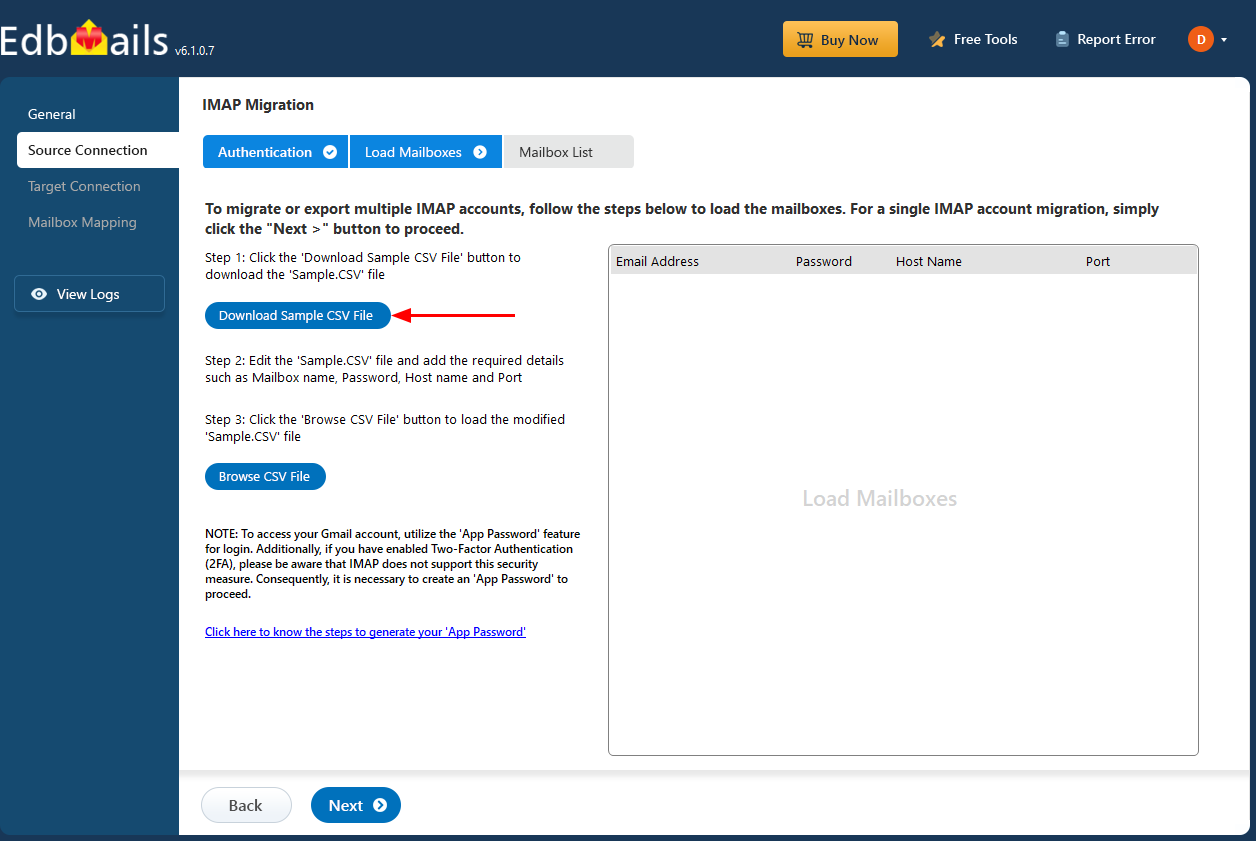
- Open the sample CSV file and enter the required details such as the email address, password, IMAP server name, and port number to prepare for the migration.
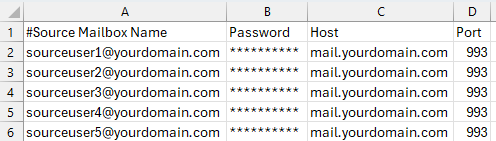
- Once you’ve added all the required information to the CSV file, save the changes and close the file to proceed with the next steps in the migration process.
- Next, click the 'Load Modified CSV File' button, locate your updated CSV file, select it, and open it to proceed.
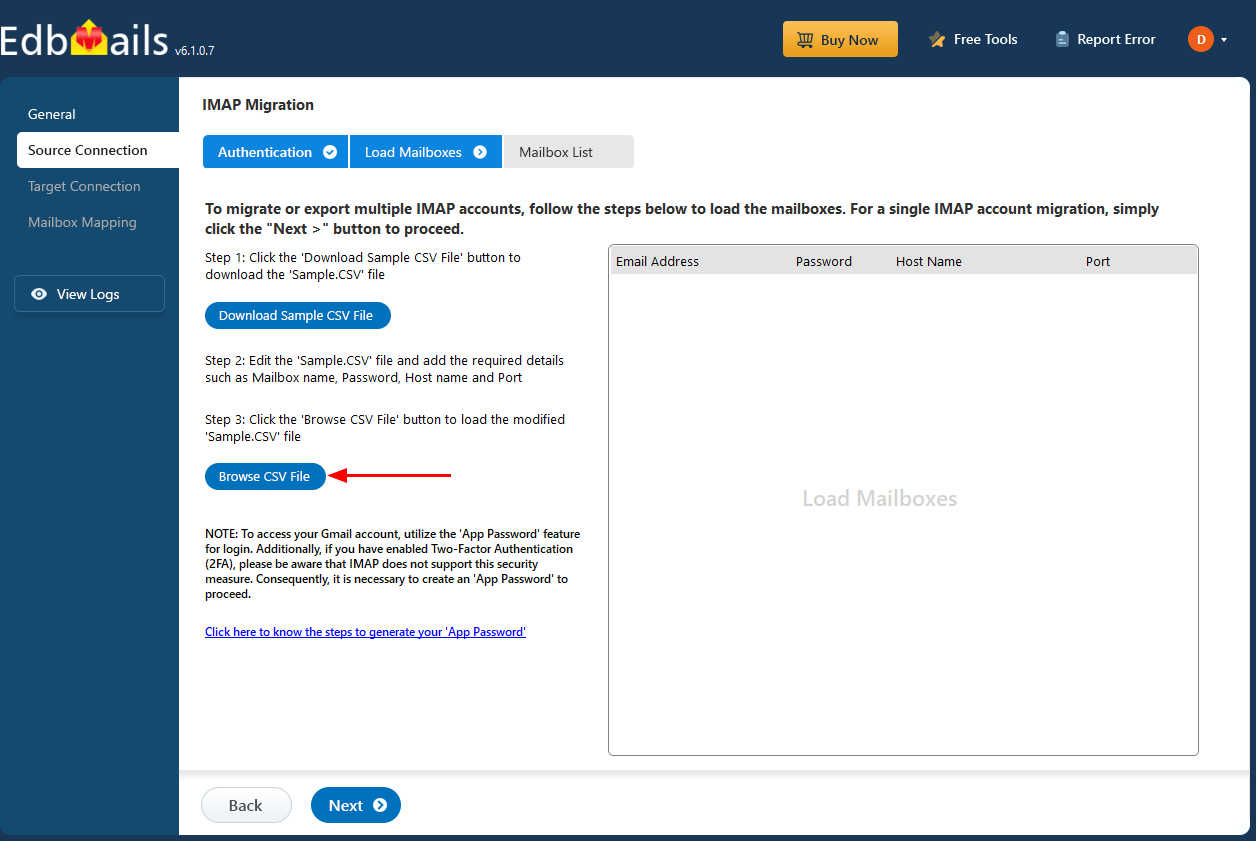
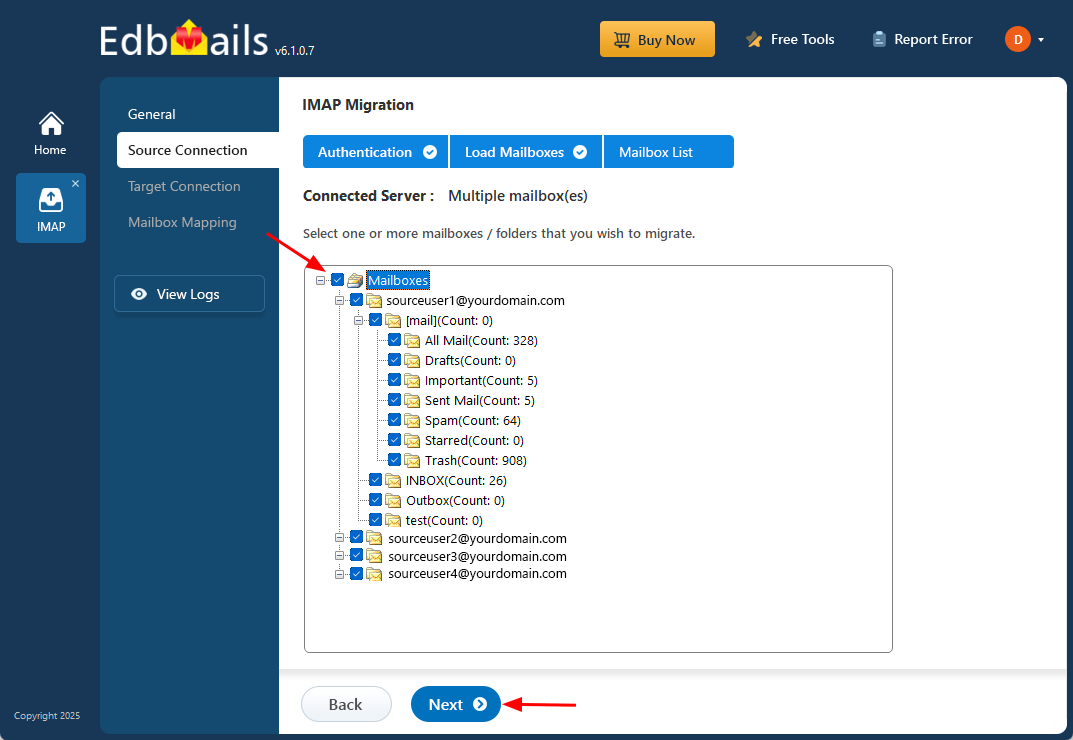
- Select the mailboxes or specific folders you want to include in the migration. After making your selection, click ‘Next’ to proceed.
Step 3: Connect to the target Gmail server
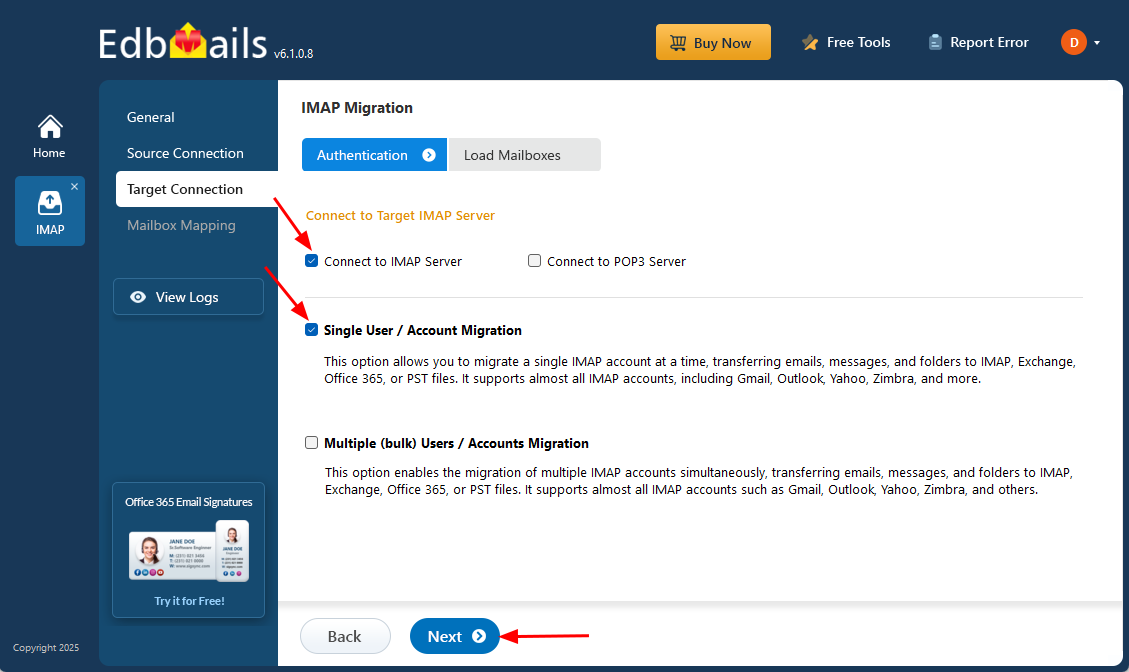
- To connect a single user account, select ‘Single User / Account Migration’ Then, choose the required protocol, such as ‘Connect to IMAP Server’ or ‘Connect to POP3 Server’, and click ‘Next’ to proceed.
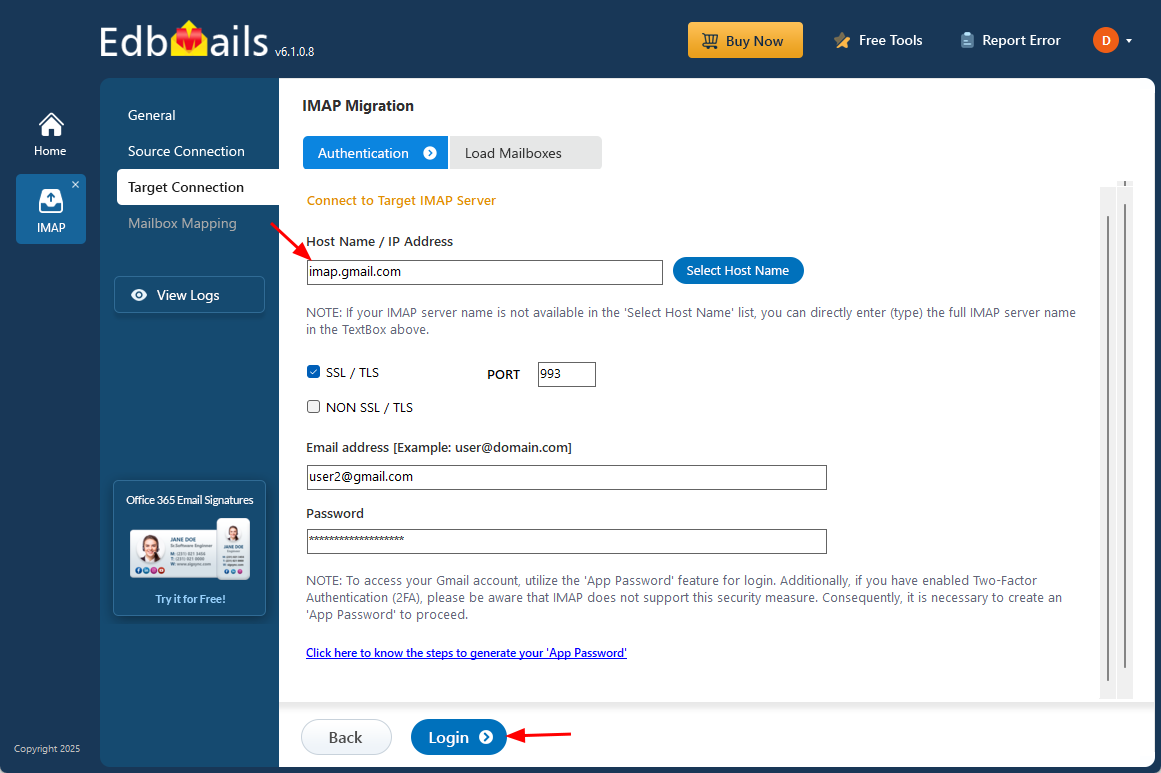
- For the target, use Gmail IMAP (imap.gmail.com). Google recommends secure Google sign-in where supported. If the EdbMails connection requires an app password, it is available only for eligible accounts with 2-Step Verification and may be restricted by an organization’s security policy.
- Click ‘Login’ to connect and begin the configuration.
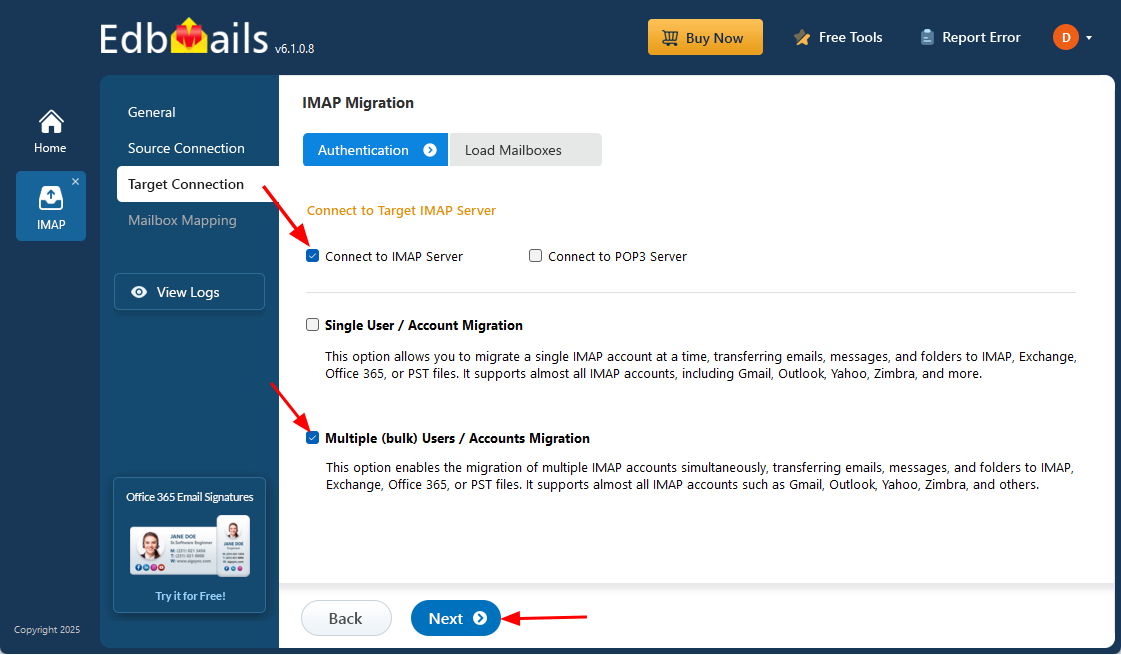
- For migrating multiple mailboxes, select ‘Multiple (Bulk) Users/Accounts Migration and click ‘Next’.
- Click ‘IMAP Migration CSV File’.
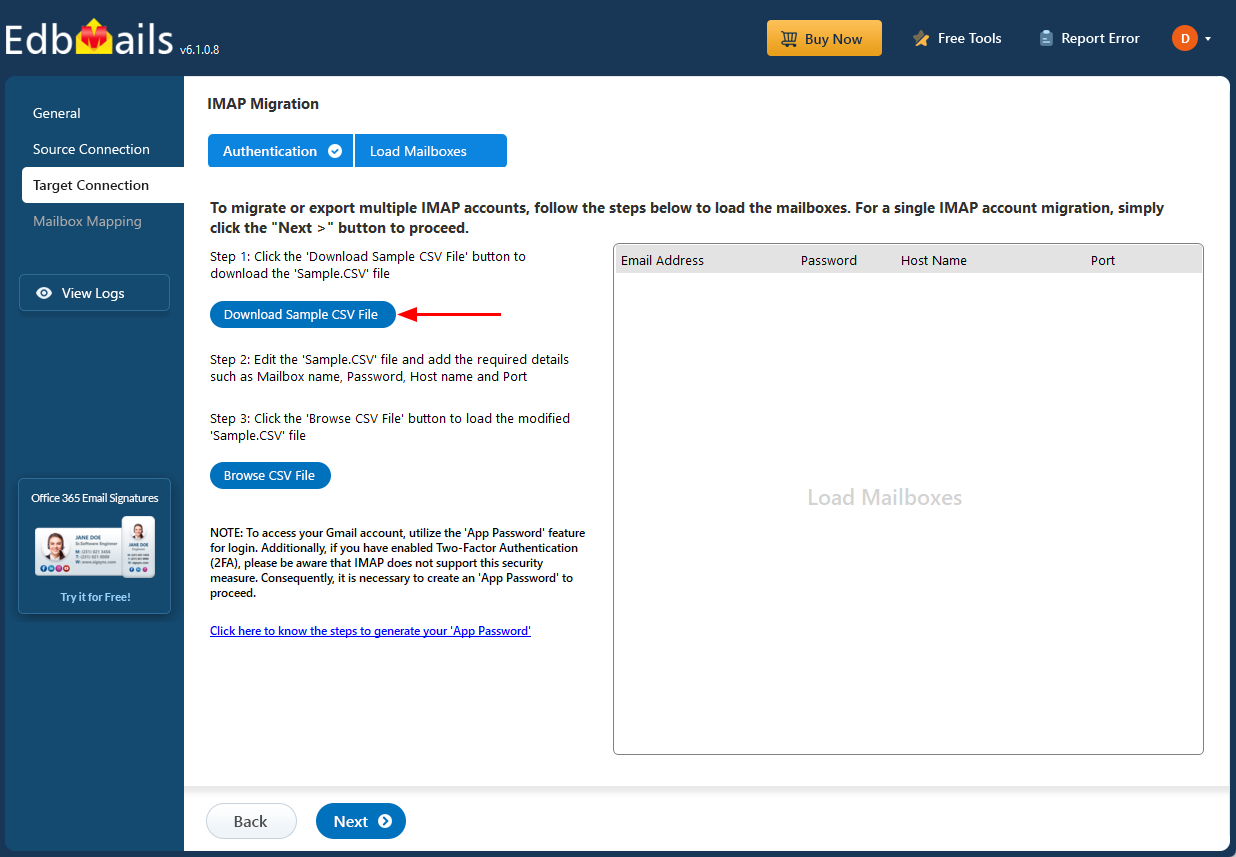
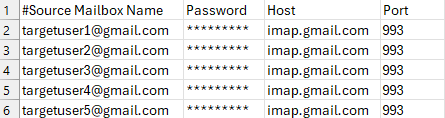
- Update the CSV file with the necessary details, including email address, password, IMAP host name, and port number then save the file to apply the changes.
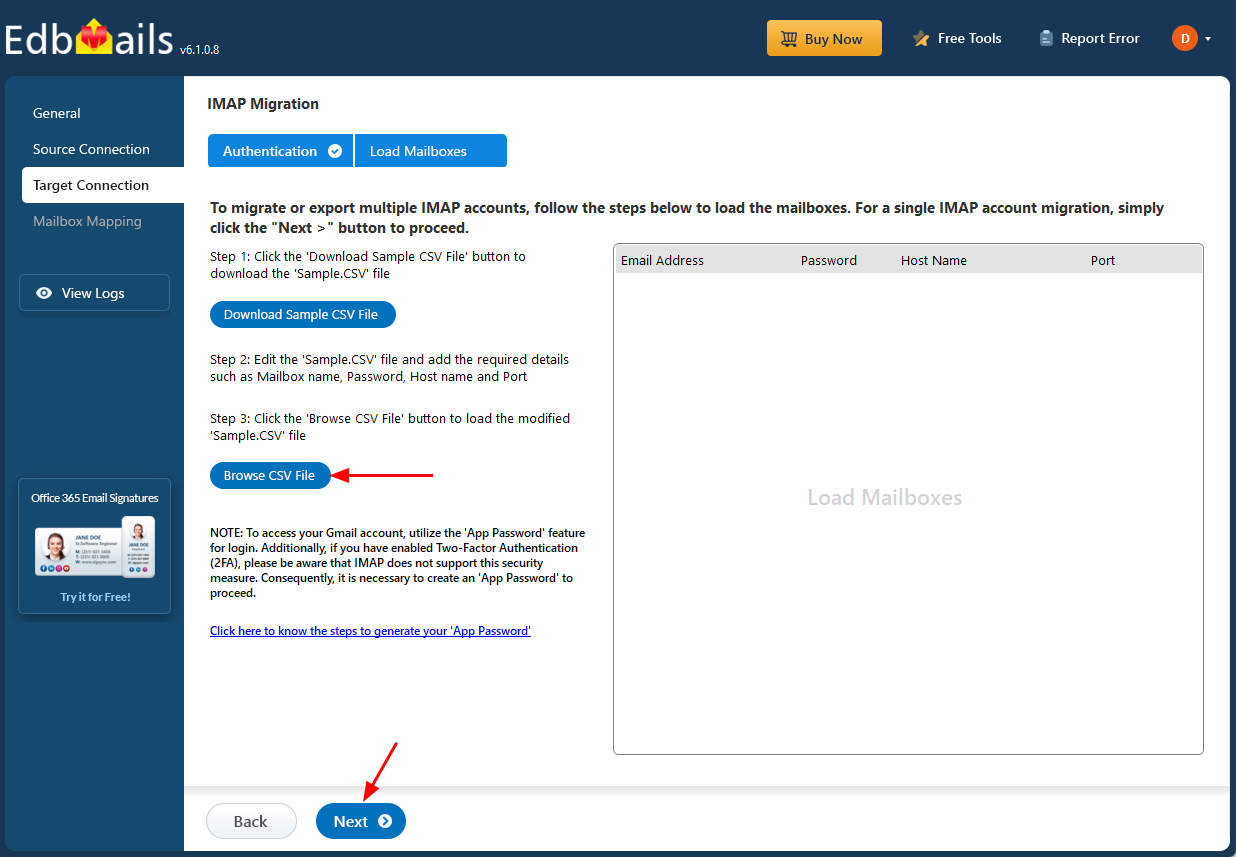
- Close the CSV file, click the 'Load Modified CSV File' button , select the modified CSV file .
- Verify the mailboxes, and click 'Next'.
- To connect a single user account, select ‘Single User / Account Migration’ Then, choose the required protocol, such as ‘Connect to IMAP Server’ or ‘Connect to POP3 Server’, and click ‘Next’ to proceed.
Step 4: Tiscali email to Gmail mailboxes mapping
- Select the appropriate mailbox mapping option to match source mailboxes with their Gmail counterparts. You can choose automatic or manual mapping based on your needs.
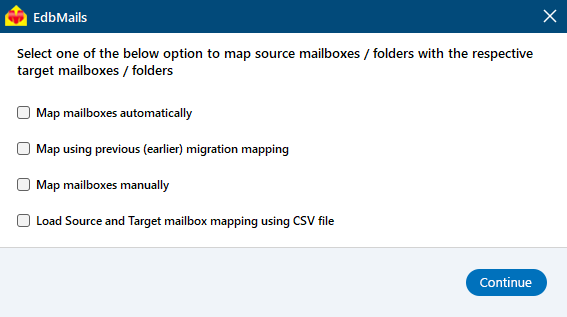
- EdbMails can automatically map source and target mailboxes where identifiers align. Review and adjust the mapping manually where required.
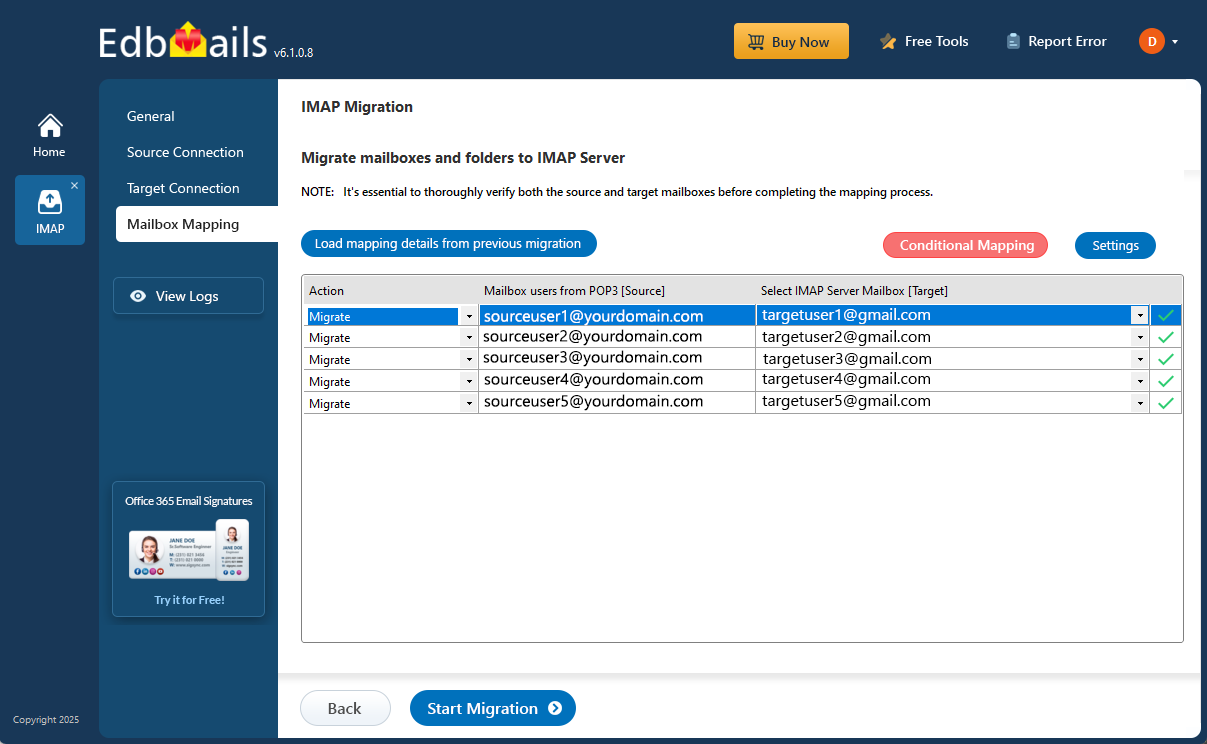
- Select the appropriate mailbox mapping option to match source mailboxes with their Gmail counterparts. You can choose automatic or manual mapping based on your needs.
Step 5: Start Tiscali email to Gmail migration
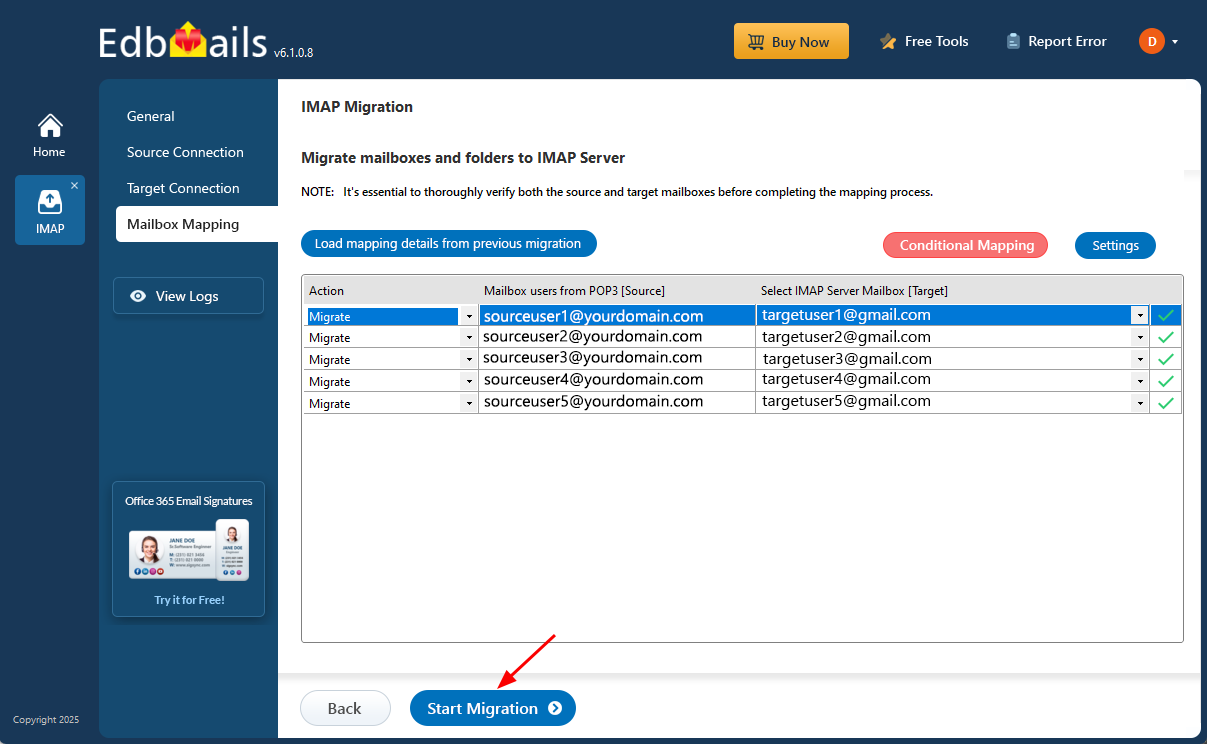
- Verify the mailbox mapping.
- Click the ‘Settings’ button to apply the filters. For example, you can set a date filter to migrate only the data within a certain date range.
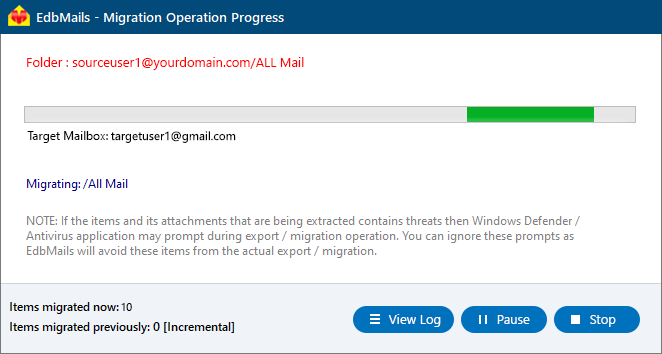
- Click the ‘Start Migration’ button and initiate the migration process.
- To view the migration report, click the ‘View Logs’ button. It provides a comprehensive summary showing the number of emails, folders, and mailbox items migrated, along with their respective counts.
Tiscali email to Gmail Post-migration Tasks
- Step 1: Verify Gmail mail flow
Confirm that users can sign in to Gmail and send and receive test messages. For Google Workspace custom-domain migrations, update and verify the required Google Workspace MX records only after the target environment is ready.
- Step 2: Verify migrated email
Review folders or labels, message counts, attachments, and representative messages in Gmail. Run an incremental pass if new mail arrived in Tiscali during the migration.
- Step 3: Retain or forward the Tiscali account during cutover
Where Tiscali forwarding is available, use it temporarily if needed and keep the source mailbox accessible until migration verification is complete.
- Step 1: Verify Gmail mail flow
Troubleshooting Guide for Tiscali email to Gmail Migration
For common migration issues, check the knowledge base articles. For more information on EdbMails IMAP migration, visit the frequently asked questions (FAQs) section or contact our support team for personalized assistance.
Why choose EdbMails for Tiscali to Gmail migration?
- Simple User Interface
EdbMails offers an intuitive and user-friendly interface, making it easy for anyone to migrate emails from Tiscali to Gmail. You don’t need to be a tech expert to use the tool. Its step-by-step guidance ensures that even beginners can complete the migration process with ease.
- Windows-based Application
EdbMails runs on supported Windows environments. Review the current IMAP migration system requirements before deployment rather than relying on an older Windows-version list.
- Concurrent mailbox processing
EdbMails can process multiple mailboxes concurrently. Actual throughput depends on source and target limits, bandwidth, mailbox volume, and migration-computer resources.
- Secure connection workflow
Use SSL/TLS-supported source and target connections, protect migration credentials, and review the EdbMails security information before deployment.
- Detailed Log Reports
EdbMails generates detailed log reports for every migration. These reports provide insights into the progress of the migration, including the number of items migrated and any potential issues encountered. You can track every step of the migration and ensure a flawless transfer.