AWS WorkMail to Office 365 migration
Migrating from Amazon WorkMail to Microsoft 365 moves the email workload to Exchange Online while allowing organizations to adopt Microsoft 365 administration and collaboration services. AWS has announced that Amazon WorkMail will reach end of support on March 31, 2027; existing customers should plan and validate their replacement email platform before that date.
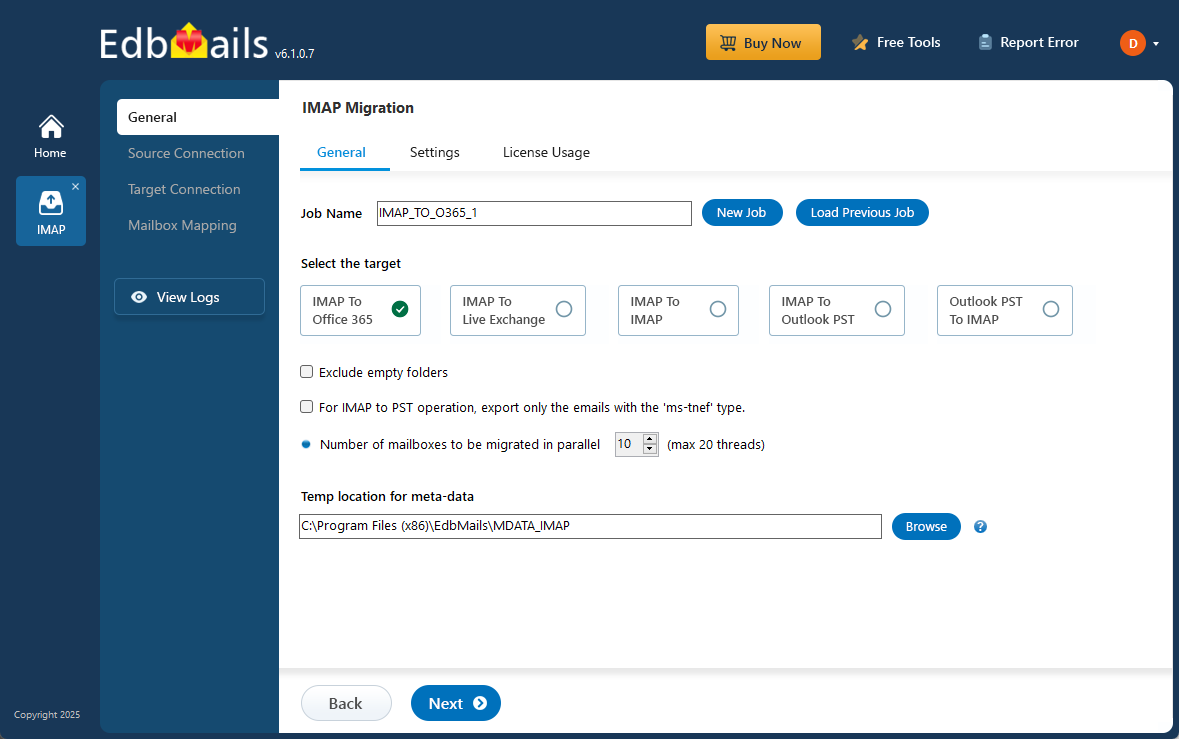
The EdbMails IMAP Migration Tool provides a direct Amazon WorkMail-to-Microsoft 365 email migration workflow with bulk mailbox loading, mapping, filters, incremental follow-up runs, concurrent processing, and migration reports. Throughput depends on WorkMail access limits, mailbox volume, bandwidth, and Microsoft 365 throttling. For destination-wide planning and cutover, use the main IMAP to Office 365 migration guide.
Where supported and selected, EdbMails can assist with target mailbox creation and mailbox mapping. Administrators should verify licensing and review every source-to-target mapping before production migration. Migration filters can be used to control the supported email-data scope.
User Query
"We currently use Amazon WorkMail for email and would like to migrate to Office 365 due to organizational requirements. We also want to know if there is a method to preserve our existing domain name on Microsoft and migrate easily without extensive planning and preparation."
AWS Workmail to Office 365 migration plan
Planning is one of the most important steps before you begin the AWS Workmail to Office 365 migration. Here is a checklist of points to consider before you migrate.
- Evaluate the overall data size and determine the total number of mailboxes to be migrated to plan resources, timelines, and migration strategy effectively.
- Create a detailed list of all data and mailbox permissions in AWS WorkMail that need to be transferred to Office 365 during migration.
- Set up the necessary user mailboxes on Office 365 and assign the corresponding licenses to each account.
- Ensure you have enough network capacity and bandwidth to migrate.
- Communicate the migration plan and flow to your end users.
AWS Workmail to Office 365 migration prerequisites
- Identify the AWS Region that hosts each WorkMail mailbox and use the corresponding Amazon WorkMail IMAP endpoint. AWS documents IMAPS on port 993 with SSL and the full WorkMail email address as the username.
- For migrating multiple users, download the sample CSV file from the EdbMails application, then update the file with the IMAP server hostname, port number, email address, and password for each user's mailbox you wish to migrate.
See how to find your IMAP server host name. - Ensure that Office 365 mailboxes are created and licenses are assigned to them. You can choose the option in EdbMails to automatically create Office 365 mailboxes. However, if you prefer to do it manually, refer to the links below:
Add users and assign licenses to Office 365 users
Assign Microsoft 365 licenses to user accounts - To migrate AWS Work mail to Office 365 Public folders, ensure that you create public folders and assign permissions on the target server.
Create Office 365 Public folder and assign permission to the admin user - Similarly, if you want to migrate mailboxes to Office 365 archive mailbox, enable In-Place archive in target O365 server
Steps to enable archive mailbox in Microsoft 365. - If you have a custom email domain from the source which you want to retain and receive emails to, you must add and verify the domain on Office 365.
Steps to add a custom domain to Office 365 and steps to add DNS records to connect your domain. - Configure Office 365 to send and receive large messages.
Follow the steps to increase the message size on Office 365 to 150MB.
See message size limits on Office 365 for more information.
Steps to migrate AWS WorkMail to Office 365 using EdbMails
Step 1: Download and install EdbMails IMAP migration software
- Download EdbMails and install the application on your computer.
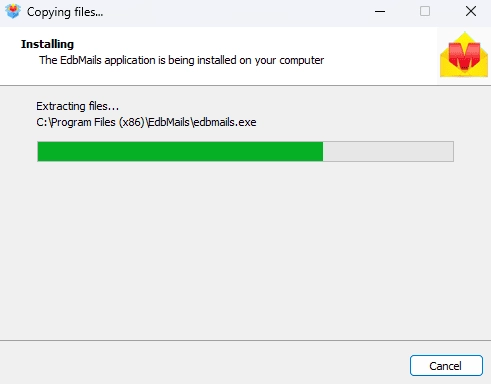
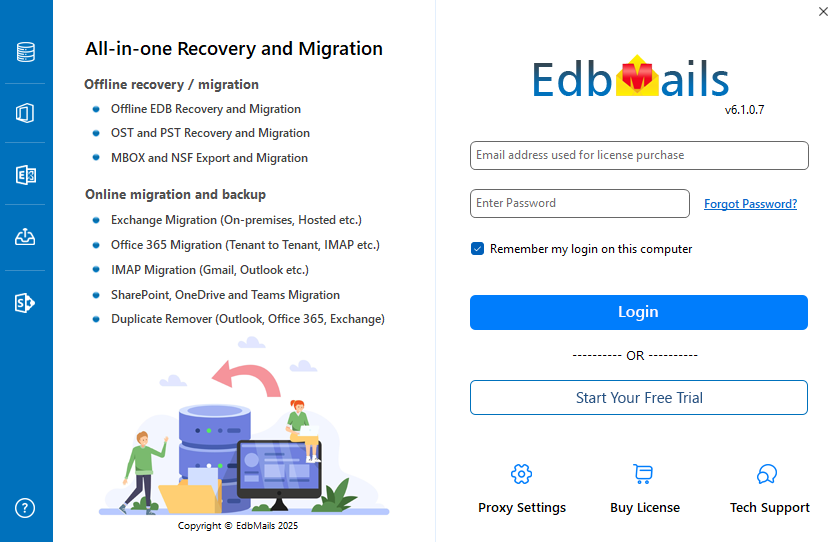
- Launch the application and log in using your email and password if you already have an account. Alternatively, click ‘Start Your Free Trial’ to explore the software without signing up immediately.
See the list of system requirements for IMAP migration with EdbMails.
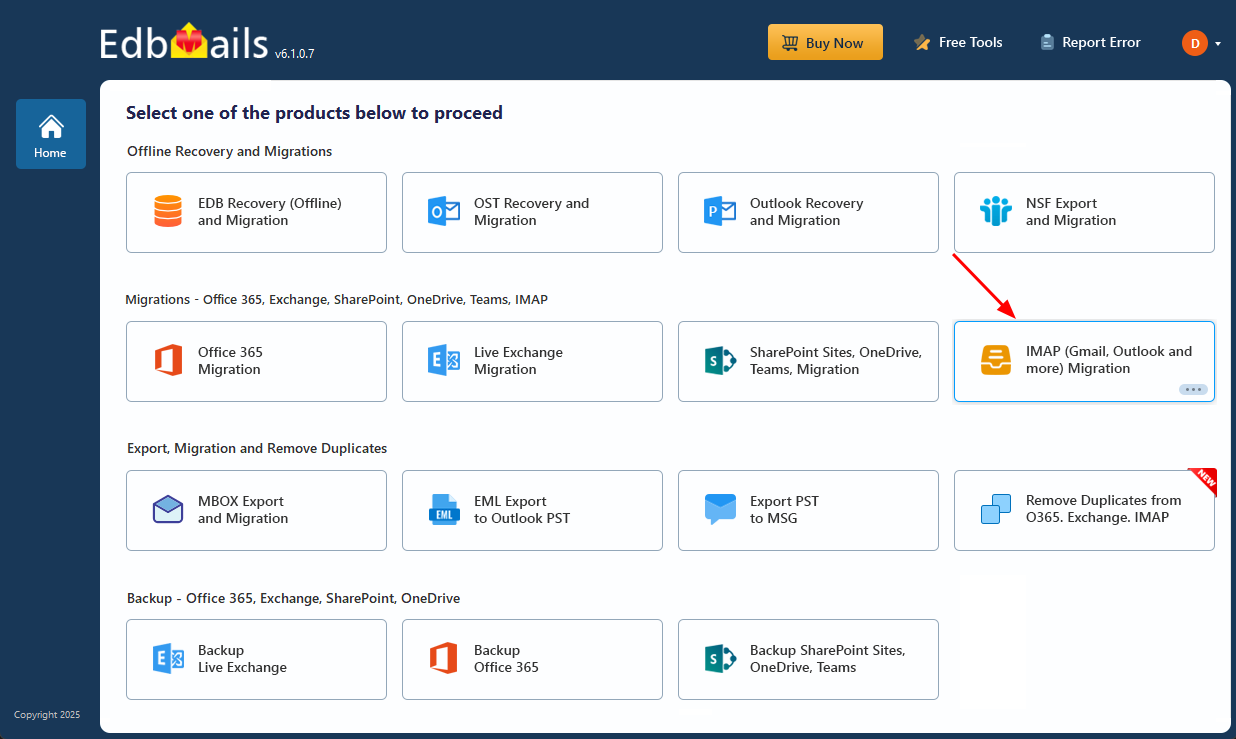
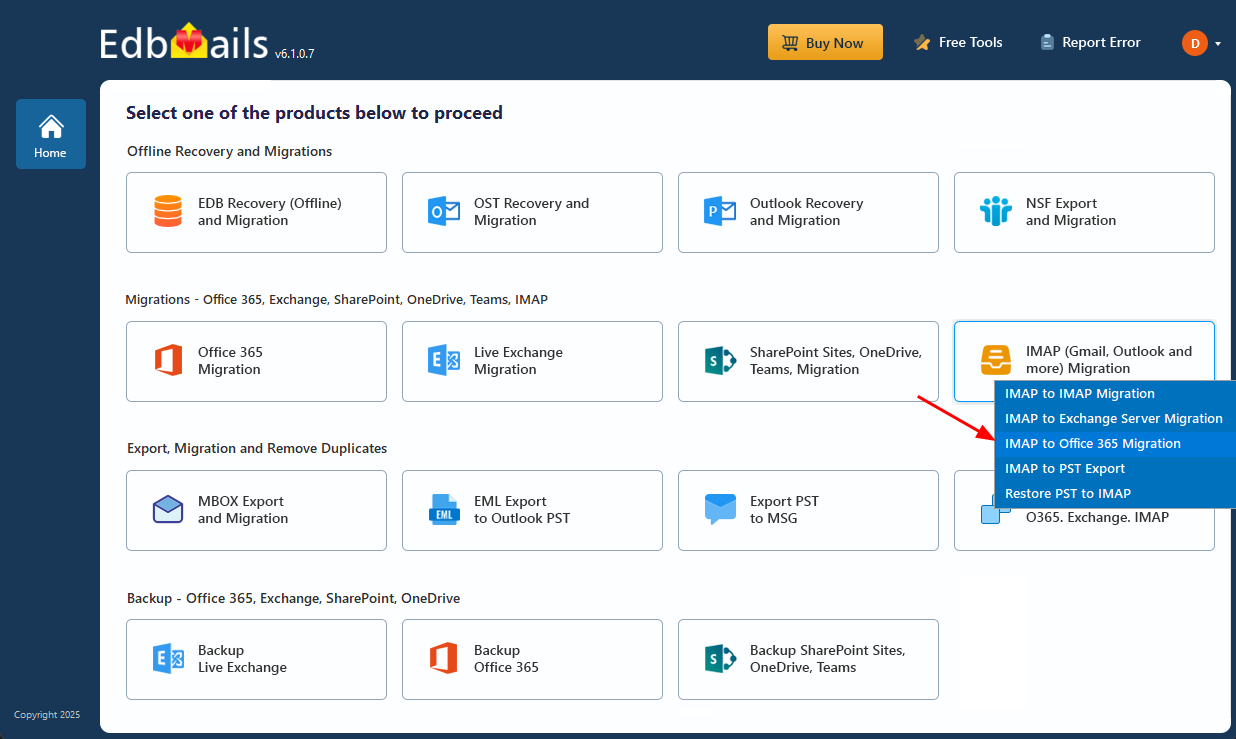
- Select the option ‘IMAP (Gmail, Outlook & more) Migration’.
- Select ‘IMAP to Office 365 Migration’.
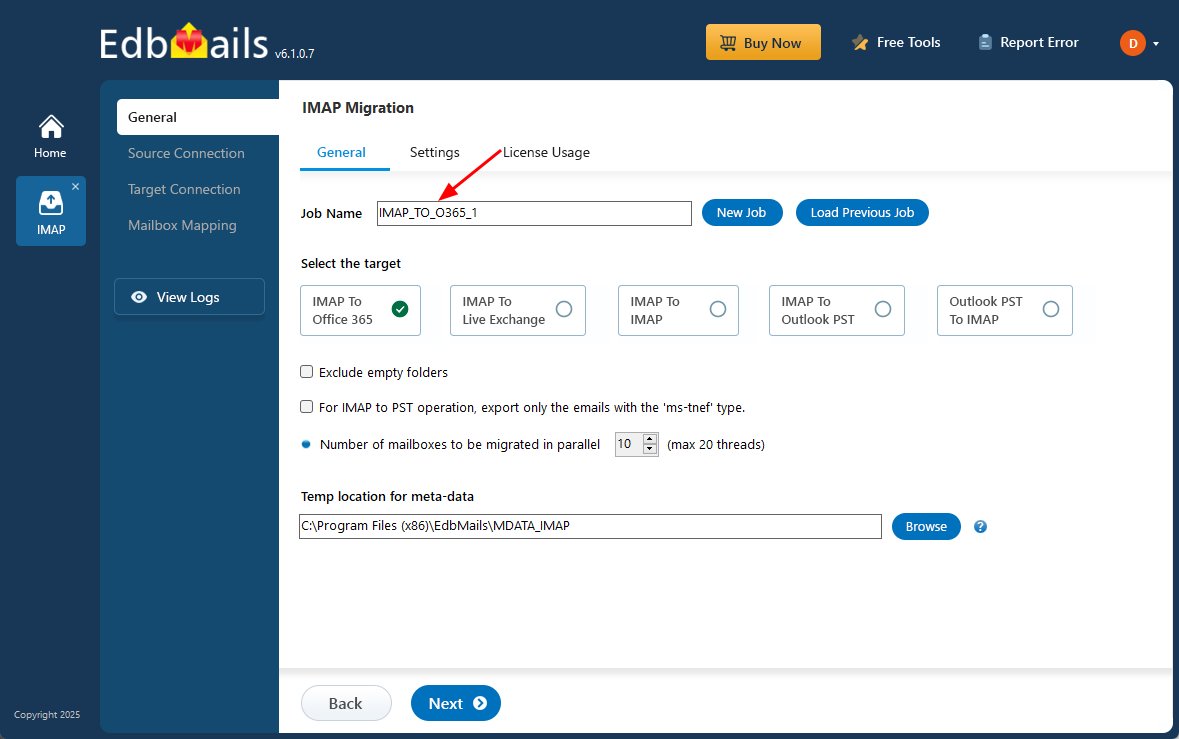
- You can use the default job name provided or click ‘New Job’ to create a custom name for your migration task.
- Download EdbMails and install the application on your computer.
Step 2: Connect to source AWS WorkMail server
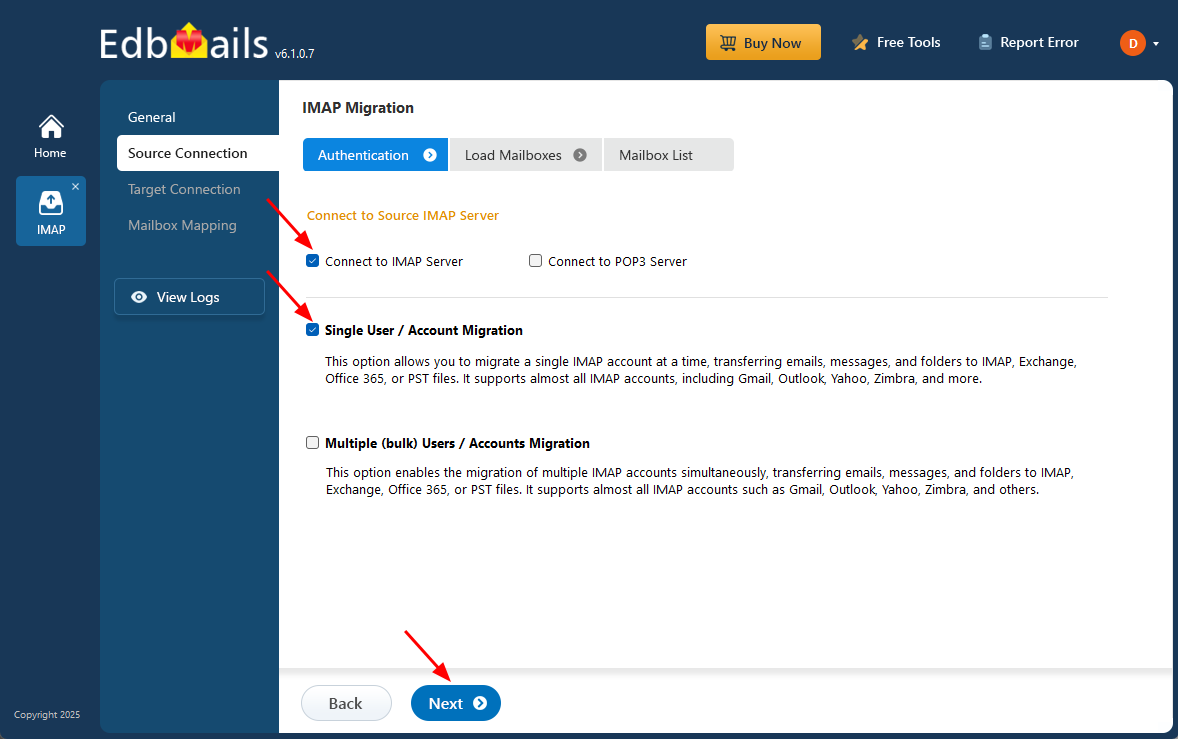
- To begin migrating a single user account, choose the ‘Single User / Account Migration’ option, then click ‘Next’ to move forward with the process.
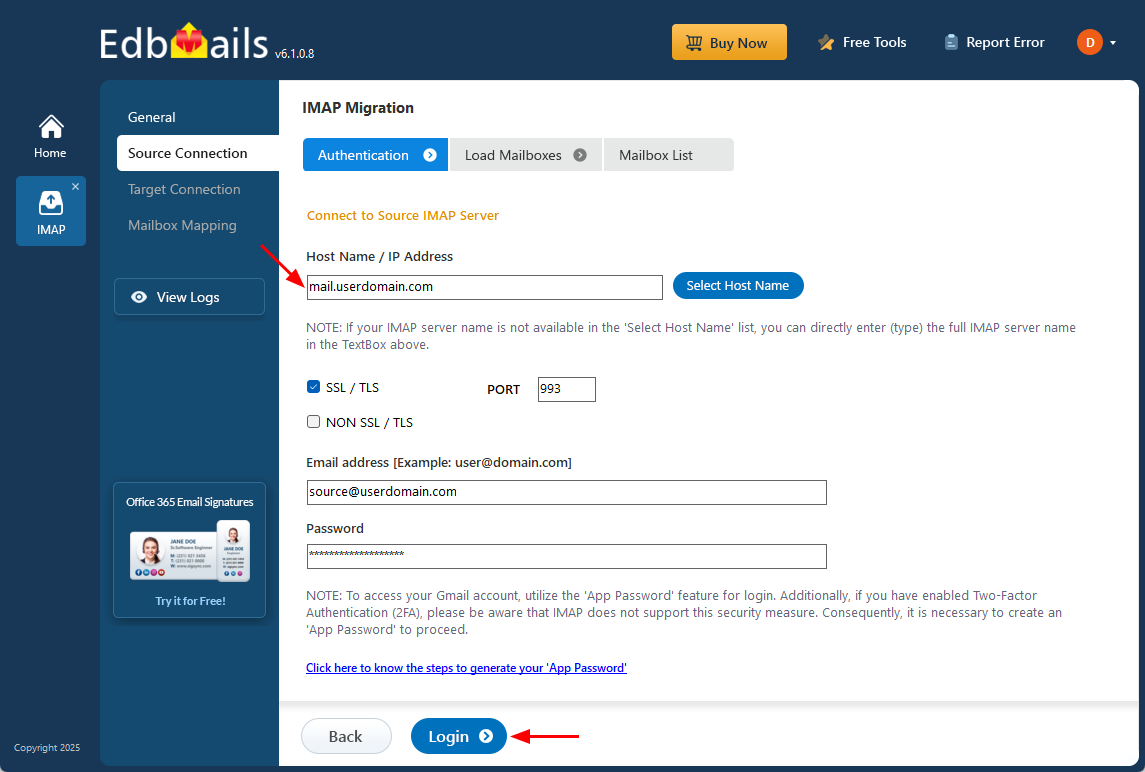
- Select ‘AWS WorkMail’ if available or enter the regional WorkMail IMAP endpoint manually. AWS documents endpoints in the form imap.mail.<region>.awsapps.com, using port 993 with SSL. Enter the full WorkMail email address and current mailbox password.
- Click on the ‘Login’ button to establish a secure connection with your AWS WorkMail account.
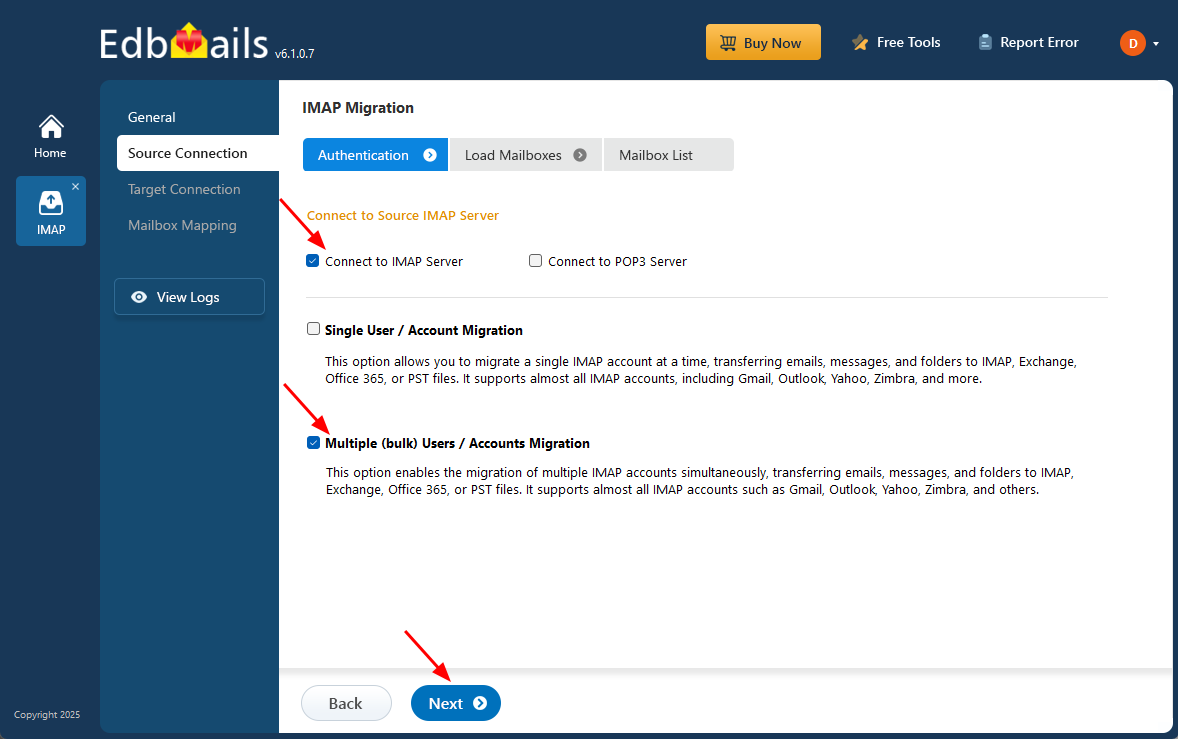
- To perform a bulk migration of multiple AWS WorkMail mailboxes, select the ‘Multiple (Bulk) Users/Accounts Migration’ option and click ‘Next’ to proceed with the configuration.
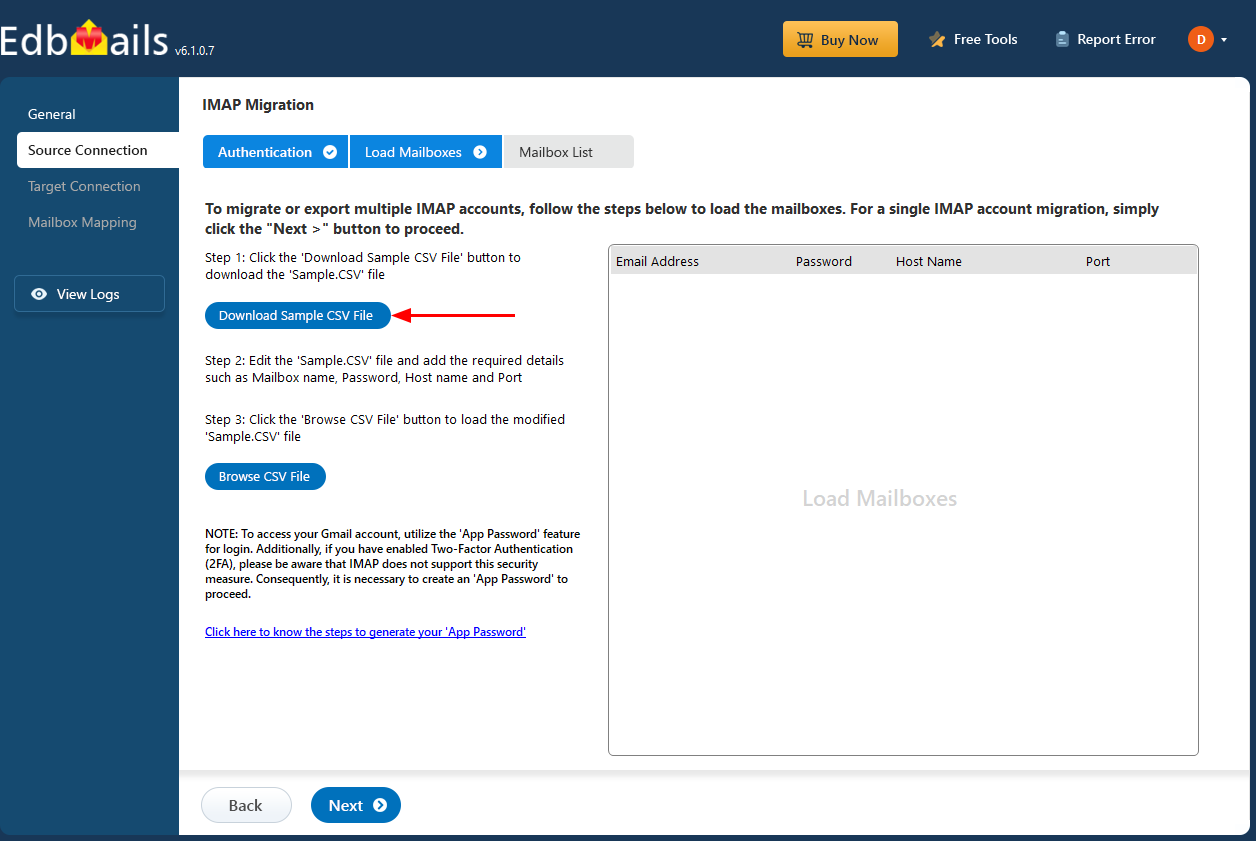
- Click ‘IMAP Migration CSV File’.
- Open the CSV file and enter the necessary details for each AWS WorkMail account you wish to migrate. This includes the user's email address, account password, IMAP server name, and the corresponding port number. After filling in all the required fields, save the file to proceed with the migration setup.
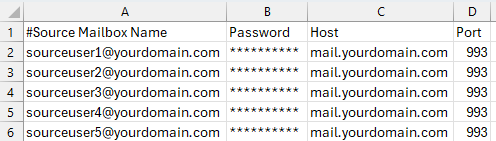
- Once you've updated the CSV file with all the necessary mailbox details, save and close the file.
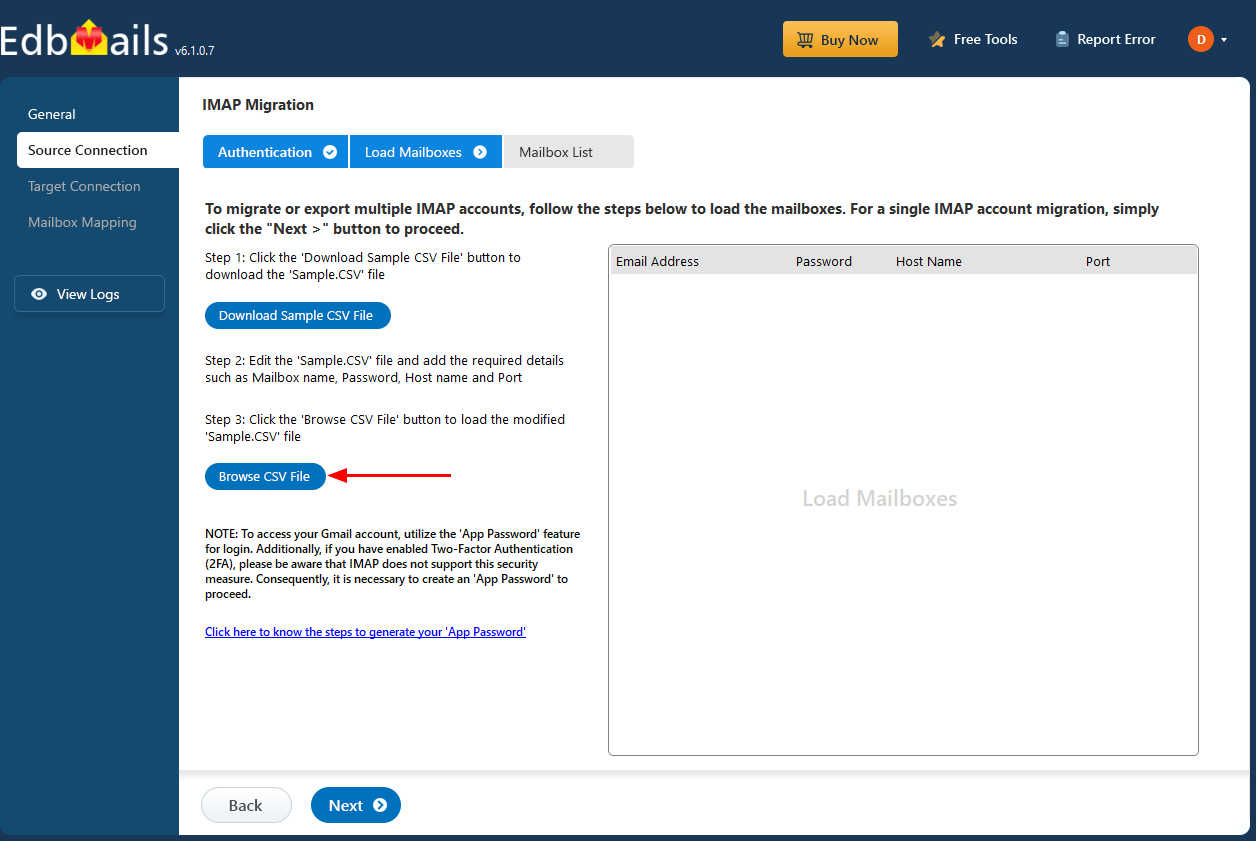
- Then, click the 'Load Modified CSV File' button, navigate to the saved location, select your file, and upload it to continue with the migration process.
- To begin migrating a single user account, choose the ‘Single User / Account Migration’ option, then click ‘Next’ to move forward with the process.
Step 3: Select the mailboxes or folders to migrate
- Select the mailboxes or individual folders you want to include in the migration. Once you've made your selection, click ‘Next’ to move forward with the process.
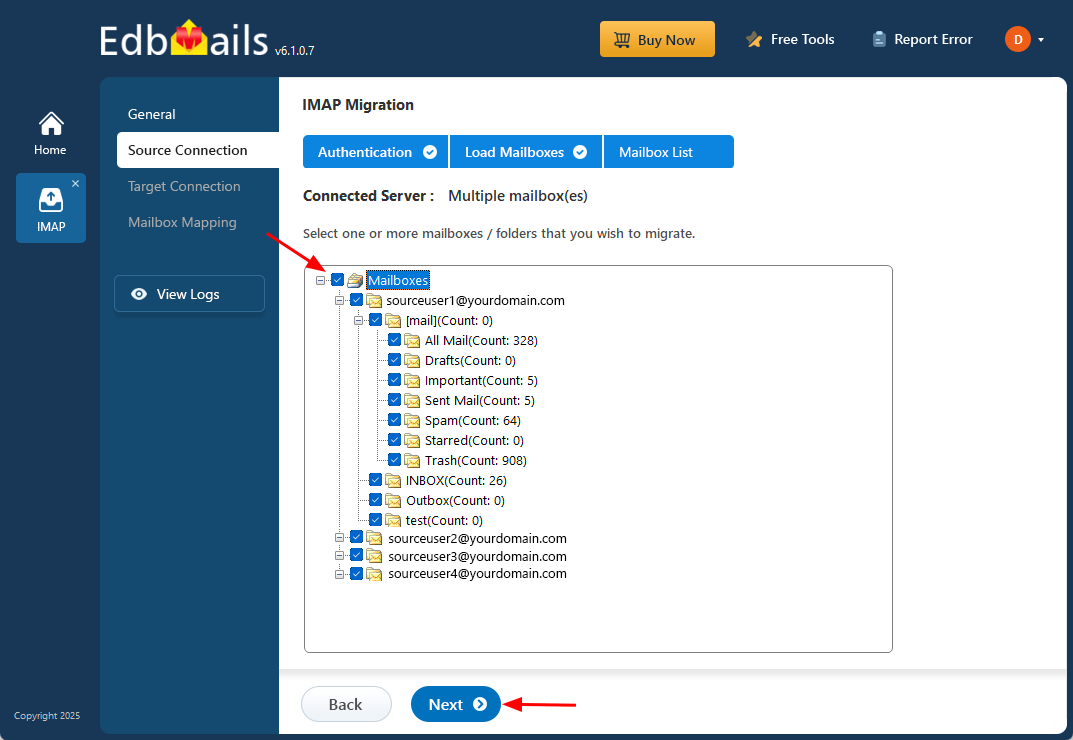
- Select the mailboxes or individual folders you want to include in the migration. Once you've made your selection, click ‘Next’ to move forward with the process.
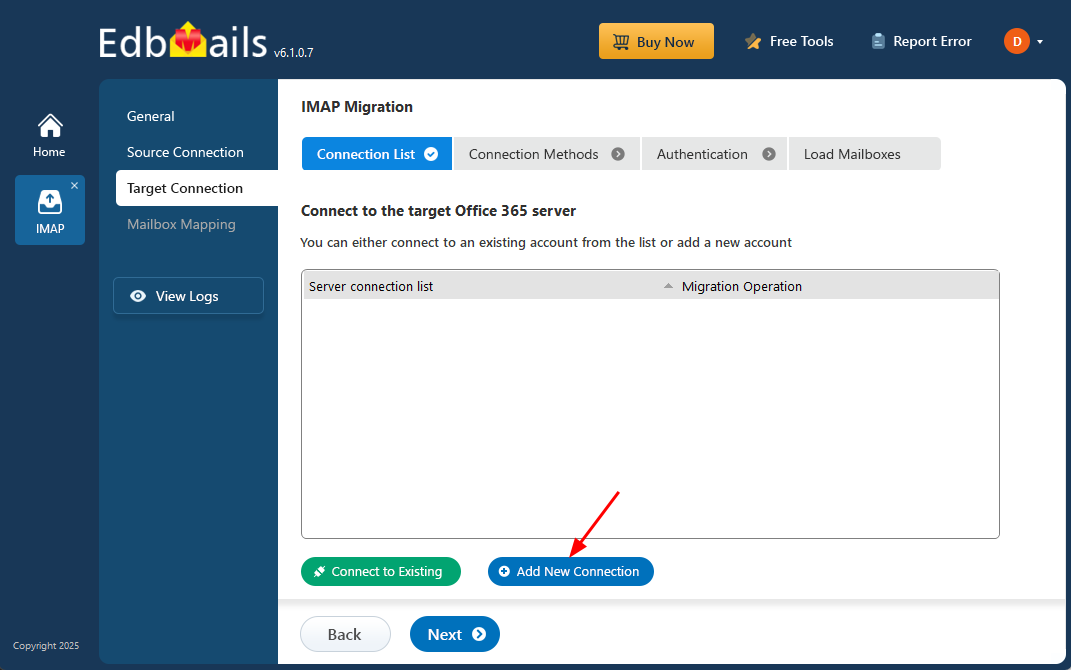
Step 4: Connect to target Office 365 server
- Click the ‘Add New Connection’ button to establish a new connection to the target Office 365. To use the previous connection, select it from the connection list and click the ‘Connect to Existing’ button to proceed.
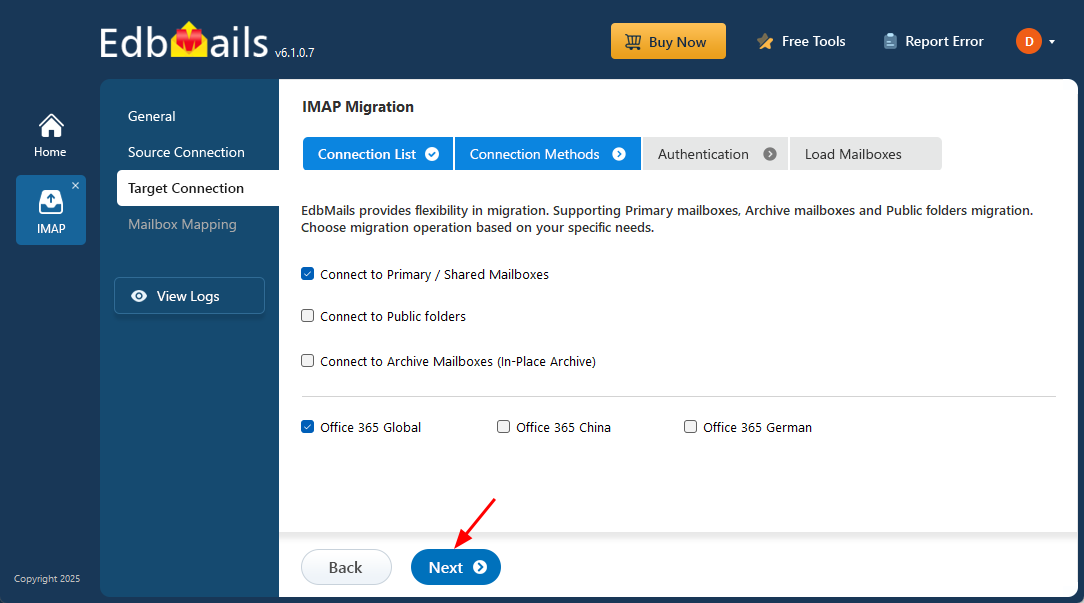
- Select the appropriate connection settings based on your migration requirements, then click ‘Next’ to proceed with the migration.
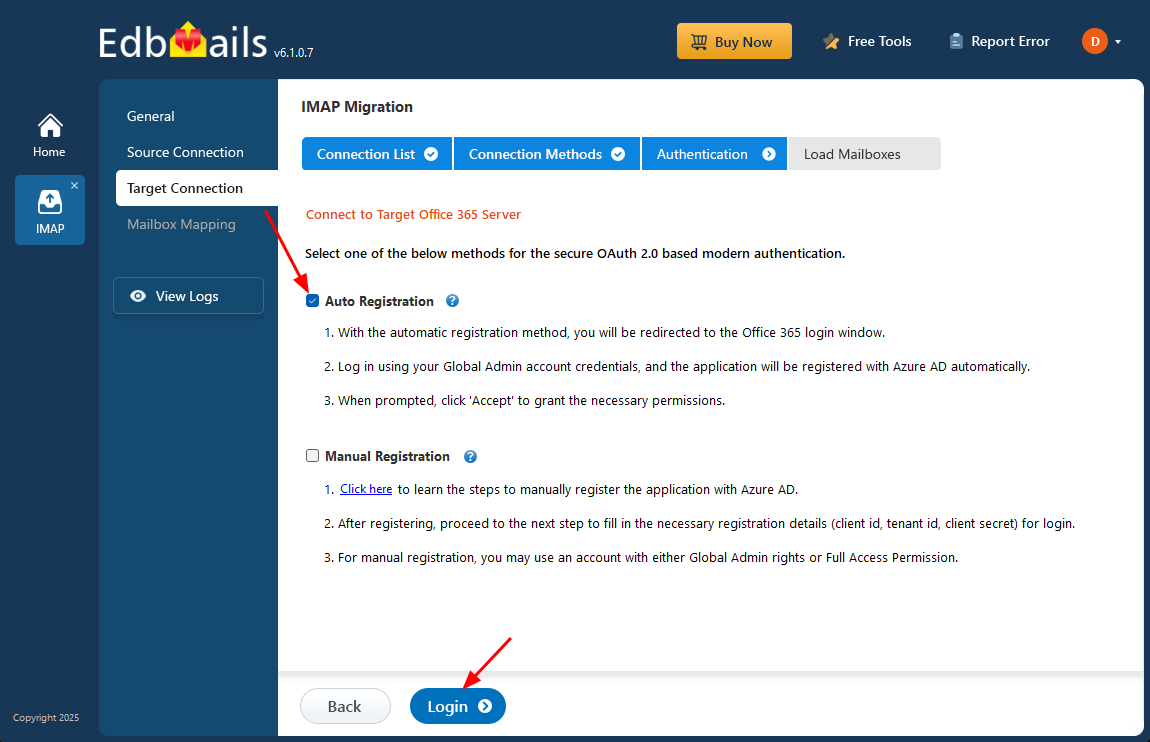
- Choose your preferred secure authentication method for connecting to the target Office 365 account, then click ‘Login’ to establish the connection.
- Authenticate on Microsoft sign-in page.
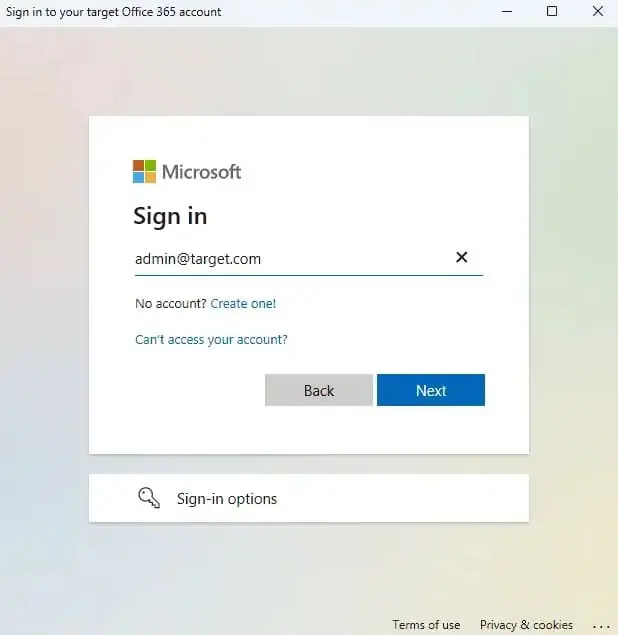
- Once logged into your target Office 365 server, decide how you want to load the mailboxes. EdbMails will list available mailboxes automatically, however, due to Microsoft API restrictions, only up to 100 mailboxes will be shown. To load more than 100 mailboxes, select the ‘Load Mailboxes using .CSV file’ option
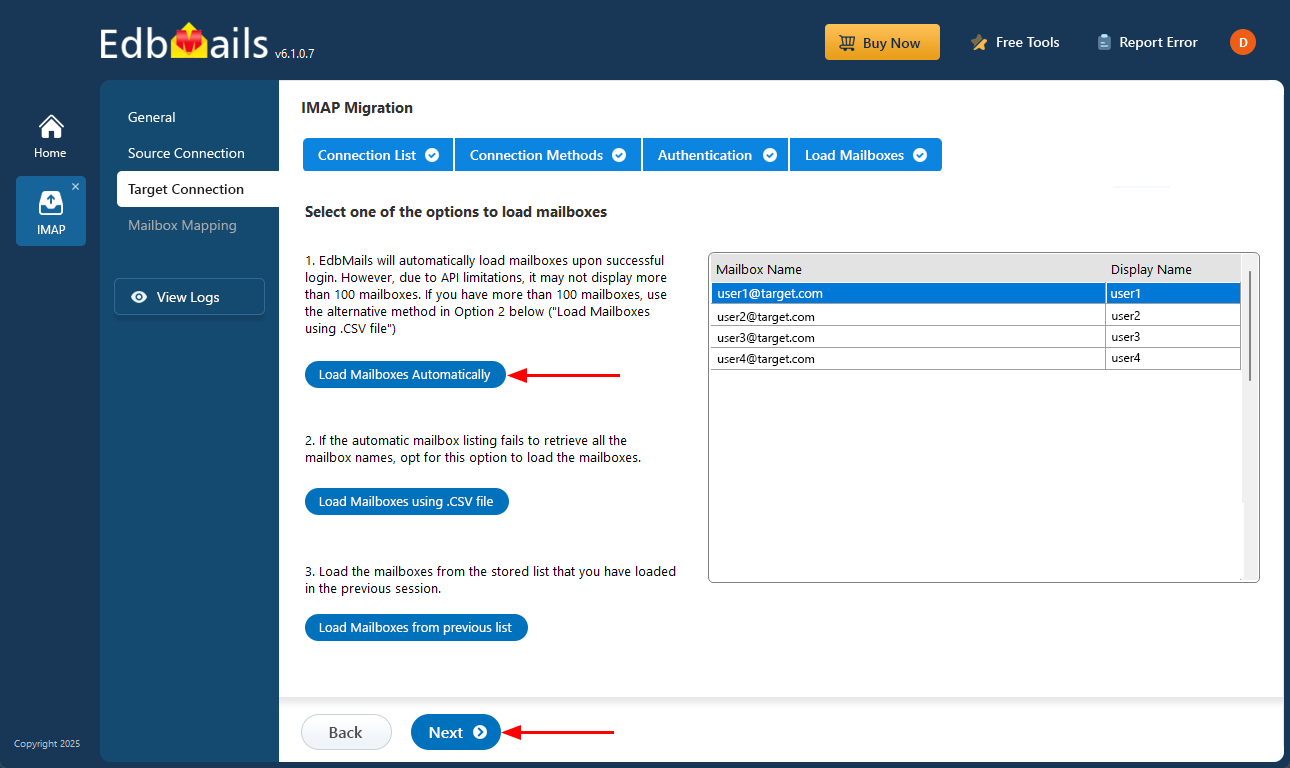
- Click the ‘Add New Connection’ button to establish a new connection to the target Office 365. To use the previous connection, select it from the connection list and click the ‘Connect to Existing’ button to proceed.
Step 5: AWS WorkMail to Office 365 mailboxes mapping
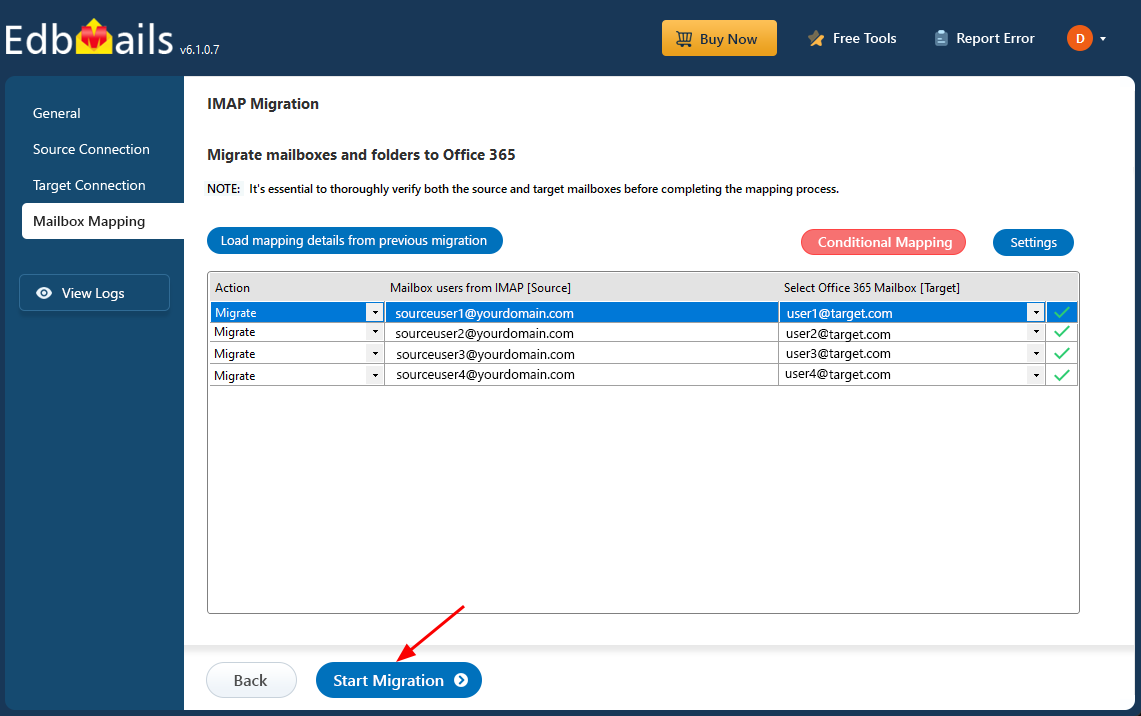
- Choose your preferred method to map the source mailboxes and folders to their corresponding mailboxes and folders on the target Office 365 account.
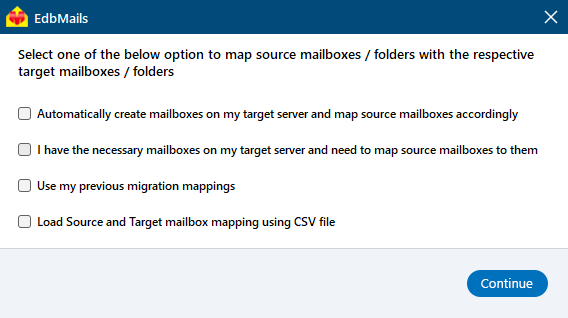
- EdbMails lets you automatically create the required mailboxes in your target Office 365 account.
- EdbMails can automatically map source mailboxes where available identifiers align. Review the final mailbox and folder mapping before starting migration.
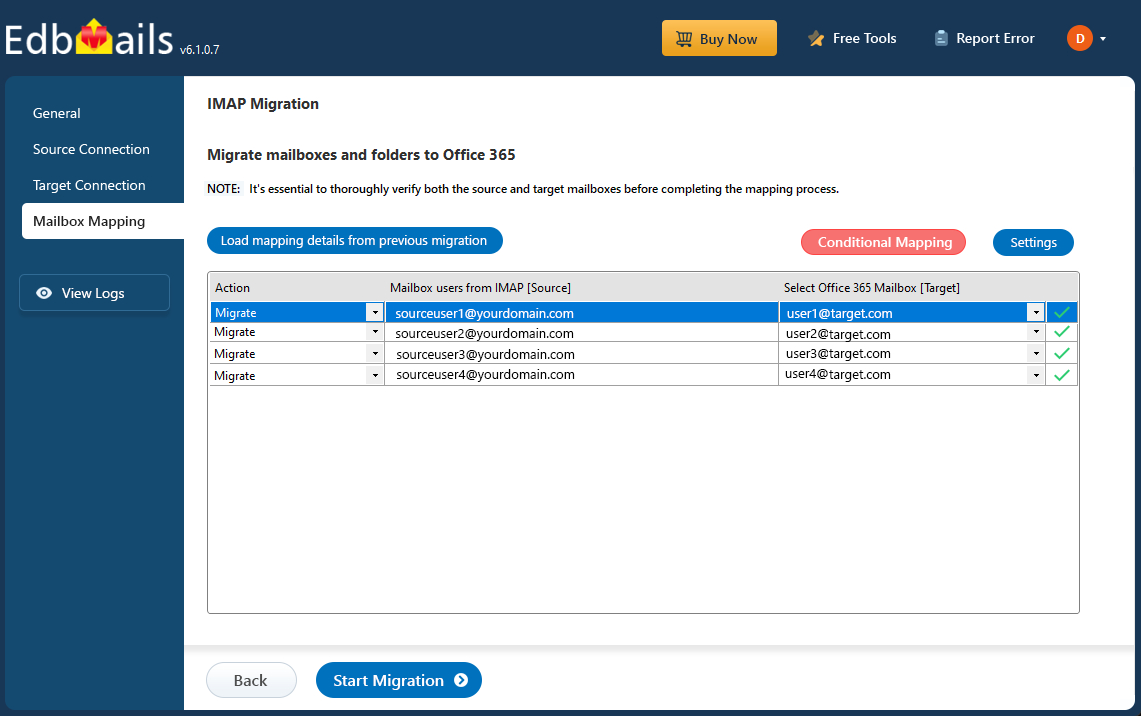
- Choose your preferred method to map the source mailboxes and folders to their corresponding mailboxes and folders on the target Office 365 account.
Step 6: Start AWS WorkMail to Office 365 migration
- Review the mailbox mapping for accuracy, then click the ‘Start Migration’ button to initiate the migration process.
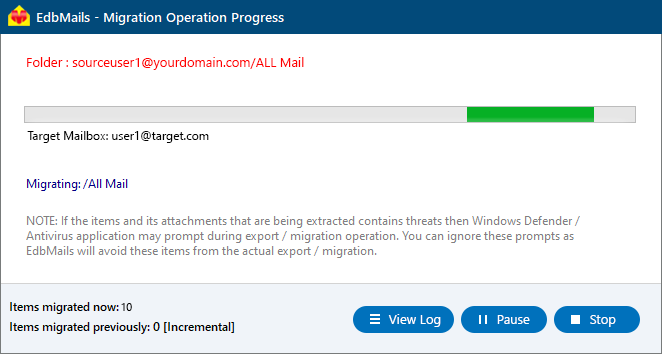
- Click the ‘View Logs’ button to open the detailed migration report. This report includes comprehensive information, such as mailbox mapping, a summary of the migration process, and the item count for each migrated mailbox and folder.
- Review the mailbox mapping for accuracy, then click the ‘Start Migration’ button to initiate the migration process.
Amazon WorkMail to Office 365 post migration tasks
- Step 1: Update the MX records to point to Office 365
Update the DNS records known as MX records to enable email and receive messages on the target Office 365 server. In addition, configure the Autodiscover record to allow Outlook to connect to the migrated mailboxes.
- Step 2: Create a new Outlook profile for users in the new domain
Configure the Outlook profile for each user in your domain if Outlook has problems connecting to Office 365 mailboxes.
- Step 1: Update the MX records to point to Office 365
AWS WorkMail to Office 365 migration troubleshooting
For troubleshooting, visit : Knowledge Base.
For more queries, check Frequently Asked Questions or contact support.
Benefits of EdbMails to migrate AWS WorkMail to Office 365
- Direct server-to-server email migration
EdbMails transfers AWS WorkMail email data directly to Office 365 using secure source and target connections. The IMAP workflow migrates email, attachments, folders, and supported message metadata; contacts and calendars require a separate migration method.
- Preserve supported folder hierarchy and email properties
EdbMails is designed to retain supported WorkMail folders, messages, attachments, and common email properties exposed through IMAP and accepted by Microsoft 365. Verify representative folders and items after migration.
- Current software and platform requirements
Use the latest available EdbMails build and review the current IMAP migration system requirements and Microsoft 365 connection guidance before production migration.
- Supported Windows migration environment
EdbMails runs on supported Windows environments. Review the current IMAP migration system requirements before installing the application.
- Migration logs and verification
EdbMails provides migration logs and folder-level item information so administrators can review the migration status and verify the transferred data after each migration pass.
- Supported WorkMail folders
EdbMails migrates supported IMAP-visible WorkMail folders and email content selected for the project. Review migration reports and the target mailbox to identify any source folders or items that require follow-up.
- Export to multiple email clients
In addition to Office 365, EdbMails offers the flexibility to migrate emails from AWS WorkMail to various other platforms, including Gmail, Yahoo Mail, iCloud, Hotmail, and more. This multi-platform migration feature ensures users can easily transition to their preferred email service.
- Advanced filtering and data customization options
EdbMails offers advanced filtering and customization options, allowing users to select specific emails based on criteria like date range, subject, sender, or attachment type. You can also choose specific folders for migration and exclude both standard and custom folders from the operation, ensuring that only relevant data is transferred and optimizing the migration process.
Additional resources
- IMAP to Office 365 migration
- EdbMails IMAP migration software
- Zoho Mail to Office 365 migration
- GoDaddy to Microsoft 365 migration
- ProtonMail to Office 365 migration
- cPanel to Office 365 migration
- Rackspace to Office 365 migration
- Plesk to Office 365 migration
- Barracuda to Office 365 migration
- Remove duplicate emails from Amazon WorkMail