123 Reg to Office 365 Email Migration
Move 123 Reg Professional Email to Microsoft 365 while keeping the domain registration and website hosting with 123 Reg if required. 123 Reg currently documents imap.secureserver.net as the secure IMAP server for Professional Email, with SSL and port 993.
Standard IMAP migration covers supported messages, attachments, mail folders, folder hierarchy, and common message properties. Contacts, calendars, tasks, website files, databases, and other non-mail workloads are outside this workflow.
The EdbMails IMAP Migration Tool supports bulk CSV loading, mapping, filters, concurrent processing, incremental follow-up runs, and reports. For broader destination planning, authentication, mapping, and cutover guidance, use the IMAP to Office 365 migration guide.
To address these issues, it’s essential to perform a thorough pre-migration assessment, ensure proper domain and mailbox preparation, and use a reliable migration tool that automates data transfer while minimizing disruption. A structured approach not only reduces manual effort but also supports a controlled migration with post-migration verification to Office 365.
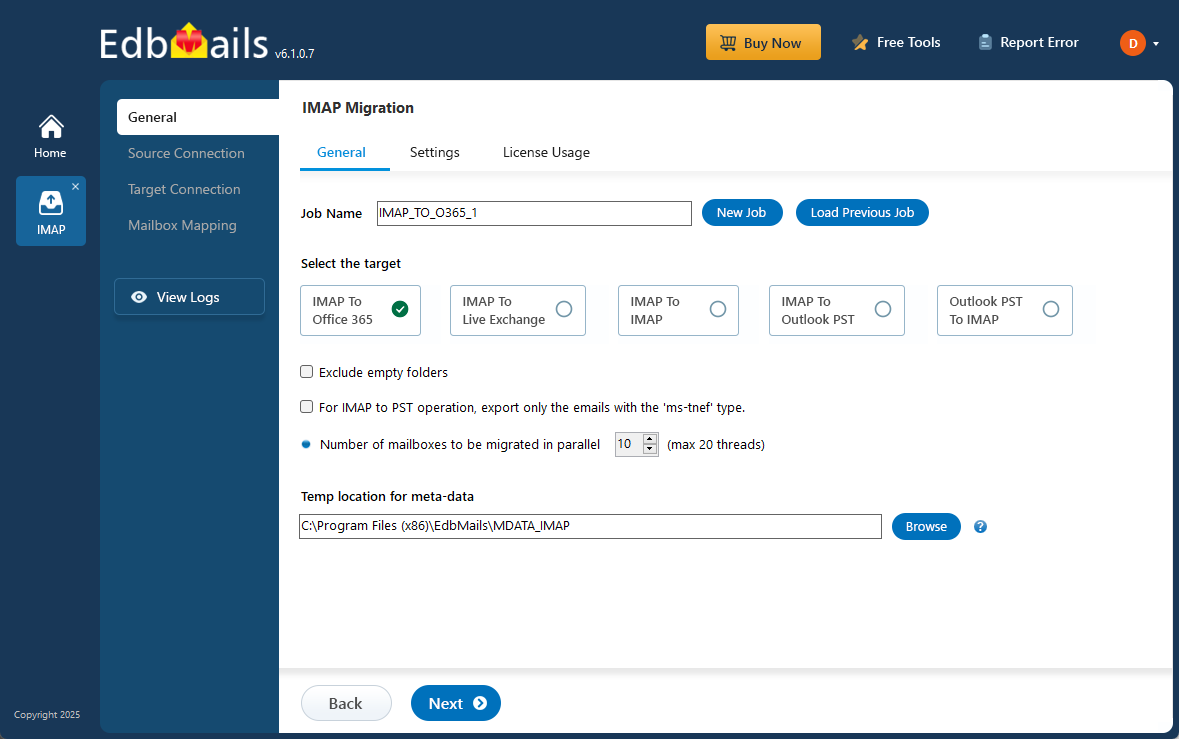
EdbMails provides a direct source-to-target workflow for supported 123 Reg IMAP email data. Incremental follow-up migration can process eligible new or changed email items after the initial pass, while migration filters help control the data scope. Automatic mailbox mapping can reduce repetitive setup where source and target identifiers match, but administrators should review the final mapping and migration report before cutover.
User Query
"We purchased a web host and email together from 123 Reg and now want to migrate only our email to Office 365 while retaining the web host. We also have the requirement that the email domain remain 123 Reg while receiving emails in our Office 365 account. In other words, how do we keep the same email domain name as 123 Reg email? Thank you for any input."
123 Reg to Office 365 Migration Planning
- Inventory 123 Reg Professional Email mailboxes, mailbox sizes, folders, aliases, and active users.
- Use imap.secureserver.net, secure IMAP port 993, SSL, the full email address, and source mailbox password.
- Create/provision Microsoft 365 target mailboxes and assign the required licenses.
- Add and verify the existing custom domain in Microsoft 365. Website hosting can remain with 123 Reg.
- Review source limits, Microsoft 365 throttling, message-size policies, and bandwidth.
- Prepare the EdbMails CSV for bulk migration and run a pilot mailbox first.
- Use incremental follow-up passes where required and change MX/DNS only after target validation.
123 Reg to Office 365 Migration Prerequisites
123 Reg Professional Email source
- IMAP server: imap.secureserver.net.
- Security: SSL.
- IMAP port: 993.
- Username: the full 123 Reg email address.
- Password: the mailbox password required by the source account.
- For bulk migration, prepare the EdbMails sample CSV and validate a small test set first.
Microsoft 365 target
- Create/provision the required target users/mailboxes and assign licenses.
- Add and verify the custom domain if Microsoft 365 will receive production mail.
- Use the current EdbMails OAuth-based Microsoft 365 target connection.
- Review target limits and run a pilot before production migration.
Steps to Migrate email from 123 Reg to Office 365
Step 1: Download and Install EdbMails software
- Download and install EdbMails on your computer.
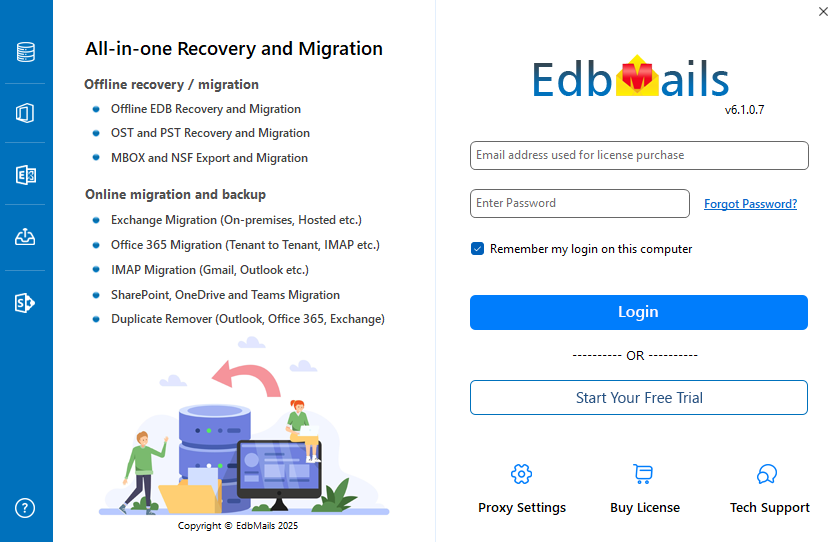
- Launch the EdbMails application on your computer.
- Enter your registered email ID and password, then click ‘Login’. If you are using EdbMails for the first time, select ‘Start Your Free Trial’ to begin with the trial version.Note: The EdbMails IMAP trial lets you evaluate the workflow and migrate up to 30 items from each folder. To migrate all eligible items for licensed mailboxes, purchase the required IMAP migration license.
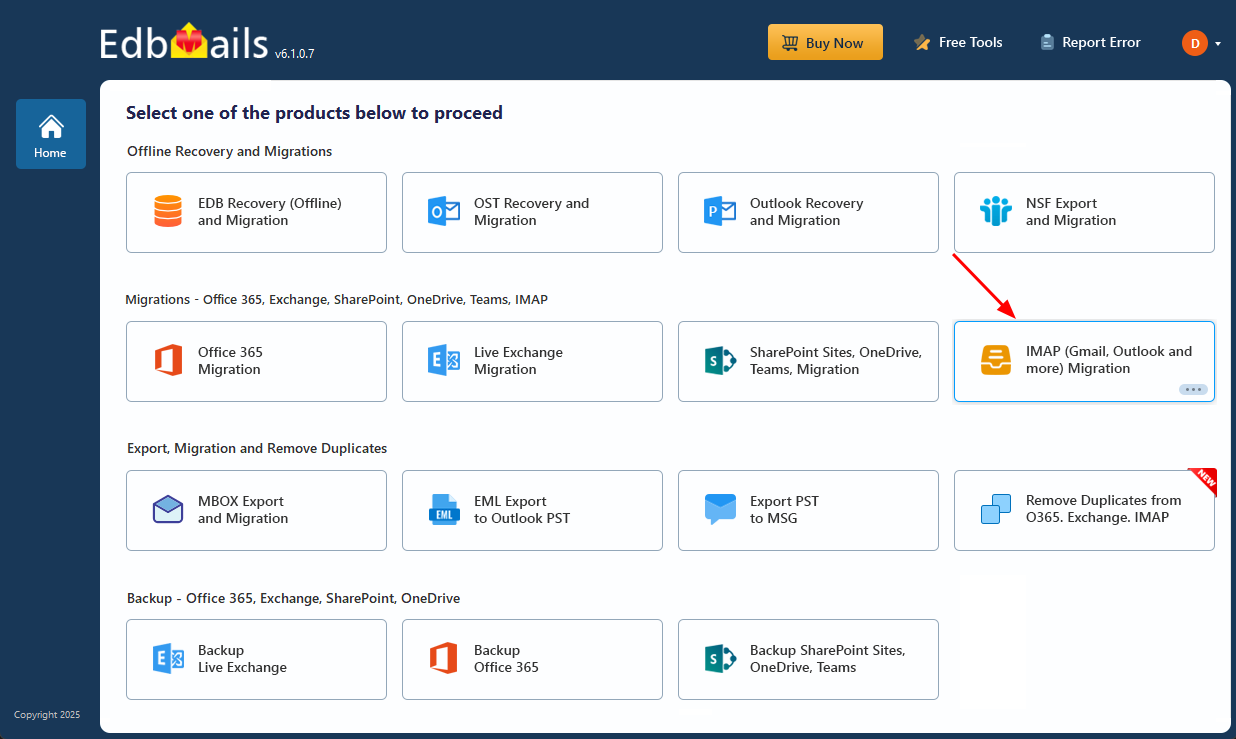
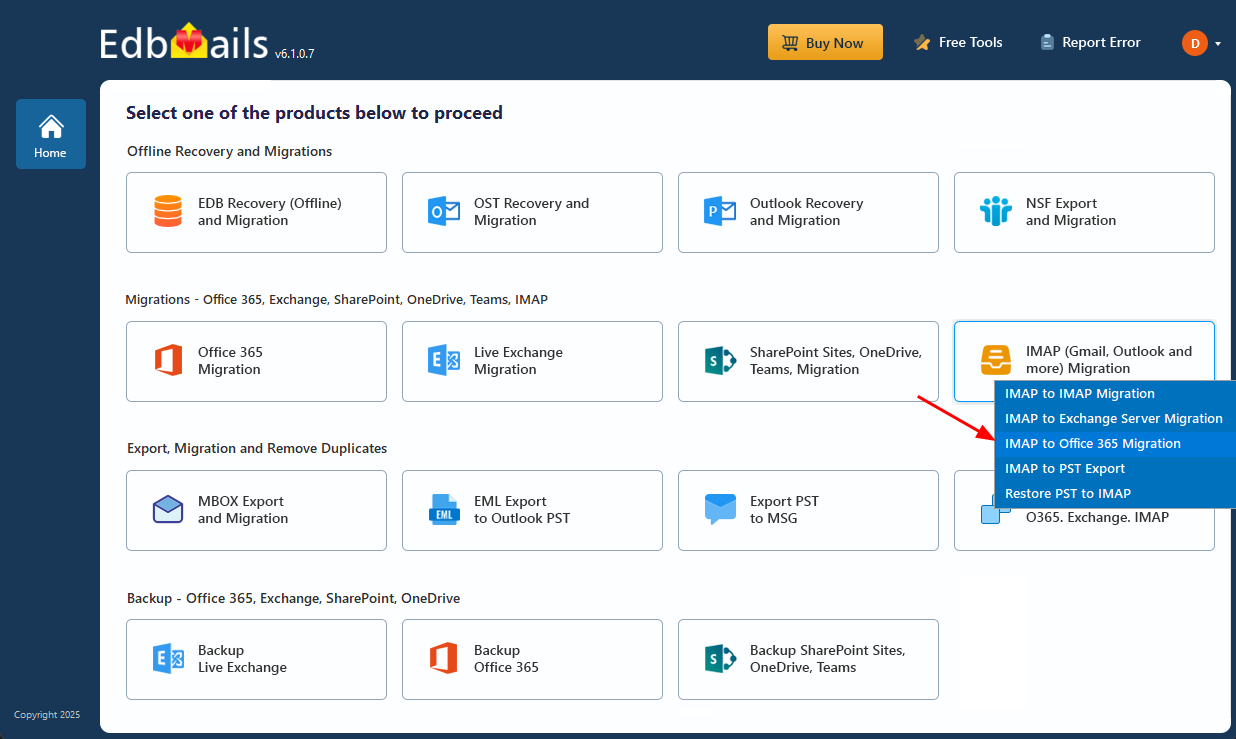
- Select the option ‘IMAP (Gmail, Outlook & more) Migration’.
- Select ‘IMAP to Office 365 Migration’.
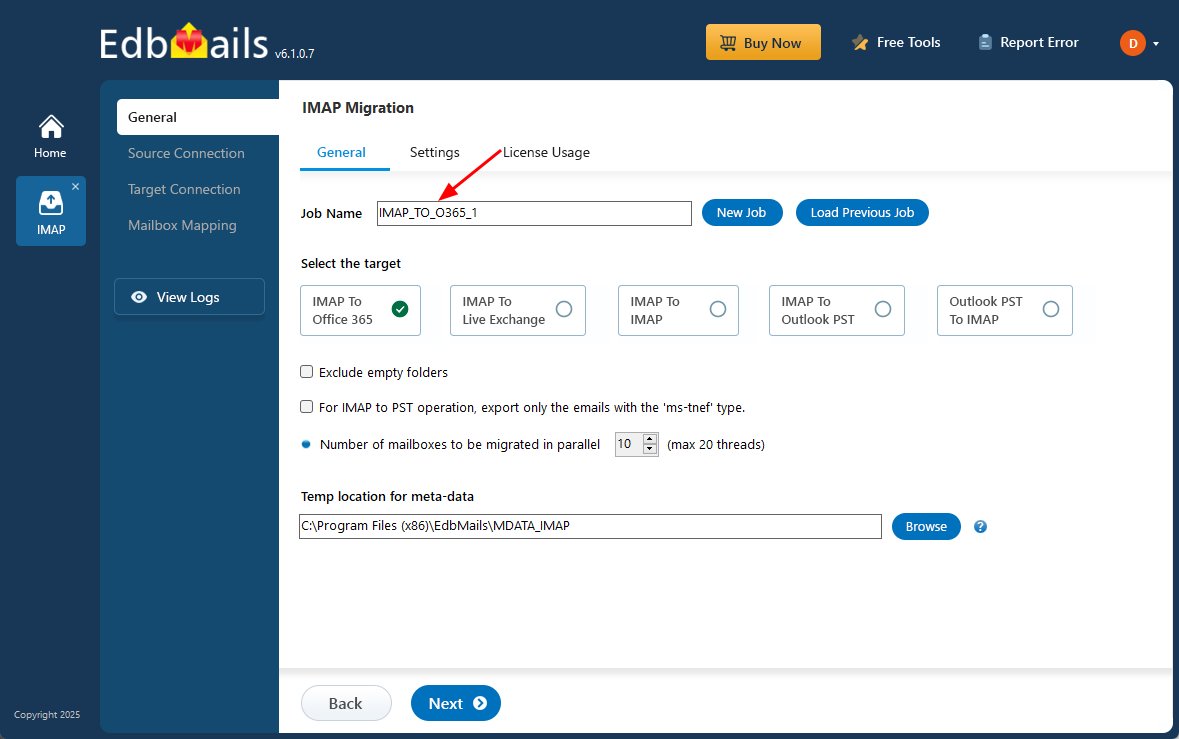
- You can proceed with the default job name, or click on ‘New Job’ to assign a custom name based on your migration preferences.
- Download and install EdbMails on your computer.
Step 2: Connect to source 123 Reg server
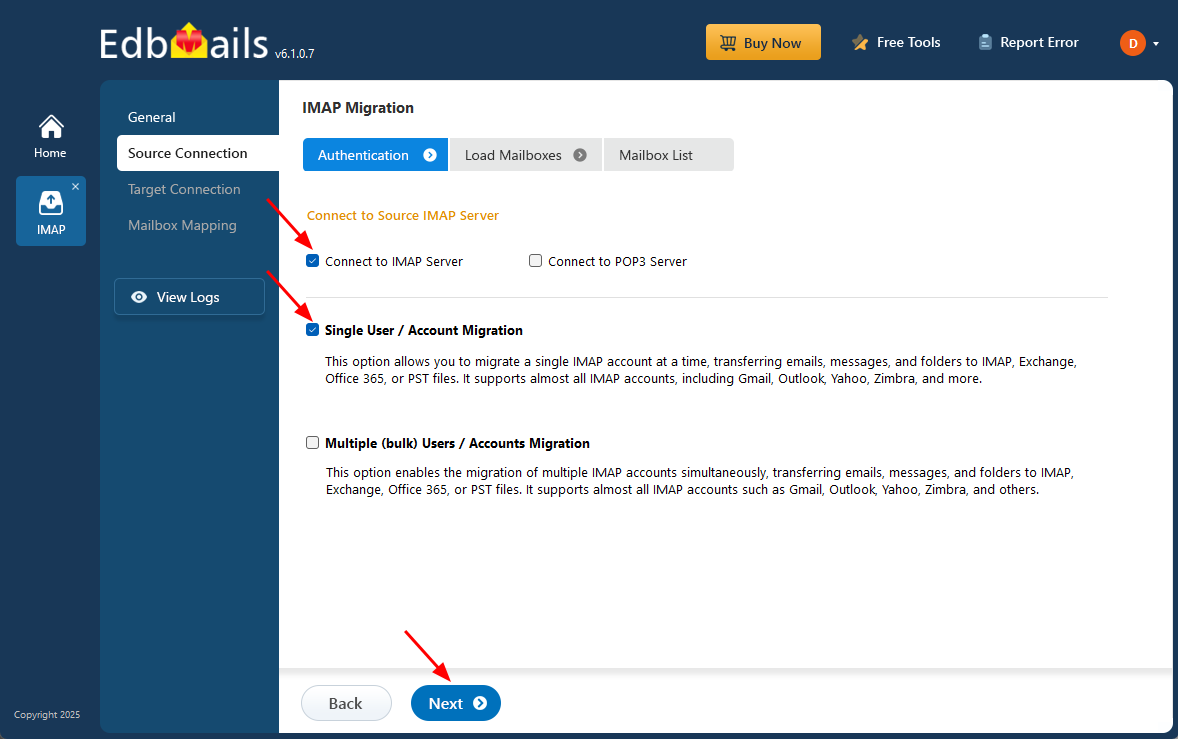
- To connect a single 123 Reg mailbox, select ‘Single User / Account Migration’, choose ‘Connect to IMAP Server’, and click ‘Next’.
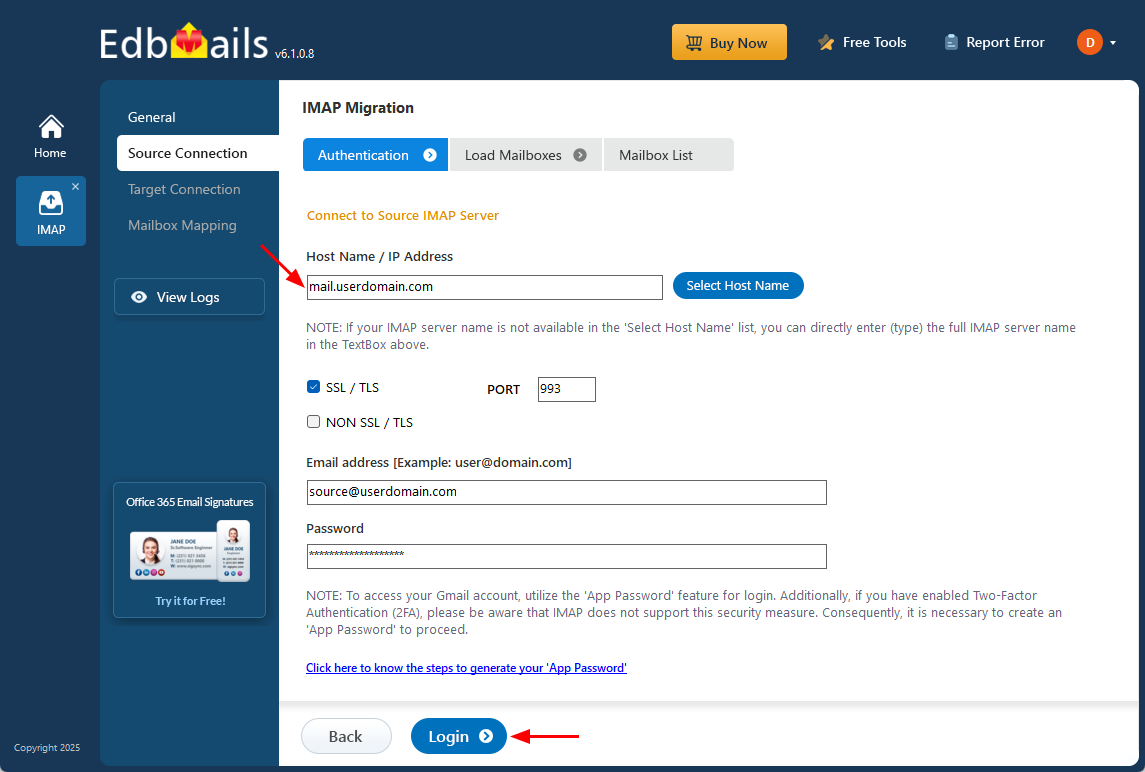
- Provide the current 123 Reg Professional Email connection details:
IMAP Server: imap.secureserver.net
Security: SSL
Port: 993
Username: full email address
- Then click the ‘Login’ button to proceed.
- To connect multiple 123 Reg mailboxes, select ‘Multiple (Bulk) Users/Accounts Migration’, choose ‘Connect to IMAP Server’, and click ‘Next’.
- Then proceed by clicking ‘Next’.
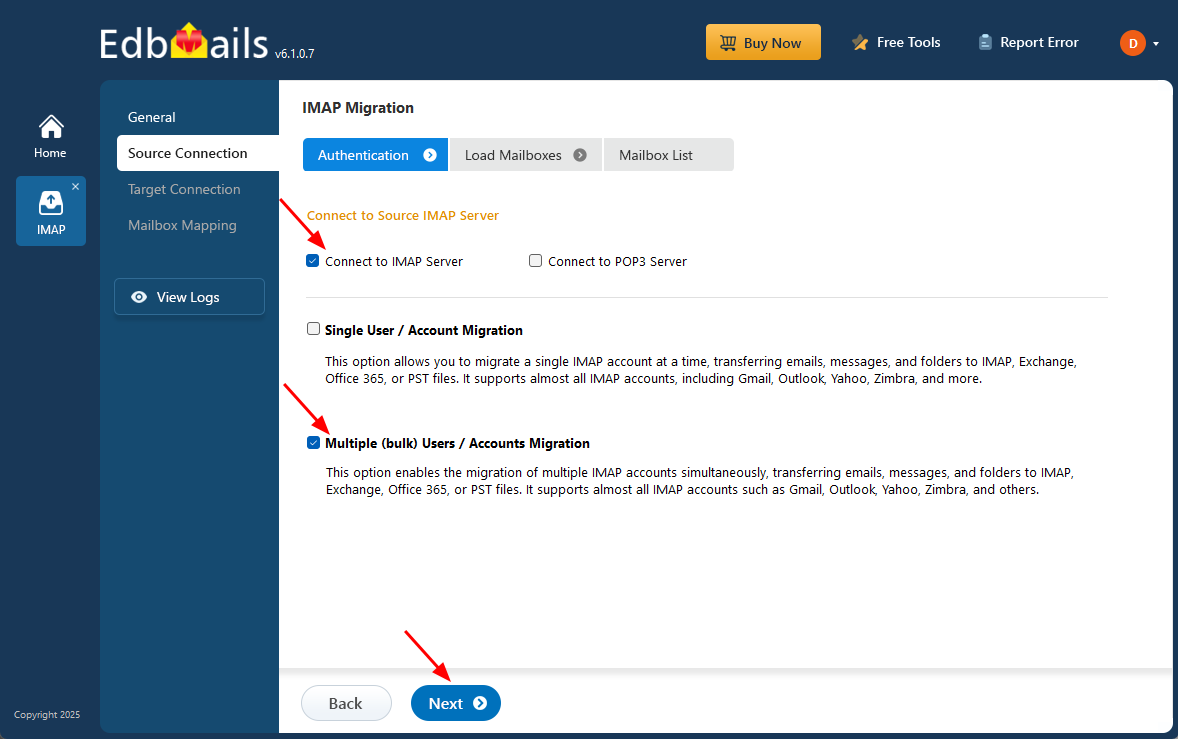
Steps to connect to single and multiple users in EdbMails IMAP migration
- Click ‘IMAP Migration CSV File’. It will load the sample CSV file to your local drive.
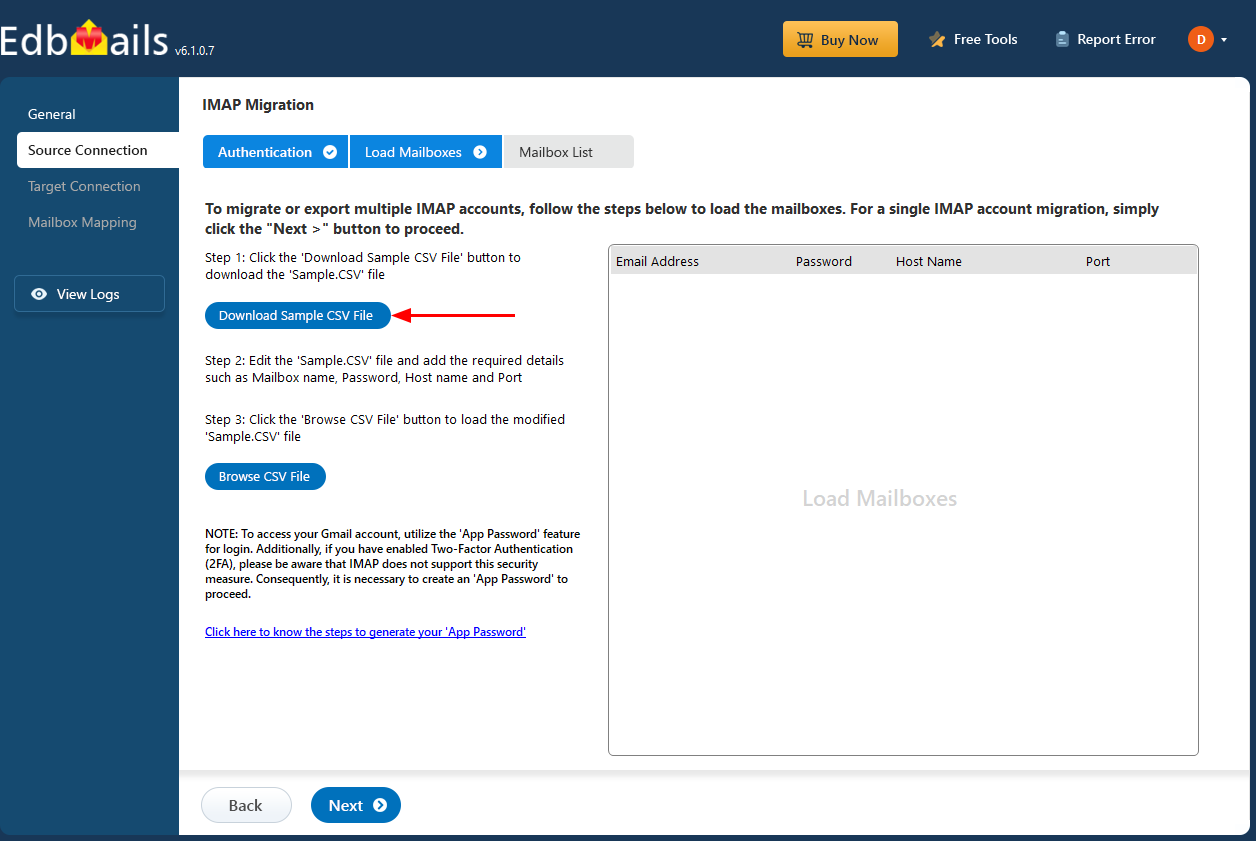
- Open the CSV file and fill in the necessary details, including the email address, password, IMAP server hostname, and port number for each mailbox. After completing the entries, save the file to proceed with the migration.
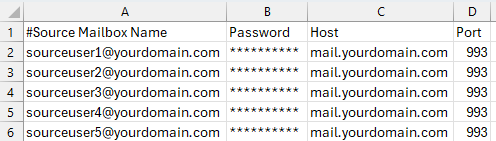
- Once you've finished updating the CSV file with the required information, save and close it.
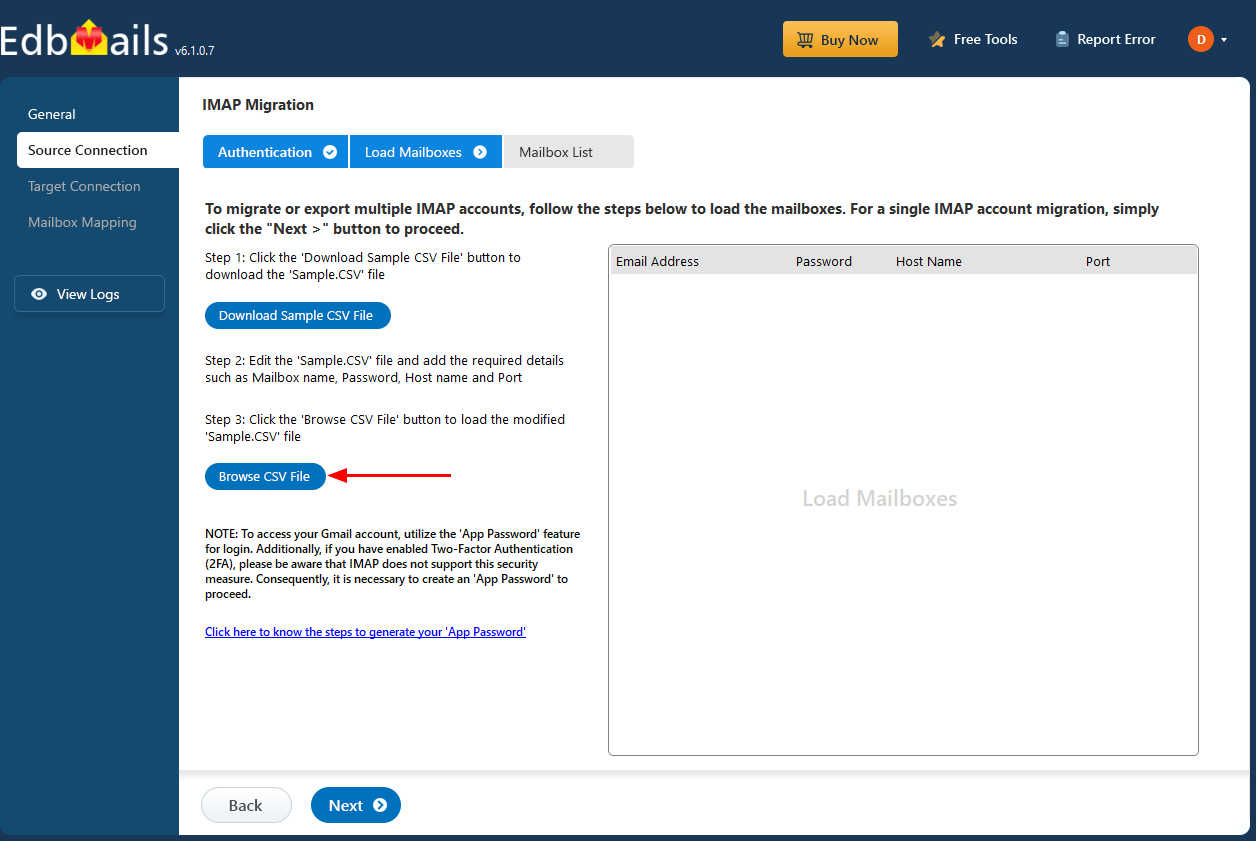
- Then, click the 'Load Modified CSV File' button, open the CSV file and click ‘Next’ to proceed.
- To connect a single 123 Reg mailbox, select ‘Single User / Account Migration’, choose ‘Connect to IMAP Server’, and click ‘Next’.
Step 3: Select source 123 Reg mailboxes to migrate
- Select the mailboxes or individual folders you want to migrate from 123 Reg, then click ‘Next’ to proceed with the migration process.
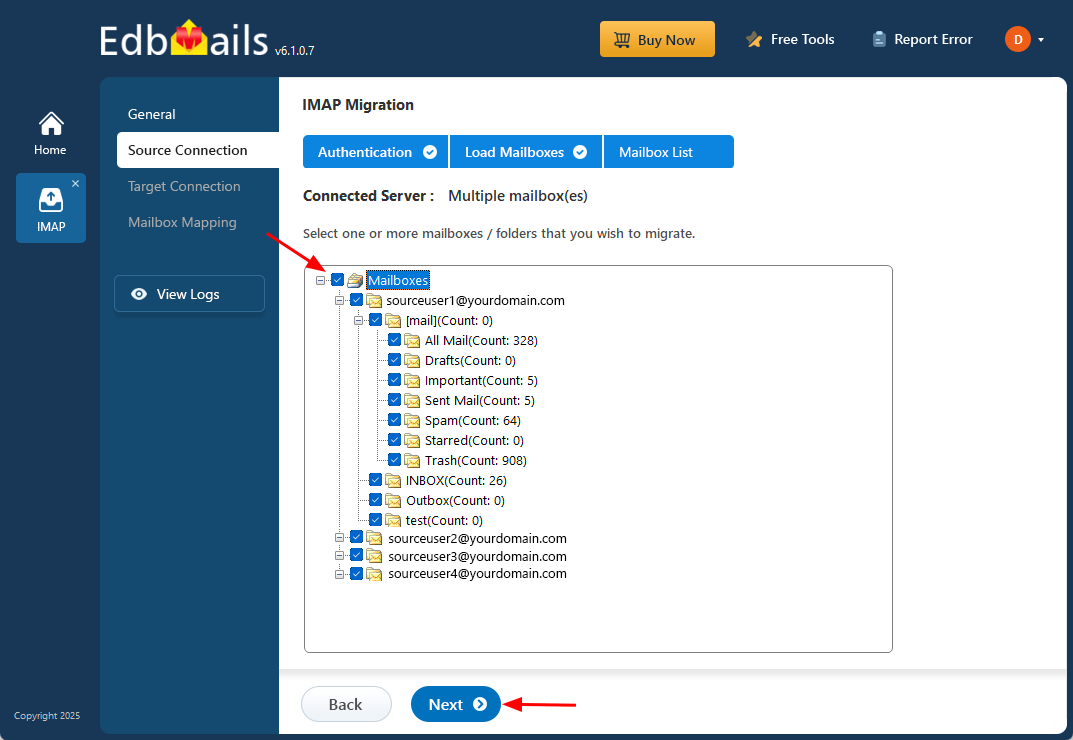
- Select the mailboxes or individual folders you want to migrate from 123 Reg, then click ‘Next’ to proceed with the migration process.
Step 4: Connect to target Office 365 server
- Click on ‘Add New Connection’ to set up a connection with your target Office 365 account.
- If a connection has already been configured, simply select it from the list and choose ‘Connect to Existing’ to continue.
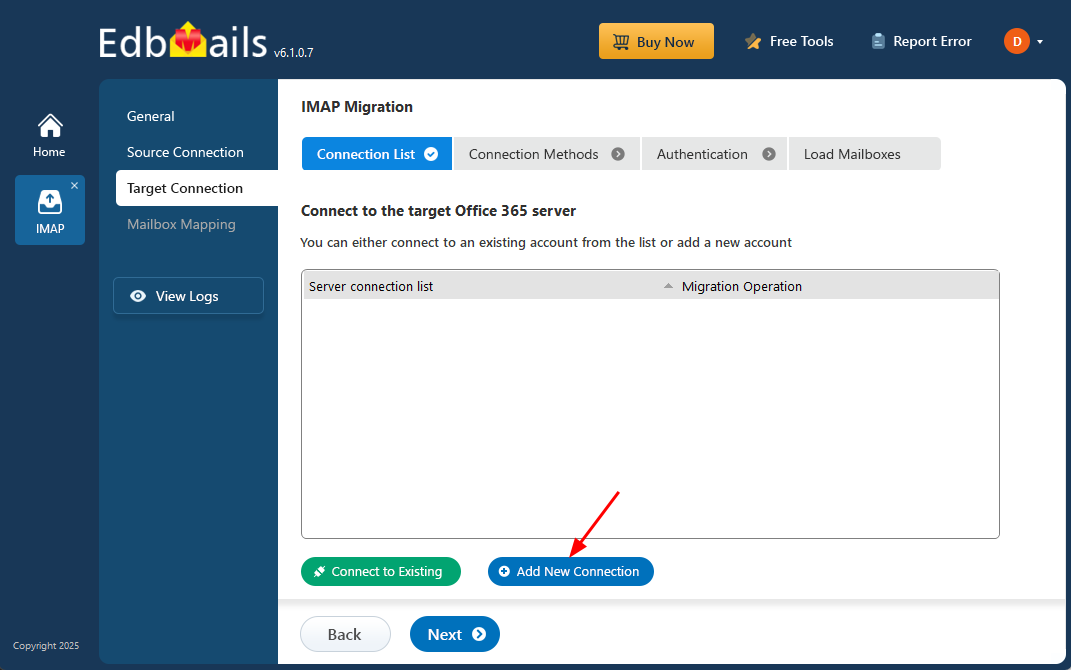
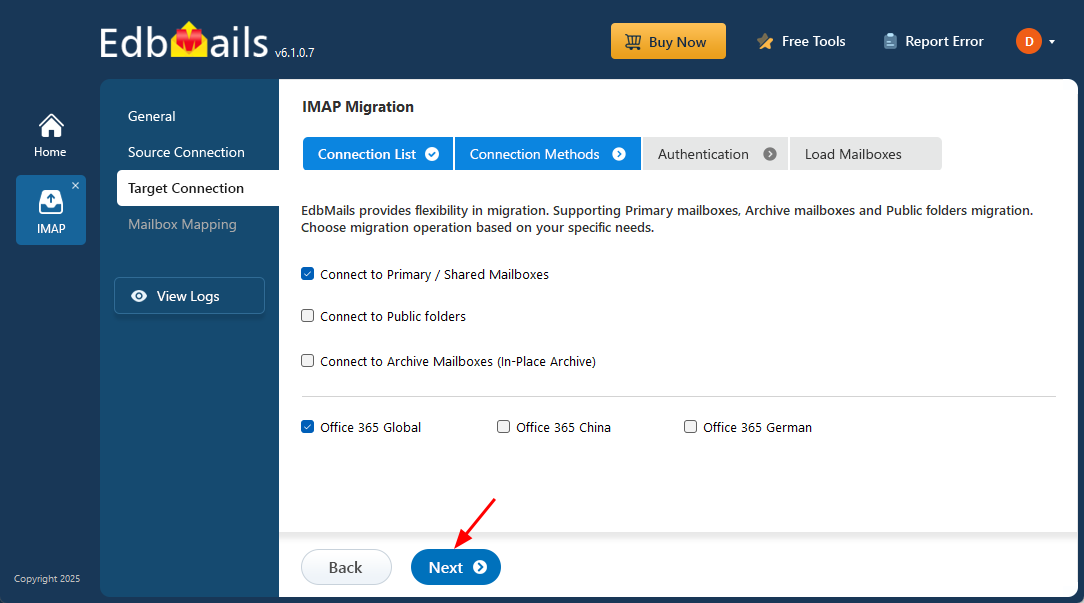
- Select the Microsoft 365 mailbox connection option appropriate for the destination mailbox used for this IMAP email migration, then click ‘Next’ and continue with the current EdbMails OAuth-based authentication workflow.
- Select your preferred connection option based on your migration requirements, and click ‘Next’ to continue with the authentication steps.
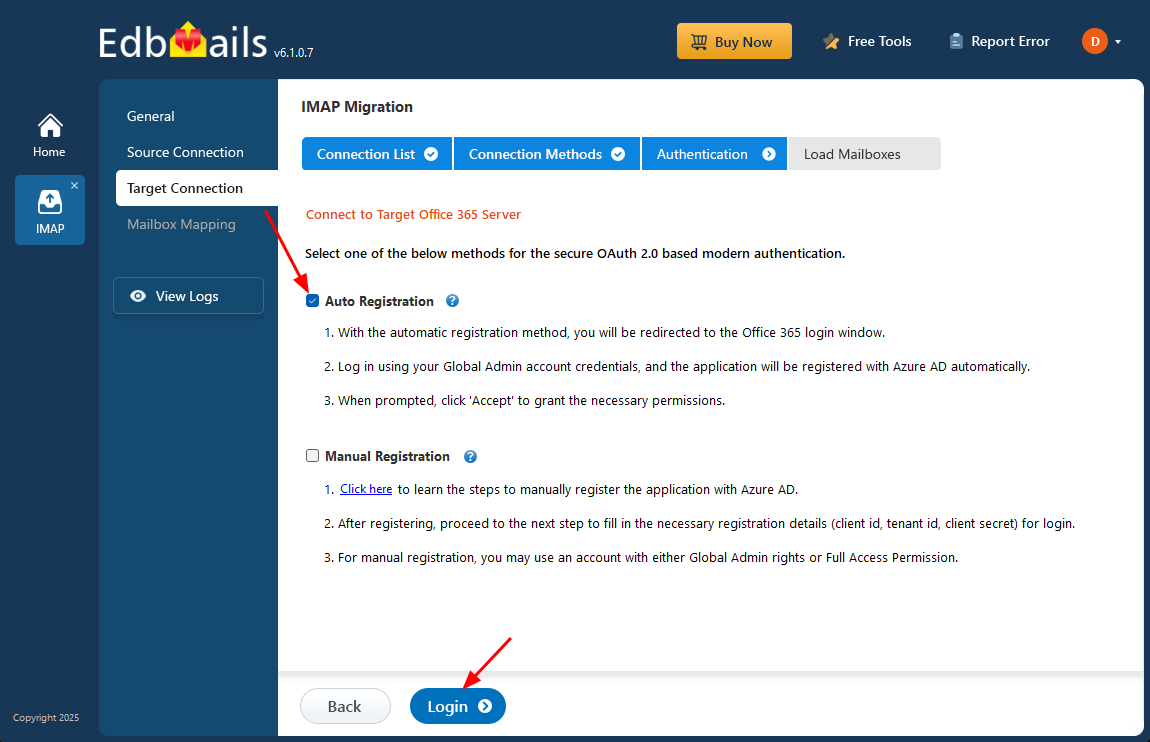
- Choose any of the available options to create a secure connection using OAuth 2.0 modern authentication:
- Select Auto Registration if you prefer a quick and smooth setup. Sign in with a Global Admin account and provide the required permissions to automatically register the application in Azure AD.
- Or choose Manual Registration if you prefer to enter the Azure AD application details yourself. This method supports both Global Admin accounts and accounts with Full Access permissions.
- Click ‘Login’ to proceed.
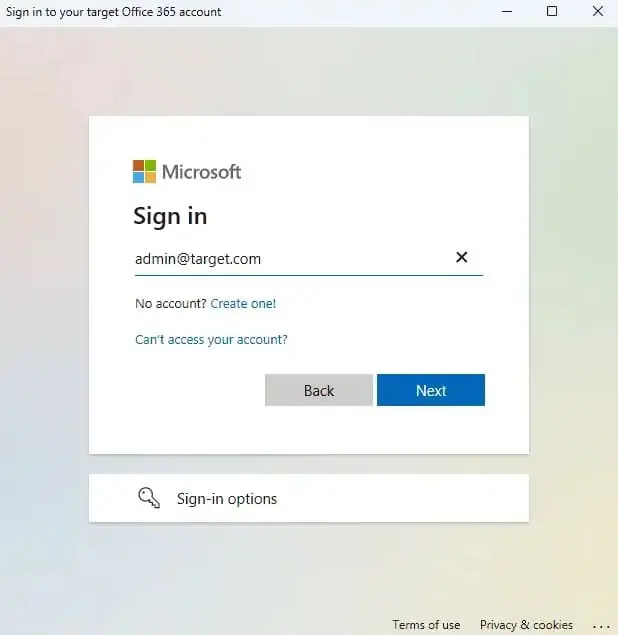
- Authenticate on Microsoft sign-in page.
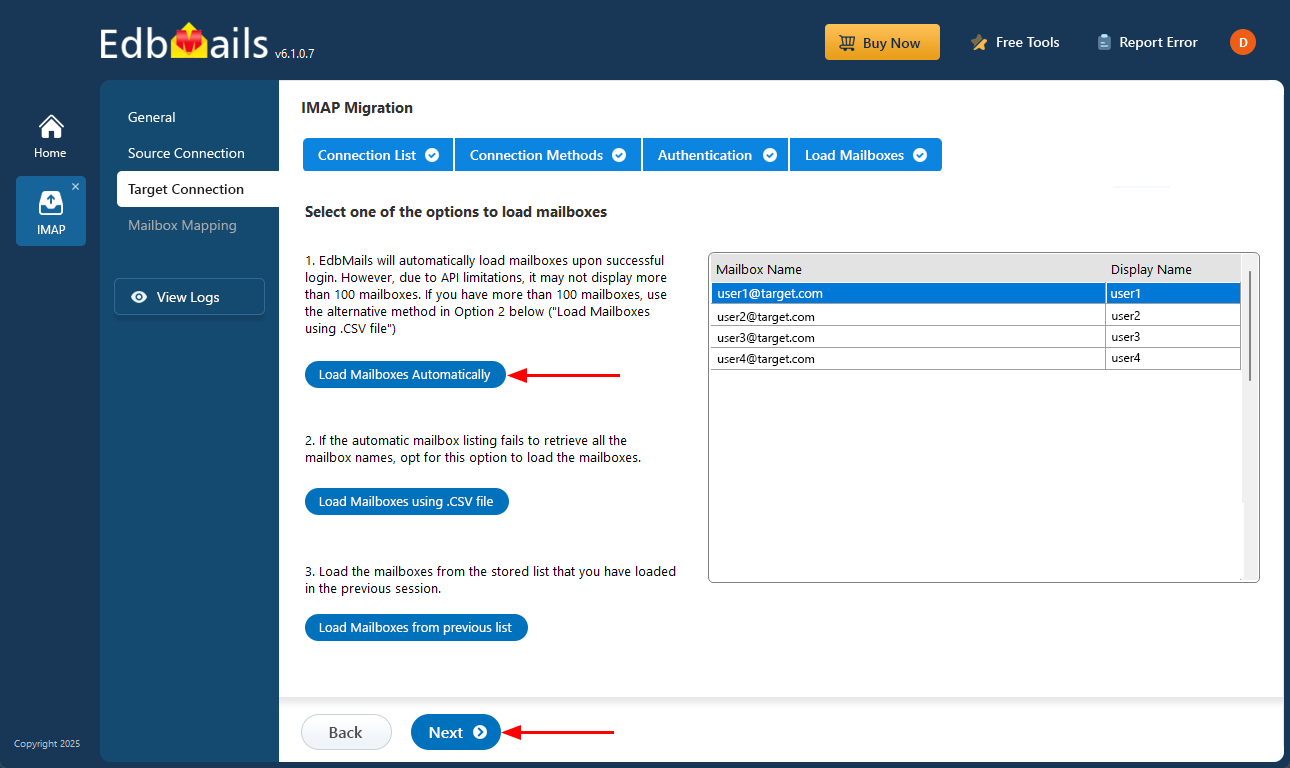
- Once authentication is completed successfully, select any one of the following options to load the mailboxes:
- Load Mailboxes Automatically: Use the automatic option to retrieve available target mailboxes through the current EdbMails Microsoft 365 connection. If every required mailbox is not returned, use the supported CSV-loading option and verify the destination mailbox list before continuing.
- ii) Load Mailboxes using CSV file: If the automatic method does not retrieve all mailbox names, choose ‘Load Mailboxes using .CSV file’ to manually upload and load the required mailboxes.
- iii) Load Mailboxes from previous list: This option allows you to load mailboxes from a previously saved list imported in an earlier session.
- Choose ‘Load Mailboxes Automatically’ and click ‘Next’ to move forward.
Step 5: 123 Reg to Office 365 Mailboxes Mapping
- Choose your preferred method to map the source mailboxes and folders to their corresponding mailboxes and folders in the target Office 365 account. This ensures that the migration is accurate and all data is transferred to the correct locations.
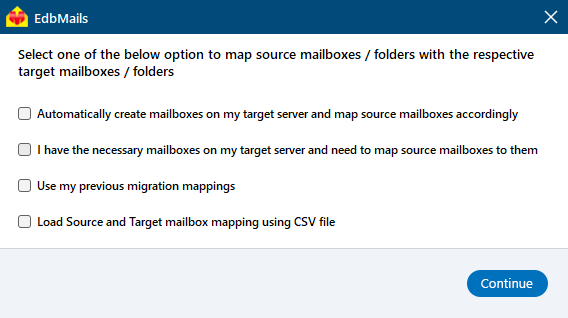
- Where supported and selected, EdbMails can assist with target mailbox creation and automatic mapping. Verify Microsoft 365 licensing and review every source-to-target mailbox mapping before starting the production migration.
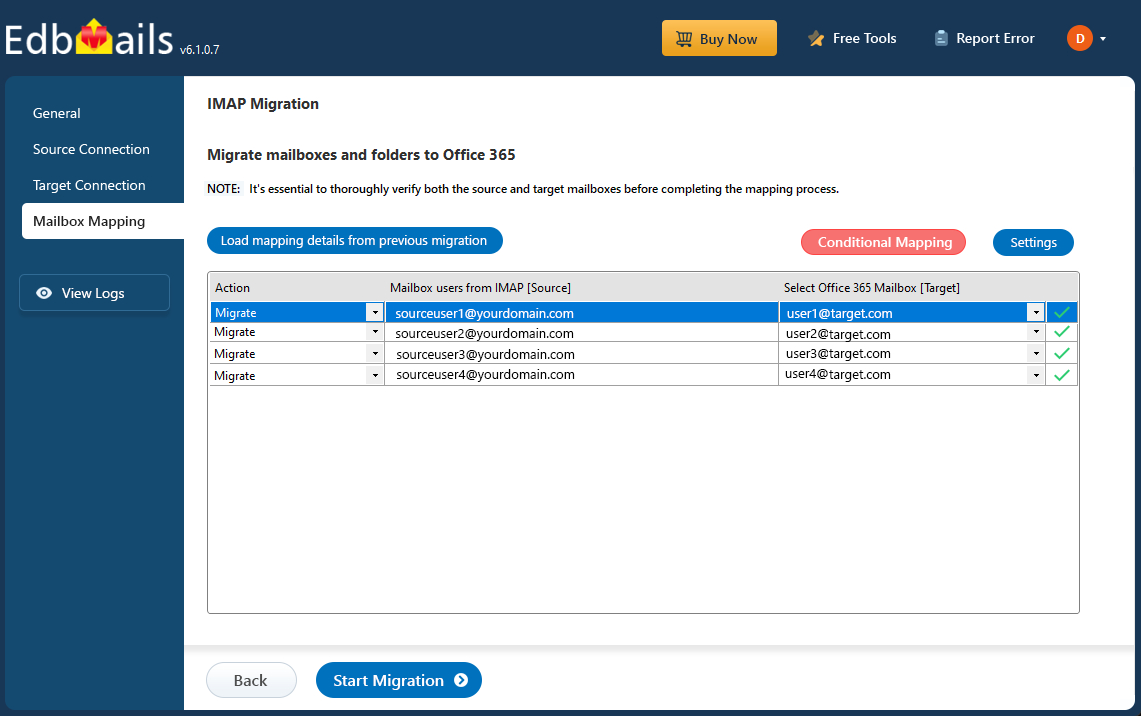
- Choose your preferred method to map the source mailboxes and folders to their corresponding mailboxes and folders in the target Office 365 account. This ensures that the migration is accurate and all data is transferred to the correct locations.
Step 6: Start 123 Reg to Office 365 migration
- Review and confirm the mailbox mapping to ensure accuracy, then click the ‘Start Migration’ button to initiate the migration process to Office 365.
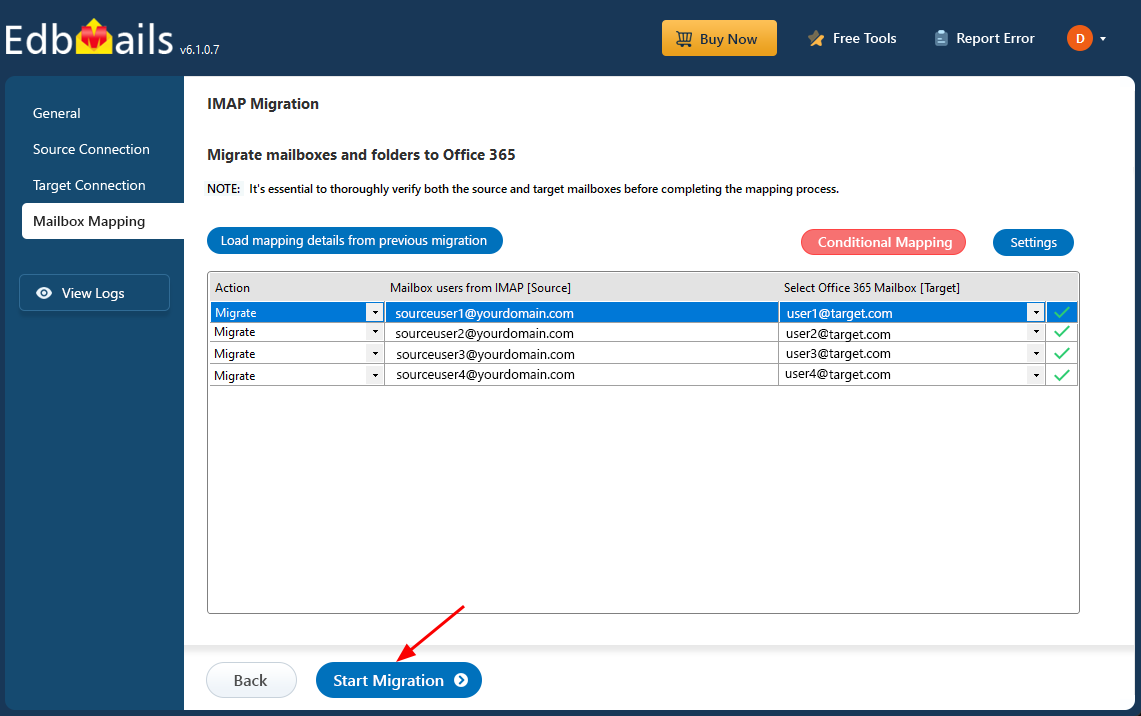
- Click the ‘View Logs’ button to access the comprehensive migration report. This report includes detailed insights such as mailbox mapping, migration summary, and the total number of items migrated for each mailbox and folder.
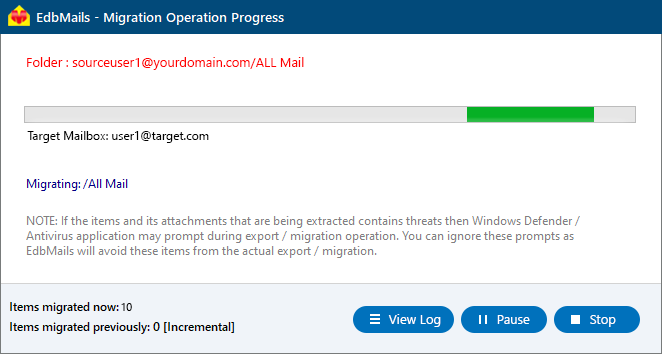
- Review and confirm the mailbox mapping to ensure accuracy, then click the ‘Start Migration’ button to initiate the migration process to Office 365.
123 Reg to Office 365 Post Migration Tasks
- Verify the target
Review migration reports and verify representative folders, messages, attachments, item counts, and user access.
- Update MX/DNS when ready
Change the required Microsoft 365 mail DNS records only after target validation. 123 Reg domain registration and website hosting can remain unchanged.
- Validate Outlook/client access
Confirm Microsoft 365 sign-in and Autodiscover behavior and recreate Outlook profiles only where required.
- Retain the source during validation
Keep the 123 Reg mailboxes available for the agreed transition period before decommissioning the old service.
- Verify the target
Troubleshooting guide for 123 Reg to Office 365 migration
Refer to the knowledge base articles for solutions to common issues. For additional details on EdbMails IMAP migration, check the frequently asked questions or reach out to our customer support team.
Benefits of EdbMails for 123 Reg to Office 365 Email Migration
- Provider-specific source connection
Use the current 123 Reg Professional Email IMAP endpoint with SSL on port 993.
- Bulk mailbox migration
Load multiple 123 Reg mailboxes through CSV and process migration batches efficiently.
- Selective migration
Choose required mailboxes/folders and use supported IMAP filters.
- Incremental follow-up runs
Process eligible new or changed email items after the initial pass for staged cutover.
- Mailbox mapping and reports
Review source-to-target mappings and use migration reports plus target-side checks before changing production mail flow.
- 24/7 technical support
Contact EdbMails support for migration assistance.