


Office 365 to Office 365 Public Folder Migration
Public folders store and share information, emails, contacts, calendars, across an organization. When you're consolidating tenants after a merger, splitting an organization, or simply reorganizing, moving those public folders between Office 365 tenants comes with real complexity: permission structures and folder hierarchies rarely map cleanly on their own.
EdbMails handles that complexity directly. The Office 365 migration software connects to both tenants, maps public folders automatically, and migrates them with minimal setup, no PowerShell scripting, no manual folder-by-folder rebuilding.
The graphical interface handles every part of the process: connecting to both servers, delta migration on repeat runs, and automatic public folder mapping between source and target.
Migration runs with strong encryption throughout, and it's a true 1:1 copy, folder structure and hierarchy carry over exactly as they exist in the source tenant, not an approximation of it.
This guide covers pre-migration planning, the full step-by-step migration process, and where to go if something doesn't work as expected.
Planning Office 365 to Office 365 Public folder migration
Before the migration from Office 365, it is crucial to ensure sufficient time and effort have been placed into the migration's planning stage to provide a seamless migration process.
- Understand the type of your current migration environment (Hybrid/Non-Hybrid)
- Determine the number & size of Public Folders you wish to migrate
- Define whether you wish to migrate the data of the public folders in one go or by stages.
- Inform the end-users about the migration plan and the change.
- Test your internet connection speed, network settings, etc.
- Perform a test (pilot) migration.
Office 365 to Office 365 Public folder migration : Pre-migration activities
On the Office 365 source server:
- For the automatic registration of the application, you must have a global admin account with a mailbox to connect to the source Office 365 server. Manual registration of the application needs any user account with full access rights. Know more
- Grant the required public folder access permissions to the admin account
See the steps to assign the required permissions to the admin user
On the target Office 365 server:
- Prepare your target Office 365 Tenant. Refer to the tenant roadmap for Microsoft 365.
- If you intend to migrate your source Public folders to Office 365 Public folders, make sure you have created and configured the Public folder mailboxes on the target server.
Create an Office 365 Public folder and assign admin permission
- Check your network and bandwidth requirements for the migration. Refer to network and migration planning, performance factors, and best practices for Office 365 Public folder migration
- If you have a custom domain from your host that you want to migrate and receive emails, you need to add and verify the domain in your target Office 365 account.
- Configure Office 365 to send and receive large mailboxes.
Follow the steps below to increase the message size to 150 MB in Office 365.
Note: Public folder migration to Office 365 with EdbMails doesn’t need any PowerShell scripts. The following explains the public folder migration method through the application's GUI.
Migrate Public folders from Office 365 to Office 365
Step 1: Download and install EdbMails Office 365 migration software
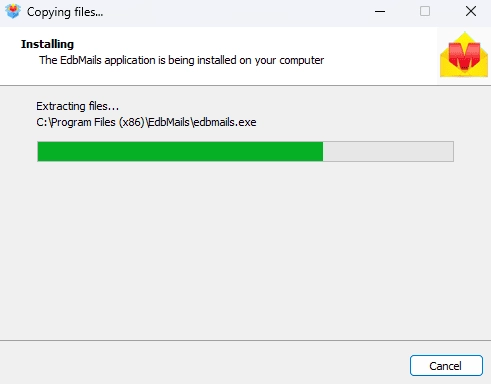
- Download EdbMails and install the application on your computer
See a detailed list of EdbMails system requirements for Office 365 to Office 365 Public folder migration.
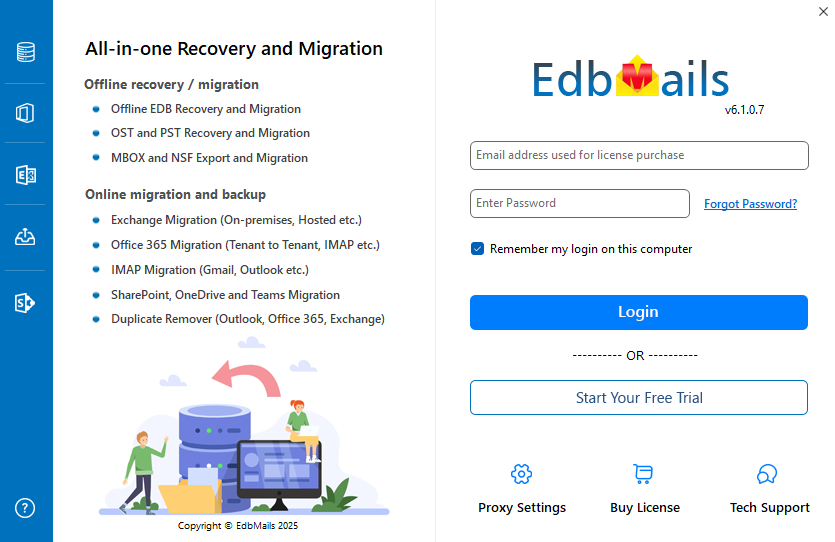
- Enter the appropriate details and click ‘Login’ or click ‘Start Your Free Trial’
- Download EdbMails and install the application on your computer
Step 2: Select ‘Office 365 to Office 365 Migration’ operation
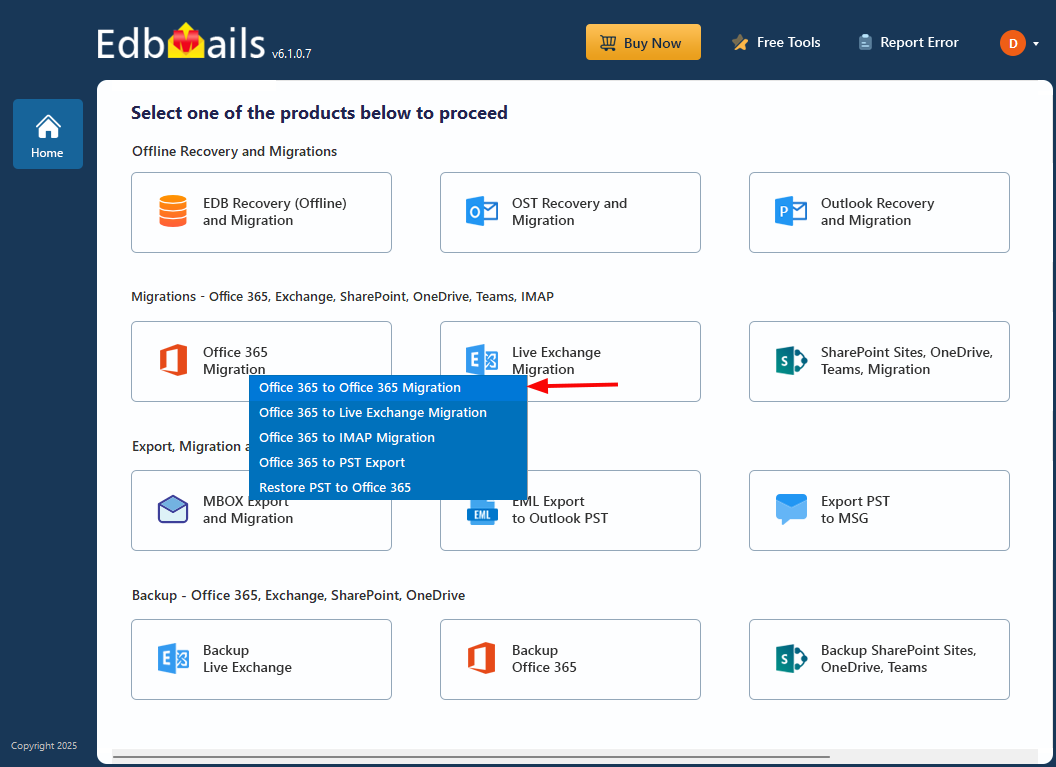
- Click the 'Microsoft 365, Exchange, SharePoint, OneDrive, and Teams Migrations' tab, then select 'Office 365 Migration'.
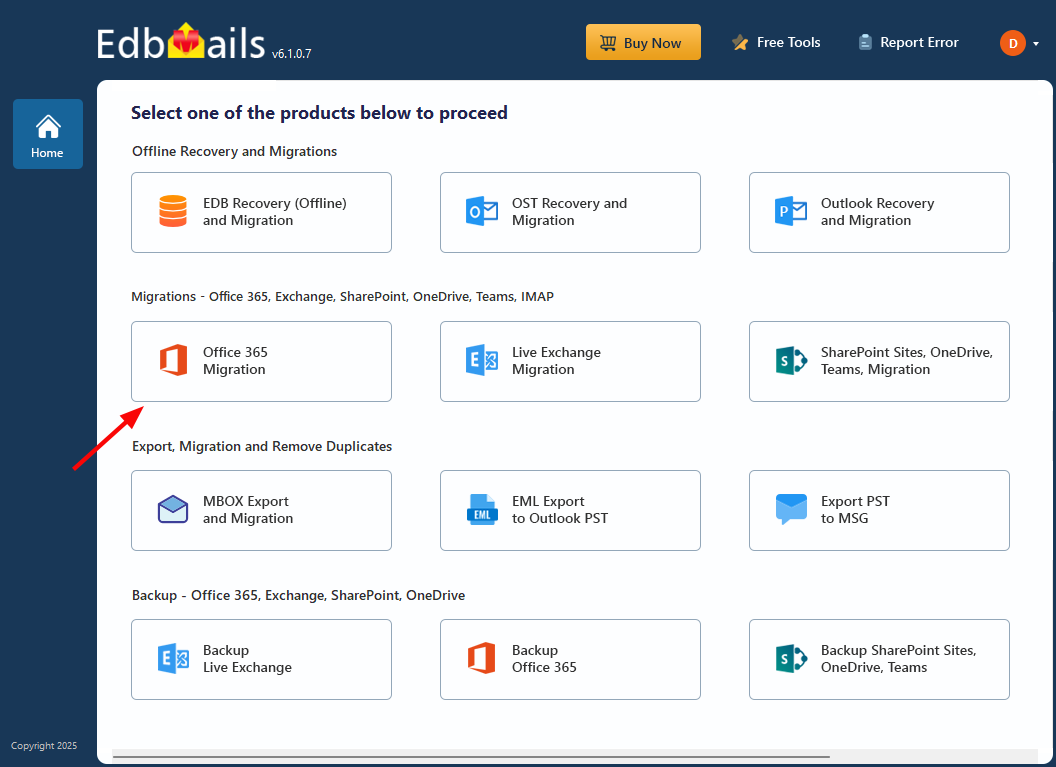
- Select ‘Office 365 to Office 365 migration’
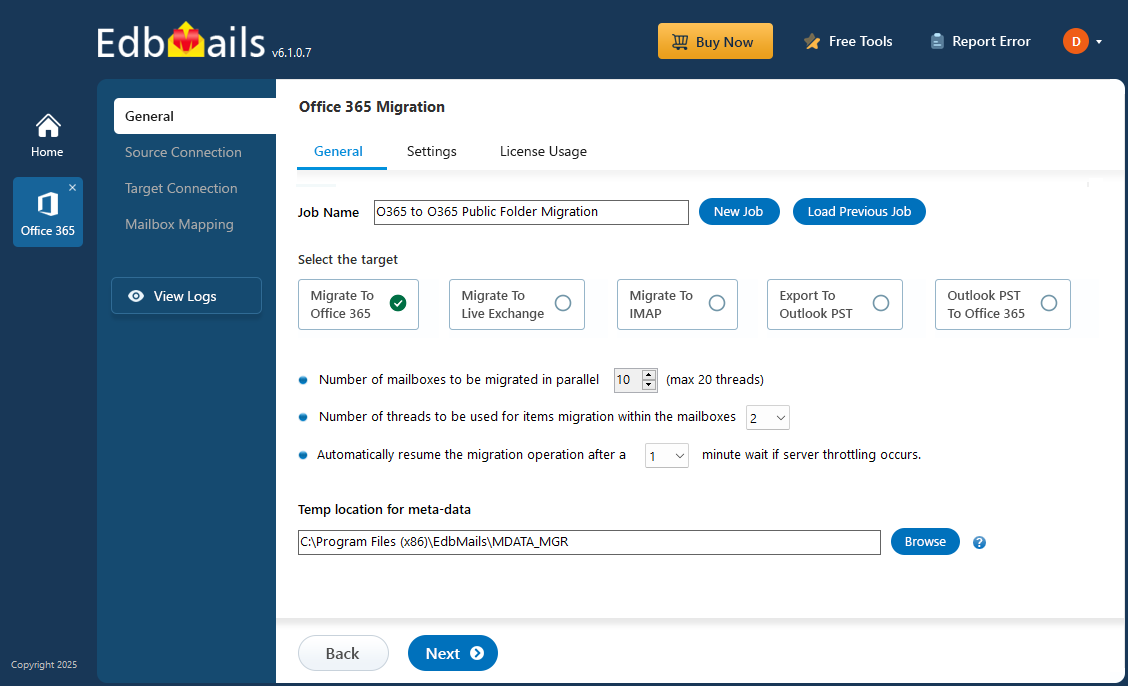
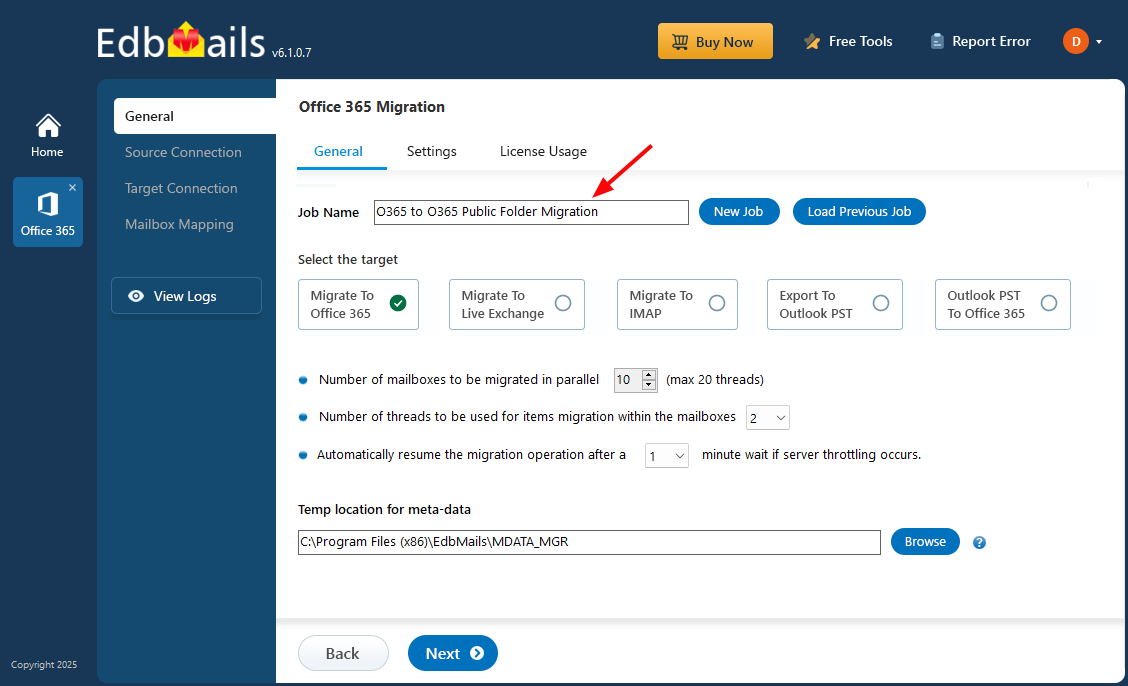
- You can proceed with the default job name, or click 'New Job' to enter a custom name.
- Click the 'Microsoft 365, Exchange, SharePoint, OneDrive, and Teams Migrations' tab, then select 'Office 365 Migration'.
Step 3: Connect to the source Office 365 server
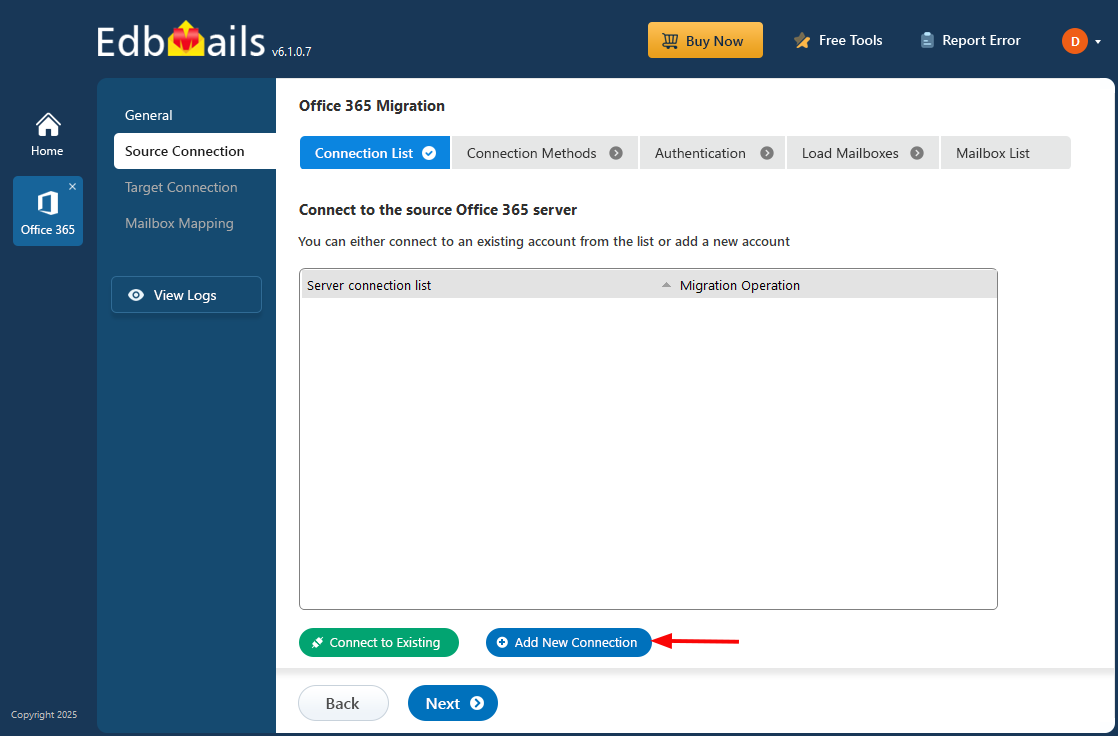
- Click the ‘Add New Connection’ button to set up a new connection to the source Office 365 account. If you prefer to use an existing connection, simply choose it from the list and click ‘Connect to Existing’ to continue.
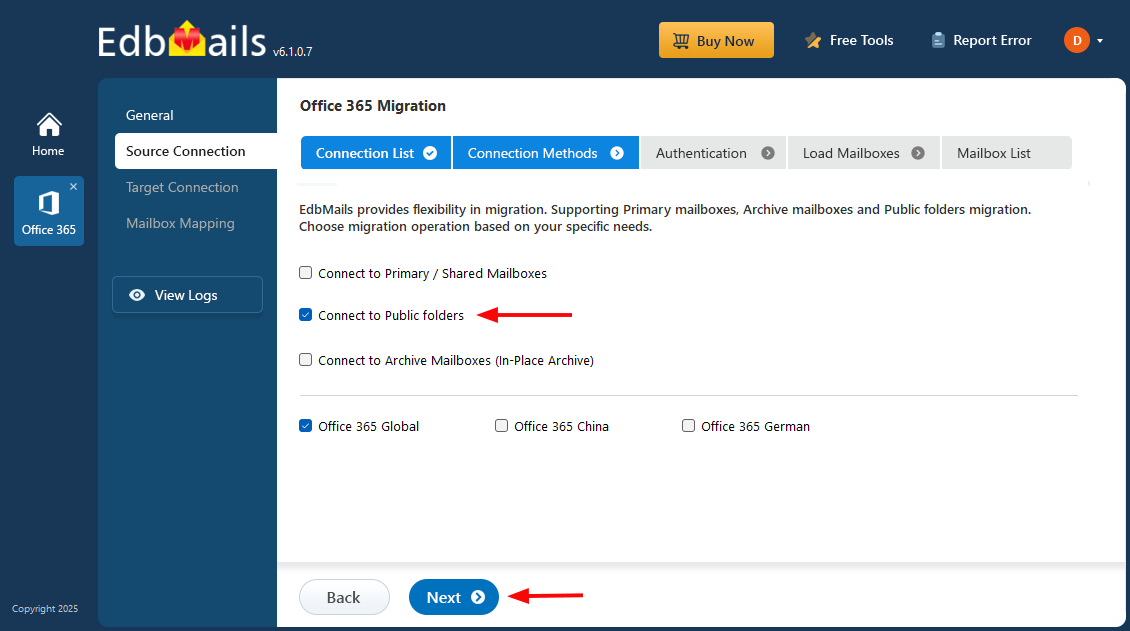
- Choose ‘Connect to Public folders’ and click the ‘Next’ button
- Choose the authentication method and click the ‘Login’ button to proceed.
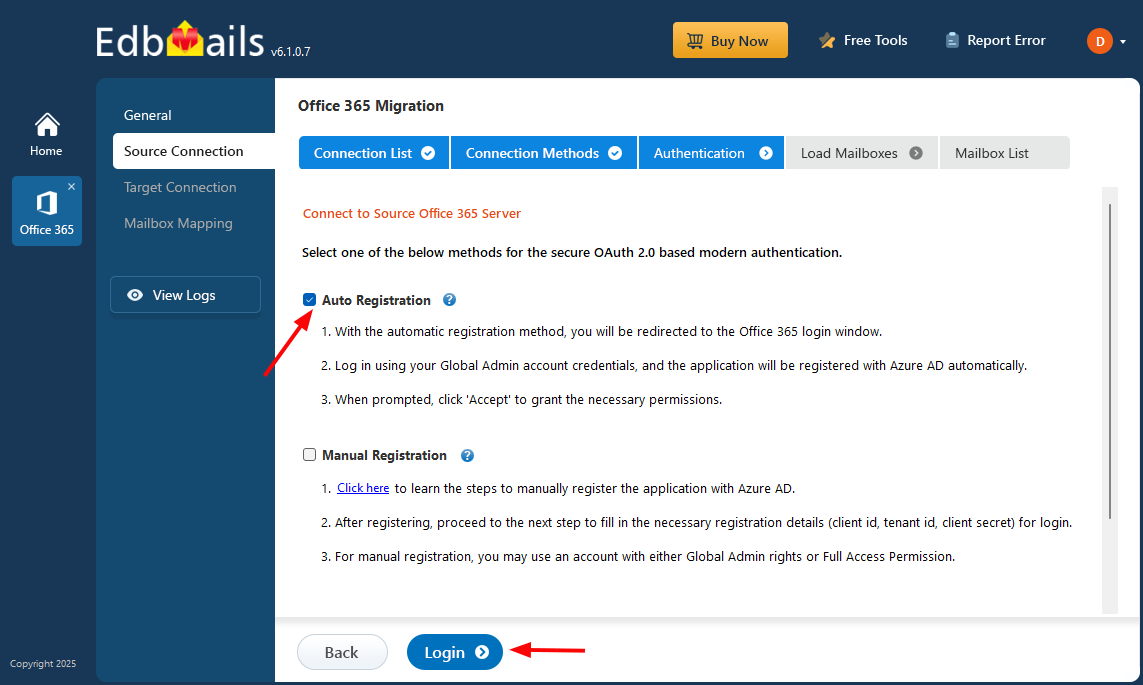
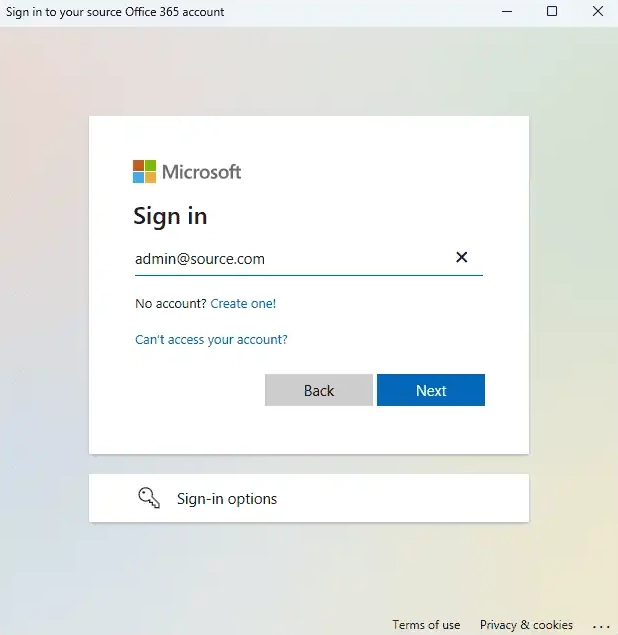
- Sign in on the Microsoft authentication page using a global admin account.
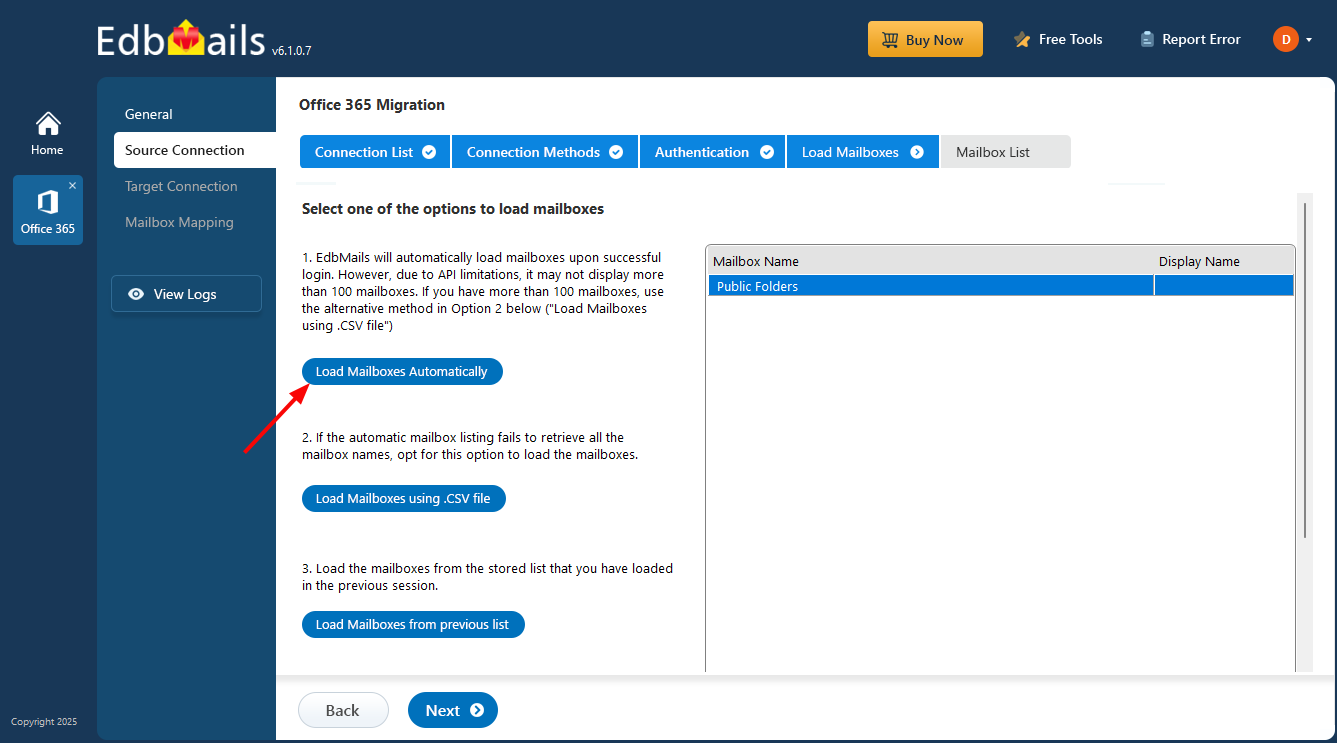
- Once authentication is successful, select 'Load Mailboxes Automatically' to load the public folders, then click 'Next' to proceed.
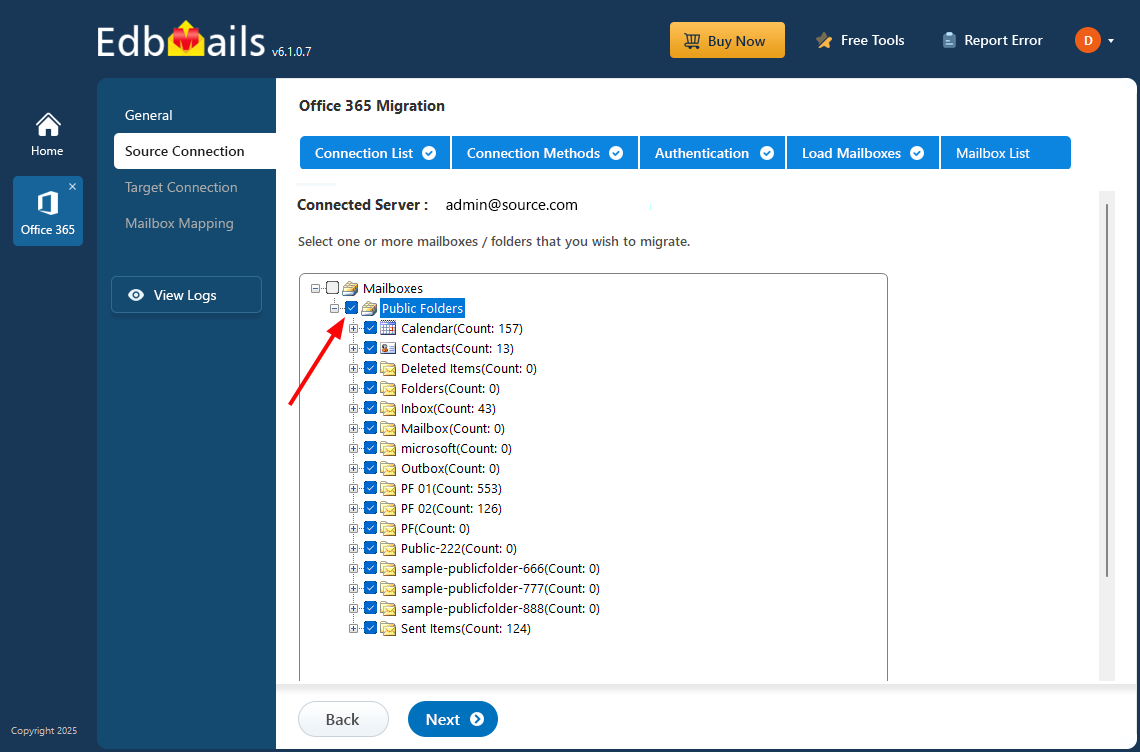
- Choose the public folders you wish to migrate and then click ‘Next’ to continue.
Tip: If this is the first time you’re migrating with EdbMails, the migration is a full migration. On subsequent migrations from the same source to the target, the migration is incremental.
- Click the ‘Add New Connection’ button to set up a new connection to the source Office 365 account. If you prefer to use an existing connection, simply choose it from the list and click ‘Connect to Existing’ to continue.
Step 4: Connect to target Office 365 server
- Click the ‘Add New Connection’ button to create a new connection to the target Office 365 account. If you prefer to use an existing connection, select it from the list and click ‘Connect to Existing’ to move forward.
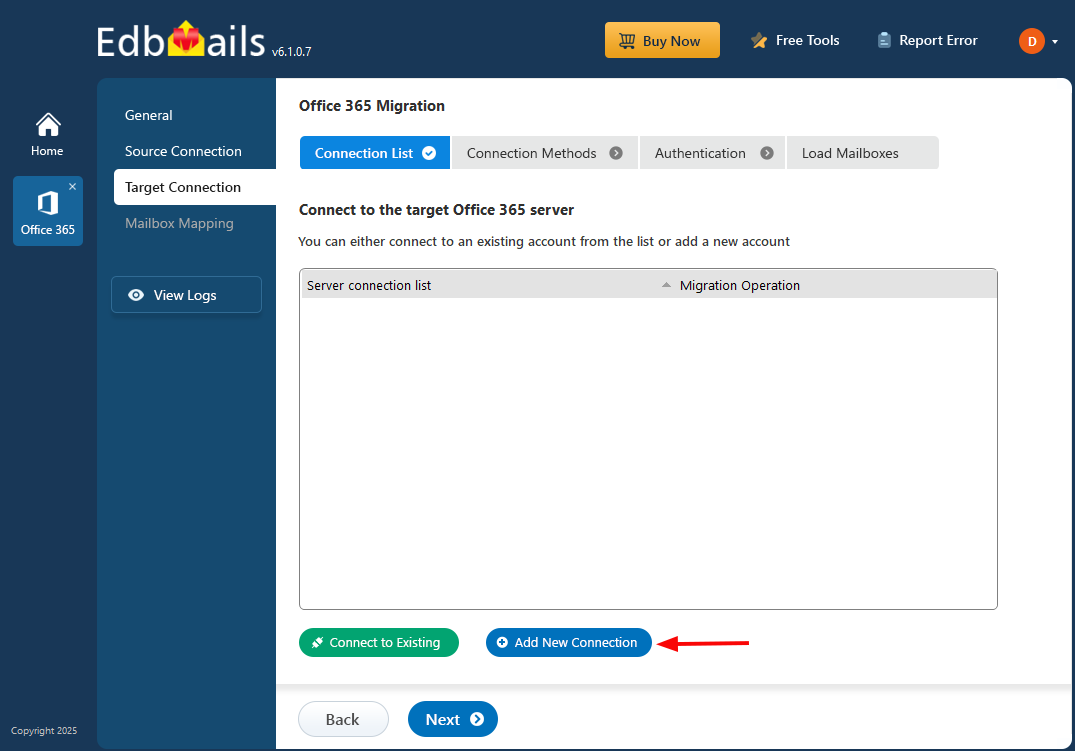
- Select ‘Connect to Public folder’ and click the ‘Next’ button.
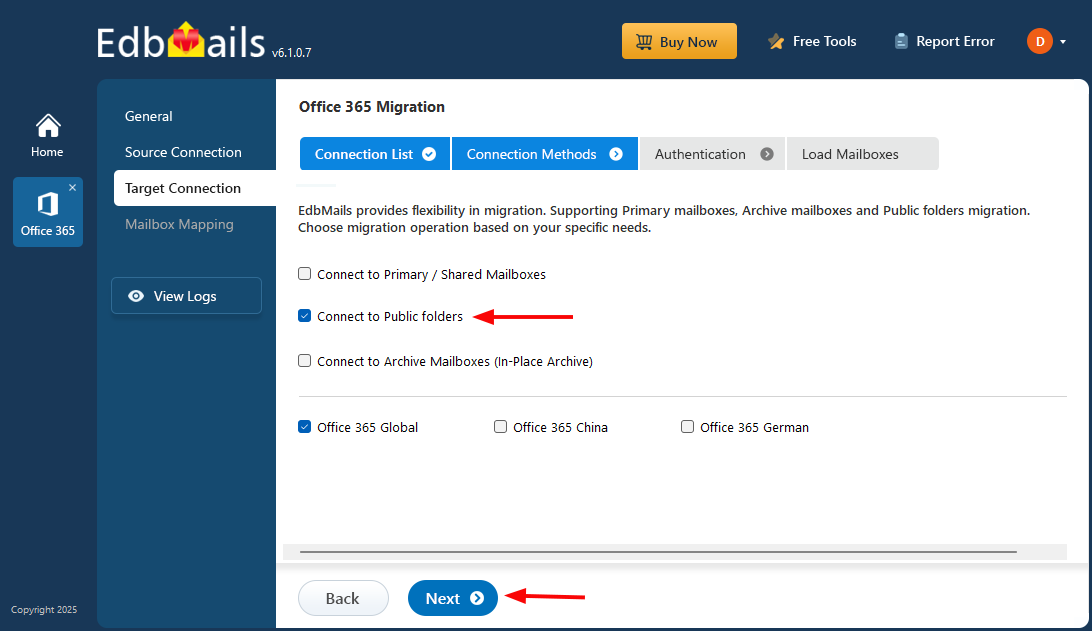
- Select one of the authentication methods and click the ‘Login’ button to continue.
- And authenticate on Microsoft sign in page
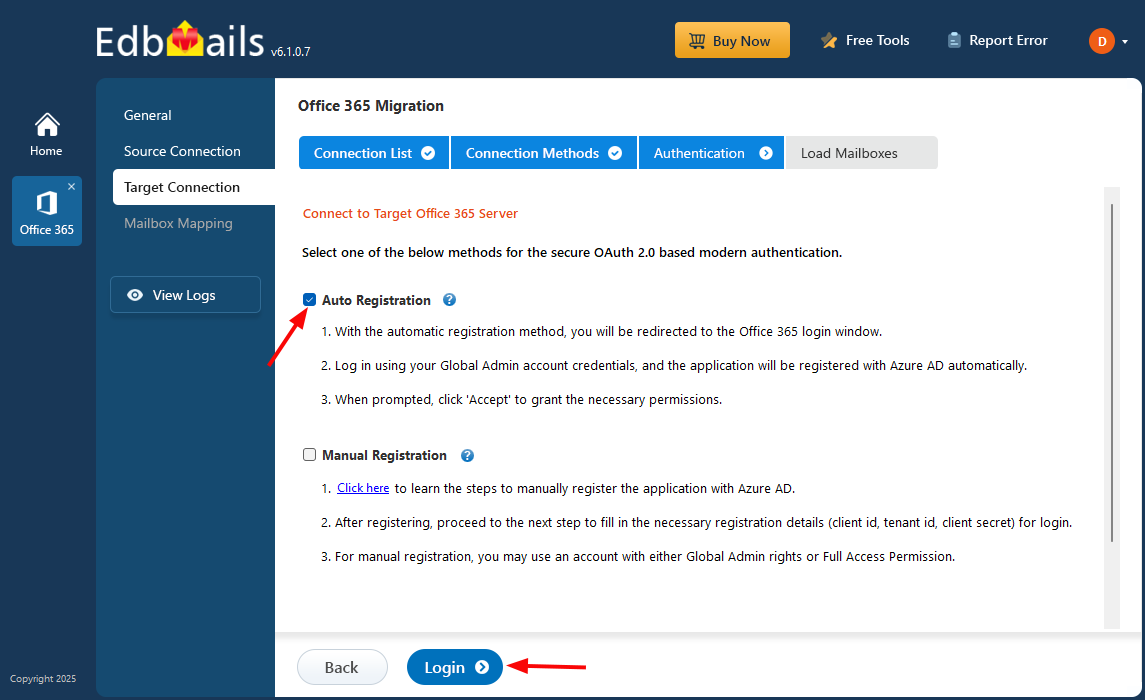
- Select one of the methods to load the mailboxes..
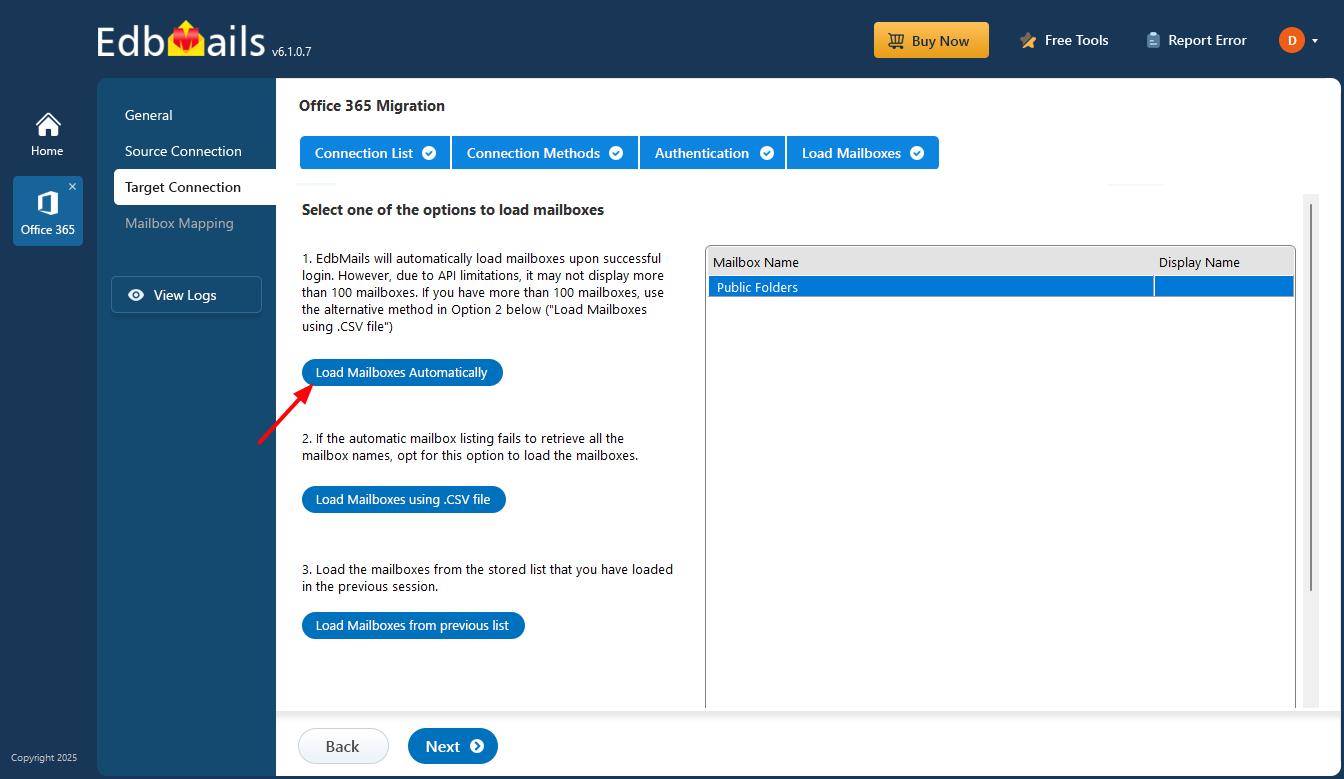
- Click the ‘Add New Connection’ button to create a new connection to the target Office 365 account. If you prefer to use an existing connection, select it from the list and click ‘Connect to Existing’ to move forward.
Step 5: Public folder mapping between source and target servers
- EdbMails automatically maps public folders between the source and target servers.
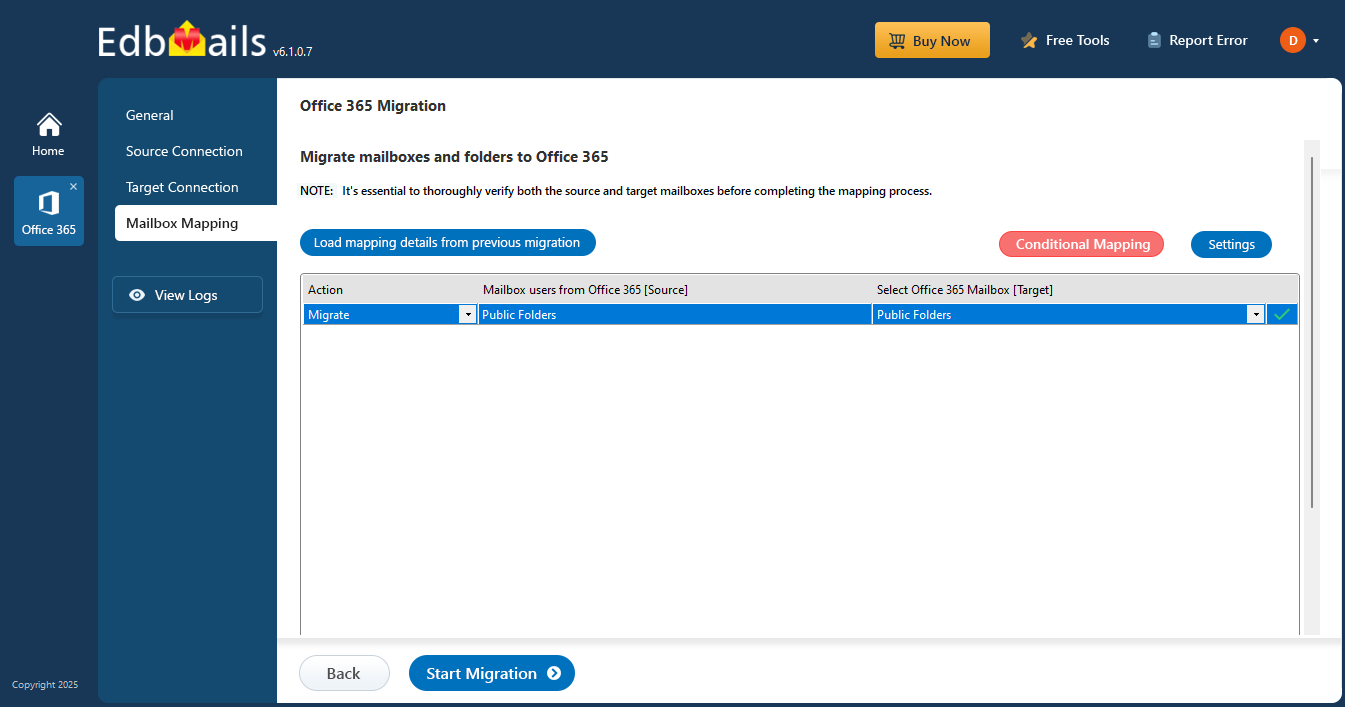
- EdbMails automatically maps public folders between the source and target servers.
Step 6: Start the Public folder migration to Office 365
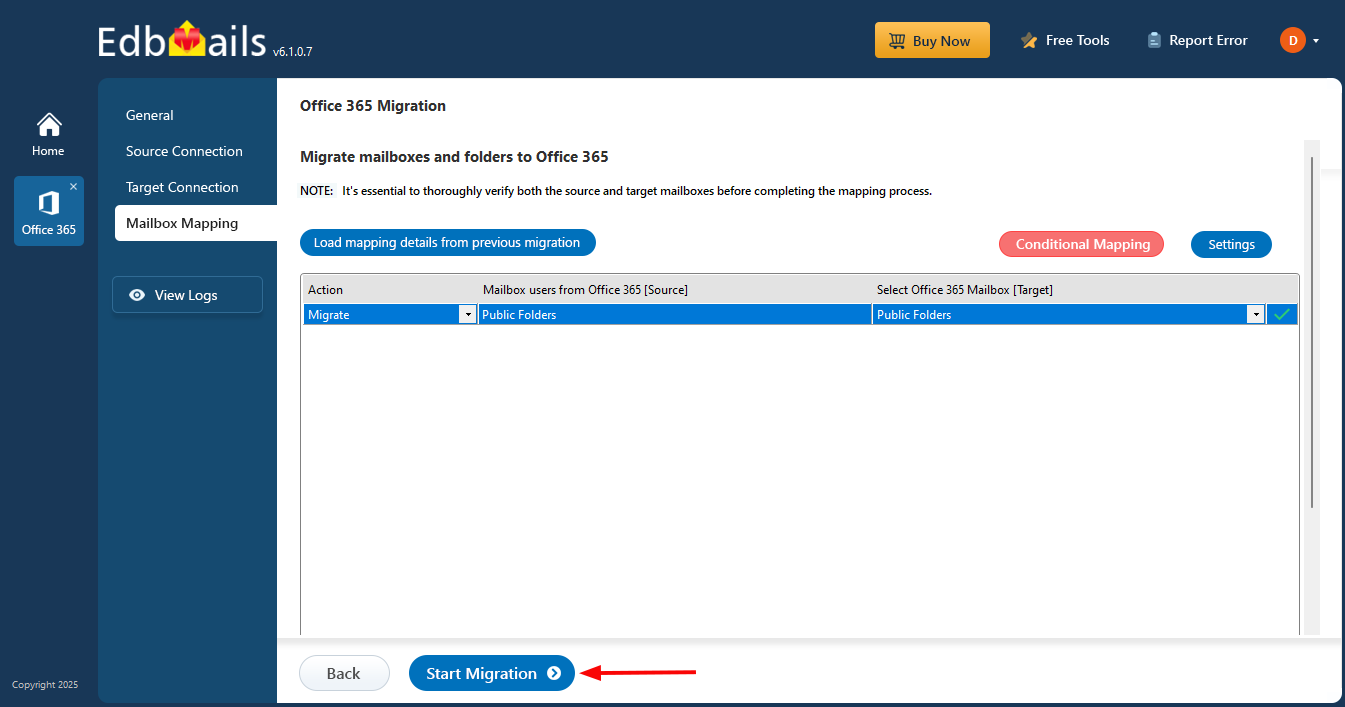
- Click the 'Start Migration’ button to initiate the migration process.
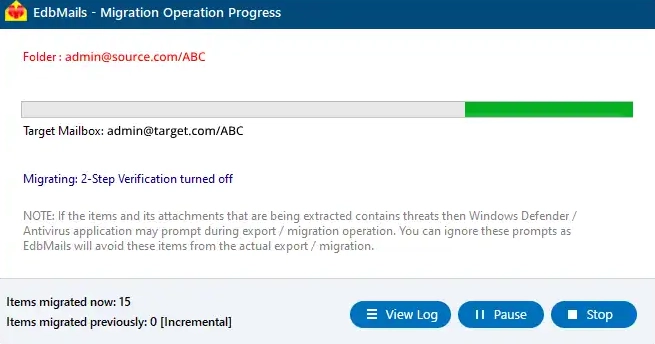
- The migration has started. Click the ‘View Log’ button to view the migration report. Then, log in to your target server to verify the migrated items.
- Click the 'Start Migration’ button to initiate the migration process.
Office 365 migration troubleshooting guide
Check the Office 365 migration troubleshooting guide or the Public folder troubleshooting page for fixes to common problems. For anything else, the Office 365 migration FAQs likely has the answer.
Advantages of using EdbMails for Public folder migration
EdbMails automates the entire Office 365 public folder migration — no PowerShell scripts, no manual work. The full folder hierarchy shows up as a tree structure, so you can see exactly what you're working with before anything moves. From there, picking specific public folders, subfolders, or individual items — emails, calendars, tasks, contacts, journals — is straightforward. The interface does not assume you have a technical background, and it does not require one.
- EdbMails exactly reproduces the source public folder structure in the target.
- EdbMails offers zero downtime during Office 365 Public folder migration.
- You get an incremental migration feature through which only new and modified source items get migrated on the next migration runs, this avoiding duplicates and reduces internet bandwidth and total migration time.
- EdbMails can automate features like public folder mapping, which reduces the manual work.
- You can migrate Public folders of any size between the Office 365 tenants, irrespective of the technical knowledge and expertise required.
- EdbMails secures your Office 365 Public folder migration.
- Free trial offered, along with 24x7 technical support, helps test tool functionality.
Frequently asked questions:
- Can I migrate only specific public folders instead of the entire hierarchy?
Yes. The public folder hierarchy is displayed before migration begins, allowing you to select specific public folders, subfolders, or individual items instead of migrating the entire hierarchy.
- Does this work for both legacy and modern (mailbox-based) public folders?
Support depends on the source and destination Office 365 tenant configuration. Because Microsoft has changed public folder architecture across different Exchange and Microsoft 365 generations, it is recommended to verify compatibility with your specific environment before starting the migration.
- What happens if the migration is interrupted partway through?
EdbMails supports incremental migration, so when the migration is resumed it processes only new or modified items since the previous run rather than restarting the migration from the beginning.
- Is there a size limit on public folders that can be migrated?
EdbMails does not impose a practical size limit on public folder migration. However, Microsoft 365 storage limits and Microsoft throttling policies for Exchange Online still apply.
- How many mailbox licenses do I need to migrate public folders?
Public folder migration uses a 50-mailbox license. With that license, you can migrate unlimited mailboxes from the same source domain.