


Export Office 365 Shared mailbox to PST
Office 365 shared mailboxes provide a central mailbox that multiple authorized users can access for team or departmental communication. Organizations may need to export a shared mailbox to PST for offline storage, long-term retention, mailbox data transfer, or maintaining a separate copy of important emails, contacts, calendars, attachments, and other mailbox items.
Organizations may also maintain separate copies of important Microsoft 365 data according to their own backup and retention requirements. Discussions around Microsoft 365 backup responsibility highlight the importance of understanding how Microsoft 365 data protection and an organization's own backup strategy differ. Exporting required shared mailbox data to PST can provide an additional offline copy that can be retained according to internal data protection and retention policies.
EdbMails Office 365 Migration Tool offers a direct Office 365 Shared Mailbox to PST export process. It connects to the source Office 365 environment, loads the available shared mailboxes, and allows the required mailbox data to be exported to PST files through a graphical interface.
With EdbMails, you can select the required shared mailboxes, apply filters when needed, specify a location for saving the PST files, and monitor the export progress. After the export completes, the generated PST files can be opened in Microsoft Outlook to verify the exported mailbox data.
Why Export Office 365 Shared Mailbox to PST?
- Maintain a Separate Copy of Shared Mailbox Data
Exporting an Office 365 shared mailbox to PST creates a separate copy of the selected mailbox data. The resulting PST file can be retained according to the organization's internal backup, retention, or data management requirements.
This provides an additional copy of important shared mailbox emails and other supported mailbox items outside the active Office 365 mailbox.
- Access Shared Mailbox Data Offline
A PST file can be opened with supported versions of Microsoft Outlook, allowing exported mailbox data to be accessed without continuously connecting to the source Office 365 shared mailbox.
This can be useful when historical shared mailbox information needs to remain available locally or when continuous access to the source mailbox is not required.
- Retain Older Shared Mailbox Data
Organizations may need to retain older shared mailbox emails separately from actively used mailbox data.
Exporting selected historical data to PST provides an offline copy that can be stored according to organizational requirements. If eligible source items are later removed, this should be done separately according to the organization's retention, compliance, and data management policies.
- Support Retention and Compliance Requirements
Organizations may have internal or regulatory requirements for retaining certain mailbox information for a specified period.
Exporting the required shared mailbox data to PST can form part of an organization's broader retention or data preservation strategy. The resulting PST files should be stored and protected according to applicable organizational and compliance requirements.
- Preserve Shared Mailbox Data for Future Reference
A shared mailbox may contain important historical communication associated with departments such as support, sales, finance, HR, projects, or administration.
Exporting this data to PST allows the organization to maintain a separate copy that can be retained for future reference when required.
- Maintain a Separate Copy of Shared Mailbox Data
Prerequisites to Export Office 365 Shared Mailbox to PST
Before starting the Office 365 Shared Mailbox to PST export, ensure the following requirements are met:
- Install and configure a Microsoft Outlook profile on the computer where the PST export will be performed.
- Ensure that sufficient free disk space is available on the computer to store the exported PST files.
Steps for Office 365 Export Shared Mailbox to PST
Step 1: Download and Install EdbMails application
- Download EdbMails and install the application on a computer running Windows OS.
- Start the application, enter the required details, and click the 'Login' button. You can also click 'Start Your Free Trial' to continue with the trial version.
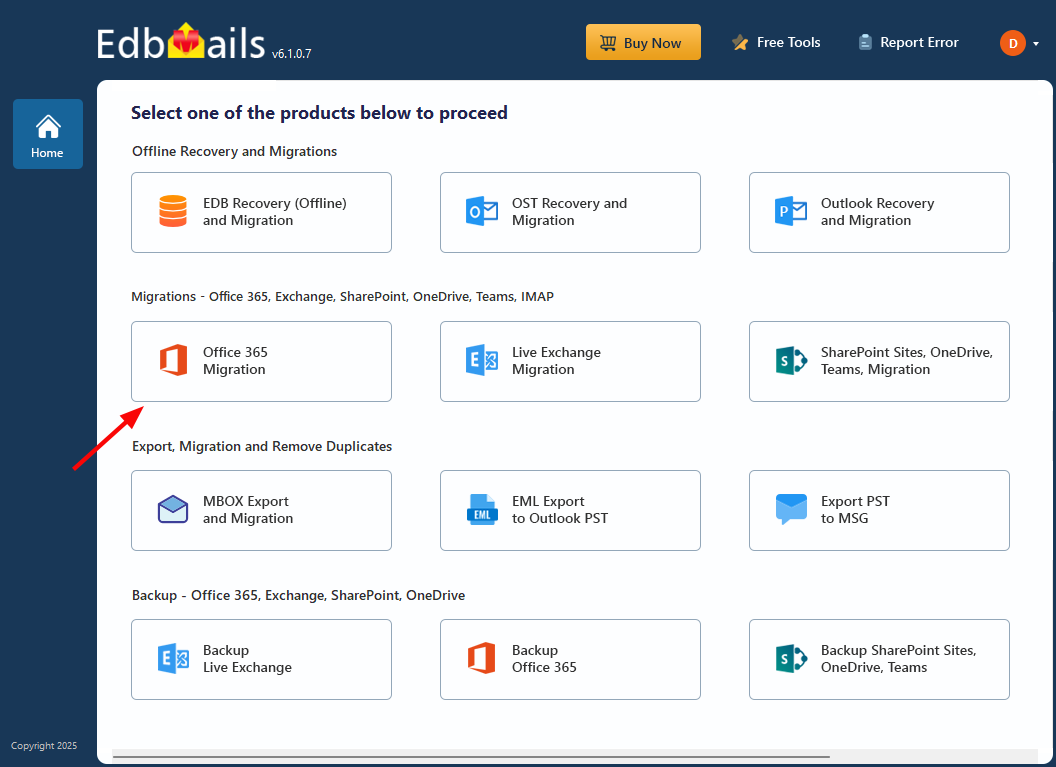
- Select 'Office 365 Migration' from the available product list.
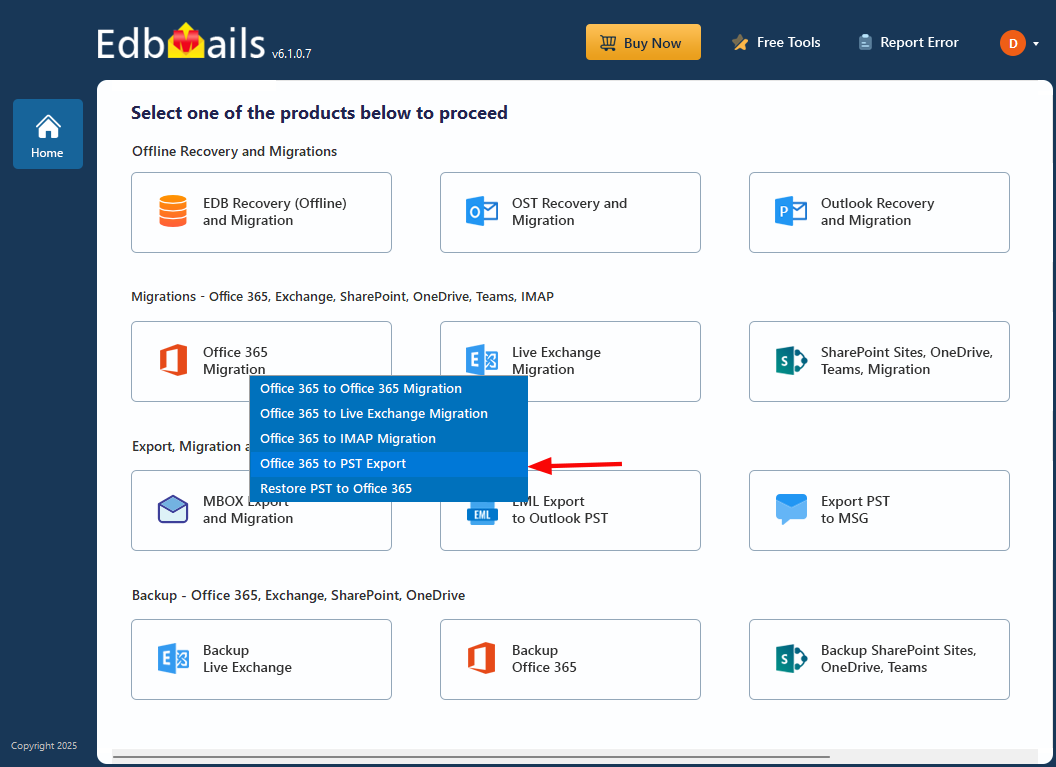
- Select 'Office 365 to PST Export' option
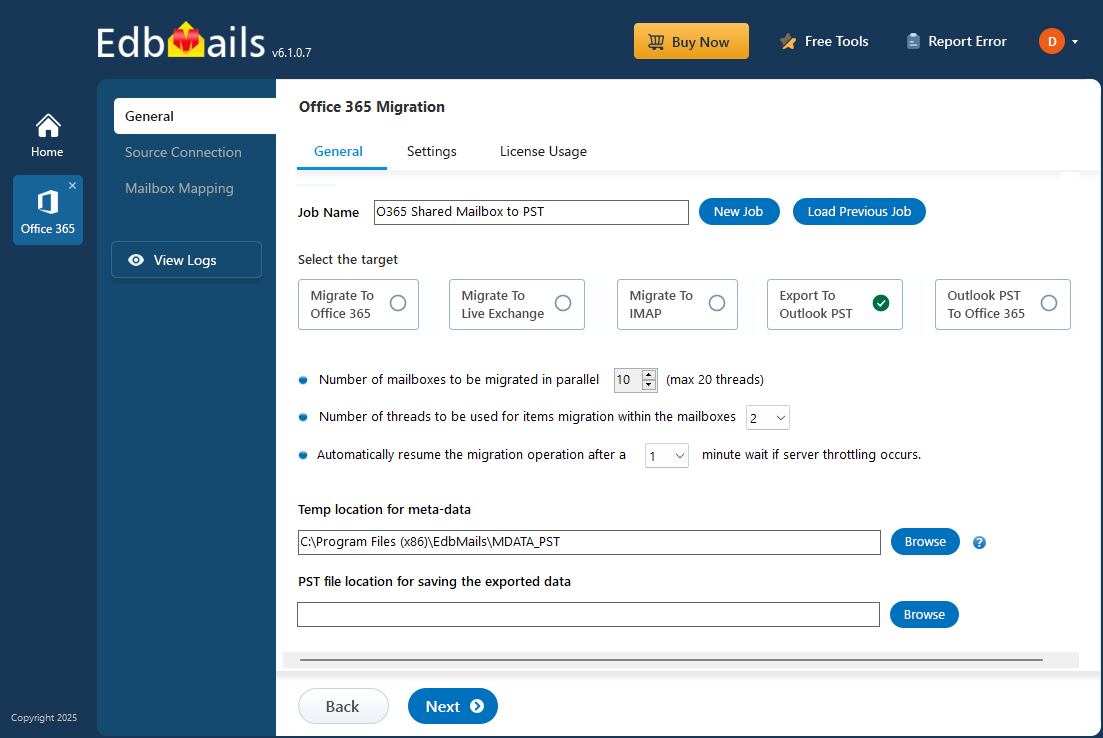
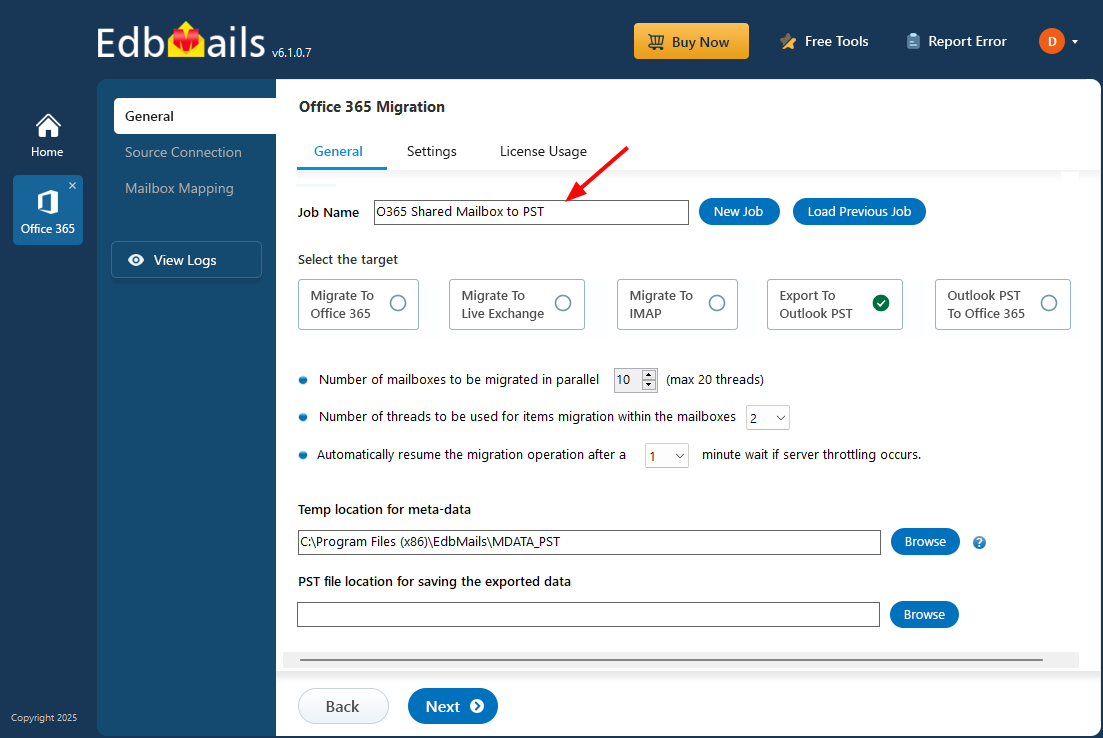
- Use the default job name or click 'New Job' to enter a custom name for the shared mailbox PST export job.
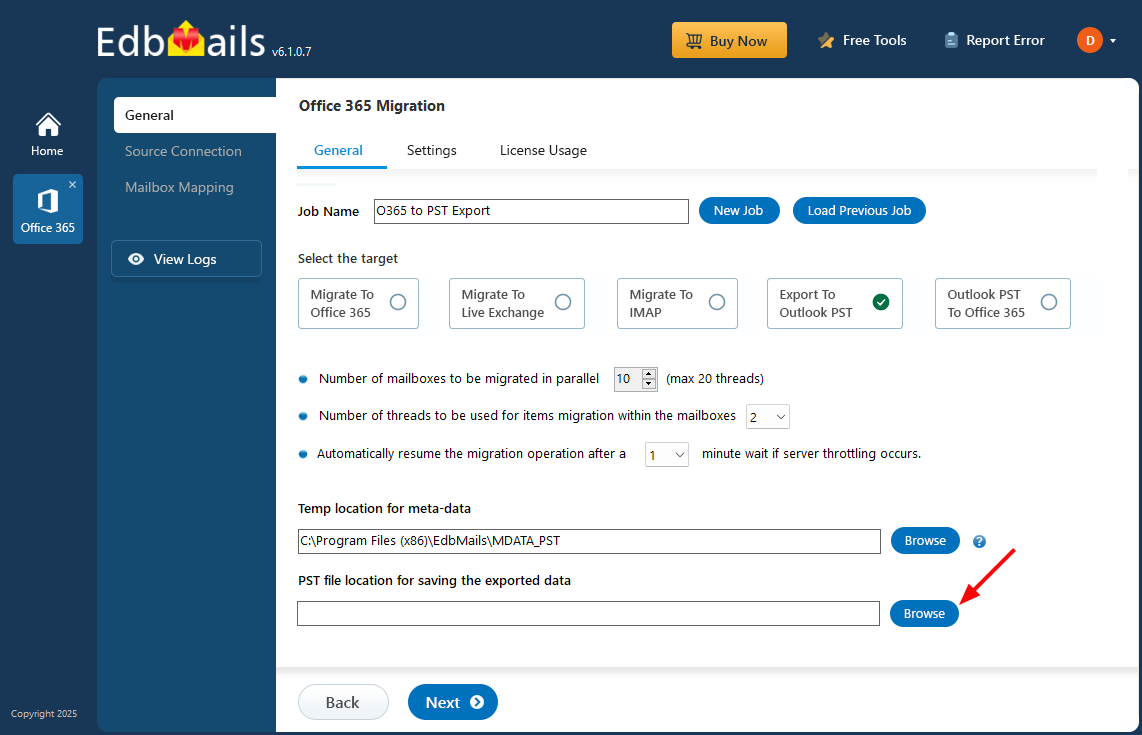
- Click the 'Browse' button to select the PST output location.
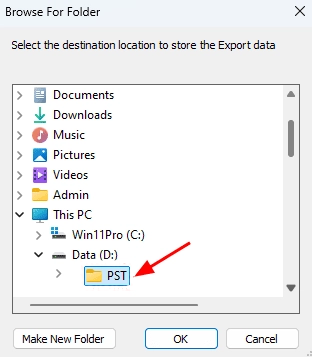
- Select the destination folder where the exported PST files should be stored. Ensure that sufficient disk space is available for the selected shared mailboxes.
Step 2: Connect to source Office 365 server
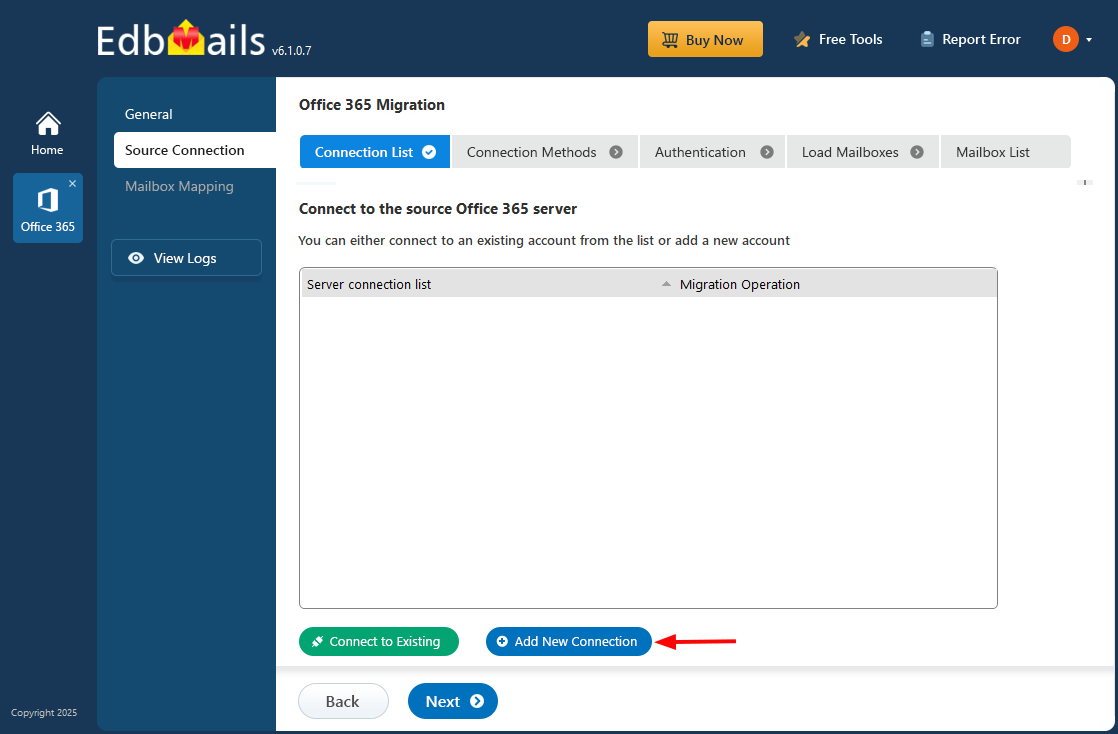
- Click 'Add New Connection' to configure a new connection to the source Office 365 environment.
- If a connection is already configured, select it from the list and click 'Connect to Existing'.
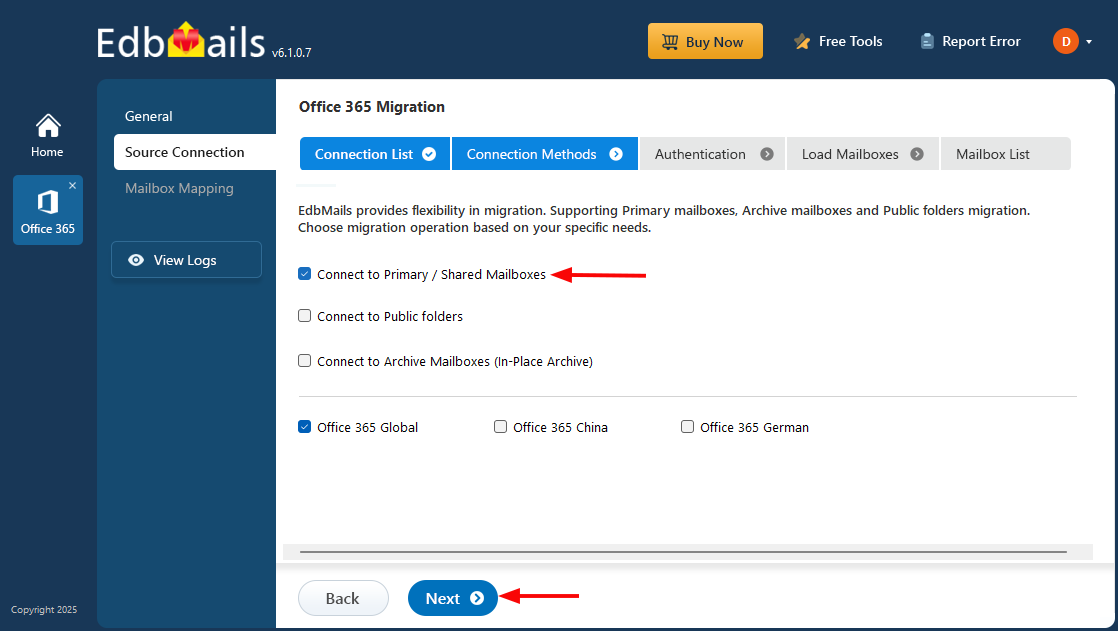
- Choose 'Connect to Primary/Shared Mailboxes' and click 'Next'.
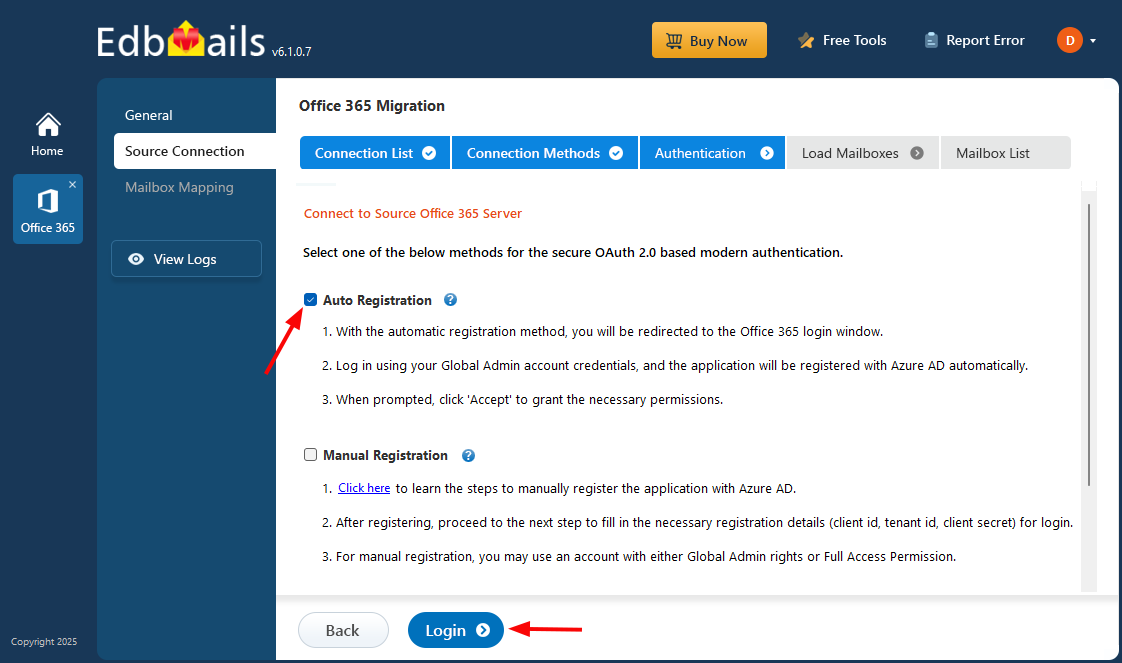
- Select the required authentication method and click 'Login' to proceed.
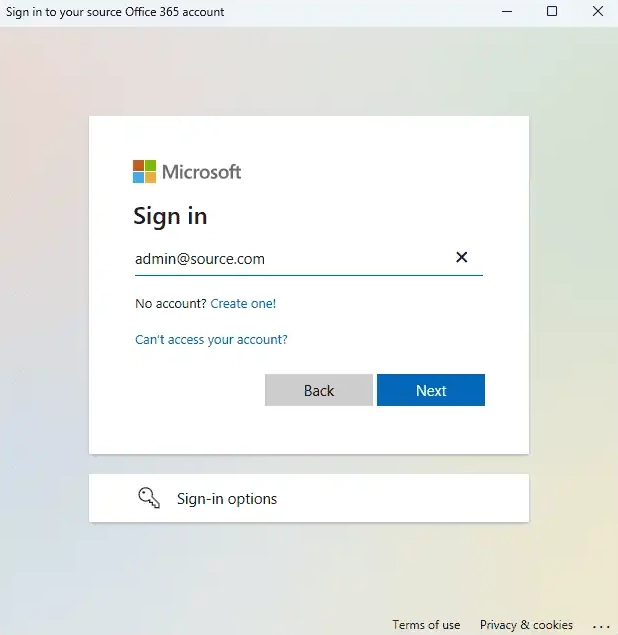
- Authenticate the account on the Microsoft sign-in page.
For more information about authentication, see Connect to Office 365 using secure modern authentication.
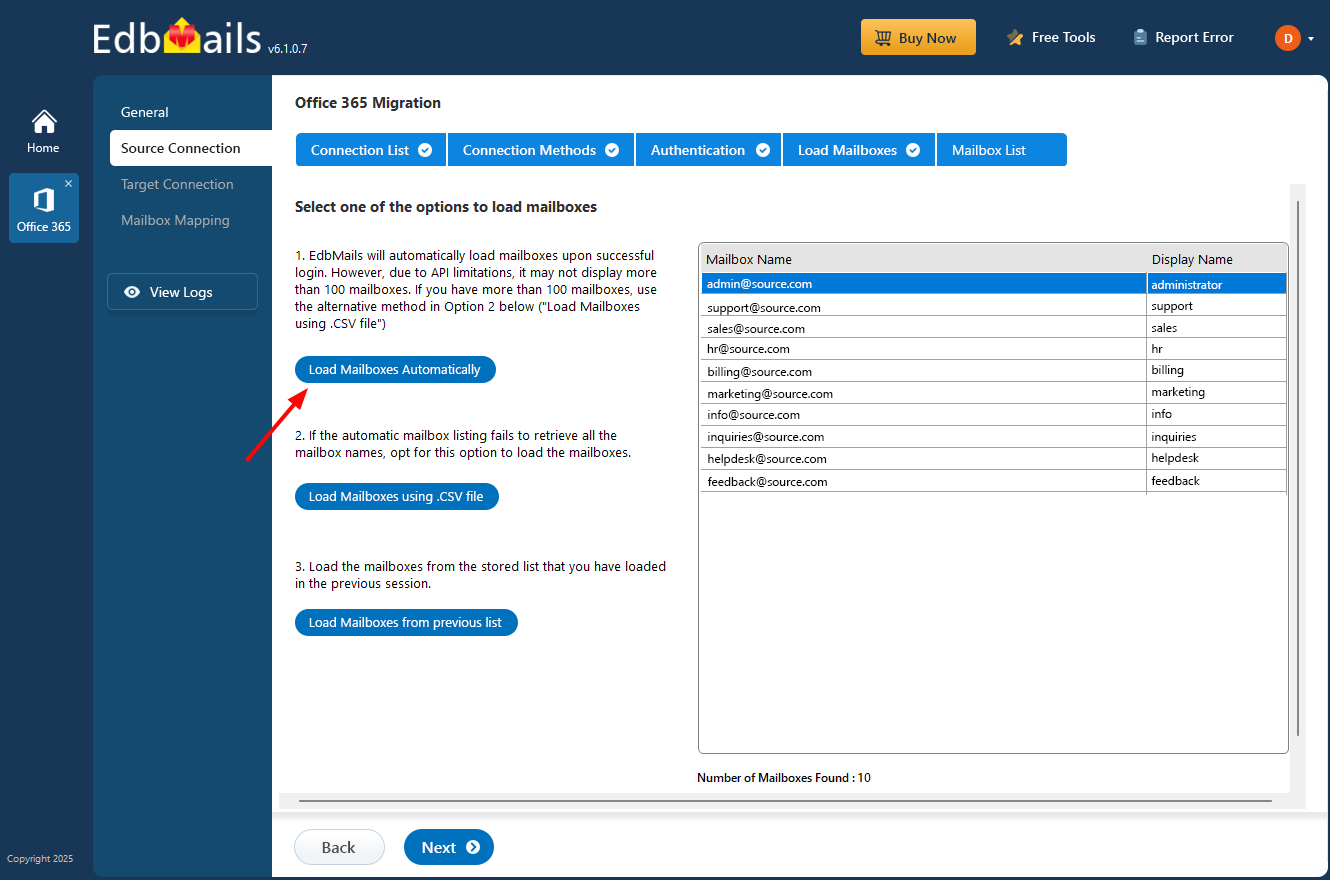
- After successfully connecting to Office 365, select the required method to load the shared mailboxes. You can also load Office 365 mailboxes using a CSV file when required.
Step 3: Select Office 365 Shared mailboxes
- EdbMails displays the available shared mailboxes after the source connection is established. Select the shared mailbox or multiple shared mailboxes that you want to export to PST and click 'Next' to proceed.
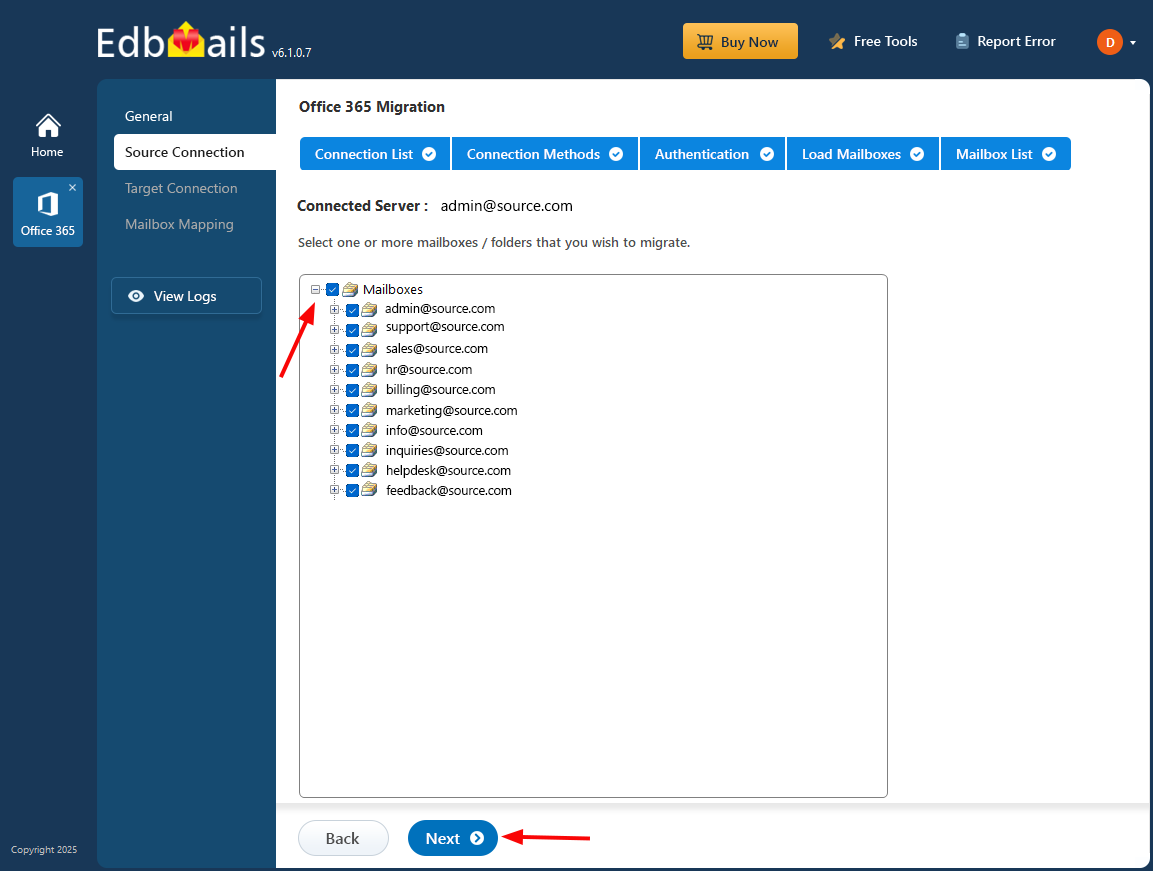
If only specific mailbox data needs to be exported, apply the required filters before starting the export. For example, a date filter can be used to export mailbox items within a selected date range rather than exporting all available shared mailbox data. Use filters when you need to export a specific subset of the shared mailbox according to the export requirement.
- EdbMails displays the available shared mailboxes after the source connection is established. Select the shared mailbox or multiple shared mailboxes that you want to export to PST and click 'Next' to proceed.
Step 4: Start Office 365 Shared mailbox to PST export operation
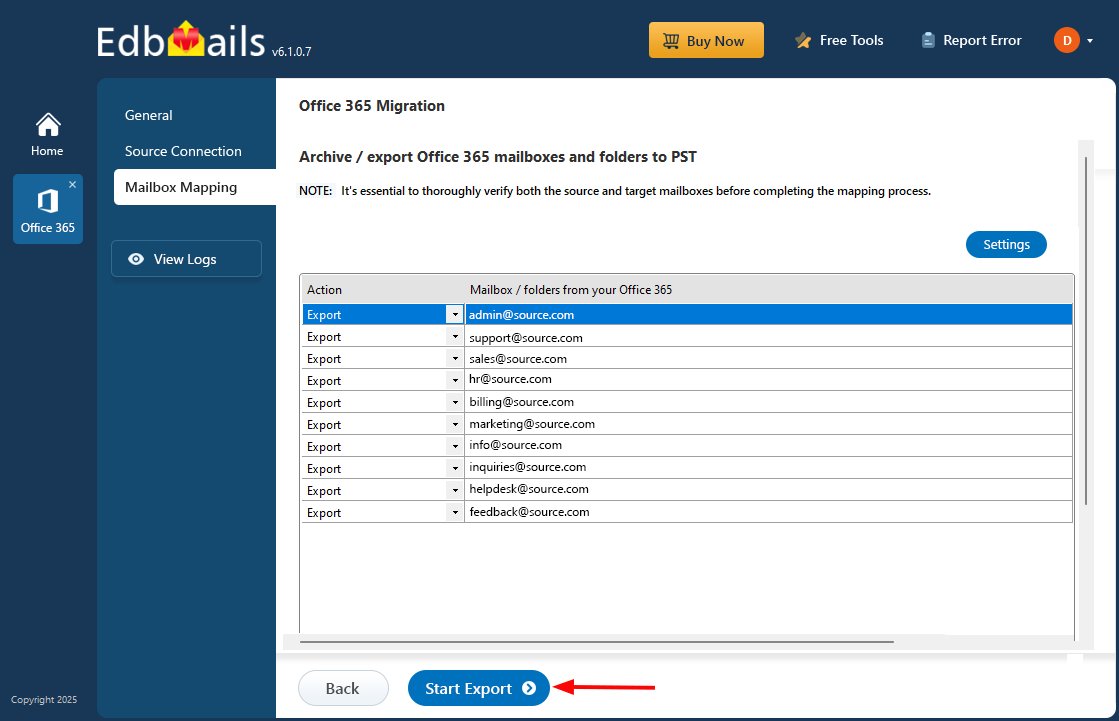
- Review the selected shared mailboxes and ensure that the 'Action' is set to 'Export'.
- Verify that the required mailboxes have been selected before proceeding. Click 'Start Export' to begin exporting the shared mailbox data to PST.
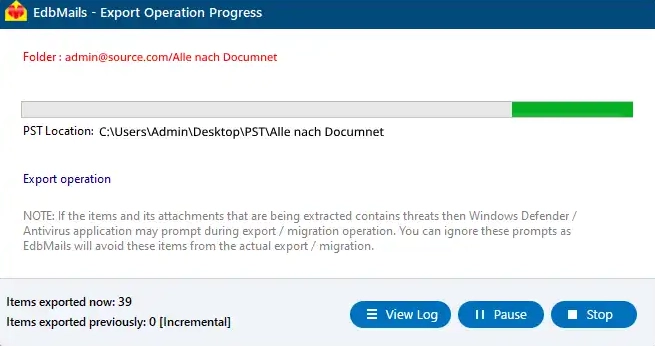
- EdbMails displays the export progress while processing the selected shared mailboxes.
- A confirmation message appears after the export operation is completed.
- EdbMails also generates detailed export reports. Click 'View Log' to review the status of the completed export operation.
EdbMails Features for Exporting Office 365 Shared Mailboxes to PST
- Export Multiple Shared Mailboxes
EdbMails allows multiple Office 365 shared mailboxes to be selected for PST export in a single export job.
This reduces repetitive configuration when several shared mailboxes need to be exported. Instead of configuring each shared mailbox separately, the required mailboxes can be selected and processed through the same export workflow.
- Detailed Export Summary
EdbMails generates an export summary report containing information about the completed operation.
The report helps review mailbox export status, item information, and issues encountered during processing. This provides a convenient way to verify the results after exporting multiple shared mailboxes.
- Preserve Shared Mailbox Data During Export
EdbMails exports supported shared mailbox items such as emails, attachments, contacts, calendars, folders, and subfolders while retaining the supported folder structure and item properties in the resulting PST.
This helps maintain the organization of the source shared mailbox data in the exported PST file.
- Pause and Resume PST Export
EdbMails provides a pause and resume option for supported operations.
This can be useful when exporting large shared mailboxes or when an ongoing export needs to be temporarily paused. The operation can then be continued according to the available export workflow.
- Export Without PowerShell Scripts
EdbMails provides a graphical interface for exporting Office 365 shared mailboxes to PST.
The Office 365 migration without PowerShell approach reduces the need to create and manage PowerShell scripts as part of the EdbMails export workflow.
The shared mailboxes can be connected, selected, configured, and exported through the application's interface.
- Selective PST Export with Filters
Filters can be applied when only specific shared mailbox data needs to be exported.
For example, a date-based filter can help limit the export to mailbox items from a required period. This is useful when the complete shared mailbox does not need to be included in the PST.
- Monitor Shared Mailbox Export Progress
EdbMails displays the progress of the shared mailbox PST export while the operation is running.
After completion, the export logs provide additional information that can be used to review the status of the selected mailboxes and verify the operation.
- Export Multiple Shared Mailboxes
Additional resources: