


Install EdbMails Office 365 Migration Tool
EdbMails Office 365 Migration Tool can be installed on a supported Windows computer that can reach the required source and target environments. Before installation, verify the workstation requirements and any workflow-specific prerequisites so the application can connect and operate correctly after setup.
Before Installing EdbMails
- Use a supported Windows workstation or server and install current Windows updates.
- Verify the computer meets the current EdbMails system requirements, including .NET Framework 4.6.2 or later and Windows PowerShell 3.0 or later.
- Keep a current browser such as Microsoft Edge, Google Chrome, or Mozilla Firefox available for Microsoft 365 authorization.
- Confirm the computer can reach the required source and target environments through the network and firewall configuration.
- Install Microsoft Outlook on the EdbMails computer when the selected workflow uses PST files.
- Ensure sufficient local or attached storage is available for PST output, application logs, and migration metadata where applicable.
- Use a Windows account with permission to install applications. If EdbMails is already installed and you are upgrading, reinstalling, or moving an existing project, follow the dedicated update or reinstall instructions so existing settings and migration metadata are handled correctly.
Where Should I Install EdbMails?
Choose a Windows computer that can access the systems involved in your migration. The main requirements vary by scenario:
| Migration scenario | Where to install EdbMails | Additional requirement |
|---|---|---|
| Office 365 to Office 365 | Windows computer with access to both Microsoft 365 tenants | Internet connectivity and the required Microsoft 365 authorization for the source and target |
| Office 365 to Exchange Server | Windows computer that can reach the target Exchange environment | Required Exchange Server connectivity and permissions for the selected workflow |
| Office 365 to IMAP | Windows computer that can reach the source tenant and target IMAP service | Target IMAP connectivity and account access |
| Office 365 to Hosted Exchange | Windows computer that can reach both environments | Connectivity and permissions supported by the hosted Exchange provider |
| Office 365 to PST | Windows computer running EdbMails | Microsoft Outlook and sufficient storage for PST output |
| PST to Office 365 | Windows computer running EdbMails with access to the PST files | Microsoft Outlook and access to the target Microsoft 365 tenant |
For Microsoft 365 connections, EdbMails uses the authentication and access methods supported by the current application version. Depending on the environment, Microsoft Entra application registration can be completed automatically through EdbMails or configured manually. Do not rely on legacy Basic Authentication or app-password workflows for Exchange Online.
Installation Steps
Follow these steps to install EdbMails:
- Download the current EdbMails setup file from the official website.
- Run the downloaded installer. Use administrative privileges if required by your Windows configuration.
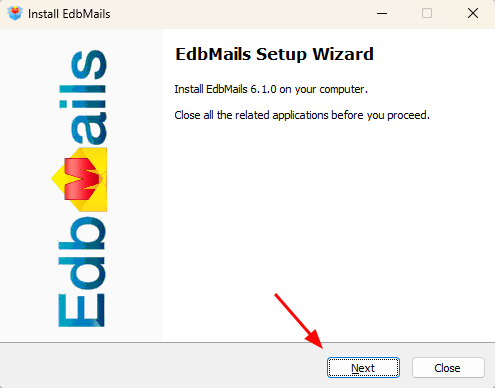
- Click ‘Next’ when the setup wizard opens.
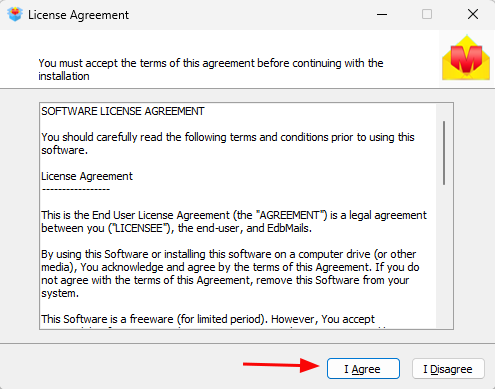
- Review the license agreement and click ‘I Agree’ to continue.
- Review the installation location. The default location is suitable for most installations unless your organization requires a different application path.
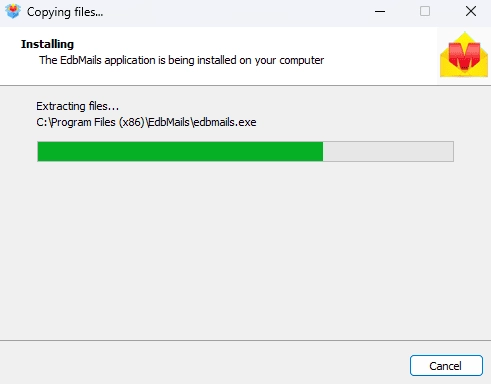
- Complete the installation and launch EdbMails. Sign in with your EdbMails account to continue with the required operation.
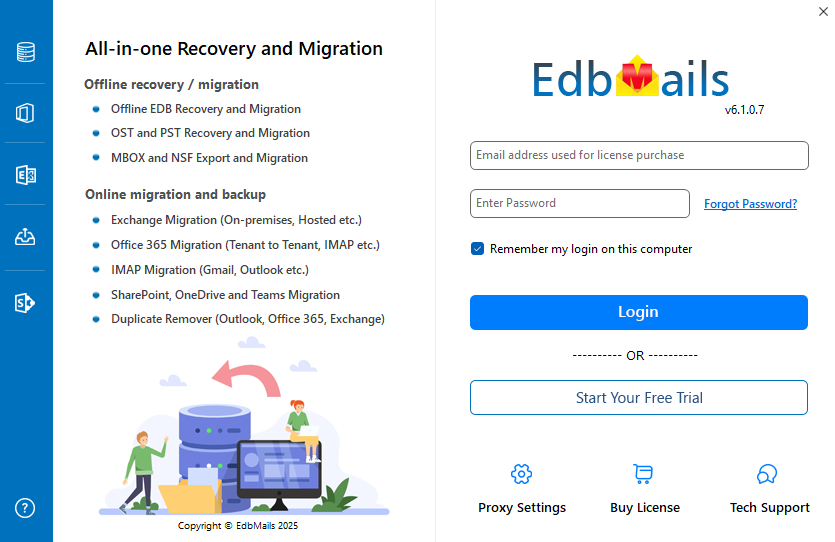
Verify the EdbMails Installation
After installation, perform these checks before starting a production migration:
- Launch EdbMails and confirm the application opens without installation or prerequisite errors.
- Sign in with the EdbMails account that will be used for the migration.
- Open the Office 365 Migration operation and verify the configured metadata or temporary location is accessible.
- Confirm the workstation can reach the intended source and target environments.
- Test the required source and target connections and complete the applicable authorization steps before selecting production mailboxes.
Impact on Your IT Infrastructure
Installing EdbMails adds the application and its supporting local files to the Windows computer. Installation itself does not migrate or modify mailbox content. Mailbox access begins only after the required source or target connection is configured and authorized.
Windows Computer
EdbMails requires the Windows components documented in the current system requirements. If a required component is missing, install or enable it before continuing. The application also uses local storage for settings, migration metadata, reports, and logs according to the selected workflow.
Source Office 365 Tenant
Microsoft 365 authorization may require EdbMails application registration in Microsoft Entra ID. The source connection workflow supports automatic registration, and manual application registration can be used when required by the tenant or administrator.
Target Office 365 Tenant
The target connection likewise requires the permissions and authorization supported by the current EdbMails version. Automatic or manual Microsoft Entra registration can be used according to the environment.
Exchange Server
For applicable on-premises Exchange migration scenarios, configure the Exchange connectivity and account permissions required by the current EdbMails connection method. Keep Exchange Server permission requirements separate from Microsoft 365 tenant authorization.
Next Steps After Installation
After verifying the installation, configure the required source and target connections, review mailbox mapping, and test a representative migration before moving production data. For end-to-end planning, use the Office 365 migration guide and the Office 365 migration checklist.
Conclusion
Install EdbMails on a supported Windows computer that meets the required software, connectivity, authorization, and storage requirements for your migration scenario. After setup, verify the application and source/target connections before starting a production migration.
Frequently Asked Questions
Do I need administrator rights to install EdbMails?
Does EdbMails need to be installed on the Exchange Server?
Is Microsoft Outlook required to install EdbMails?
What should I do if EdbMails is already installed?
Does installing EdbMails modify mailbox data?