


Office 365 to AOL Mail Migration
An Office 365 to AOL Mail migration requires careful planning to ensure emails, folders, attachments, and mailbox data are transferred accurately without disruption. Whether you're moving to AOL Mail for personal use, simplifying email management, or consolidating accounts, preserving mailbox integrity throughout the migration process is essential.
Office 365 provides enterprise-grade email, collaboration, and productivity services, while AOL Mail offers a straightforward email platform that is accessible across devices. Due to differences in platform architecture, authentication methods, and mailbox handling, manual migration can be time-consuming and may result in incomplete data transfers.
EdbMails Office 365 migration software simplifies Office 365 to AOL Mail migration by securely transferring mailbox data while preserving folder hierarchy, email properties, attachments, and metadata. With OAuth 2.0 authentication, TLS encryption, advanced filtering, and incremental migration support, EdbMails helps ensure a secure, accurate, and interruption-free migration experience.
Why Choose AOL Instead of Office 365?
Reasons Office 365 AOL Mail Ease of Management Offers advanced admin controls but requires technical setup and maintenance. Simple configuration that needs no admin console or technical knowledge. Security Framework Uses enterprise-grade protection that depends on user policy configuration. Includes built-in spam protection and security features for everyday email communication. Storage Architecture Storage capacity varies by subscription plan and mailbox quota. Provides generous mailbox storage for personal and everyday email usage. Access and Compatibility Works best with Microsoft ecosystem and licensed applications. Compatible across devices through web browsers and mobile apps without add-ons. Cost and Maintenance Subscription-based model with recurring license management. Free email platform that requires no license or upgrade cost. These factors make AOL Mail a preferred choice for many users migrating from Office 365 using EdbMails Office 365 migration software.
Office 365 to AOL Mail: Pre-Migration Activities
1. Prepare the Source: Office 365
Before starting the migration, ensure the following tasks are completed on Microsoft 365:
- Make sure you have a global admin account with an active mailbox for automatic registration of the EdbMails application in your Entra ID (Azure Active Directory). Alternatively, for manual registration, you can use either a global admin account or any user account that has full access permissions.
- Make sure your network meets the bandwidth requirements.
- If your mailboxes contain large messages, increase the message size limit to accommodate.
2. Prepare the Target: AOL Mail
On the AOL Mail side, ensure the following:
- Ensure the target AOL Mail accounts are created and accessible before starting the migration.
- Collect the AOL Mail IMAP server details, email address, app password, and port number (993 for IMAP over SSL).
- If you're migrating multiple users, prepare a CSV file with the following fields:
- Email address
- Password
- IMAP hostname
- Port number
- Enable SSL/TLS on your AOL Mail server for secure communication.
How to migrate from Office 365 to AOL Mail using EdbMails?
Step 1: Download and Set Up the EdbMails Tool
- Download and install EdbMails on your system.
Review the EdbMails system requirements to ensure compatibility for Office 365 to AOL Mail migration.
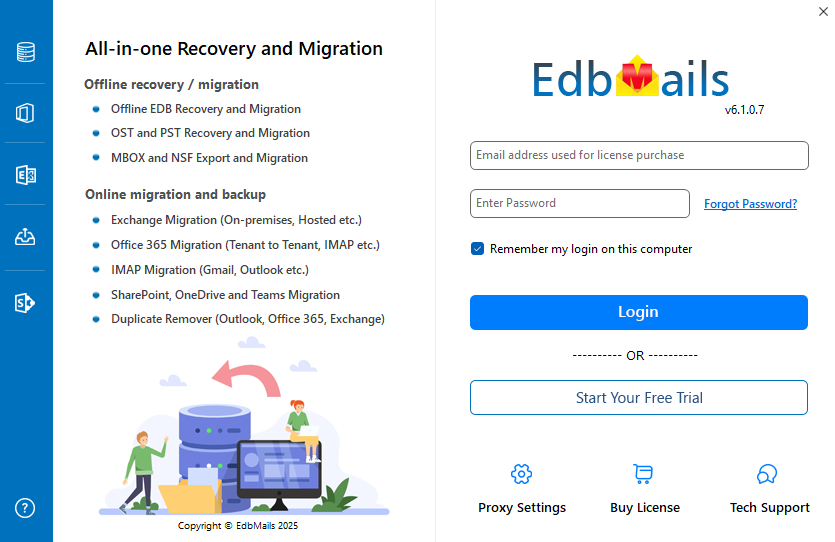
- Launch the EdbMails application and click ‘Login’ to sign in with your registered email and password. If the account is not created yet, choose ‘Start Your Free Trial’ to access the application.
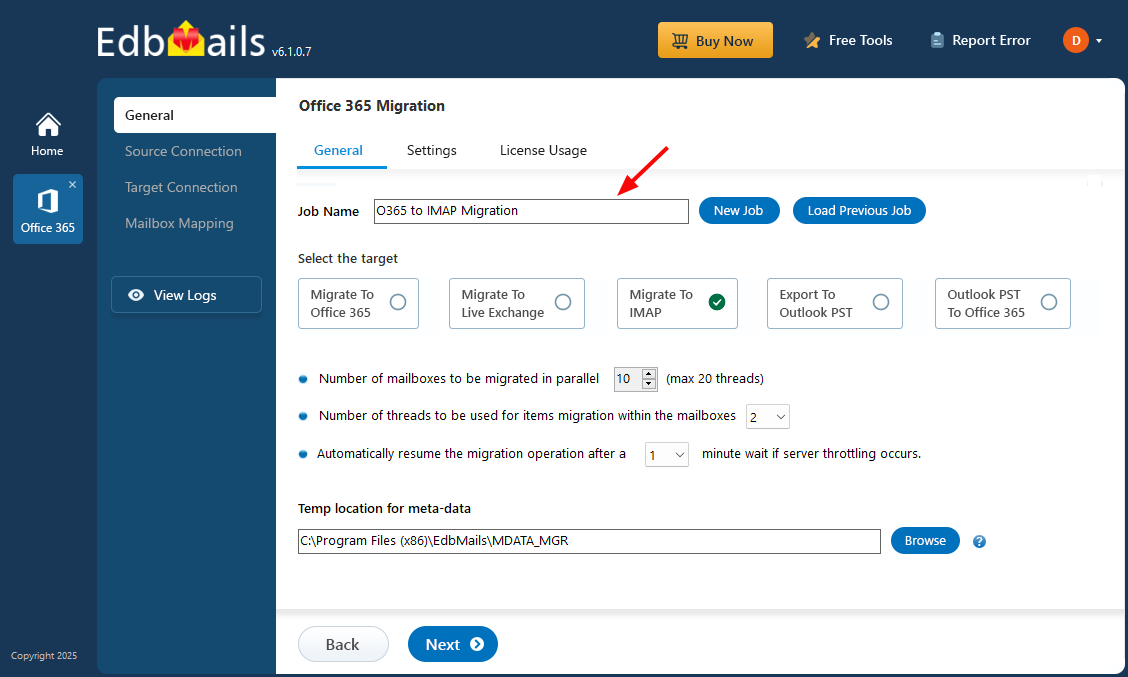
- Choose the ‘Office 365 Migration’ option.
- Next, select ‘Office 365 to IMAP Migration’ as your migration type.
- You can keep the default job name or enter a custom one, then click ‘Next’ to proceed with the configuration.
- Download and install EdbMails on your system.
Step 2: Connect to Source Office 365 Server
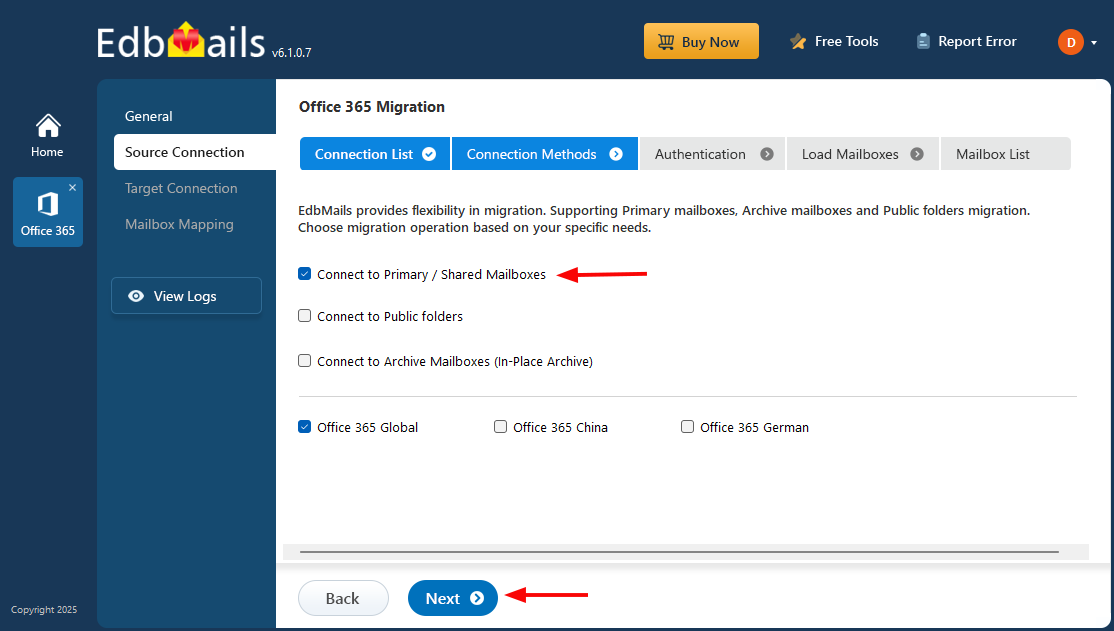
- Click ‘Add New Connection’ to create a new source connection, or choose an existing one and select ‘Connect to Existing’.
- Pick the required connection settings and click ‘Next’.
- Select a secure OAuth 2.0 authentication method and click ‘Login’ to proceed.
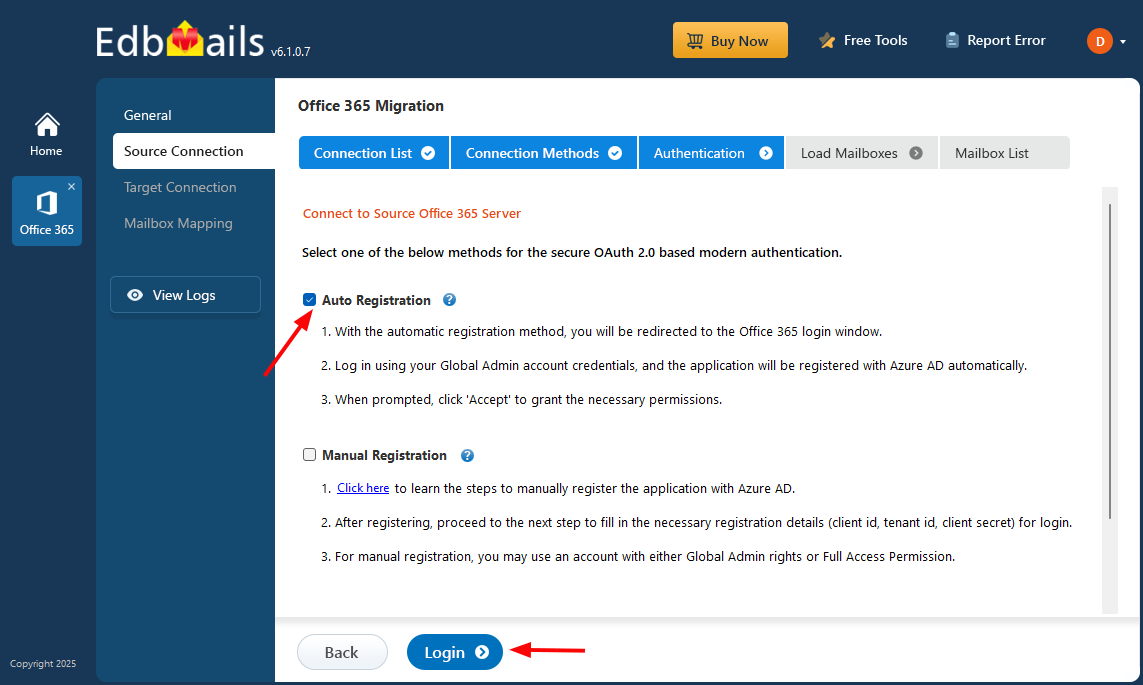
- Sign in through the Microsoft login page to complete verification.
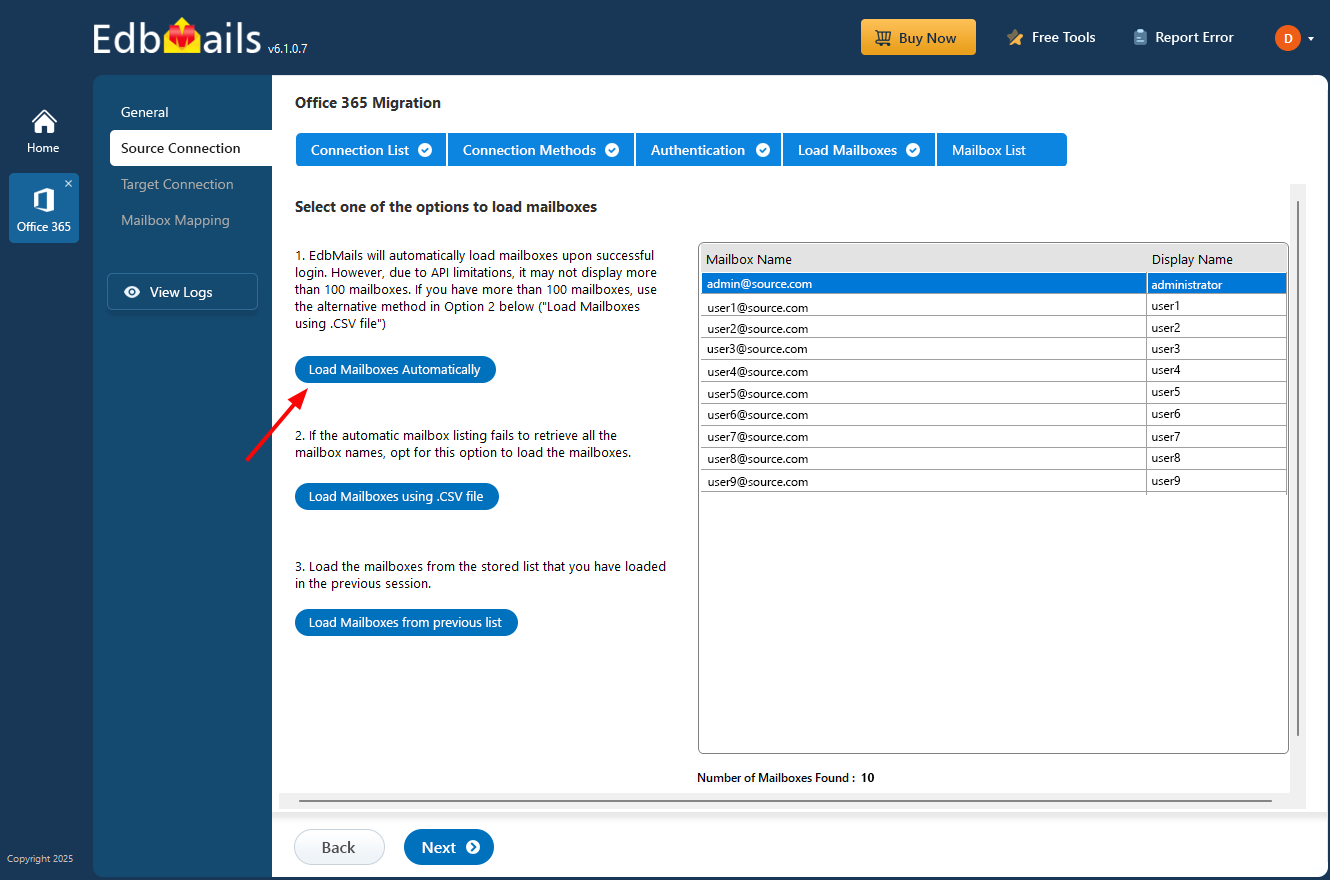
- After authentication, load mailboxes automatically or import them using a CSV file.
Step 3: Select the Office 365 Mailboxes
- Finally, select the mailboxes to migrate from your Office 365 account and click ‘Next’ to continue.
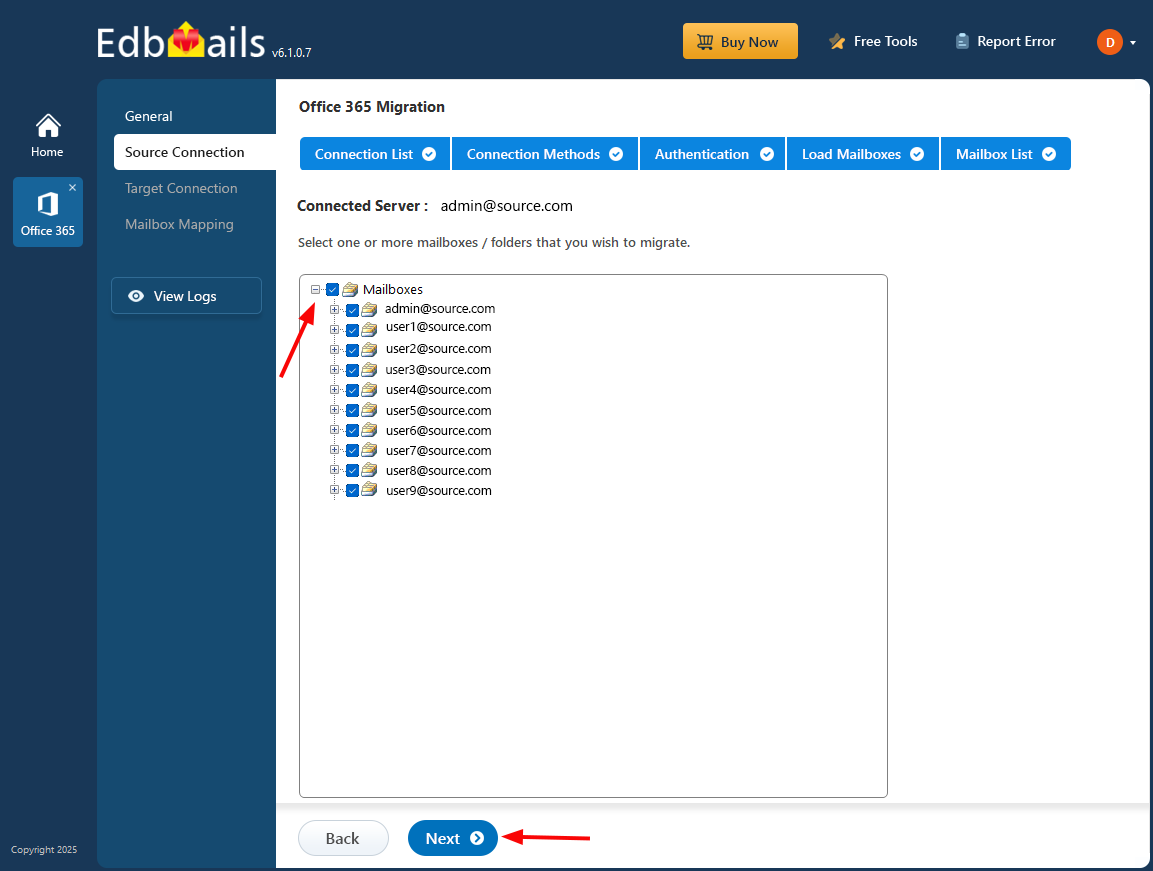
- Finally, select the mailboxes to migrate from your Office 365 account and click ‘Next’ to continue.
Step 4: Connect to the Target AOL Mail Server
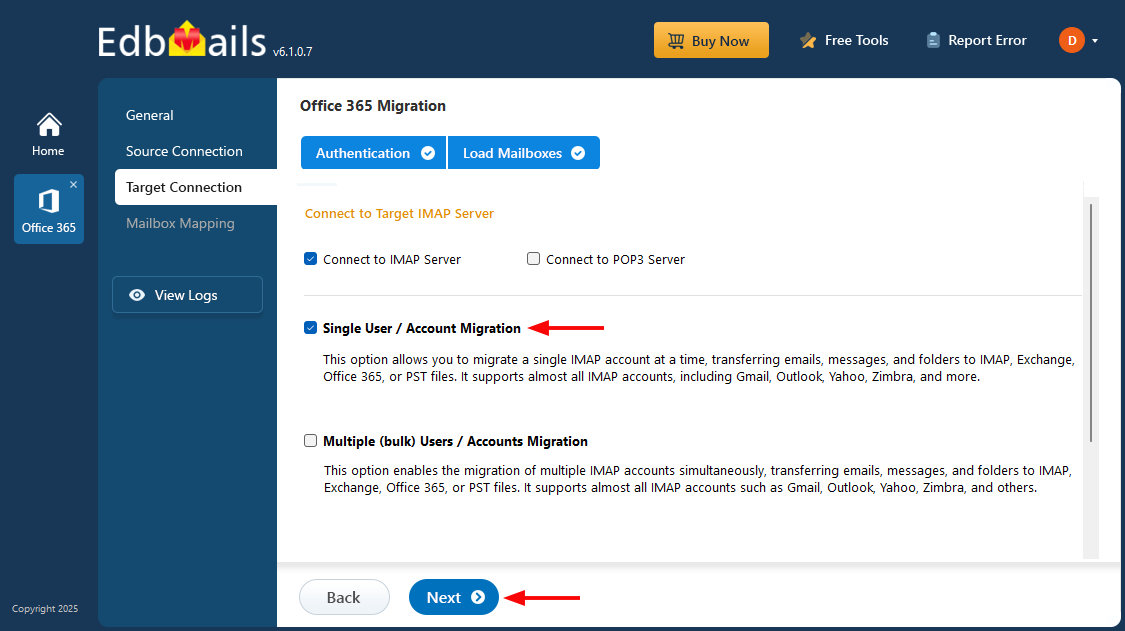
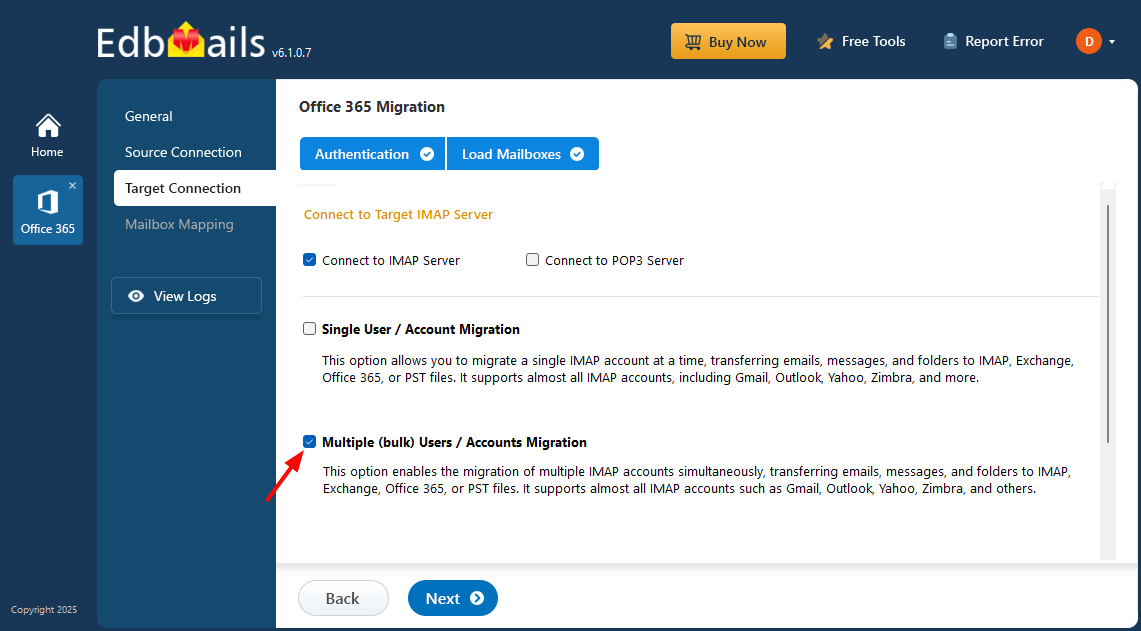
- Select 'Connect to IMAP Server' to connect to the AOL Mail destination mailbox.
- For a single mailbox, choose ‘Single User / Account Migration’ to proceed.
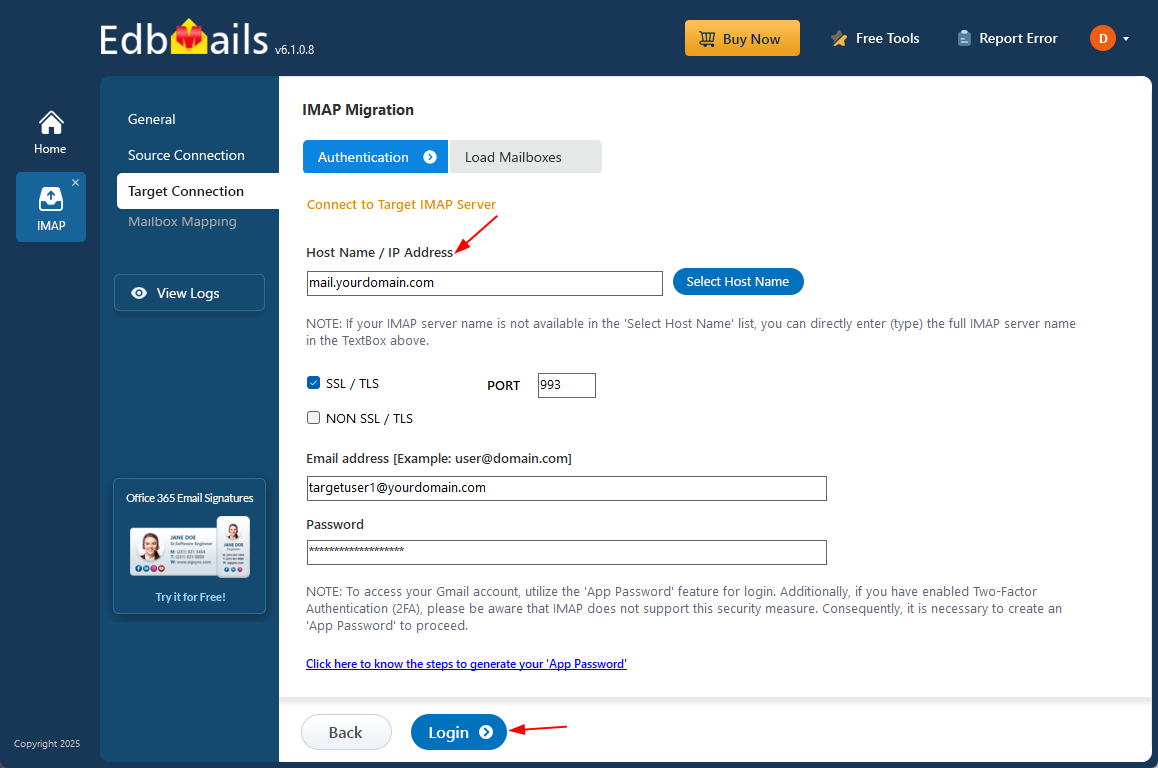
- From the dropdown, choose the correct AOL Mail IMAP server hostname or enter it manually (for example, mail.yourdomain.com). Enter the AOL Mail email address and app password. Ensure IMAP access is enabled for the mailbox before proceeding.
- Click ‘Login’ to connect to the AOL Mail server and load the destination mailbox details.
- For migrating multiple mailboxes, select ‘Multiple (Bulk) Users/Accounts Migration’ and click ‘Next’.
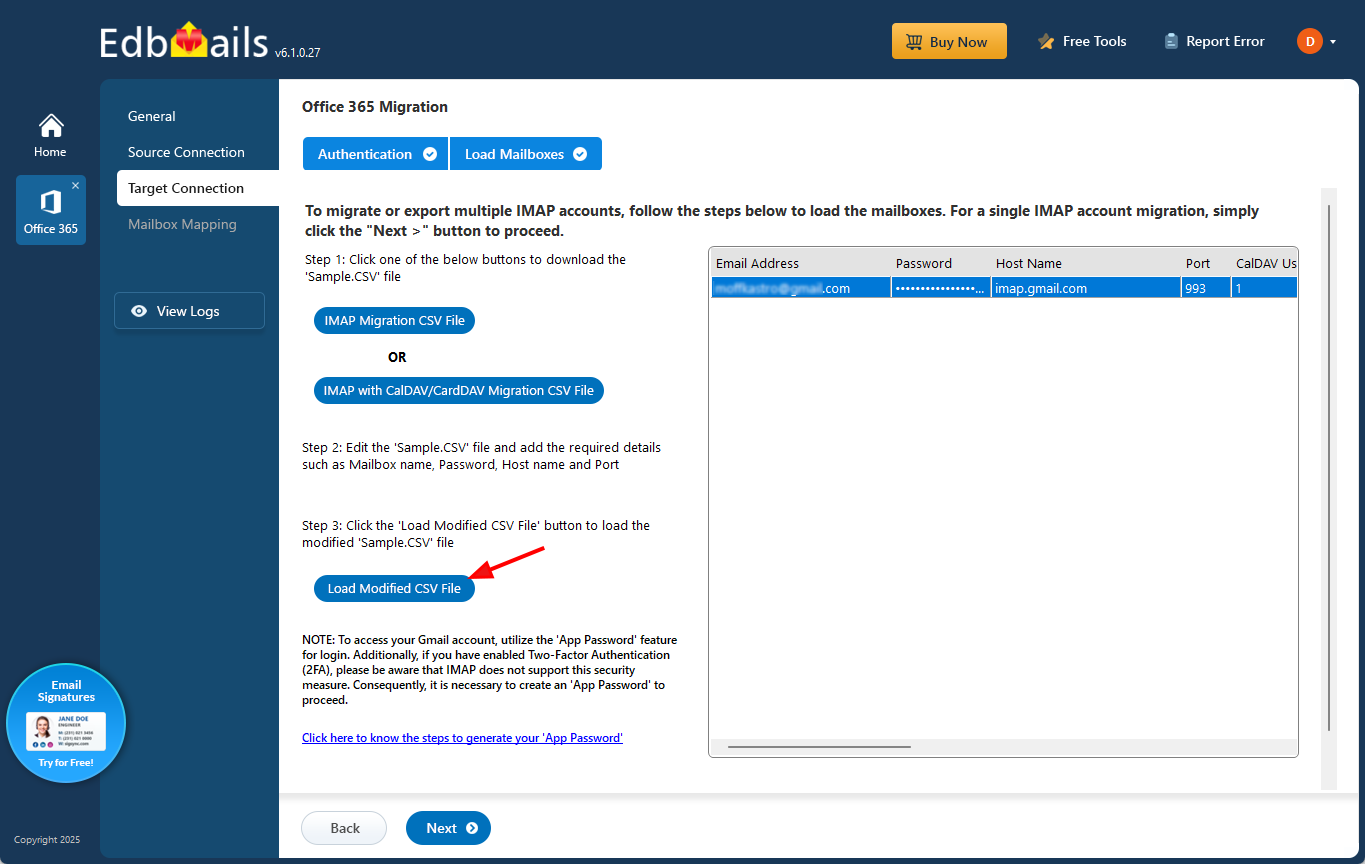
- Choose ‘IMAP Migration CSV File’ to proceed.
- Download the sample .csv file and save it to your system.
- Open the CSV file and enter the AOL Mail mailbox details, including Email Address, Password, Host Name, and Port Number. Mark any unused fields as 'NA', then save and close the file.
- Click ‘Load Modified CSV File’, browse to the saved CSV file, and upload it into EdbMails.
- Verify the listed mailboxes, then click ‘Next’ to continue.
Step 5: Office 365 to AOL Mail Server Mailbox Mapping
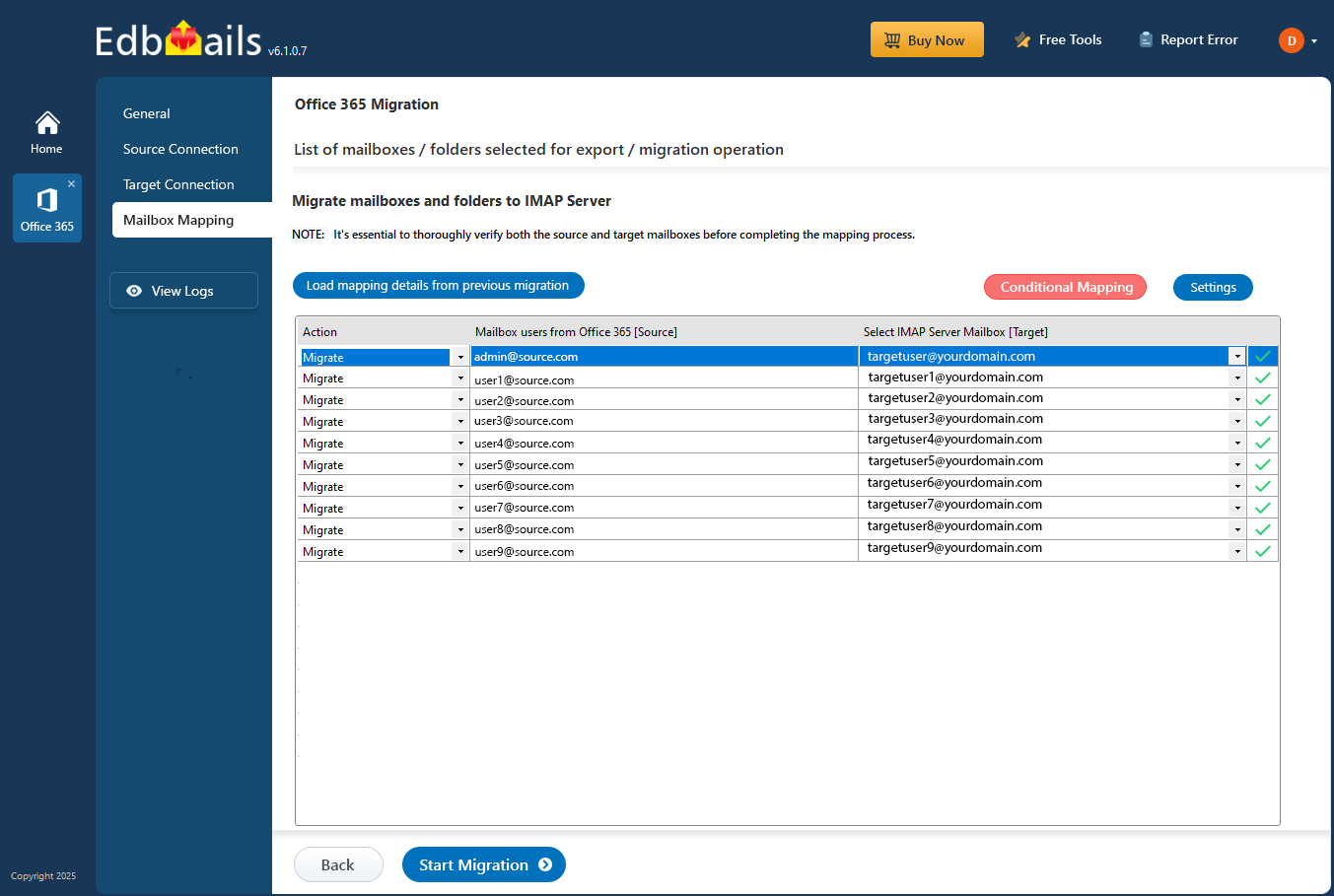
- Select the mailbox mapping option.
- EdbMails automatically maps Office 365 mailboxes to their corresponding AOL Mail accounts. Review the mappings and make any necessary adjustments before proceeding.
Step 6: Start Office 365 to AOL Mail Migration Operation
- After completing mailbox mapping, click ‘Start Migration’ to begin the process.
- Once finished, select ‘View Log’ to check a detailed migration report showing migrated emails, folders, and items.
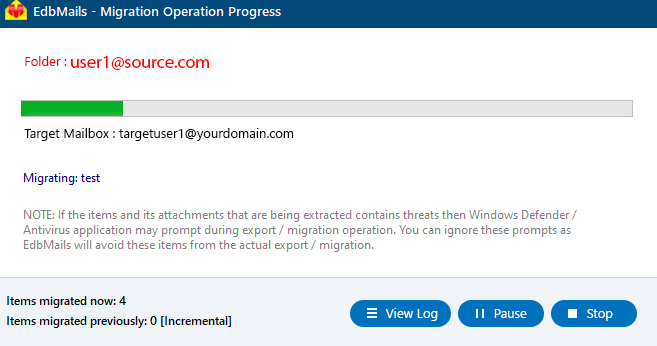
- Sign in to AOL Mail and verify that emails, folders, and attachments have been migrated successfully.
Post Migration Tasks
After the migration is complete, modify your MX records to direct mail flow to the new server.
Email Size & Attachment Handling
EdbMails ensures reliable and consistent data transfer during Office 365 to AOL Mail migration by maintaining the integrity of large messages and attachments.
- Supports large items: EdbMails migrates large emails and message bodies without truncation, provided they are within the size limits supported by the destination server.
- Maintains attachments: All attachments, including PDFs, images, documents, and embedded files are preserved exactly as they exist in Office 365.
- Preserves MIME structure: The tool retains the original MIME headers, HTML formatting, inline images, and message properties to ensure emails appear the same in AOL Mail.
- Maintains data integrity during IMAP transfer: EdbMails uses validation checks and retry mechanisms to help ensure emails and attachments are transferred accurately.
Migration Speed Factors:
The overall migration speed depends on several factors, including mailbox size, network bandwidth, Microsoft 365 throttling policies, and the response time of both the source and destination servers. Understanding these factors can help you estimate migration duration and optimize performance for a smoother Office 365 to AOL Mail migration:
- Network Bandwidth:
Higher upload and download speeds directly improve migration performance because EdbMails transfers data in real time over your available internet connection.
- Microsoft 365 Throttling Policies:
Office 365 applies built-in throttling limits to prevent server overload. These limits can slow the transfer rate even if your local network is fast.
- Server Response Time (Source & Destination):
Migration speed depends on how quickly Office 365 and AOL Mail servers respond to requests. Slow IMAP responses lead to slower item retrieval and upload.
- Mailbox Size & Item Count:
Migration duration increases with mailbox size, item count, and folder complexity. Mailboxes containing thousands of messages require additional processing time.
Best Practices for Office 365 to AOL Mail Migration
- Assess Office 365 mailboxes, data volume, and permissions to identify critical items and remove unnecessary data before migration.
- Verify AOL Mail account readiness by checking credentials, storage space, and folder organization.
- Ensure the migration uses secure authentication like OAuth 2.0 and encryption protocols such as TLS for data protection.
- Apply advanced filters to migrate only specific emails or folders, reducing time and improving control.
- Use a migration solution that supports secure authentication, mailbox filtering, incremental migration, and detailed reporting to help ensure a successful migration.
- Maintain post-migration checks to confirm email accessibility and ensure all mail data is successfully transferred.
Frequently Asked Questions (FAQs)
Is there any downtime during an Office 365 to AOL Mail migration?
No. Office 365 users can continue accessing their mailboxes during the migration. EdbMails transfers mailbox data in the background without disrupting user activity.
What happens if the migration stops midway due to network failure?
EdbMails supports incremental migration, allowing you to resume the operation and transfer only new or previously unmigrated items.
Can I migrate only selected folders or exclude unnecessary data?
Yes. EdbMails provides advanced filtering options that allow you to migrate specific folders, emails within a selected date range, messages from particular senders, or items with and without attachments.