


How to Convert OST to PST
If your Outlook profile and mailbox are still accessible, use Outlook's own Import/Export wizard to export directly to PST. If the OST file is orphaned, corrupted, or the mailbox is no longer available, use the EdbMails OST to PST Converter to scan the OST directly and export the readable, recoverable data to PST.
Converting an OST file to PST gives you a portable copy of Outlook mailbox data that doesn't depend on the original OST file or its connection to a mailbox. Which method to use depends on whether the source mailbox is still healthy and reachable.
When Native Outlook Export Is Enough
If your Outlook profile can still open the mailbox, Outlook's built-in Import/Export wizard can export mail, contacts, and calendar items directly to a PST file, no separate tool needed. This works well when the mailbox is intact and reachable, whether on Exchange, Microsoft 365, or another supported account type.
One limitation worth knowing: under Cached Exchange Mode, Outlook's export pulls from your current local cache, not necessarily the complete server-side mailbox history. If you need older mail outside your cache range, make sure it's synced locally, or still available on the server, before exporting.
When Dedicated OST Recovery Is Required
Native export is not an option for every OST file. It does not apply to an orphaned OST left behind after the mailbox or profile is gone, a severely corrupted file Outlook refuses to open, or an OST copied from another computer with no matching profile. In those cases, the EdbMails OST to PST Converter can read the offline file directly, preview readable mailbox data, and export the recoverable content to PST independently of the original mailbox connection.
See also: Manual Methods vs OST Recovery Software | EdbMails OST to PST Converter
Which Method Fits Your Situation
| Condition | Best Route |
|---|---|
| Mailbox/profile accessible | Classic Outlook Export to PST |
| Mailbox healthy but OST corrupt or stale | Rebuild or resync the OST, then export if needed |
| Orphaned OST / mailbox unavailable | EdbMails OST recovery → PST |
| Need direct cloud/server restore | OST to Microsoft 365 or OST to Exchange migration |
Before You Convert OST to PST
| Preparation | Recommended Guidance |
|---|---|
| Check available disk space | Keep sufficient free space for the resulting PST. |
| Decide what mailbox data you need | Choose required folders such as Inbox, Sent Items, Contacts and Calendar. |
| Preserve a copy of the source OST before recovery | Keep the original OST file untouched before running any repair or recovery attempt. |
Prerequisites for Converting OST Files to PST
| Requirement | Why It Is Needed |
|---|---|
| EdbMails installed | Scan and recover OST |
| Source OST accessible | Required for reading mailbox data |
| Microsoft Outlook with a configured supported profile | Required for PST export |
| Sufficient disk space | Required to store output PST |
| Supported Windows environment | Required to run EdbMails. See system requirements. |
Exporting via Outlook's Import/Export Wizard
If your profile and mailbox are accessible, Outlook's own wizard can create a PST directly, no separate tool is needed. In Outlook, open File > Open & Export > Import/Export, choose Export to a file, then Outlook Data File (.pst), and select the folders to include. Remember that this exports your current local cache under Cached Exchange Mode, as noted above. See Microsoft's own step-by-step export guide for the full walkthrough.
Steps to Convert OST to PST with EdbMails
These steps show the conversion workflow. For product capabilities, supported recovery scenarios, trial details and licensing, see the EdbMails OST to PST Converter.
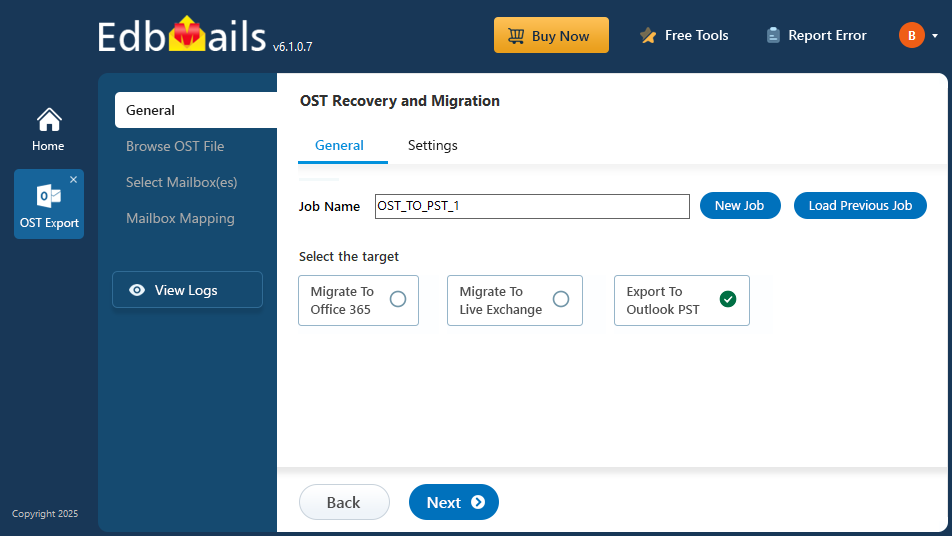
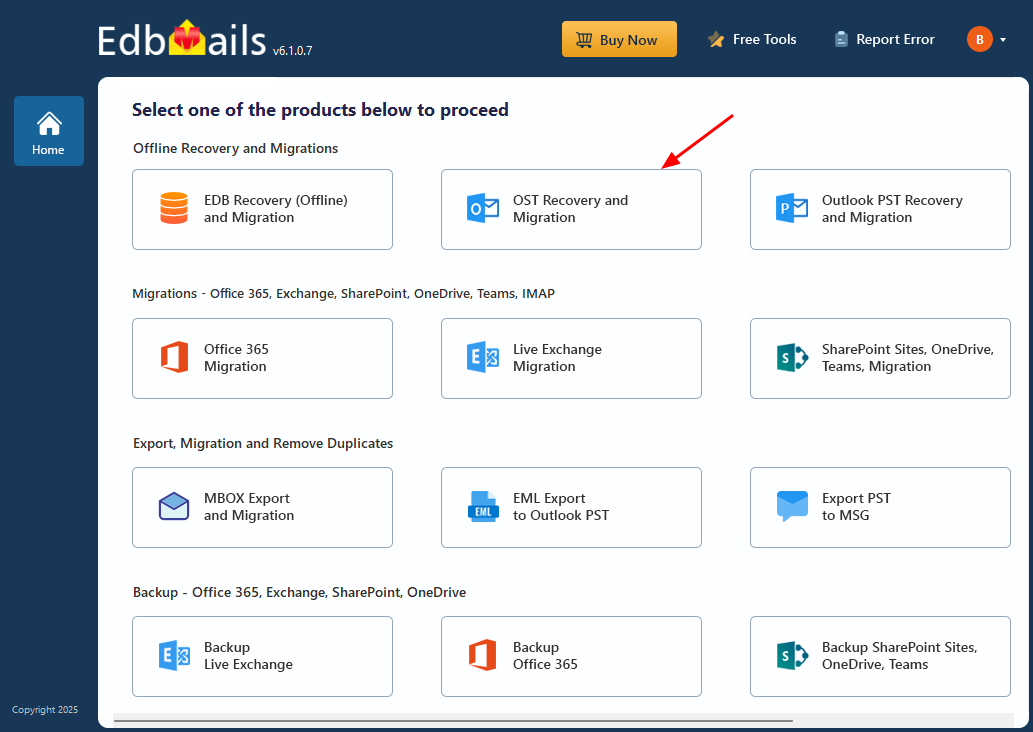
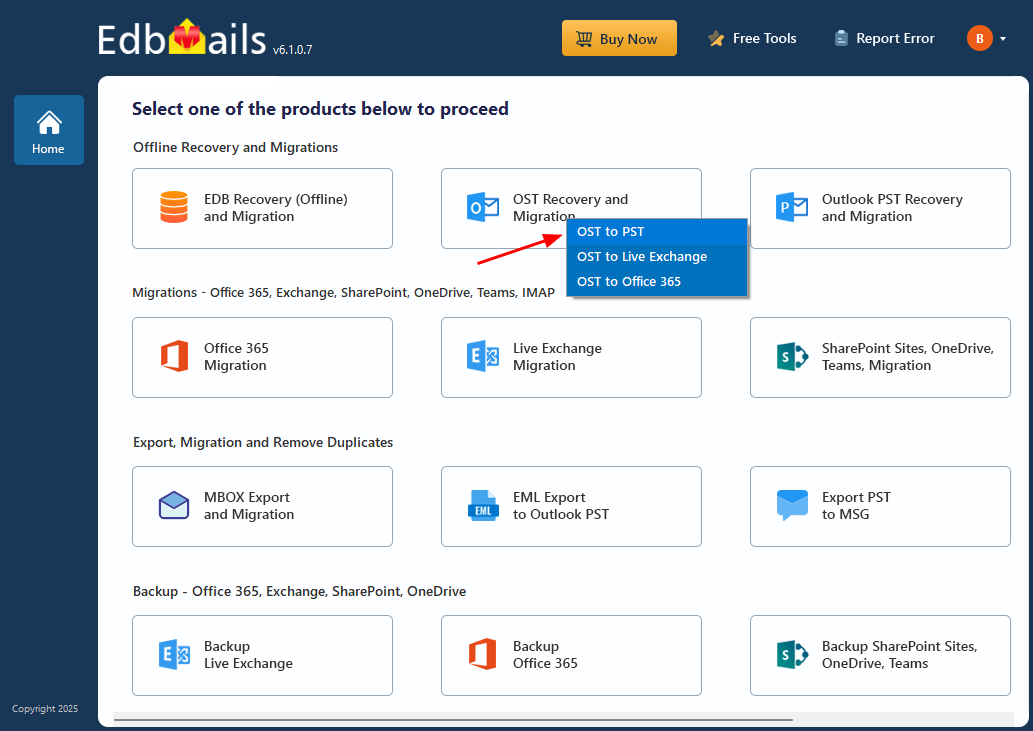
- Download EdbMails, install it, then open the application and select OST Recovery and Migration, followed by OST to PST.
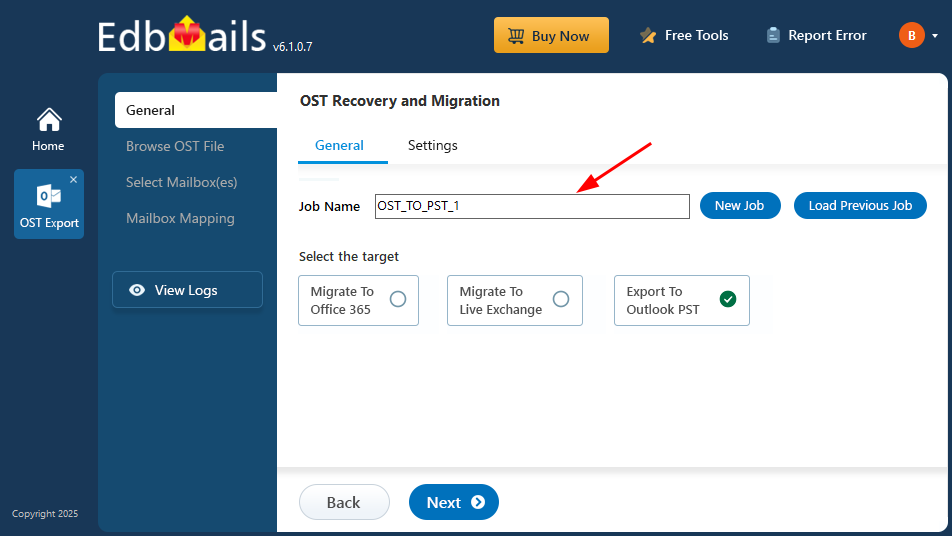
- Create or retain the job name, then click Next.
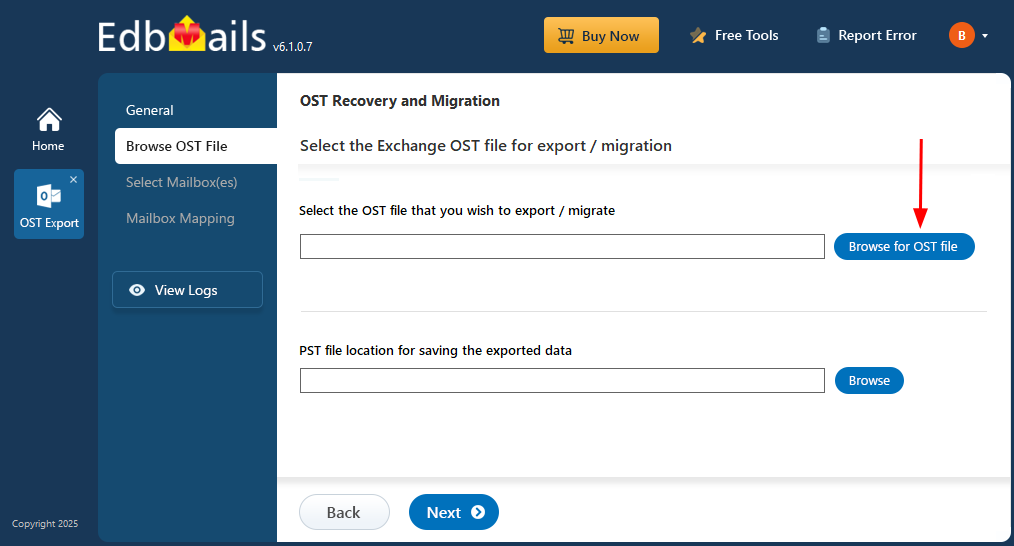
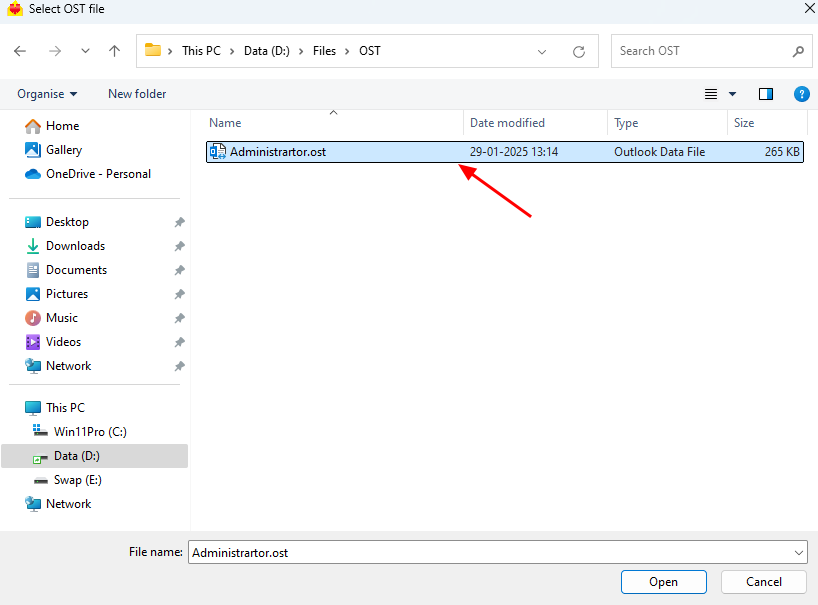
- Click Browse for OST File and select the offline OST file from your local drive, then click Next.
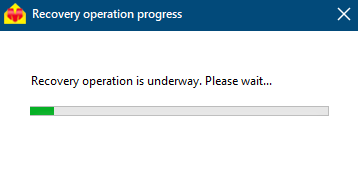
- EdbMails scans the selected file. The scan identifies readable, recoverable mailbox content, how long it takes depends on file size, storage speed, and how much of the file is damaged.
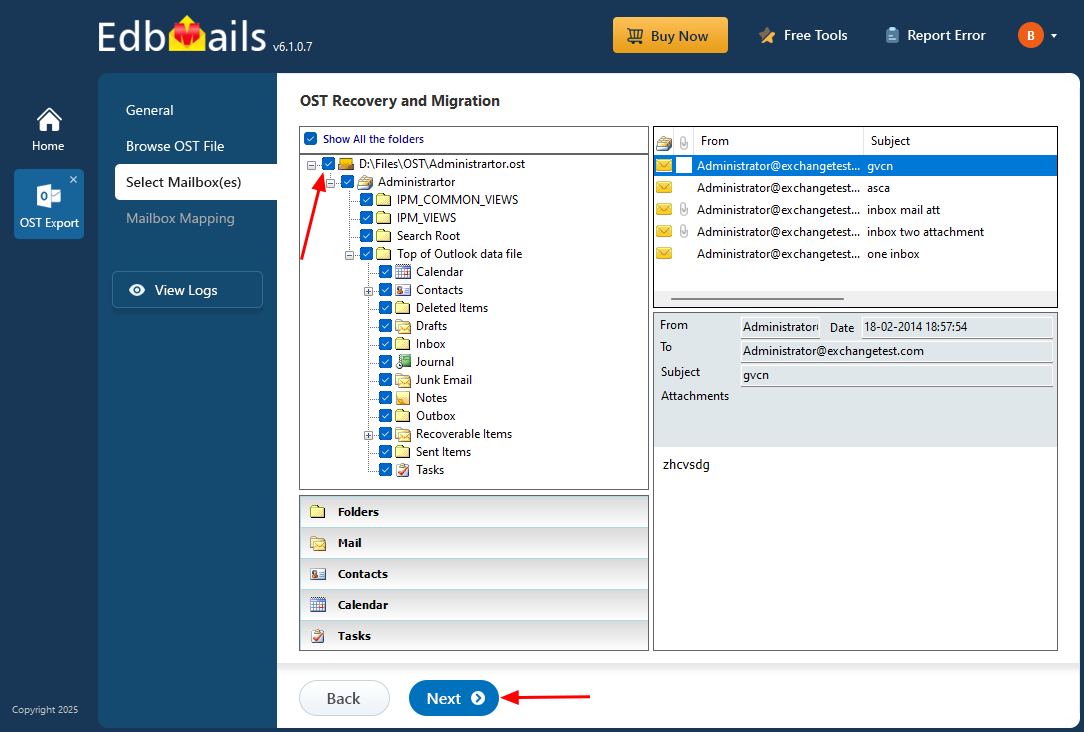
- Recovered folders appear in the detected mailbox hierarchy. Expand any folder or subfolder to preview its contents, emails, contacts, calendars, tasks, notes and attachments, before deciding what to export. EdbMails also offers a free OST file viewer to preview OST data, and lets you open an OST file without Outlook.
- Choose the entire OST or only the folders and items you need, then click Next.
- Apply supported filters where required. For example, use date filters to export items within a specific date range, go to the General tab on the left, then click the Settings tab at the top right. See also: Selective OST to PST Export, Export OST with Date Filter.
- Choose the folder where the PST output will be saved. Click Browse.
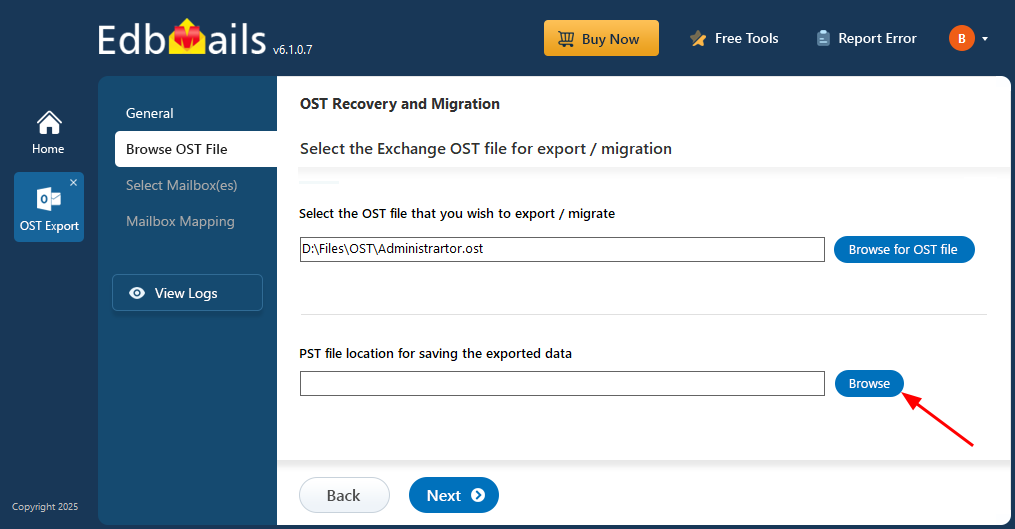
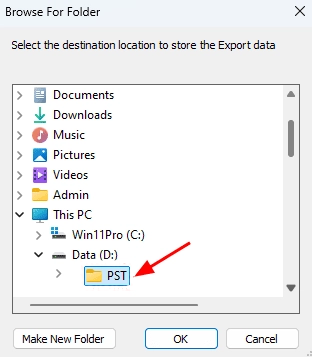
- Confirm sufficient free disk space, then click Next.
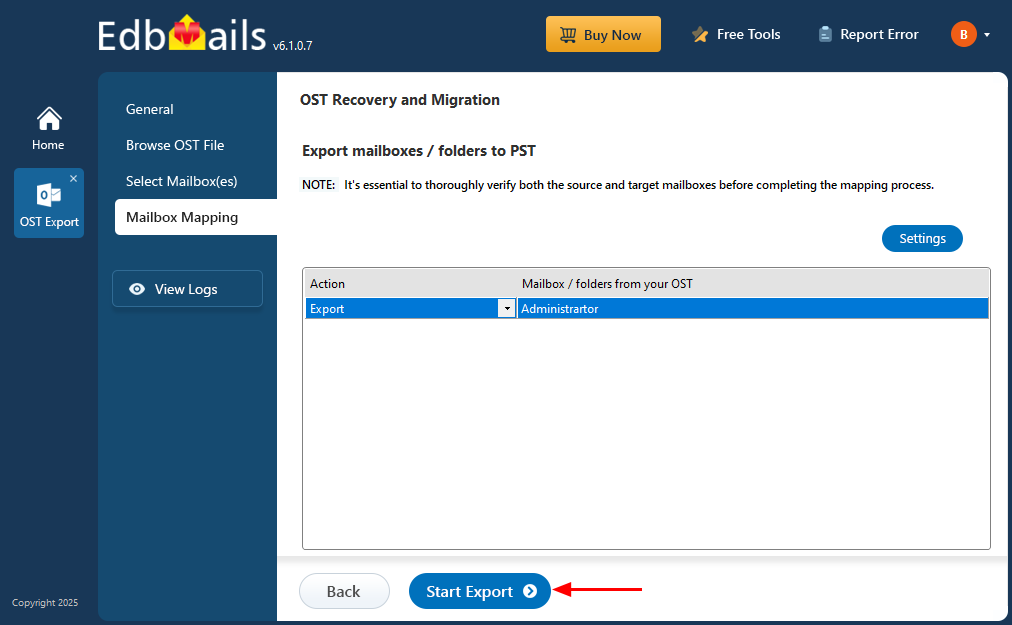
- Review the selected folders, confirm Action is set to Export, then click Start Export.
- Monitor exported item counts and progress. The interface shows the mailbox and folder being exported, the destination PST file location, and the count of items exported so far.
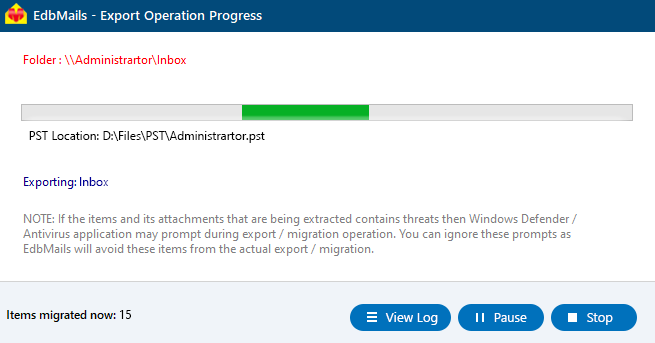
- Wait for the completion confirmation.
- Review the export report — Click View Log to check the successful, skipped, and failed item counts, along with mailbox and folder-level details.
- Open the PST in Outlook — Spot-check that the folders and items you expected, Inbox, Sent Items, Contacts, Calendar, and attachments, are present and accessible.
- Store the PST accordingly — A PST is a portable copy of the recovered data; it isn't, on its own, a compliance or formal retention solution. Move or archive it according to your organization's requirements.
What Conversion Cannot Recover
- Items that were never cached into the OST in the first place.
- Online Archive content that isn't stored in the primary OST.
- Server-side changes made after the OST's last sync.
- Data already overwritten or unreadable in the source file.
- Mailbox identity, rules, permissions, and other server-side configuration, none of which travel with a PST.
Why Use EdbMails OST to PST Converter?
- Recover corrupt and orphaned OST files
- Preview mailbox data before conversion
- Select folders and items for export
- Preserve detected folder hierarchy and metadata
- Convert 30 items per folder free
- Convert unlimited items with the licensed version
EdbMails supports OST files from the Outlook and Exchange versions listed in the current system requirements.
Frequently Asked Questions
Can I manually convert OST to PST?
Is Outlook required for OST to PST conversion?
Can I convert a corrupt OST to PST?
Can I convert an orphaned OST file?
How much disk space is required?
Can I convert only selected OST folders?
For more questions, visit the full OST to PST FAQ page, or try the free trial to evaluate EdbMails yourself.