


How to Migrate Only Selected Mailboxes from Google Workspace
Not every organization can move its entire Google Workspace tenant in one go, and honestly, most shouldn't try. A phased rollout, where a handful of mailboxes go first and the rest follow once the process is validated, is how experienced IT teams keep a migration from turning into a helpdesk fire drill. This guide walks through how to run a selective mailbox migration using the EdbMails Google Workspace Migration Tool, and why picking specific mailboxes instead of migrating everything at once is often the smarter move.
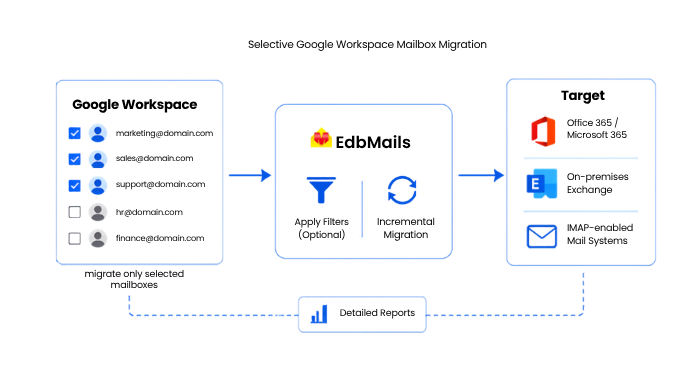
What Selective Mailbox Migration Actually Means
Selective mailbox migration is simply the ability to choose which mailboxes move, and when, rather than being forced into an all-or-nothing transfer. Instead of pointing a migration tool at your entire domain and hoping for the best, you pick a defined group of users, say, the marketing team or a set of pilot accounts, and migrate just their data first. This isn't the same as filtering data within a single mailbox (though EdbMails supports that too, by date range or folder). Selective mailbox migration works at the user level: some mailboxes migrate now, others stay put until you're ready for them.
Why Phased Migrations Make Sense
A full-tenant cutover sounds efficient on paper. In practice, it concentrates every possible risk into a single weekend. If something goes wrong with mailbox mapping, folder structure, or calendar sync, you find out after hundreds of users are already affected.
Migrating in phases spreads that risk out and gives IT teams a few real advantages:
- Smaller blast radius: If an issue shows up during the first batch, it affects ten users instead of a thousand.
- Real-world validation: You can confirm that folder hierarchy, contacts, and calendar events transfer correctly before committing the rest of the organization.
- Department-by-department rollout: Some businesses migrate by function, moving sales or support first while other teams keep working uninterrupted in Google Workspace.
- License and bandwidth planning: Migrating in smaller batches makes it easier to manage target-tenant licensing and avoid saturating available bandwidth.
- Executive or VIP mailboxes handled with extra care: High-priority accounts can be migrated separately, outside the main batch, with closer monitoring.
None of this is unique to Google Workspace migrations, but Google Workspace environments in particular tend to have a mix of shared drives, group mailboxes, and departmental accounts that make a staged approach worth the extra planning.
Does EdbMails Support Selective Mailbox Migration?
Yes. EdbMails is built around administrator-based authentication, which means you connect once using a Google Workspace admin account and API-based access rather than collecting individual passwords from every user. Once connected, EdbMails pulls up the full list of mailboxes in the domain, and from there you choose exactly which ones to include in the current migration run.
On top of that mailbox-level selection, EdbMails also lets you apply filters within the mailboxes you do choose:
- Migrate only items within a specific date range
- Migrate specific folders or labels instead of the entire mailbox
- Migrate selected item types rather than the full data set
This combination, choosing which mailboxes move and controlling what data moves with them, is what makes selective migration practical for organizations that need a phased rollout rather than a single cutover.
Step-by-Step: Migrating Selected Mailboxes from Google Workspace
1. Download and Install EdbMails
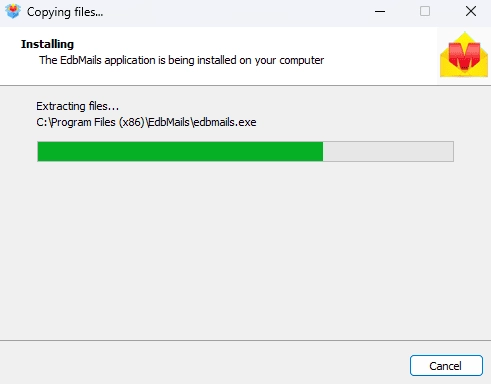
Start with the EdbMails installer. A free trial is available, and it's worth using it to test your selective migration plan on a small batch before running the full project. The trial version migrates all mailboxes with 30 items per folder, which is enough to confirm folder structure and formatting land correctly on the target side.
2. Connect to Your Google Workspace Source
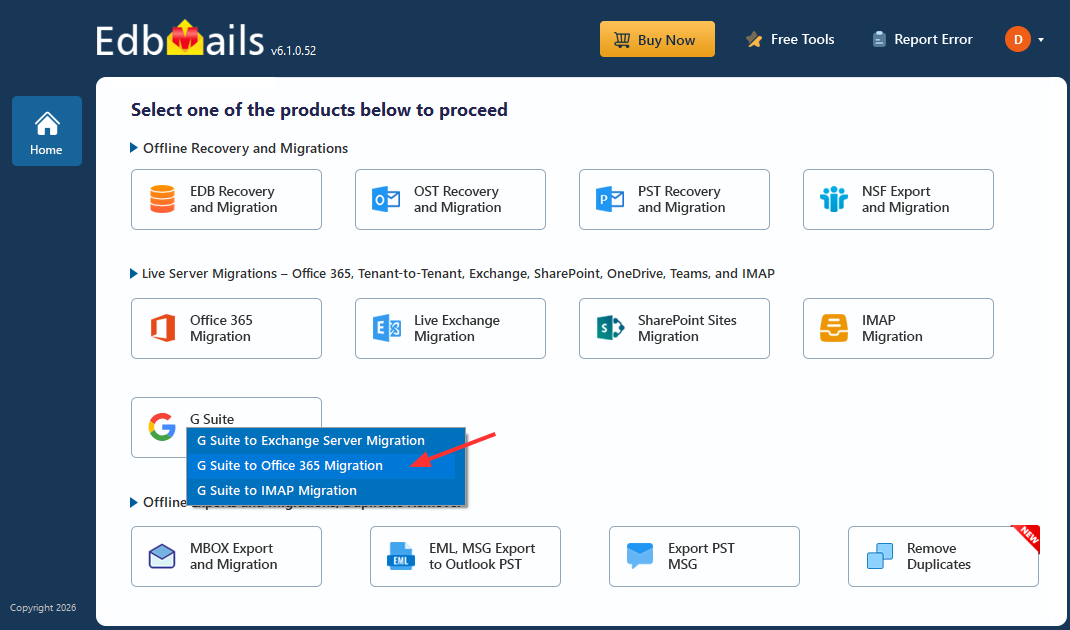
Launch EdbMails and select Google Workspace as the source. Authenticate using an admin account and the required API permissions. Because this uses administrator-level access, you don't need to gather credentials from each individual user, which matters a lot when you're only migrating a subset of accounts and don't want to loop in people who aren't part of this phase yet.
3. Select the Mailboxes for This Migration Batch
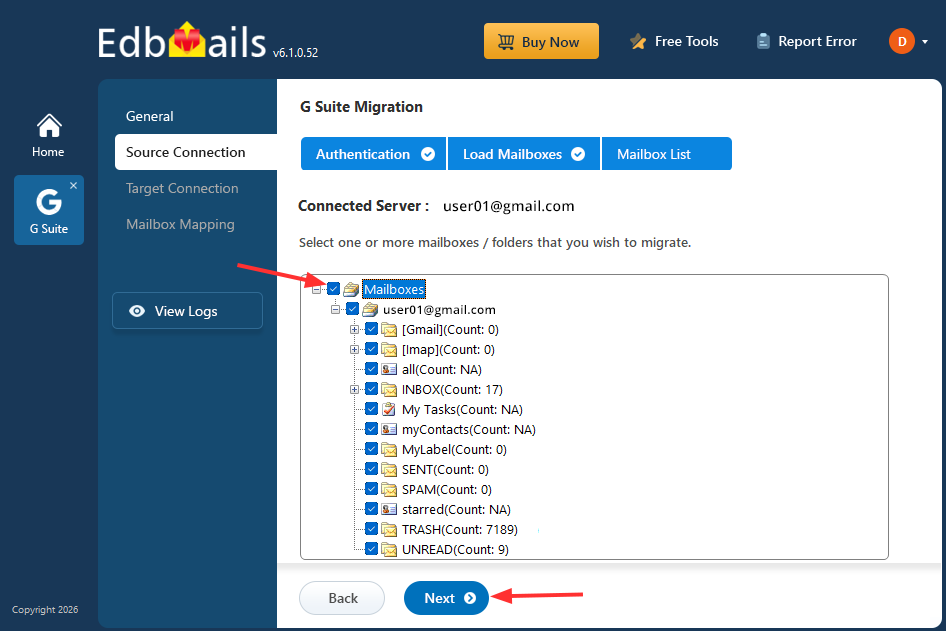
Once connected, EdbMails displays the available mailboxes in the domain. This is where the selective migration actually happens: instead of selecting all, check only the mailboxes you've decided belong in this phase, whether that's a pilot group, a single department, or a list of priority users.
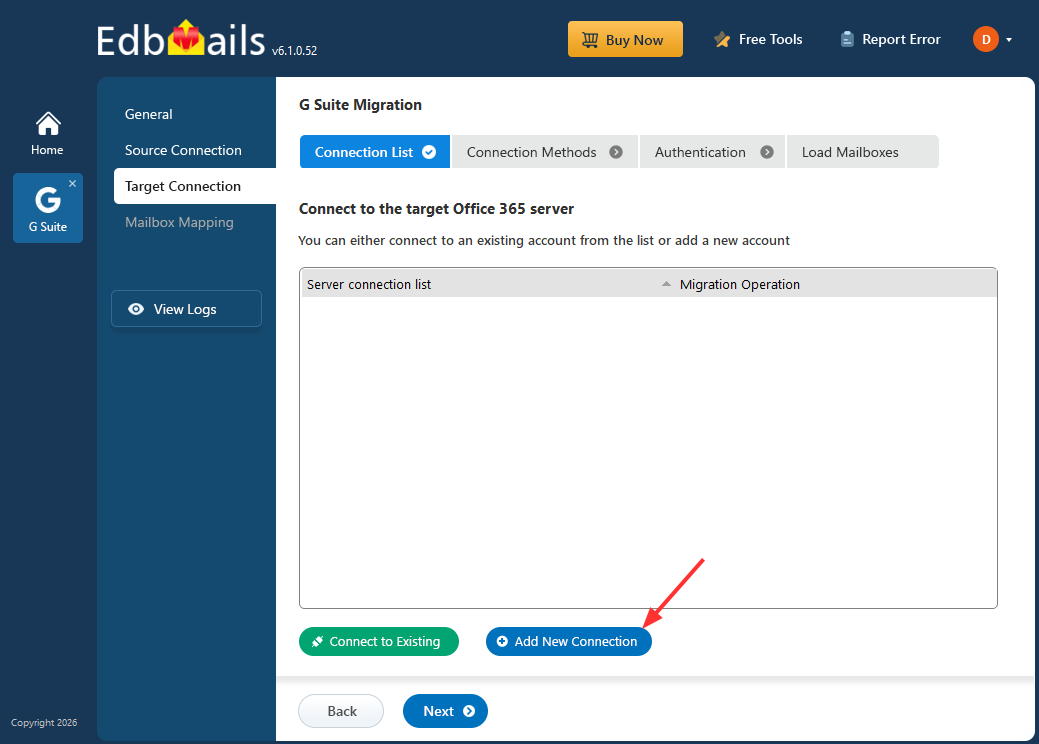
4. Connect to the Target Platform
Depending on where you're migrating to, connect to your target Office 365 tenant, on-premises Exchange Server, or IMAP-enabled mail system. EdbMails supports all three destinations from the same source connection.
5. Map Mailboxes and Start the Migration
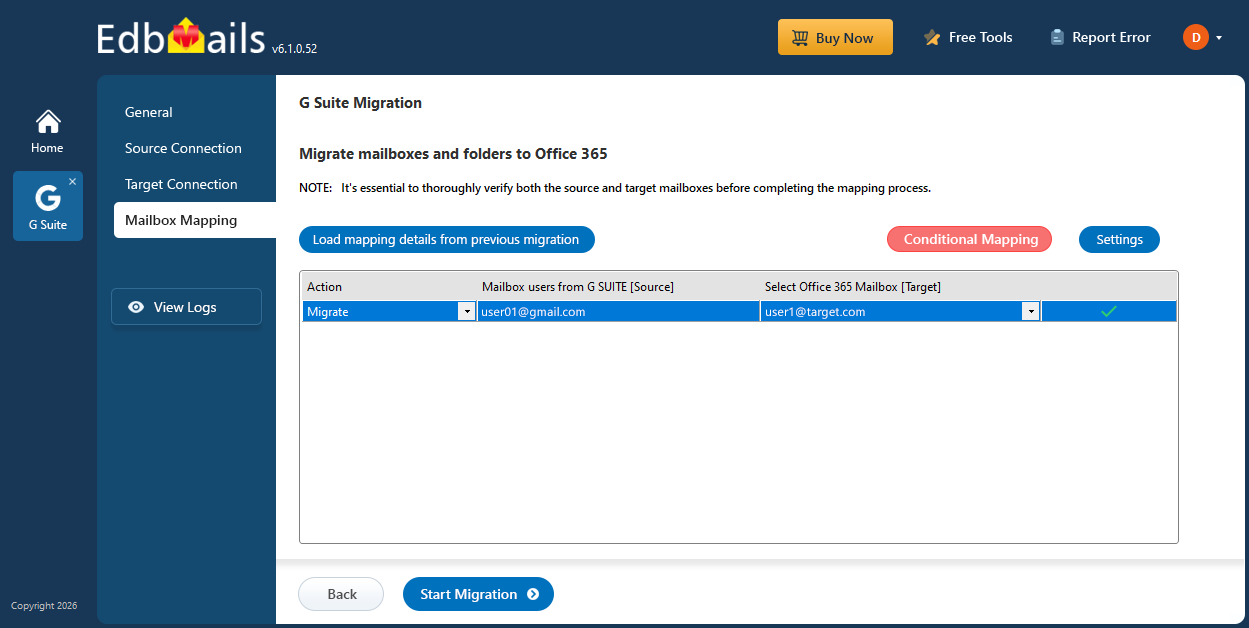
EdbMails automatically maps source mailboxes to their corresponding target mailboxes based on matching identifiers, though manual mapping is available if you'd rather control it directly. Once mapping is confirmed, start the migration for the selected batch.
6. Apply Data Filters If Needed
If you want to narrow things down even further within the selected mailboxes, apply filters by date range or by specific folders. This is particularly useful for a first-phase migration where the goal is to validate the process with recent data before committing to a full historical transfer.
7. Run Incremental Migration for Later Phases
After the first batch completes, use incremental migration to sync any new or changed items in those mailboxes without duplicating data already transferred. When you're ready to move the next group of mailboxes, repeat the selection process for that batch. This is what makes a multi-phase migration manageable: each round only moves what's new or what hasn't been migrated yet.
Common Scenarios for Selective Migration
Pilot testing before a full rollout: IT teams often migrate a handful of test mailboxes first to confirm everything, folder structure, calendar entries, contact groups, works as expected before scheduling the rest of the organization.
Department-based cutover: Rather than migrating the whole company at once, some organizations move one department at a time, keeping the rest of the business on Google Workspace until their turn comes up.
Mergers and reorganizations: When only part of a Google Workspace domain needs to move to a new platform (for example, after a divestiture), selective migration lets you move just the affected users without touching the rest of the tenant.
Migrating high-priority accounts separately: Executive or leadership mailboxes are sometimes migrated on their own schedule, with closer monitoring, separate from the bulk of the organization.
Best Practices for a Selective Migration Project
Start small: Run your first batch with a handful of non-critical mailboxes to confirm the process before scaling up.
Document your batches: Keep a simple record of which mailboxes have migrated, which are pending, and when each batch ran. It sounds basic, but it's the single most common thing that gets missed in phased projects.
Use incremental migration between phases: This avoids re-transferring data that already moved and keeps each subsequent batch fast.
Check migration reports after every batch: EdbMails generates detailed reports after each run, which is the easiest way to confirm a batch completed cleanly before moving on to the next one.
Communicate timing to affected users: Even a well-run selective migration causes some disruption for the mailboxes in that batch, so give those users a heads-up before their turn.
Get Started
Selective mailbox migration gives you control over the pace and order of your move away from Google Workspace, instead of forcing a single high-risk cutover. Download the application and try a small test batch first, or book a personalized demo if you'd like help planning a phased migration for your organization.