


Mac Data Recovery via SSH
EdbMails data recovery software provides a powerful solution for Mac users who need to recover lost or deleted data without the hassle of physical access or complicated procedures. Accidentally deleting important files or folders on your Mac happens more often than expected, and when it does, finding a reliable way to get that data back becomes critical.
The Mac Recovery via SSH feature built into EdbMails allows you to recover deleted files from macOS systems, recover deleted folders, and handle broader Mac data recovery scenarios directly from your Windows computer. Whether you're dealing with accidental deletion, a failed system update, or an accidentally formatted drive, this remote recovery solution provides a safe and efficient way to restore your data.
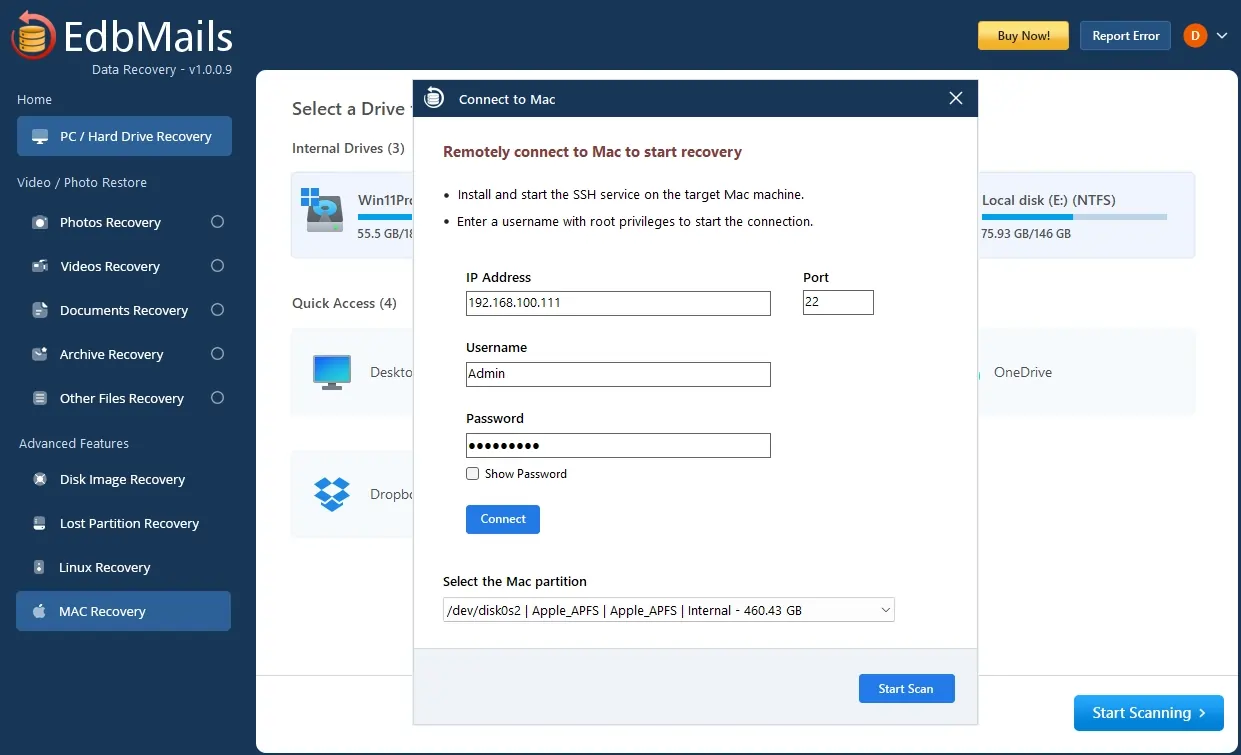
Getting started is straightforward. Simply enable SSH on your target Mac machine, then connect to it from EdbMails using the IP address, port, and your administrator login credentials. Once connected, you can browse and select the relevant Mac partition—including APFS containers and other supported file systems—and run a scan to locate deleted or lost files and folders. The best part is that you can recover everything you need without needing physical access to the Mac system. This makes it especially useful for recovering data from remote workstations, MacBook laptops, or Mac systems at different locations.
This approach works reliably whether your data loss occurred due to accidental deletion, a system update that went wrong, or even accidental disk formatting. EdbMails handles all these scenarios with both Quick Scan for recent deletions and Deep Scan for more comprehensive recovery of older or harder-to-find files.
Key Benefits of Mac Recovery via SSH
- Secure Remote Access:
All communication between your Windows machine and the Mac system is encrypted using industry-standard SSH (Secure Shell), so there's no need to physically access the Mac to recover data. This makes the process safe to use even over network connections, since the entire session remains protected from end to end with military-grade encryption.
- Remote Data Recovery:
EdbMails can recover data from Mac machines located anywhere on your network or across the internet, connecting to remote Mac systems without requiring any additional software installation on the target Mac. This makes it particularly useful for remote workstations, MacBook laptops, Mac Minis used as servers, or even iMacs that aren't easily accessible in person.
- Comprehensive File System Support:
The feature supports all Mac file systems, including APFS (Apple File System - used in modern macOS), HFS+ (Mac OS Extended), NTFS partitions commonly used on external drives, ExFAT, FAT32, and FAT16 file systems. This covers both internal Solid State Drives (SSDs), traditional Hard Disk Drives (HDDs), external USB drives, and Thunderbolt storage devices for broader recovery compatibility.
- Advanced Scanning Technology:
Recovery supports both Quick Scan and Deep Scan modes. Quick Scan rapidly retrieves recently deleted files by reading file system metadata, while Deep Scan performs thorough, sector-level analysis to locate older files, partially overwritten data, or files with corrupted file system references. The software recovers files directly to your Windows location without requiring a preview listing.
- Fast & Efficient:
The SSH connection is optimized to support fast data transfer over the network. Interrupted recovery sessions can be resumed rather than restarted from scratch, saving time and reducing network bandwidth usage. Multiple recovery options are also available to suit different data loss scenarios, whether you're dealing with a single accidentally deleted file or a larger-scale recovery operation.
- No Mac Downtime:
Unlike traditional recovery methods that require removing and connecting the Mac drive to another system, SSH recovery allows you to recover data while the Mac remains in operation. This is especially valuable for business environments where Mac downtime is costly and can impact productivity.
- Multi-File Type Support:
Recover a wide variety of file types, including photos and images (JPEG, PNG, RAW, HEIF), videos (MOV, MP4, AVI), documents (PDF, DOCX, XLSX, PPTX), emails and archives (ZIP, RAR), audio files (MP3, WAV, FLAC), and more. The software uses file signature analysis to identify and recover even corrupted files.
- Secure Remote Access:
Advantages of Using EdbMails for Mac Recovery
- Recover deleted and lost data from Mac systems remotely without physically accessing the device.
- Connect securely to Mac computers from Windows using encrypted SSH communication.
- Recover data from APFS, HFS+, NTFS, ExFAT, FAT32, and FAT16 file systems with a single application.
- Restore files from internal drives, SSDs, HDDs, USB drives, and external storage devices.
- Choose between Quick Scan and Deep Scan to maximize recovery success based on your data loss scenario.
- Recover documents, photos, videos, emails, archives, audio files, and hundreds of other file formats.
- Resume interrupted recovery sessions without repeating the entire scanning process.
- Recover data without removing the Mac drive or installing additional software on the target Mac.
- Perform recovery while the Mac remains operational, helping reduce system downtime.
- Simple step-by-step recovery workflow designed for both individual users and IT professionals.
- Reliable recovery solution for personal, business, and enterprise Mac environments.
Who Should Use This Feature?
- Users who accidentally deleted important files from their Mac system
- System administrators and IT professionals managing multiple Mac systems
- Businesses requiring data recovery from Mac systems without downtime
- Mac users who experienced accidental formatting or partition deletion
- Remote teams and organizations need secure data recovery across the network
Prerequisites for Mac Recovery via SSH
On Your Mac Machine:
- Compatible with all versions of macOS (10.12 Sierra and later recommended)
- Administrator/root access privileges for SSH connections
- SSH service capability (included with all macOS versions, just needs to be enabled)
On Your Windows Machine (Running EdbMails):
- Compatible with all modern versions of Windows (Windows 7 SP1 or later)
- EdbMails data recovery software installed (latest version recommended)
- Network connectivity to the Mac machine (along with IP address, username, password, and SSH port number)
- Sufficient storage space to save the recovered data
- Prior knowledge of the Mac storage device and the partition you want to recover from
Steps to Recover Data from a Mac via SSH
Enable SSH on Your Mac
SSH (Secure Shell) is the protocol that allows EdbMails to connect to your Mac system over the network securely. SSH is built in to macOS, so you do not need to install any additional software. Remote Login (SSH) allows secure connections from other computers. Follow these steps carefully to enable Remote Login on your Mac:
Step 1: Open Terminal on Your Mac and Run the Following Commands
Command 1: Enable Remote Login (SSH) with Administrator Privileges
Command: Copy & Pastesudo systemsetup -setremotelogin on
This command enables Remote Login on your Mac, which is the macOS equivalent of SSH. When you run this command with sudo, it requires administrator privileges to make changes to the system settings.
Command 2: Verify SSH Status
Command: Copy & Pastesudo systemsetup -getremotelogin
This command checks the current status of Remote Login (SSH) on your Mac and reports whether it is enabled or disabled. It's essential to run this verification command to confirm that your previous command executed successfully.
Command 3: Find Your Mac's IP Address
Command: Copy & Pasteifconfig | grep "inet "
You need your Mac's IP address to connect to it from the Windows computer running EdbMails. This command displays all network interfaces and their associated IP addresses. The 'grep' portion filters the output to show only the lines containing 'inet' (IPv4 addresses).
Configure EDBMails to Connect to Your Mac via SSH
Follow these steps to set up and use Mac Recovery via SSH in EdbMails
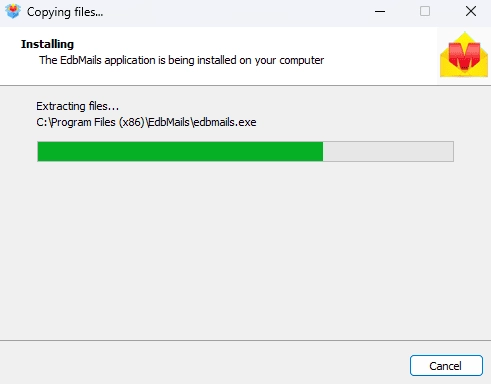
- Download and install the EdbMails application on your computer.
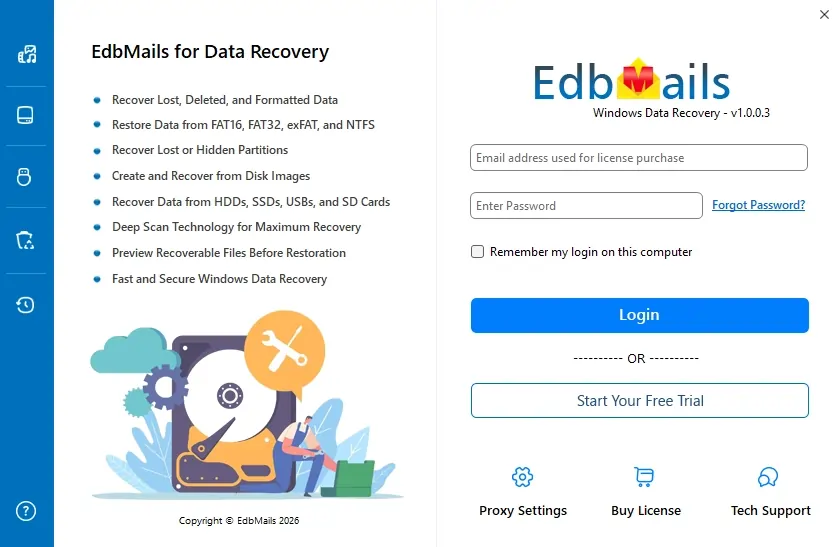
- Login using your registered email address and password. If you don't yet have an account, click ‘Start Your Free Trial’ to explore EdbMails features.
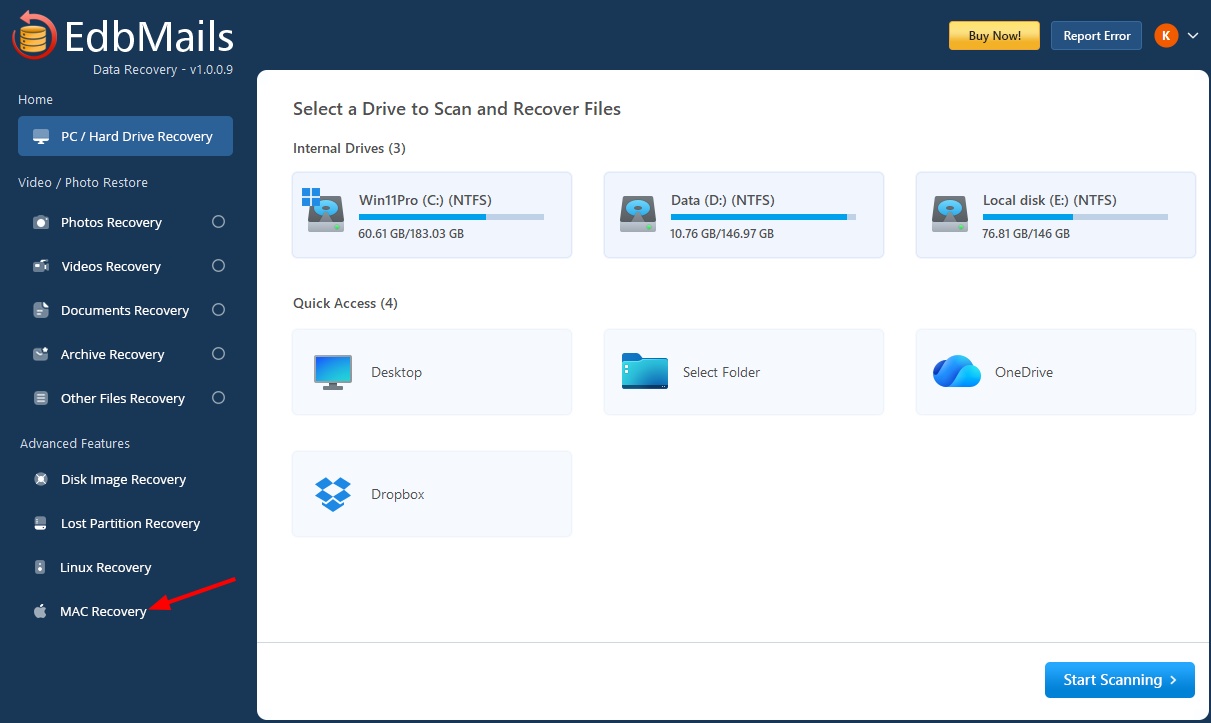
- In the left-side toolbar, under Advanced Features, click ‘Mac Recovery’.
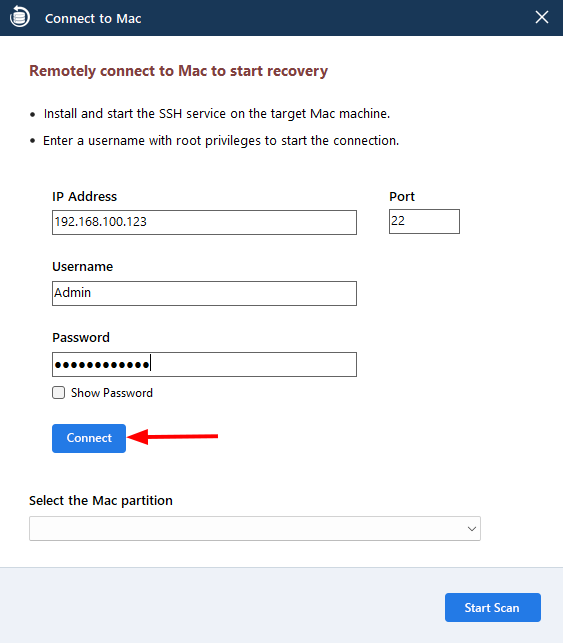
- Enter the required details, including IP address, username, and password, then click the ‘Connect’ button.
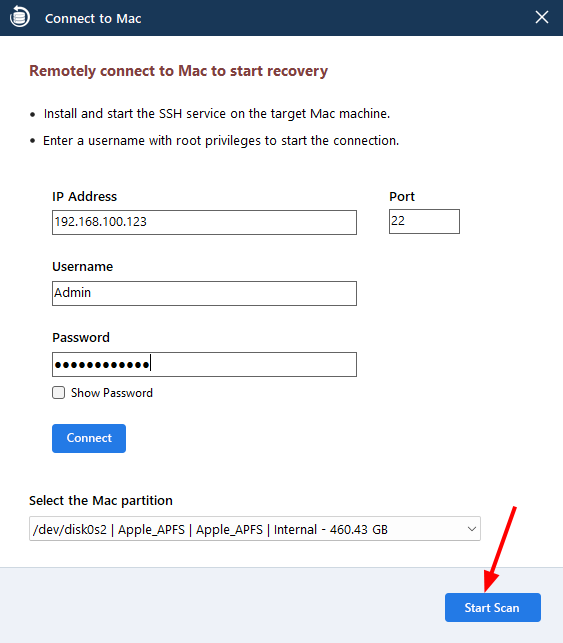
- Once the partitions load successfully, select the required partition and click ‘Start Scan’.
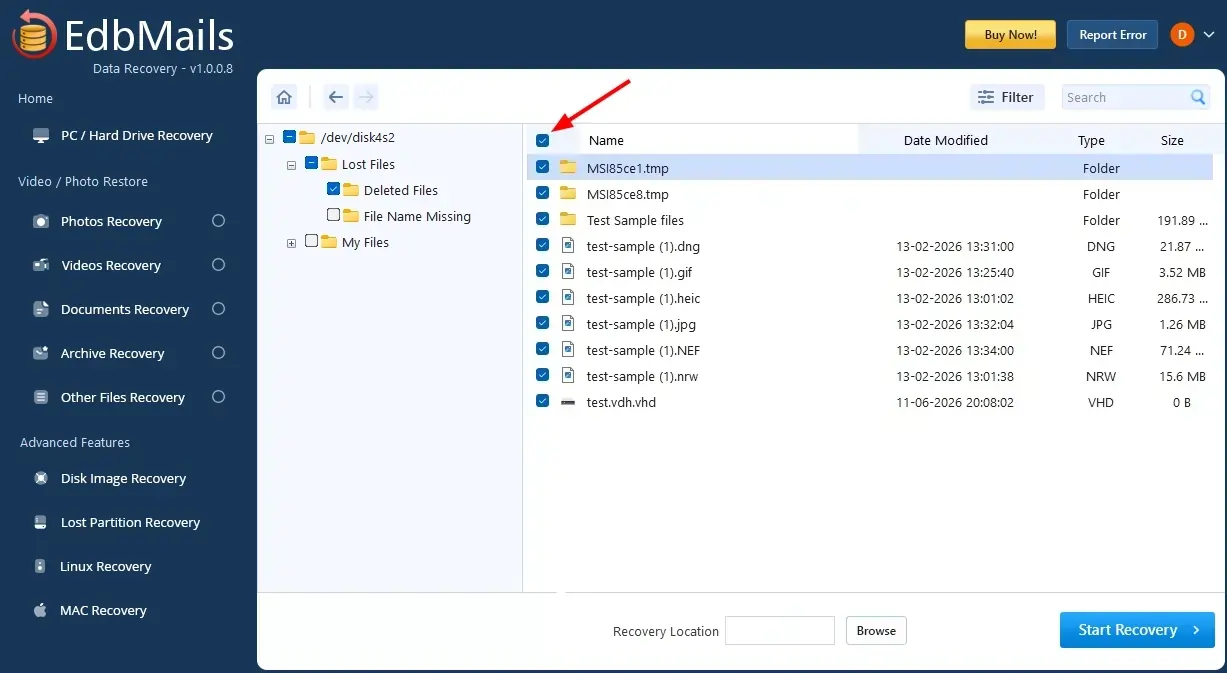
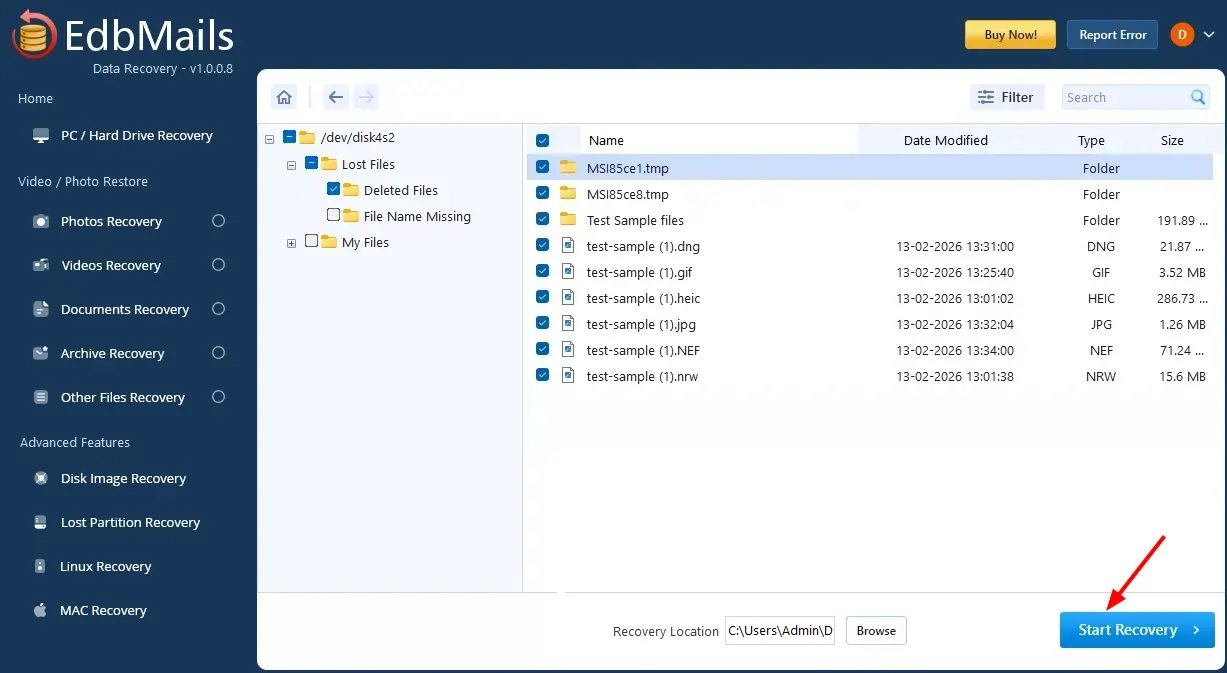
- Select the required folders or files that you want to recover.
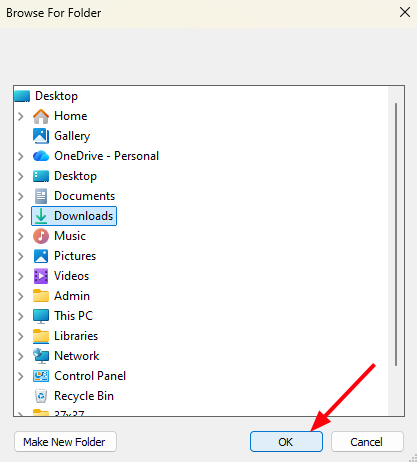
- Click the ‘Browse’ button to select the recovery location
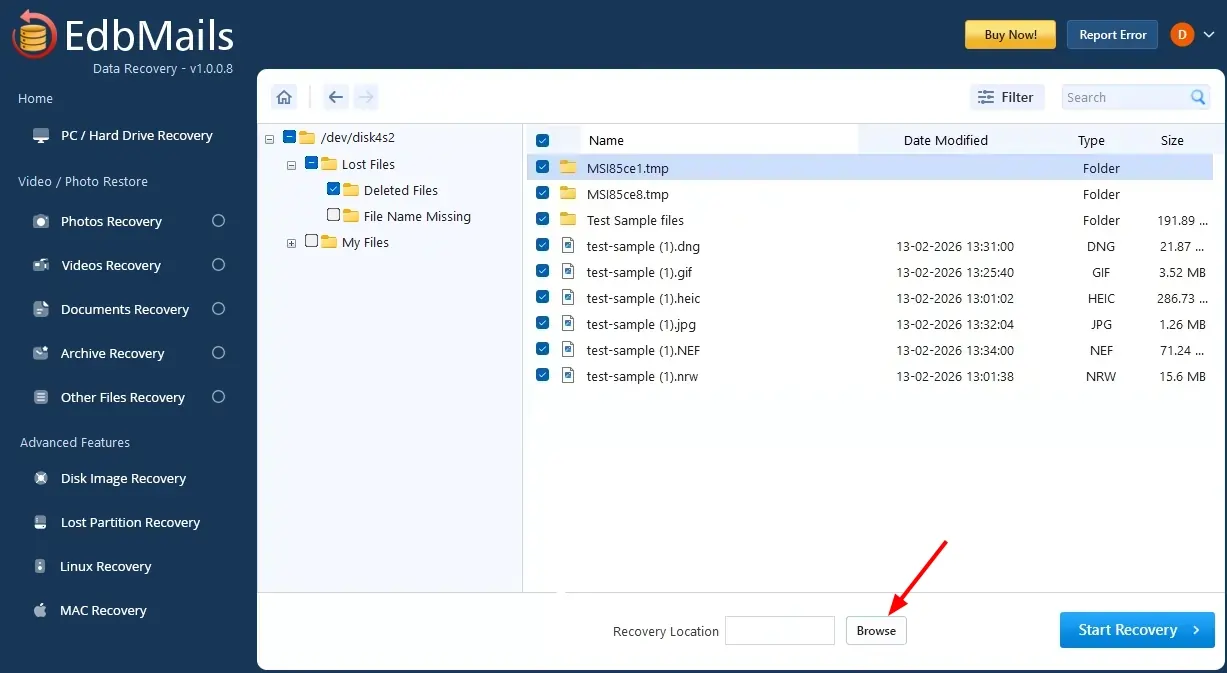
- Choose the desired location and click ‘OK’.
- Click the ‘Start Recovery’ button.
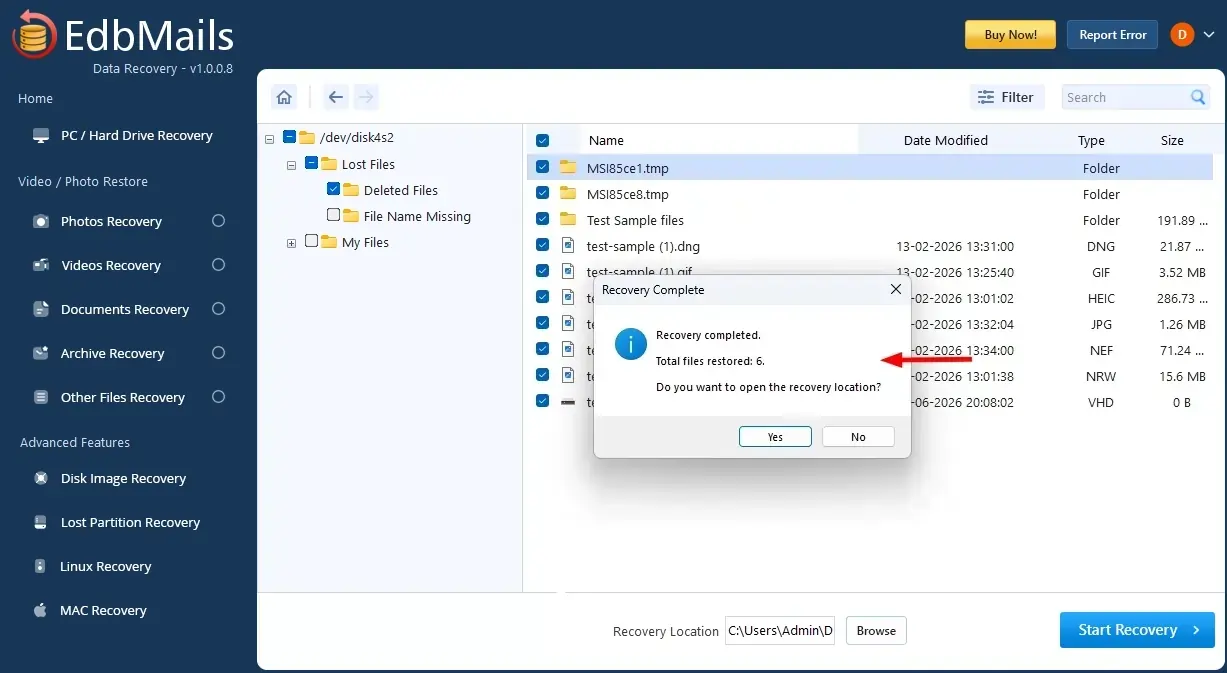
- Once recovery is complete, the total number of recovered items will be displayed.
- Download and install the EdbMails application on your computer.
How MacRecovery via SSH Works
The Mac Recovery feature follows a systematic process to identify and recover your data. Understanding this process helps you make informed decisions about recovery methods:
StageDescriptionSSH ConnectionThe application establishes a secure SSH connection to your Mac using the IP address, port, username, and password you provide.Disk DetectionThe application reads macOS disk information to identify all available disks, including internal drives, external drives, and partitions.Partition IdentificationThe application identifies APFS containers, HFS+ partitions, and other supported file systems on the Mac.Partition SelectionYou select the specific partition or APFS container containing the data you want to recover.Access ValidationThe application validates that the SSH account has raw disk access permissions to read the selected partition.File RecoveryThe application performs either a normal scan (for recently deleted files) or a deep scan (for comprehensive recovery using signature-based detection).Supported Mac File Systems and File Types
File Systems Supported:
- APFS (Apple File System) - Primary file system for modern macOS and Mac storage devices
- HFS+ (Mac OS Extended) - Legacy Mac file system used on older Mac computers
- NTFS - Windows file system is often used on external drives
- ExFAT - Universal external drive format
- FAT32 / FAT16 - Legacy file systems on older drives
Recoverable File Types:
- Images and Photos: JPEG, PNG, RAW, HEIF, TIFF, BMP, GIF, PSD, AI
- Video Files: MOV, MP4, AVI, MKV, FLV, WMV, MPEG
- Audio Files: MP3, WAV, FLAC, AAC, OGG, M4A
- Documents: PDF, DOCX, XLSX, PPTX, DOC, XLS, PPT, TXT, RTF
- Email and Archives: ZIP, RAR, 7Z, TAR, GZ, EML, MSG
- Other: HTML, CSS, JS, SQL, XML, JSON, and many more