How to Convert PST to MSG - Step-by-Step Guide
Use PST to MSG conversion when you need individual Outlook items outside a mailbox-level PST container. MSG files are useful for message-level archiving, review, transfer, document-management workflows, or saving selected Outlook items as separate files.
The EdbMails PST to MSG Converter lets you add supported PST files, choose an MSG output location, select the required PST folders or items, and export the selected data. Readable message properties and attachments can be carried into the exported output when they are present in the source PST and supported by the item type.
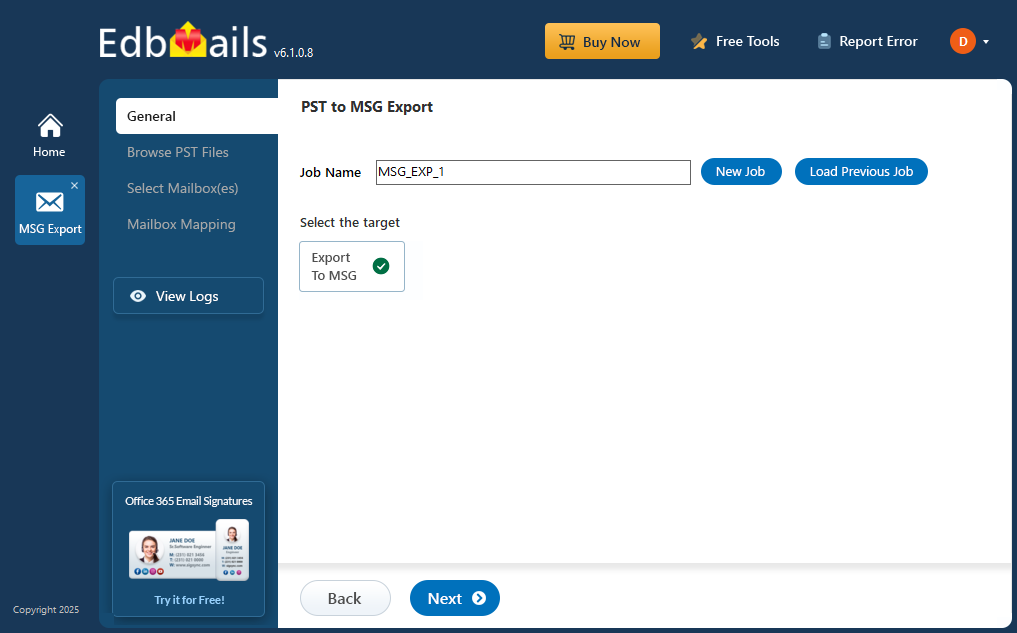
This guide covers the prerequisites, PST selection, output-location setup, item selection, export, log review, and post-export verification for the EdbMails PST to MSG Converter workflow.
PST to MSG conversion planning checklist
- Identify the required PST data.
Decide whether the project needs the entire PST or only selected folders, messages, or Outlook items.
- Verify the Outlook requirement.
Install and configure Microsoft Outlook on the Windows computer used for the current PST-to-MSG export workflow.
- Choose the output location.
Use a destination with sufficient free disk space and a folder structure suitable for the exported MSG files.
- Keep the source PST until validation.
Do not delete the only copy of the PST immediately after conversion. Verify representative MSG files first.
Prerequisites to convert PST to MSG
- Step 1: Install and configure Microsoft Outlook
The current EdbMails PST-to-MSG export workflow requires Microsoft Outlook to be installed and properly configured on the Windows computer performing the conversion. Keep Outlook updated and ensure sufficient free disk space for the exported MSG files.
- Step 2: Confirm a working Outlook profile
Use a properly configured Outlook profile as required by the current PST-to-MSG export workflow.
- Step 3: Plan the export location
Choose a destination with enough free space for the MSG output. Keep the source PST unchanged until representative exported files have been verified.
- Step 1: Install and configure Microsoft Outlook
Steps to convert Outlook PST to MSG files using EdbMails
Step 1: Download and Install the EdbMails application
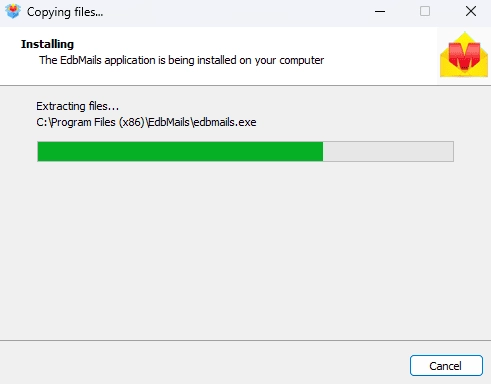
- Download the EdbMails application and install it on your Windows computer.
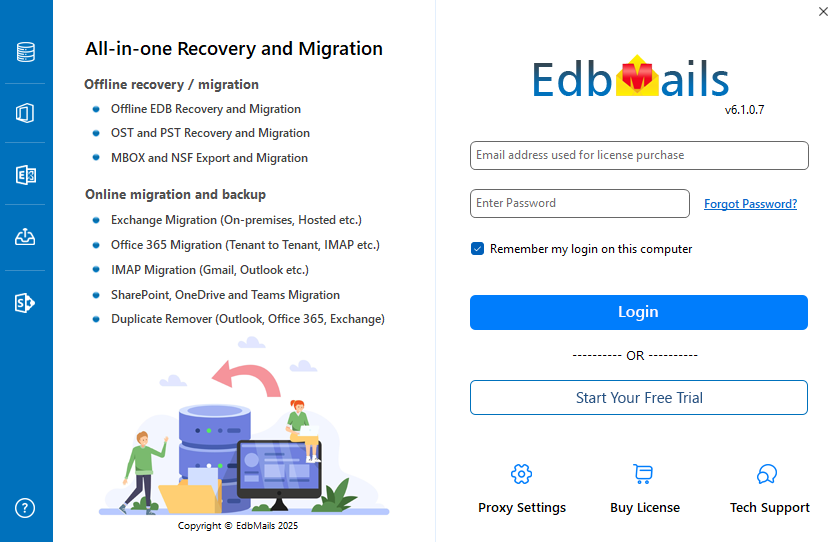
- Log in with your registered email address and password, or select the ‘Start Your Free Trial’ option
- Download the EdbMails application and install it on your Windows computer.
Step 2: Select Export PST to MSG
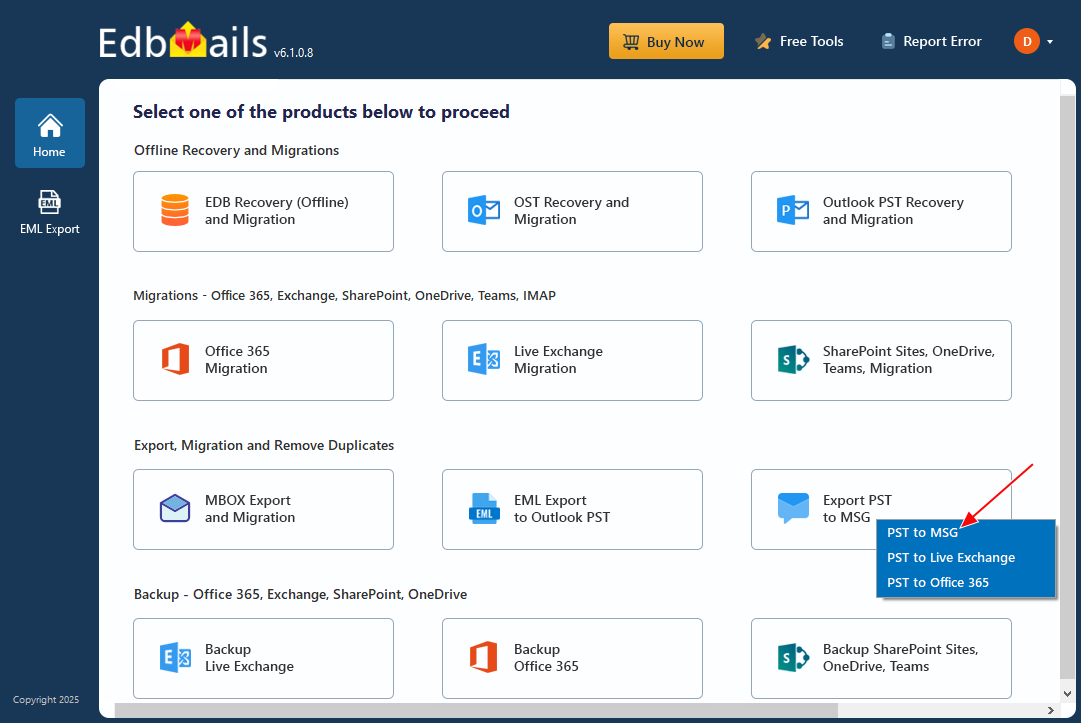
- Select ‘Export PST to MSG’ from the list of products.
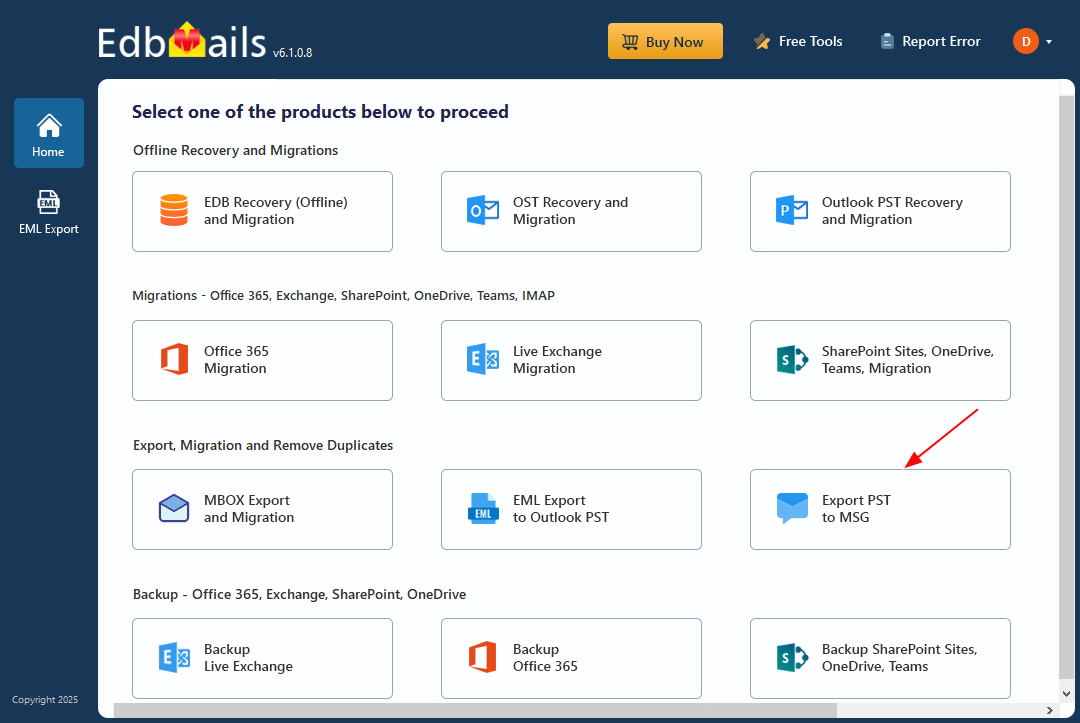
- Choose the option ‘PST to MSG’
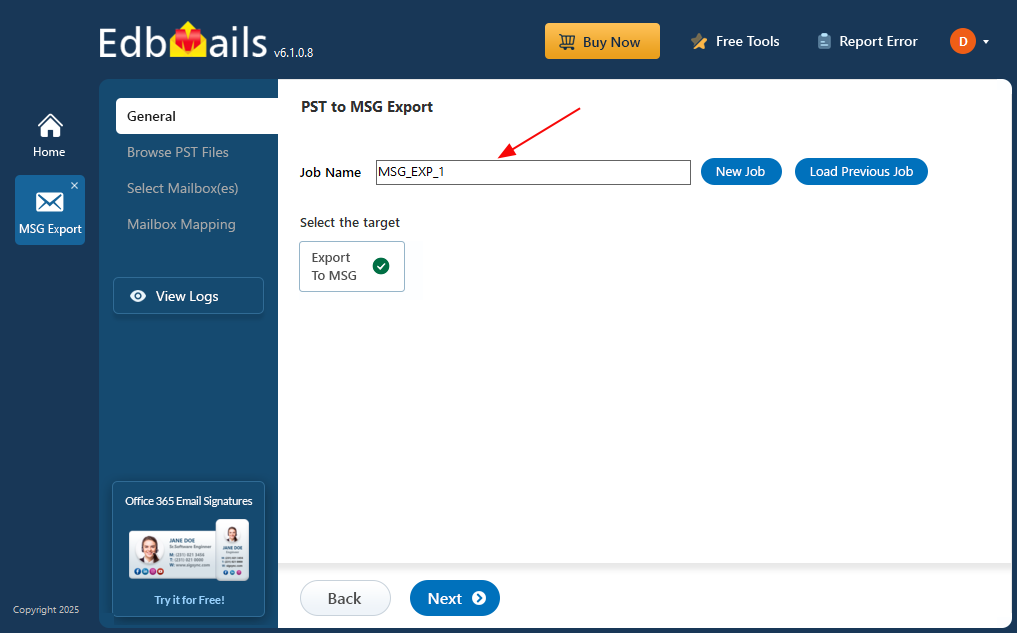
- You can keep the default job name or click on the 'New Job' button to give a new job name.
- Select ‘Export PST to MSG’ from the list of products.
Step 3: Add PST Files
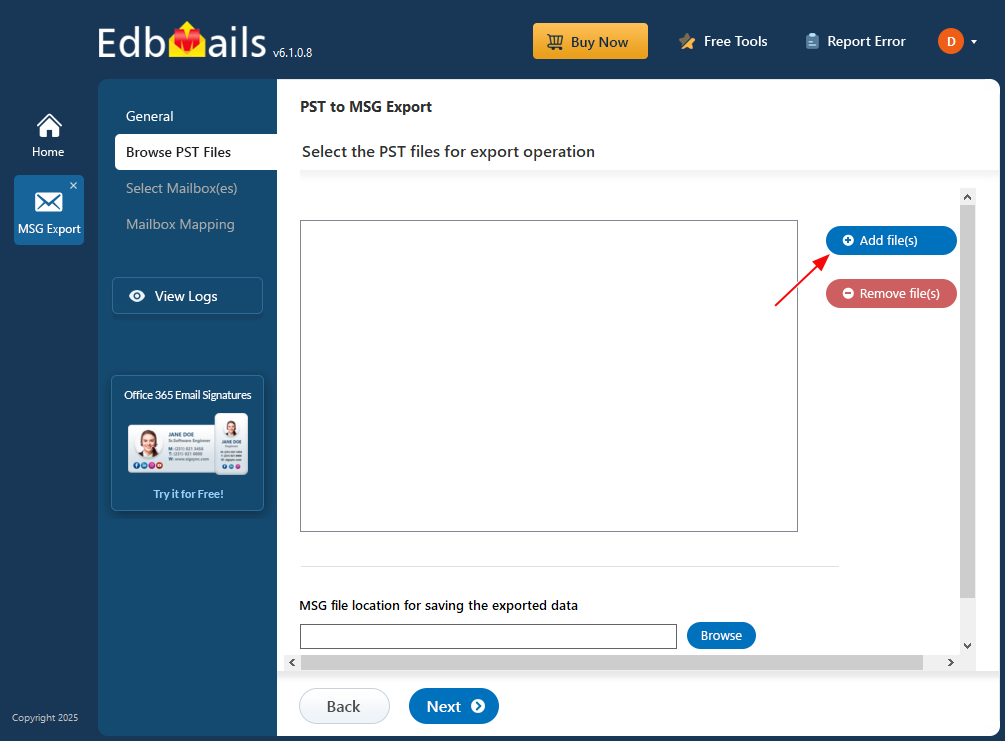
- Click the ‘Add file(s)’ button
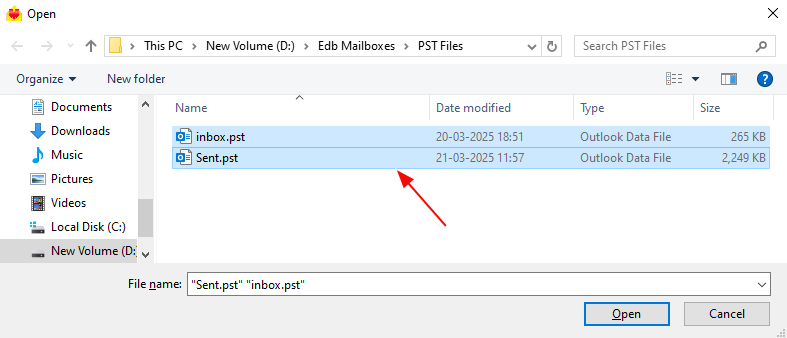
- Select the offline PST file(s) stored on your local computer or an accessible network location. Ensure the computer running EdbMails can reliably read the source PST throughout the export.
- Click the ‘Browse’ button
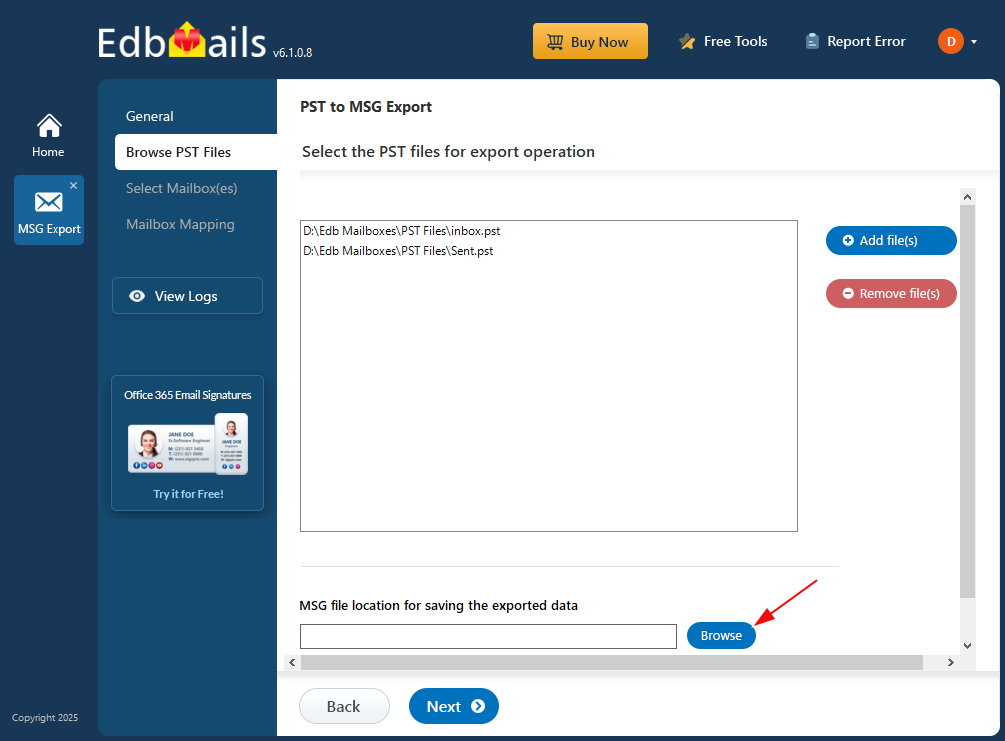
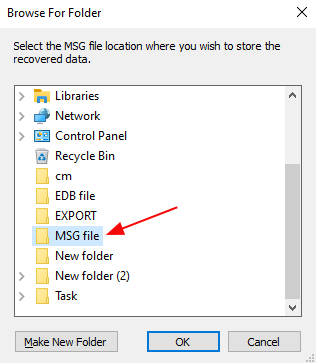
- Select the location to save the exported MSG files
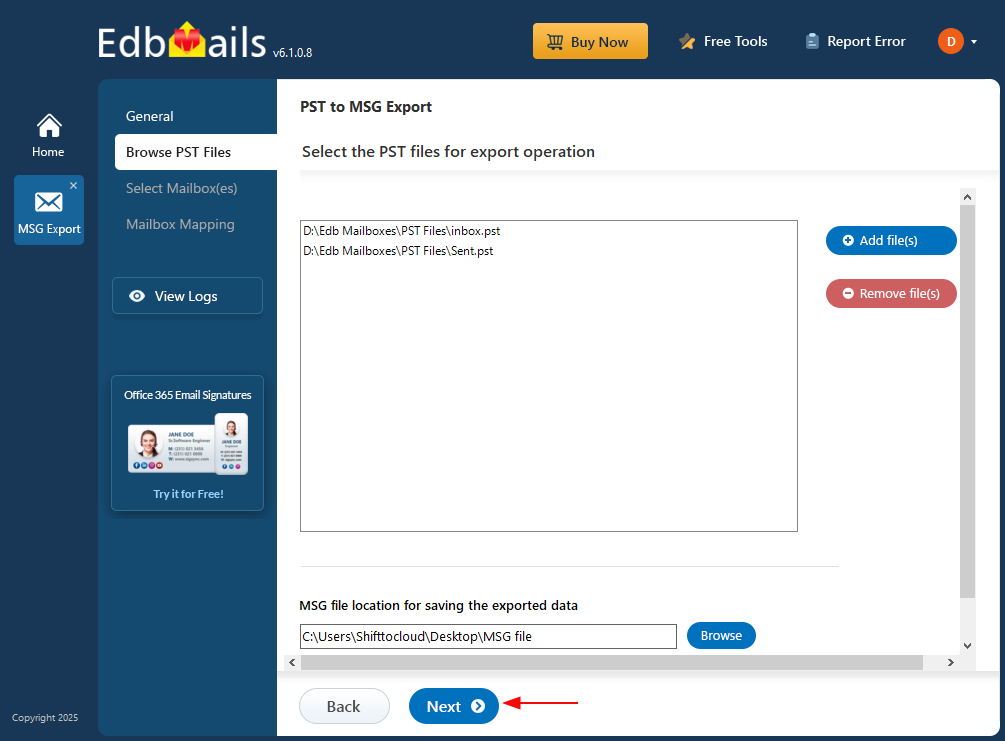
- Click ‘Next’ to continue
- Click the ‘Add file(s)’ button
Step 4: Select the PST folders or items
- Review the PST source and select the folders or items required for MSG export, then click ‘Next’
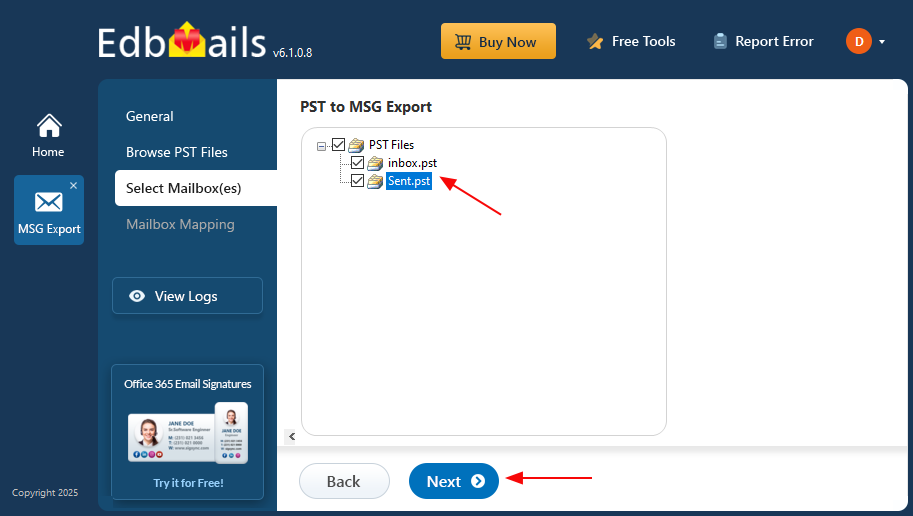
- Review the PST source and select the folders or items required for MSG export, then click ‘Next’
Step 5: Verify the export job and start PST to MSG conversion
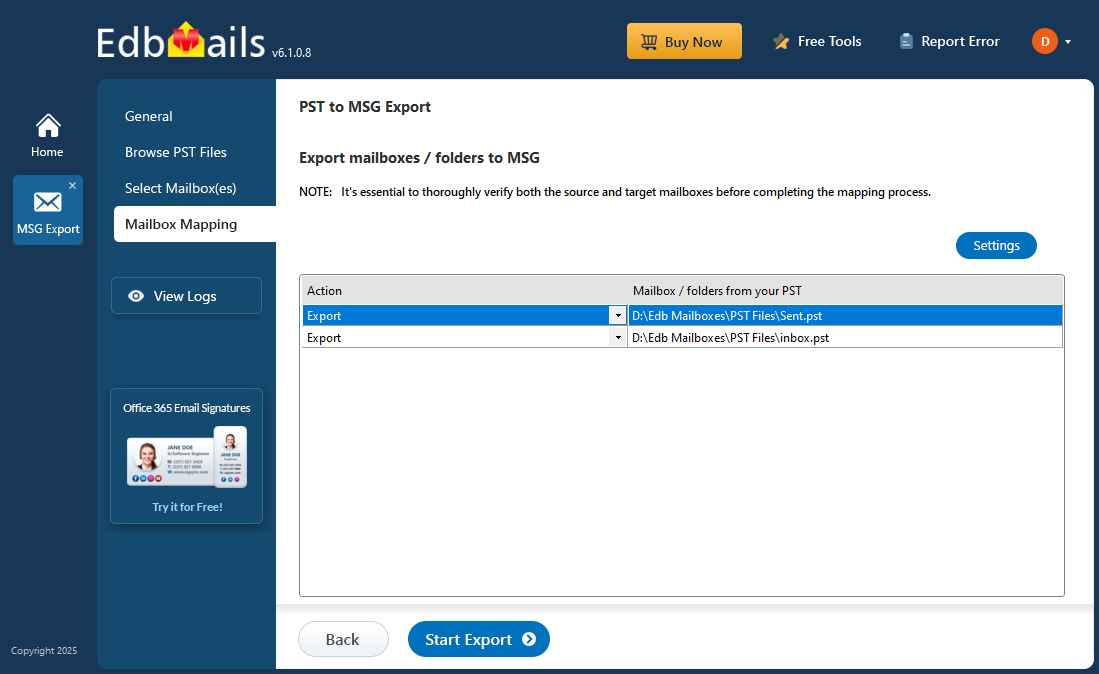
- Verify the selected offline PST files and ensure the 'Action' is set to 'Export.'
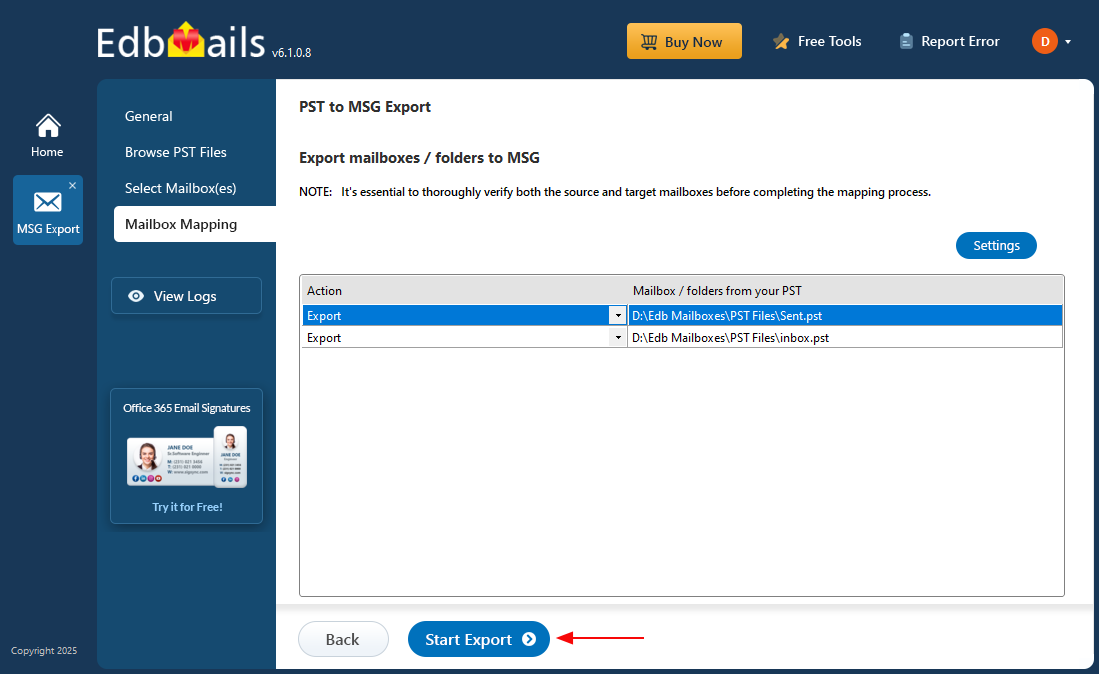
- Click the 'Start Export' button to begin the PST to MSG conversion process.
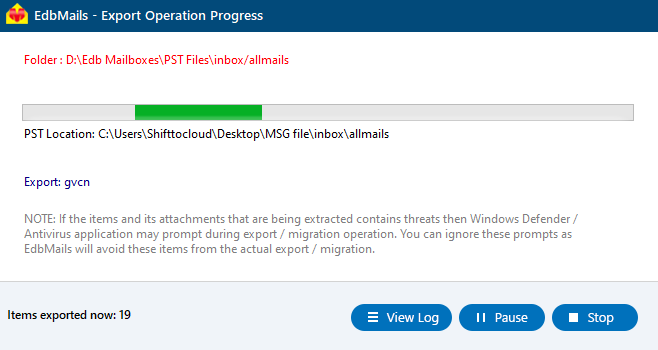
- Monitor the export progress. When the job completes, click ‘View Logs’ to review the export result. Then open representative MSG files and verify the expected subject, body, dates, sender and recipient details, attachments, and output-folder placement.
- Verify the selected offline PST files and ensure the 'Action' is set to 'Export.'
Benefits of EdbMails PST to MSG Converter
- Guided conversion workflow: Add PST sources, choose the output location, select the required data, start export, and review results from one application.
- Message properties and attachments: EdbMails carries supported readable message properties and attachments into the exported output when they are present in the source PST and supported by the MSG item type.
- Preview and selection: Review the PST source and select only the folders or items required for MSG export.
- Individual-item output: MSG is useful when Outlook items need to exist as separate files instead of remaining only inside a mailbox-level PST container.
- Selective conversion: Export only the folders or mailbox items required for the project instead of converting the entire PST by default.
- Batch conversion: Add multiple PST files to the workflow and export selected data in batches.
- Source-preserving workflow: Keep the source PST available while the selected data is written to a separate MSG output location, then verify representative files before retiring the source.
- 24/7 technical support: EdbMails provides free round-the-clock support for questions that arise during the conversion workflow.
PST to MSG conversion frequently asked questions
Does EdbMails require Outlook for PST to MSG conversion?
Yes. The current EdbMails PST-to-MSG export workflow requires Microsoft Outlook to be installed and properly configured on the Windows computer performing the conversion.
Can I convert multiple PST files to MSG?
Yes. Add multiple PST sources to the conversion workflow and export selected data in batches.
Can I export only selected PST folders or emails?
Yes. Select only the folders or mailbox items required for MSG export instead of converting the entire PST by default.
Are attachments included in the exported MSG files?
Readable attachments associated with supported Outlook items are exported when they are present in the source PST and supported by the MSG item type.
Can EdbMails export data from a damaged PST to MSG?
EdbMails can scan damaged or inaccessible PST files and display data that remains recoverable. Export results depend on what is still present and readable in the source PST. For recovery-specific scenarios, see the EdbMails PST Recovery Tool.
How should I verify PST to MSG conversion?
Review the EdbMails export log, then open representative MSG files and verify the subject, body, dates, sender and recipient details, attachments, and output-folder placement.